Posted on 05/16/2026 6:32:10 AM PDT by BenLurkin
A hefty, never-before-seen asteroid is racing toward Earth at around 20,000 mph (32,000 km/h) and will zoom past our planet closer than some satellites on Monday (May 18), scientists say. You can watch the unusually close encounter for yourself, even if you don't have access to stargazing equipment.
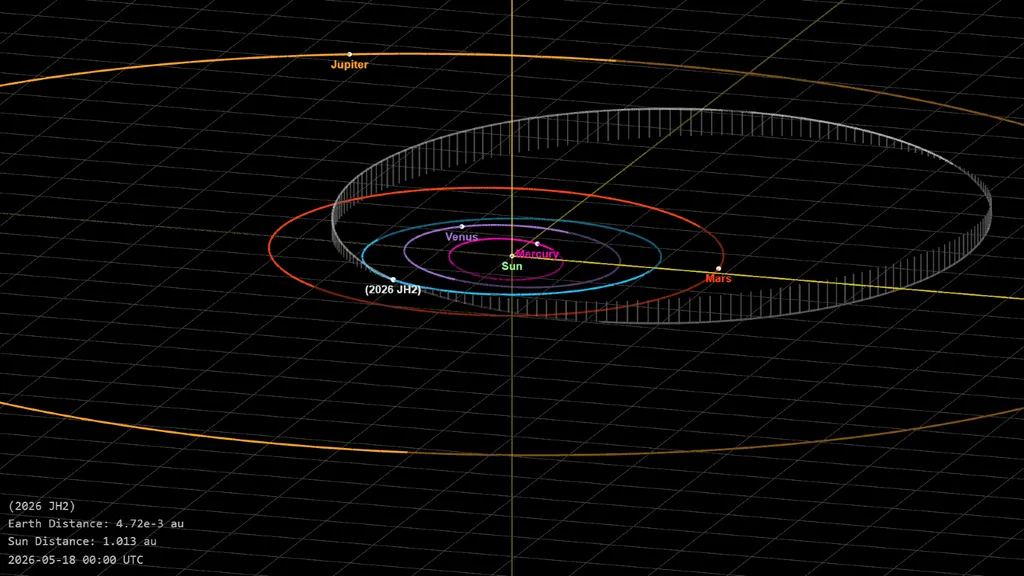
The asteroid, dubbed 2026 JH2, was discovered May 10 by astronomers at the Mount Lemmon Observatory near Tucson, Arizona, who also spotted the superbright Comet Lemmon last year. The space rock, which has since been verified by other observatories across the globe, likely circles the sun every 3.7 years on an elliptical orbit that takes it as far out as Jupiter, according to the Small-Body Database Lookup from NASA's Jet Propulsion Laboratory.
2026 JH2 is up to 115 feet (35 meters) across, or just above the maximum length of Earth's largest animal, the blue whale (Balaenoptera musculus). This puts the space rock on a par with the Chelyabinsk meteor, which spectacularly exploded above Russia in 2013 and is the largest space rock to have entered Earth's atmosphere in nearly 120 years.
At around 6 p.m. EDT Monday, 2026 JH2 will shoot over Earth's surface at an altitude of around 56,000 miles (91,000 kilometers) — around a quarter the distance between our planet and the moon. At this height, the hefty space rock will sail over most of Earth's satellites but be closer to us than a handful of spacecraft, such as the Transiting Exoplanet Survey Satellite (TESS). (There is currently no suggestion that these spacecraft are at risk of being hit by 2026 JH2.)
Due to limited observations, there is some level of uncertainty about how close the asteroid may get to Earth, scientists say. However, there is zero chance that it will impact our planet.
(Excerpt) Read more at livescience.com ...
Asteroid 2024 YR4, roughly 60 meters wide, has a roughly 4% chance of impacting the Moon on December 22, 2032. There might even be a base on the Moon by then!
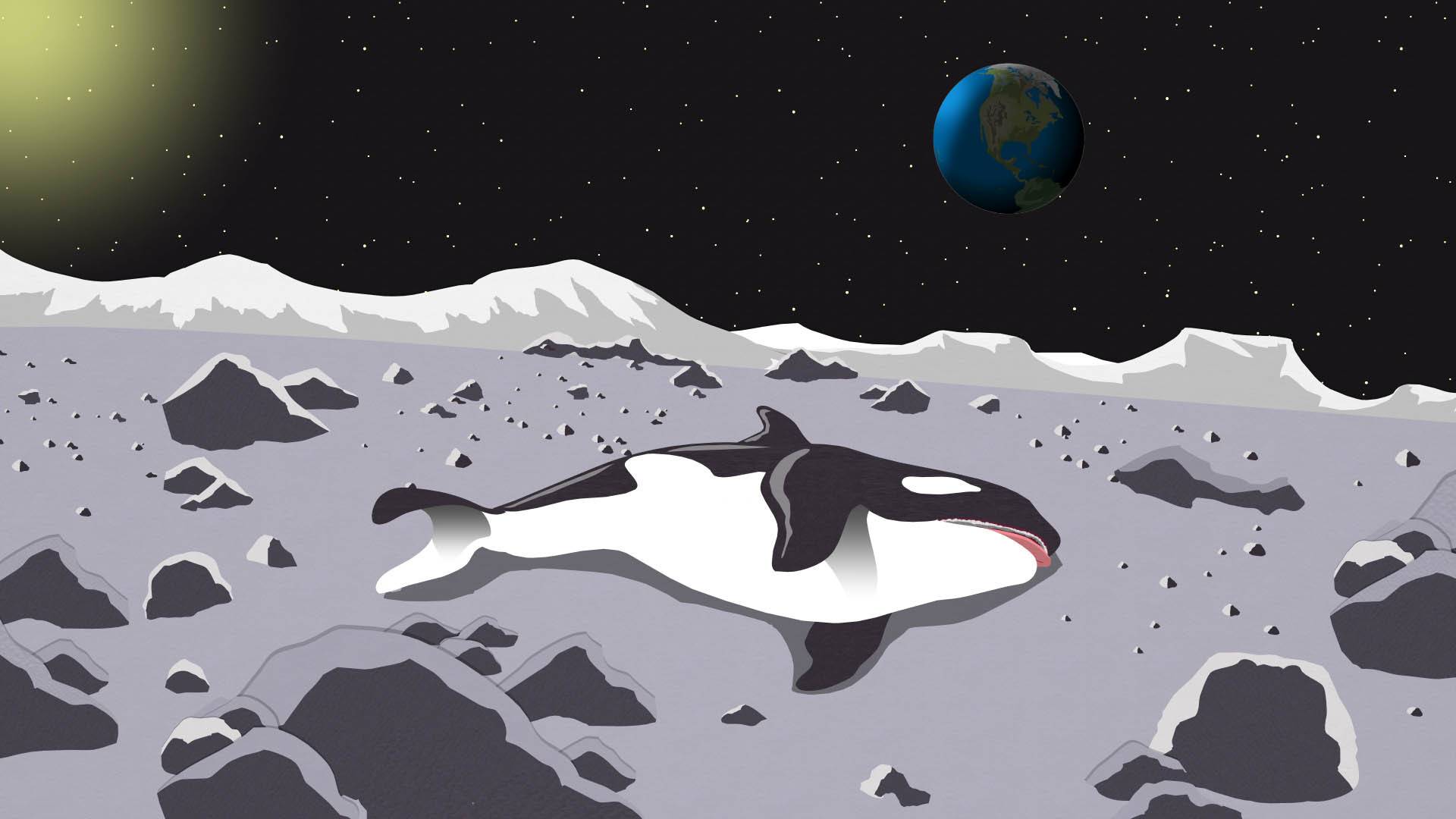
I’ve heard the phrase when pigs fly but when whales fly, not so much.
good to know we spot these things early enough to take action should they be headed for a collision with us.
well, not this time
Yjat Blue whale is an Orcha
I didn’t even read it and am betting 20 bucks thatbtealncloae is over a million miles...
Now I’ll go read...
Just another awful tease. {snicker}
Ok... looks like I’m out 20 bucks!
Ping!..............
covfefe
The Chelyabinsk meteor and the 2016 Arizona fireball (often called the Dishchii'bikoh meteorite) that lit up the skies over Phoenix are intimately related. Scientific studies have confirmed that both space rocks are cosmic siblings, meaning they broke off from the same parent asteroid in the inner asteroid belt.
I actually heard that Phoenix meteor. I just assumed at the time it was noisy neighbors. Early in the morning I saw the smoke trail it left in the sky. It was not until later I learned the complete story.
“However, there is zero chance that it will impact our planet.”
Safe and effective....................
That is easy for you to say!
Lea Teoni will be hugging her German father on a beach.
Big deal. Sand flea sized asteroids whiz by and hit the planet every day. Geez.
Lol... proof of large thumbs texting and a lack of proof reading!!
Guilty as charged!!
Is there another asteroid the size of a bowl of petunias?
Maybe it’s a purrgil...lol
Disclaimer: Opinions posted on Free Republic are those of the individual posters and do not necessarily represent the opinion of Free Republic or its management. All materials posted herein are protected by copyright law and the exemption for fair use of copyrighted works.
