Skip to comments.
How DNA Reveals Neolithic Europeans Colonized Africa 7,000 Years Ago [22:05]
YouTube ^
| October 28, 2026
| Dan Davis History
Posted on 11/09/2026 5:30:03 PM PST by SunkenCiv
Over 7,000 years ago, Neolithic farmers crossed the Mediterranean from Iberia into North Africa. Carrying Cardial Ware pottery, domesticated crops and livestock, these European migrants established communities in Morocco and mixed with indigenous Maghrebi hunter-gatherers. Archaeology and ancient DNA shows how farming spread through migration, cultural adoption and later movements from the Levant. Including the remarkable spread of the R1b-V88 paternal lineage from Mesolithic Europe and Neolithic Iberia into the Green Sahara, and ultimately to populations living around Lake Chad today. How DNA Reveals Neolithic Europeans Colonized Africa 7,000 Years Ago | 22:05
Dan Davis History | 392K subscribers | 140,024 views | October 28, 2026

(Excerpt) Read more at youtube.com ...
TOPICS: History; Science; Travel
KEYWORDS: africa; agriculture; ancientnavigation; animalhusbandry; dietandcuisine; genealogy; godsgravesglyphs; greensahara; helixmakemineadouble; huntergatherers; mesolithic; neolithic; r1b
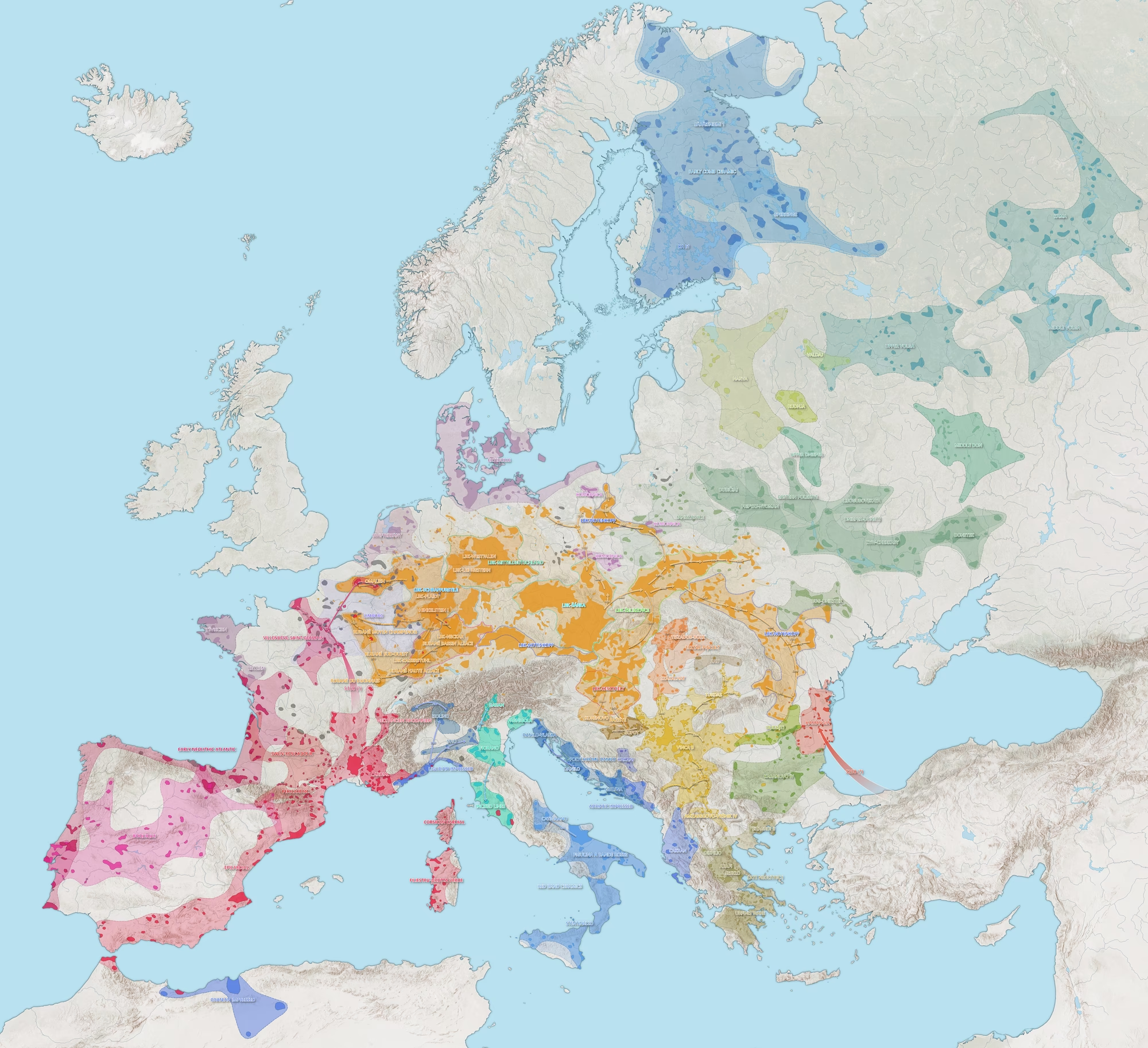
Map: Expansion of farming in western Eurasia, 9600 - 4000 cal BC (update vers. 2025.1) | Authors: Detlef Gronenborn | Barbara Horejs | Contributors: Mario Börner | Michael Ober | Published August 15, 2025 | Version v3 | Over 7,000 years ago, Neolithic farmers crossed the Mediterranean from Iberia into North Africa. Carrying Cardial Ware pottery, domesticated crops and livestock, these European migrants established communities in Morocco and mixed with indigenous Maghrebi hunter-gatherers. Archaeology and ancient DNA shows how farming spread through migration, cultural adoption and later movements from the Levant. Including the remarkable spread of the R1b-V88 paternal lineage from Mesolithic Europe and Neolithic Iberia into the Green Sahara, and ultimately to populations living around Lake Chad today.5100 BC Atlas
1
posted on
11/09/2026 5:30:03 PM PST
by
SunkenCiv
To: StayAt HomeMother; Ernest_at_the_Beach; 1ofmanyfree; 21twelve; 24Karet; 2ndDivisionVet; 31R1O; ...
2
posted on
11/09/2026 5:31:47 PM PST
by
SunkenCiv
(TDS -- it's not just for DNC shills and jihadists anymore -- oh, wait, yeah it is.)
Chapters
00:00 Europe’s Into Africa migration
02:43 Sponsorship
04:35 Neolithic European Migrations
10:10 Into Africa Migration
15:29 European Lineages in Africa
Transcript
Europe’s Into Africa migration
Over 7,000 years ago, Neolithic farmers crossed the Mediterranean from Europe and established communities on the northwest coast of Africa. They introduced domesticated plants and animals to the huntergatherer societies of the Magghreb, transforming the region forever. The Neolithic into Africa migration was actually part of a much larger and quite incredible maritime expansion that had begun centuries earlier. Its roots lay in the movement of farmers from Anatolia across the Aian into southeastern Europe after about 7,000 BC carrying domesticated cereals, pulses, sheep, goats, and other elements of an agricultural way of life.
After about 6,000 BC, related farming populations making impressed ware pottery began expanding rapidly westwards along the coasts and islands of the Mediterranean. Along the way, they mixed with the local European hunter gatherers, forming a new distinctly European population. This was one of the most remarkable series of migrations in all human history, seeing rapid colonization of new lands generation after generation. And some of these courageous, intrepid people decided to make the crossing from Iberia to colonize North Africa.
Recent ancient DNA analysis from a cave site in coastal Morocco confirms that people made this crossing and established communities here. Most of their ancestry came from Neolithic farming populations in Mediterranean Europe. After reaching North Africa, they also mixed with local people. Perhaps surprisingly, a trace of Neolithic European movements into Africa may survive in the paternal lineage we call R1B V88. The earliest known carriers of this lineage were European hunter gatherers in the Balkans.
Through mixing, this lineage was later seen in Neolithic men in Iberia and Sardinia before the lineage entered Africa and expanded through the green Sahara. Today it’s concentrated among certain populations of the central Sahel, particularly around Lake Chad, including in northern Nigeria and Cameroon.
But who were the indigenous inhabitants encountered by these farmers? What kind of boats did they use to make these epic voyages? And how did a paternal lineage with ancient European origins eventually become concentrated south of the Sahara? This is the incredible story of Europe’s Neolithic migrations into Africa.
[ad text redacted]
3
posted on
11/09/2026 5:47:39 PM PST
by
SunkenCiv
(TDS -- it's not just for DNC shills and jihadists anymore -- oh, wait, yeah it is.)
Transcript
Neolithic European Migrations
Farming developed in the fertile cresant over 10,000 years ago. Some of the early farmers in central Anatolia moved to western Anatolia and there mixed with genetically related hunter gatherers before spreading across the Aian into southeastern Europe from around 7,000 BC. These farming societies were very successful and people spread into neighboring regions.
There was one route of movement northwards through the river valleys leading eventually into central Europe. Another followed the coasts and islands of the Mediterranean. They would have encountered huntergatherer communities already occupying many of these landscapes, but the population geneticists call western hunter gatherers were not wiped out. Their ancestry mixed with that of the farmers, helping to create the distinctly European early farmer populations whose genetic signature was eventually carried into North Africa.
The maritime expansion across the Mediterranean is associated with several related impressed ware traditions including the pottery commonly called cardial or cardium ware. The cardial ware conveys something of the maritime nature of the society. Some of their pottery vessels were decorated by pressing the edge of a cockal shell into wet clay. The old name for them cardium referred to cockals belonging to the family cardiiday. They used other stuff as well to make patterns, but these shells were a common one.
You can see why the wavy serrated edges of them would be used to make attractive patterns on their pottery, especially as these people traveled to and from the beaches where they washed up. Perhaps the cockal itself also carried some symbolic meanings, maybe to do with travel and ancestry or who knows what. But the patterns made with it became part of a shared artistic tradition linking farming settlements across hundreds of kilometers of Mediterranean coastline. And despite their extraordinary maritime mobility, these people were farmers. Isotope evidence suggests that fish and shellfish generally made only a minor contribution to their diet, if at all, even at many coastal sites.
For these people, the sea was above all a route for movement and exchange. We don’t know exactly what the boat crossing the Mediterranean looked like. Perhaps they built skinboats stretched over a frame, but an early Neolithic settlement near Rome has preserved five dugout canoes dating from the same period. The largest was carved from a single oak trunk and measured over 10 m long. It had reinforcing ridges and fittings that might have supported ropes, a stabilizer, or maybe a second hull, maybe even sails. Sails seem most unlikely to me, but maybe they rigged small temporary ones. But even without sails, experimental replicas have successfully traveled hundreds of kilome along Mediterranean coastlines.
These farmers weren’t the first to cross these waters, though. Recent excavations show that Mesolithic hunter gatherers reached Malta around 6,500 BC, repeatedly crossing around 100 km of open water from Sicily. This shows that long-distance Mediterranean seafaring was already possible centuries before the cardial expansion. And I do wonder the degree to which the farmers had incorporated hunter gatherers whose ancestors had navigated its coasts and islands for thousands of years.
And I want to emphasize just how rapid this Mediterranean expansion was. One study I read shows how these people spread from the Bay of Genoa to the estie of the Mondo River in Portugal in just 100 or 200 years at most. So this wasn’t only a case of a generation outgrowing a village and moving to the next valley or bay along the coast and starting a new village and then the process repeating again when the population outgrew local carrying capacity.
There was also intentional long-d distanceance maritime pioneer colonization. Something drove these people for generations, striking out boldly into new lands with immense energy and courage. Wherever they landed, they would establish their societies a new and start carving out a place for themselves and their children. And there were hunter gatherers in these places already that they either drove off, killed, or incorporated into their societies.
And these people wouldn’t stop there. Their descendants would push on northwards through what’s modern France all the way to Britany and the Paris basin. These people would mix there with their distant cousins to form new societies. And then after 4,000 BC, they would launch themselves in another rapid expansion to colonize the British Isles as rapidly as their ancestors had conquered the Mediterranean centuries earlier.
We talk about other famous expansions and colonizations. Most famously perhaps the peopling of the Americas, the Indo-Uropean expansions, the Bantau expansions, and the Aranesian and Polynesian expansions. But the maritime colonization of the Cardialware people is every bit as impressive and historically significant as any of them. Anyway, all this helps explain why within only a century or two of reaching southern Iberia, perhaps even earlier than that, some of these farming communities crossed [music] into northern Morocco.
4
posted on
11/09/2026 5:48:06 PM PST
by
SunkenCiv
(TDS -- it's not just for DNC shills and jihadists anymore -- oh, wait, yeah it is.)
Transcript
Into Africa Migration
Of course, people were already living in North Africa. Recovering ancient DNA in North Africa is extremely difficult, but genomes from people living in Morocco about 15,000 years ago reveal a distinctive ancestry that ancient genetics researchers have called Mcgrebi ancestry. Related ancestry survived in Morocco, Algeria, and Chunisia into the early hollesene. Genetic evidence suggests that some of these populations remained relatively isolated and had small effective population sizes for thousands of years. Nevertheless, they continued to develop technologically and culturally.
Intensive plant exploitation and varying degrees of sedentism were already present in Africa, even before farmers arrived from Europe. The first evidence of domesticated crops in northern Morocco appears at basically the same time as farming reached Iberia. At a rock shelter in the eastern rift region of Morocco overlooking the Mediterranean coast, archaeologists found a long sequence of hunter gatherer occupation, followed by early Neolithic deposits containing impressed pottery and domesticated plants. A charred domesticated lentil was radiocarbonated to around 5,730 to 5,560 BC.
This date overlaps with some of the earliest farming evidence in Iberia. Unfortunately, there’s no ancient human DNA recovered from this occupation. So, we can’t directly identify the ancestry of the people who brought it or cultivated it at this site. However, a few centuries later at CFat Elgar near the strait of Jibralta, people were using cardial pottery, cultivating cereals and pulses and raising domesticated livestock. The four human remains tested there were predominantly descended from the Neolithic farmers of Mediterranean Europe.
A genetic model estimates their ancestry as approximately 82% European Neolithic farmer and 18% Mcgrevi. These people were already admixed by around 5,400 BC. And genetic analysis suggests the first admixure events began many generations earlier, maybe even 300 years earlier in modeled estimates. So there wasn’t a single ad mixture event. It was an ongoing process of Iberian colonists bringing locals into their communities one way or another over centuries.
Taken together with the archaeological evidence, it’s likely that contact and migration began around the middle of the 6th millennium BC, perhaps around 5,600 to 5,500 BC. And this is the same kind of dates we have for these people settling Iberia. I keep coming back to the speed and distances of these expansions. All these groups kept making these epic pioneering voyages. There were probably also contacts across the central Mediterranean, but likely not to the same scale as in the west.
The colonists at CFat Elgar introduced the Neolithic package of crops, livestock, pottery, and farming practices into Morocco, but other local groups adopted domesticated cereals and cardial-like pottery with only a small amount of European farmer ancestry. Later in the fifth millennium BC, Neolithic people from the Levant spread westwards, bringing new genes into the region. The Levventine ancestry also brought pastoralism and a new ceramic tradition known as Ashikar. So, North African groups ended up with different mixtures of Levventine, European, and local Mcgrebi ancestry.
Haplogroups provide another way of examining these migrations, though they represent only single lines of descent. Certain mutations on the Y chromosome tracks a paternal line from father to son while mitochondrial DNA follows one maternal line through the mother. Neither represents a person’s complete ancestry nor can a hap group by itself identify an ethnic group, culture or language.
Three of the four people analyzed at Capat Elgar were male. The Y chromosome could be identified in two of them and both belonged to G2A, the most common European neolytic farmer male lineage. Their maternal lineages were more varied. One man carried U6, a maternal lineage likely from the indigenous McGrebie population. The other men carried two different lineages from Neolithic European populations. The only woman in the sample carried U5 B2B1A, a European hunter gatherer lineage that had entered European farming populations through earlier ad mixture. These lineages suggest both men and women arrived from Europe, while at least one local North African maternal lineage had entered the community.
5
posted on
11/09/2026 5:48:24 PM PST
by
SunkenCiv
(TDS -- it's not just for DNC shills and jihadists anymore -- oh, wait, yeah it is.)
Transcript
European Lineages in Africa
And there’s another paternal lineage that might preserve evidence of movements between Neolithic Europe and Africa. That lineage is R1B V88. Today R1B V88 reaches its highest European Lineages in Africa frequencies in the central Sahel, particularly in northern Cameroon, northern Nigeria, Chad and Niger. In some sample populations of northern Cameroon, it’s carried by more than 3/4 of the men. It also survives at much lower frequencies in parts of North Africa like Egypt and in Sardinia.
The oldest known carriers of R1B V88 were messylithic hunter gatherers in the Balkans. These include two individuals from the Iron Gates region of Serbia dating to around 9,000 BC. Watch my video on Leensky Ve to find out more about these people.
During the Neolithic, the lineage is seen in European farming populations. A man buried at a cave site in the Pyrenees in around 5100 BC carried R1B V88. Interestingly, this was a massacre site of early farmers, perhaps by local hunter gatherers or by another farming group. V88 was also common among ancient Sardinians. This distribution suggests that a paternal lineage originally carried by European hunter gatherers was incorporated into expanding Neolithic farming populations and carried westwards through Mediterranean Europe.
After that, however, there is a gap in the direct evidence. As of now, there’s only two Yapper group samples from the Moroccan colony site and they’re both G2A. If we could get more samples from the region, perhaps we would find V88 among them. The African part of the story has instead been reconstructed mainly from the family tree of modern Y chromosomes.
One study estimated that V88 originated in Europe approximately 12,000 years ago and that the ancestors of its African branches entered the Sahara between about 6,700 to 5,900 BC. But these are statistical estimates of when different branches shared common ancestors, not direct dates for a migration. And they don’t tell us where the Mediterranean was crossed, but the estimated date range is within the African humid period when lakes, rivers, and extensive grasslands occupied regions that are now desert. These conditions would have made movement across the green Sahara far easier than it is today.
The same genetic study identified a later expansion of V88 around the Lake Chad basin between about 3800 and 3,300 BC. This expansion likely accounts for much of the lineage’s present concentration in the central Sel. Who carried this lineage towards Lake Chad is unknown. We have to look at the archaeological evidence for possible cultures in these regions at this time and see if any of them might fit with these kinds of movements. One plausible candidate is the pastural populations archaeologists associate with the Tenarian tradition. They occupied the central Sahara during the same broad period in which V88 underwent its rapid expansion.
Some Tenarian communities practiced cattle husbandry, constructed megalithic monuments, and carried out ritual cattle sacrifice. The people buried at the site of Goro were also physically distinct from the population that had occupied the region before them. being shorter and more slender and with a cranial morphology described as Mediterranean. It’s thought the megalithic and cattle sacrifice traditions of the Tenarians were a response to the aridification that ultimately drove them out of the Sahara and into the Sahel by about 2200 BC. And as the broad waters of Lake Meachad receded, fertile lands were exposed and settled by agriculturalists.
A mobile patrinearally organized pastoral society would provide a plausible mechanism for the expansion of a single paternal lineage. The Y chromosomes could be spread through founder effects, clan expansions and unequal reproductive success. The same kind of processes seen in later Indo-Uropean societies in fact. But this is just a hypothesis. We don’t yet have any Tenarian DNA. The V88 lineage might have been carried by Tenarian pastoralists or by another unsampled Saharan population.
And the concentration of V88 among a number of Chadicsp speakaking peoples led researchers to propose that its expansion was connected with the spread of the Chadic branch of the Afroasiatic languages. The association isn’t exact though. V88 is also found among people speaking Nylo Saharan, Niger Congo and unclassified languages. Anyway, the V88 lineage seems to be linked with the expansions of Chadic speaking populations across the region.
By the late Neolithic, North African groups were a mixture of people and cultures from the Mediterranean, the Levant, and the Sahara. And we have evidence suggesting a remarkable journey of a lineage over thousands of years from the Mesolithic hunter gatherers of the Balkans to Neolithic Iberia into the green Sahara, the drying Lake Chad, and into tropical West Africa. And we now know that around 5,500 BC, pioneering Neolithic farmers, men and women, crossed from Iberia, established communities, and mixed with local Mcgrebi people. The crops, livestock, and technologies they introduced were then adopted and transformed by local communities spreading the Neolithic way of life through North Africa.
Thanks again to My Heritage for sponsoring this video.
If you want to find out about your ancient ancestry and support my channel at the same time, be sure to use the link in the description or scan the QR code and use my coupon code dan D19 to get your DNA kit for this very low price now.
And thank you very much to my channel members and patrons for supporting the channel.
If you enjoyed this video, please support this work as a channel member so I can continue to produce this kind of video.
And please [music] do hit like and subscribe to the channel now to find out about how DNA can tell us about European prehistory from the mammoth hunters of the ice age to today.
Please watch this video now on the incredible story of the ancient I2A lineage.
Thank you for watching.
6
posted on
11/09/2026 5:48:50 PM PST
by
SunkenCiv
(TDS -- it's not just for DNC shills and jihadists anymore -- oh, wait, yeah it is.)
The rest of the Green Sahara keyword, sorted:
- Al Haruj - The Black Ocean of the Sahara [11:26] [10/05/2026]
- 10,000-Year-Old Rock Engravings Discovered in Libya [08/06/2025]
- First ancient genomes from the Green Sahara deciphered [07/02/2025]
- Unknown human lineage lived in 'Green Sahara' 7,000 years ago, ancient DNA reveals [04/04/2025]
- Ancient Cave Discovery Reveals That 8,000 Years Ago, the Sahara Was Green [03/10/2025]
- The lush green Sahara [09/20/2021]
- Terrible News for Climate Catastrophists: The Sahara Is Getting Greener [06/02/2015]
- Fish Swam the Sahara, Bolstering Out of Africa Theory [12/29/2010]
- How Earth's orbital shift shaped the Sahara [12/21/2010]
- Stone Age humans crossed Sahara in the rain [11/12/2009]
- Graves Found From Sahara's Green Period [09/15/2008]
- Graves Found From Sahara's Green Period [08/15/2008]
- US scientists find stone age burial ground in Sahara [08/14/2008]
- In Search Of The Lost Sahara [05/18/2008]
- Once Lush Sahara Dried Up Over Millennia, Study Says [05/08/2008]
- Sahara dried out slowly, not abruptly: study [05/08/2008]
- The Tassili n'Ajjer [Algeria] : birthplace of ancient Egypt ? [04/05/2008]
- Egypt's Earliest Agricultural Settlement Unearthed [02/15/2008]
- UN vandals spray graffiti on Sahara's prehistoric art [01/31/2008]
- Ruins of 7,000-year-old city found in Egypt oasis [01/29/2008]
- Exodus From Drying Sahara Gave Rise to Pharaohs, Study Says [07/22/2006]
- Sahara Desert Was Once Lush and Populated [07/20/2006]
- Ancient lakes of the Sahara [01/21/2006]
- Stone Age Cemetery, Artifacts Un Earthed In Sahara [10/23/2005]
- Prehistoric Desert Town Found In Western Sahara (15,000 Years Old) [08/20/2004]
- African Ice Core Analysis Reveals Catastrophic Droughts, Shrinking Ice Fields, Civilization Shifts [10/18/2002]
7
posted on
11/09/2026 5:59:26 PM PST
by
SunkenCiv
(TDS -- it's not just for DNC shills and jihadists anymore -- oh, wait, yeah it is.)
To: SunkenCiv
Thanks SunkenCiv, yet another (major) ancient event of which I had no idea of before now.
8
posted on
11/09/2026 8:05:15 PM PST
by
Inyo-Mono
To: Inyo-Mono
9
posted on
11/09/2026 8:18:02 PM PST
by
SunkenCiv
(TDS -- it's not just for DNC shills and jihadists anymore -- oh, wait, yeah it is.)
Pertinent additions to the keyword, sorted:
10
posted on
11/09/2026 8:18:30 PM PST
by
SunkenCiv
(TDS -- it's not just for DNC shills and jihadists anymore -- oh, wait, yeah it is.)
To: SunkenCiv
ThNk you for posting this. It is fascinating
11
posted on
11/09/2026 8:26:16 PM PST
by
Cronos
(Strange women lying in ponds distributing swords is no basis for a system of government.)
Disclaimer:
Opinions posted on Free Republic are those of the individual
posters and do not necessarily represent the opinion of Free Republic or its
management. All materials posted herein are protected by copyright law and the
exemption for fair use of copyrighted works.
FreeRepublic.com is powered by software copyright 2000-2008 John Robinson

