Posted on 09/06/2026 9:02:50 PM PDT by Red Badger
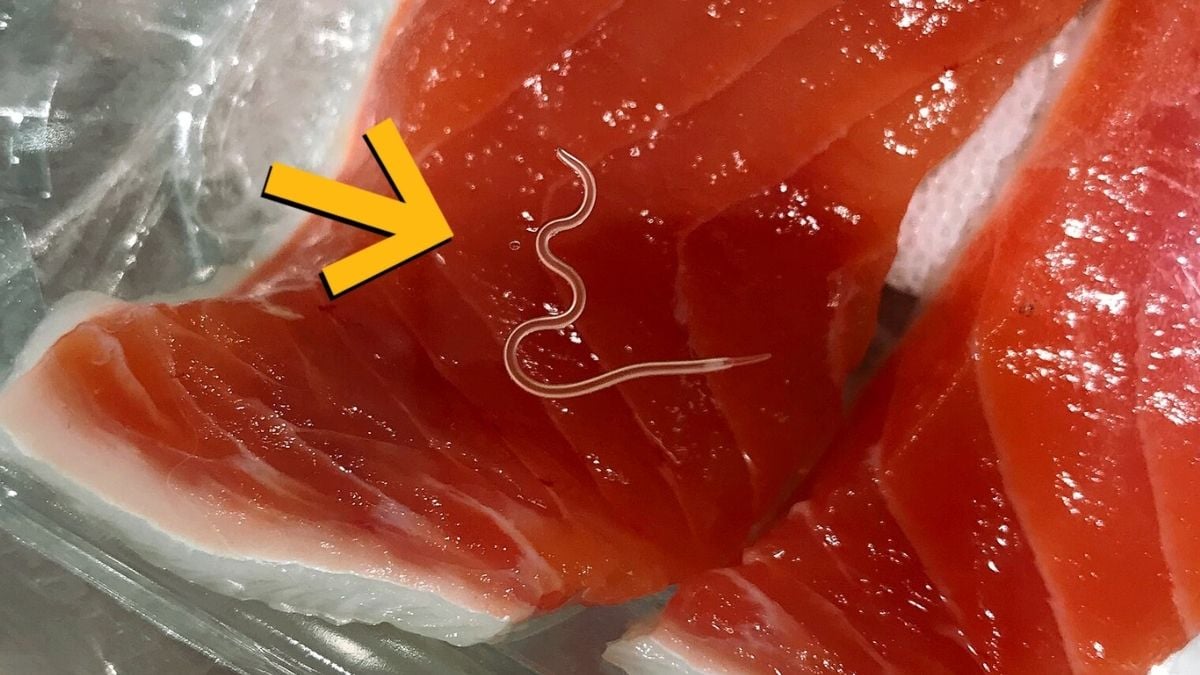
Anisakid parasite in chum salmon. (Togabi/Wikimedia Commons) A fatty tuna that is often used for sashimi or canning may be swimming with parasites more often than not.
When scientists at the Federal University of Santa Catarina in southern Brazil analyzed 53 locally caught fish, they found nearly all were contaminated by worms.
According to a brief communication published in Ocean and Coastal Research, the research team counted more than 1,600 little worms in total.
Using powerful microscopy tools as aids, they found that the kidney and heart were the only organs free of parasites in every fish.
Otherwise, the worms and their signs were everywhere.
Of the 53-fish haul, 96 percent were infected by parasites.
The intestines were the most heavily infected organ, followed by the muscle tissue – notably, the bit we eat – and then the stomach.
"These results highlight the importance of sanitary inspection," the study authors conclude, "and emphasize the importance of immediate evisceration to avoid the migration of larvae from the viscera to the musculature."
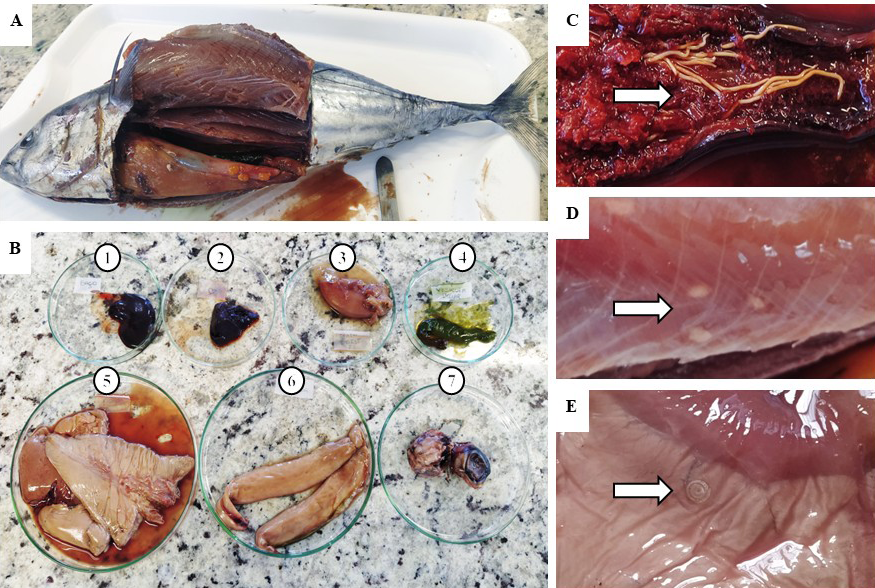
(A) Necropsied tuna; (B) Internal Organs: (1) spleen, (2) heart, (3) intestine, (4) gallbladder, (5) liver, (6) gonad, (7) eyes; Infected tissues: (C) Rhadinorhynchus sp.; (D) Trypanorhyncha; and (E) Anisakis sp. (Maia de Aquino et a., Ocean Coast. Res., 2026) The study from Brazil is small and covers only a single point in time, but it suggests that tuna in this region commonly host two worm genera: Trypanorhyncha and Anisakis.
Parasites and fish have evolved to coexist in the world's oceans, so it's not altogether surprising to find them in tuna.
What is eyebrow-raising is just how many worms were in each sample and how widely they were spread among the organs.
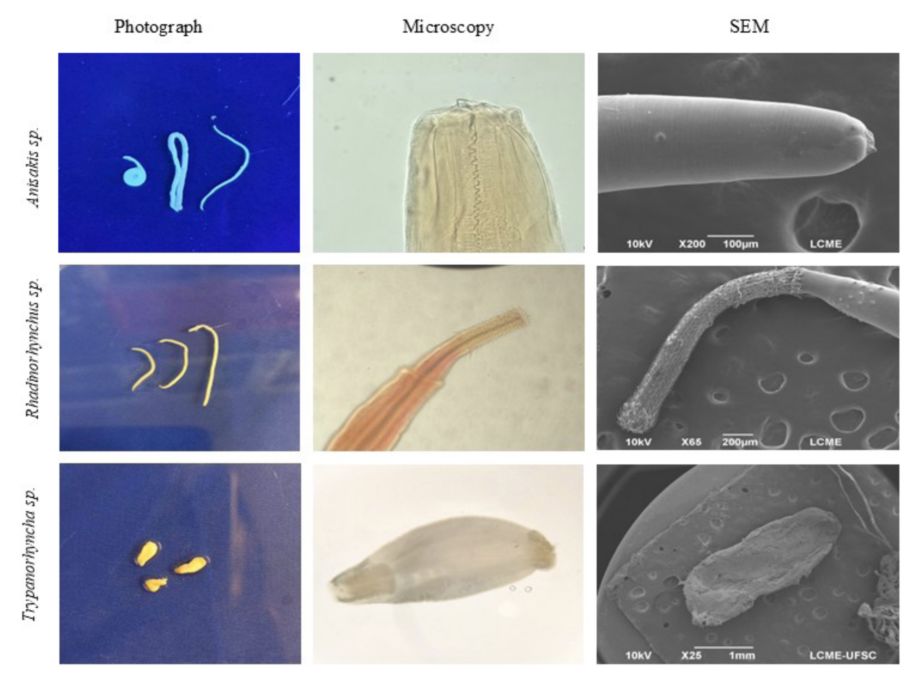
Morphological characteristics of parasites found in Katsuwonus pelamis. (Maia de Aquino et a., Ocean Coast. Res., 2026) The tuna species analyzed in the study is known as skipjack, oceanic bonito, or katsuo (Katsuwonus pelamis), depending on where you are in the world, and it has high commercial value.
It is the most abundant tuna species in Brazil and, in 2022, the third most-captured marine species globally. That year, 3.1 million tons of skipjack were caught and sold around the world.
Who knows how many parasites each one of those fish carried.
Tuna sold for consumption is usually carefully examined by seafood processors and sushi chefs, and visible parasites are thankfully removed. But the truth is that some tiny creatures inevitably sneak past our defenses.
VIDEO AT LINK...............
Indeed, parasitologists in the United States are studying worms hidden in expired cans of fish to track parasite numbers.
Before anyone goes throwing their tinned fish away, let it be known that accidental human infection with Trypanorhyncha larvae is rare, and not all species of Anisakis are recognized as causative agents of human disease.
When killed during the canning process, most parasitic worms are harmless to humans.
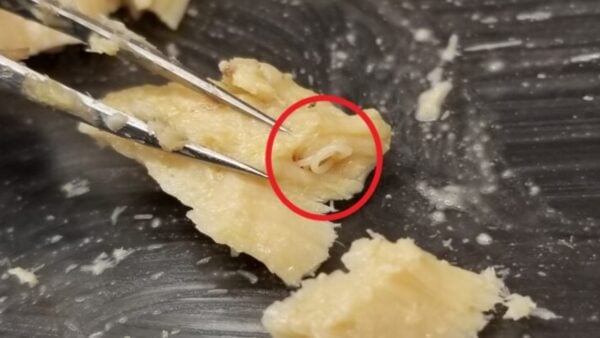
An anisakid worm in a canned salmon fillet. (Natalie Mastick/University of Washington) That said, if eaten in raw or undercooked fish, some species can latch onto the human intestinal wall and cause gastrointestinal symptoms such as abdominal pain, vomiting, nausea, or diarrhea.
Even if these parasites don't make someone sick, though, finding a worm in a can of tuna is enough to turn some consumers away.
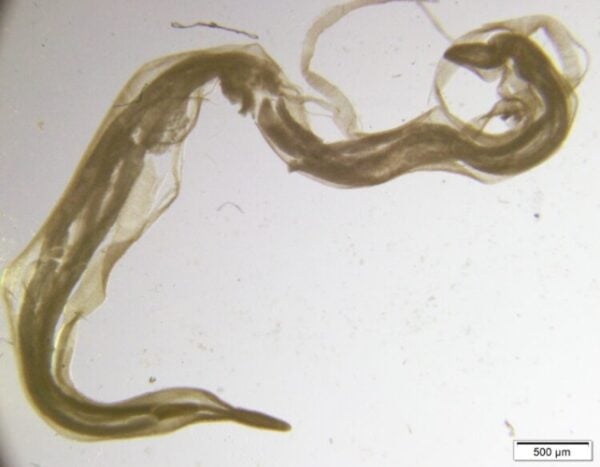
A highly degraded anisakid found in canned salmon. (Natalie Mastick/University of Washington) "Beyond their potential impact on human health," explain the researchers, "parasites can reduce the marketability and value of seafood products due to implications for food safety and quality, decreasing consumer confidence and causing economic losses for the fishing industry."
Parasites are often villified as agents of disease, but Chelsea Wood, a parasitologist at the University of Washington, says their presence can be a good omen, too.
VIDEO AT LINK............
"Everyone assumes that worms in your salmon is a sign that things have gone awry," said Wood in 2025.
"But the anisakid life cycle integrates many components of the food web. I see their presence as a signal that the fish on your plate came from a healthy ecosystem."
At this point, it's impossible to say whether this many parasitic worms in tuna is normal.
Studies on these fish parasites are scarce, despite their importance to fisheries worldwide.
In 2020, researchers at the University of Washington found evidence that Anisakis worms in raw seafood have increased 280 times since the 1970s.
On average, they explained, we have gone from finding less than one worm in every 100 caught fish to more than one worm in every single host caught.
But that isn't necessarily a bad thing for us or the marine ecosystem.
Parasites like Anisakis also infect fish, squid, whales, and dolphins. Their goal is not to end up in humans.
"My gut is that this is about the improvements we've made in marine mammal conservation," Wood told ScienceAlert in 2020.
"The time frame of our study directly overlaps with when a bunch of really important marine mammal legislation went into effect, like the Marine Mammal Protection Act in 1972 and the International Whaling Commission moratorium on commercial whaling, which came in the 1980s."
Related: Expired Cans of Salmon, Decades Old, Preserve a Huge Surprise
More research needs to be done tracking parasites, not only off the coast of Brazil, but in other key fishing regions around the world, to better understand how they are faring in a rapidly changing world.
For now, the average fish consumer should take their cue from Wood, a researcher well acquainted with the reality of eating fish.
"So if I'm being honest with you, there are worms in everything you eat," Wood told an audience at the Seattle Aquarium in 2020.
"But cooking kills the menagerie of parasites that we find in our food, and it's only when we eat raw or undercooked food that we wind up tangling with live and infectious parasites."
Besides, she added, "when you eat these parasites, you get to be part of a natural cycle that links plankton to fish to whales to you."
How… comforting.
The study is published as a brief communication in Ocean and Coastal Research.
This article was fact-checked by Michael Irving and edited by Michael Irving. While we pride ourselves on our process, we are only human. If you spot a mistake, please let us know.
Help is available.
“Experience Comprehensive Health with the Dr. Clark 3-in-1 Parasite Cleanse
Balances the intestinal environment*
Promotes ideal pH in the stomach to enhance digestion*
Helps maintain proper kidney function*
Detailed instructions are included with purchase.
The Dr. Clark 3-in-1 Kit includes the Digestive Aid, Clove/Wormwood/Black Walnut, and Kidney Health protocols. You may take all three cleanses at the same time—this will take 3 weeks to complete. However, if you are not accustomed to taking many potent herbs simultaneously, you can take each cleanse individually in the following order: Start with the Digestive Aid, followed by the Clove/Wormwood/Black Walnut protocol, and finish with the Kidney Health protocol.
Digestive Aid Protocol (view instructions here)
Stomach acid is essential in maintaining a healthy digestive system. It breaks down proteins, activates enzymes, and strengthens the acid barrier. And according to Dr. Clark, acids are important in helping sanitize food in the stomach, protecting the colon from bad microbes, and help maintain a balance of the live organisms in the colon. Betaine HCL support your stomach’s acid requirements for proper digestion.*
Digestive Enzymes go hand-in-hand with stomach acid when it comes to digesting food properly. When cooking and manufacturing destroys naturally occurring enzymes in food, the digestive system relies on the body to secrete the necessary enzymes to break down food. As with the body’s declining production of hydrochloric acid, natural production of digestive enzymes also decreases with age and illness.*
Turmeric and Fennel support optimum balance of good flora in the colon. Cascara Sagrada is a natural laxative and should only be used when experiencing occasional constipation.*
Clove/Wormwood/Black Walnut Protocol (view instructions here)
You can provide your body with the herbal support it needs to maintain good health despite dangerous critters. Our bodies have developed natural defenses to combat harmful organisms. The herbs in this protocol have been used traditionally to rid the body of such organisms. This protocol reestablishes a beneficial balance in the intestines that is so easily lost in due to unsanitary food and water, infected pets, and international travel. Ethnographic and herbal studies over recent years tend to support this traditional use of the herbs in this protocol.*
Kidney Health Protocol (view instructions here)
The kidney protocol helps to lighten the load on your kidneys through a synergistic blend of herbs, vitamins, and minerals traditionally used to flush out impurities and nurture the kidneys. It also helps to support your body’s ability to maintain proper functioning of the kidneys.*
The kidney protocol contains a synergistic blend of natural herbs: Hydrangea Root, Marshmallow Root, Gravel Root, Ginger Root and Uva Ursi. These carefully selected herbs provide a natural flushing action. By combining several different complementary herbs we greatly enhance each ingredient’s effectiveness. This protocol also contains Magnesium Oxide, which inhibits calcium from binding with oxalate and forming blockages, Vitamin B6 to help maintain healthy kidneys, and Freeze-Dried Parsley to encourage regular urine flow.*
To complete the series of Dr. Clark’s signature health programs, consider following the kidney health protocol with the liver health protocol.
To get the greatest possible benefits from our cleanses please consider the following carefully:
Stay on the ParaCleanse Weekly Maintenance Program for a minimum of 4 weeks to a year. The benefits are cumulative as the Maintenance Program continues to minimize the effects and limits the chances of being re-exposed. Dr. Clark believed that in order to gain 100% of the benefits from this protocol, it was best to stay on the Maintenance dose indefinitely. This helps free up your body’s energy for issues that need attention rather than relentlessly fighting harmful organisms.* . . .” . . .
The sake kills them.
I’ve always wondered what those round boney things are in a can of salmon or tuna.
Now I know.
I eat raw salmon sashimi pretty much every day and have done so for many years. It is king salmon from New Zealand, available at my local Wegmans supermarket. Never a single problem.
My mom would cook up a tuna fish hot dish and pass it off as chicken to my old man.
After one of those meals dad had to excuse himself early.
He later explained “It’s not that I don’t like it, it just doesn’t agree with me. She thinks I just don’t like it. I know she really likes it so I put up with it and don’t say anything when she cooks it. Which is rarely - because she thinks I don’t like it.”
I imagine these worms were in tuna 50+ years ago too when he told me that.
There is a reason God gave us cooking.
Protein is protein..................😉
I don’t eat canned fish very often, but the next time I do, I am NOT going to examine it for worms, because I’m afraid I might find one.
Don't think I would fry up a mess of parasites but once cooked they are generally harmless.
Well, in a canned fish the parasites are definitely dead........I think...............🙄
BRAVE AI:
Yes, worms can be found in canned fish, though they are harmless to humans because the high-heat canning process kills them. The parasites most commonly identified are anisakid roundworms (often called “sushi worms”), which are naturally present in many wild-caught fish species.
While the presence of these dead parasites may appear unappetizing, they pose no health risk to consumers. In fact, scientific studies indicate that their presence can signal a healthy marine ecosystem, as the parasites rely on complex food webs involving marine mammals and krill. Recent research on canned salmon from the 1970s to 2020s showed rising parasite levels in some species, correlating with the recovery of marine mammal populations.
Safety: The canning process involves thorough cooking that eliminates all viable pathogens, making the fish safe to eat.
Common Species: Salmon (chum, pink, coho, sockeye), tuna (particularly skipjack), and sardines are frequently cited as hosts for these parasites.
Prevalence: While rare in some commercial products due to quality control, parasites are natural and common in wild-caught fish; for example, recent studies found parasites in 96% of examined skipjack tuna.
Allergies: A small subset of individuals may experience allergic reactions to the proteins in these worms, even if the worms are dead.
Notochord, IIRC.
Global warming, obviously.
Fresh caught Alaskan Salmon certainly not “Scum?” salmon?
Pretty sure Star-Kist is not canning worms. I can’t think of a better way to kill their business.
.
Time to do a shot of apple flavored horse stuff.
A for real can of worms....
ivermectin is u’r friend
When folks ask me why I won't eat it and I tell them why, most of them, especially the sushi lovers, go quiet. Lolol!
👍👍👍
Disclaimer: Opinions posted on Free Republic are those of the individual posters and do not necessarily represent the opinion of Free Republic or its management. All materials posted herein are protected by copyright law and the exemption for fair use of copyrighted works.