Skeleton of a Bronze Age woman discovered at Karczyn-Witowy, PolandAdriana Romanska (AMU)
Posted on 03/11/2026 9:52:48 AM PDT by SunkenCiv
According to a statement released by the University of Gdansk, evaluation of the remains of people who lived in what is now north-central Poland between 4100 and 1230 B.C. has revealed how their diets changed from the Neolithic period to the Bronze Age. Using radiocarbon dating, DNA analysis, and stable isotope measurements of carbon and nitrogen, a team led by Łukasz Pospieszny of the University of Gdansk suggests that Corded Ware communities of the late Neolithic period herded their animals in forests and wet river valleys. After several hundred years, however, their diet began to resemble that of nearby farmers, who kept their animals on open grasslands. The chemical composition of bone collagen from the remains shows that some communities began to consume broomcorn millet as a staple crop around 1200 B.C. These people also buried their dead differently than other communities living in the region who did not rely on millet, suggesting that food choice may have been tied to local identity. Analysis of bone collagen from people who lived during the Early Bronze Age detected variations in nitrogen isotopes, indicating that some people ate more animal protein than others. This could reflect the emergence of a ruling elite, the researchers concluded. Read the original scholarly article about this research in Royal Society Open Science. For more on the Corded Ware culture, go to "Canine Couture."
(Excerpt) Read more at archaeology.org ...
Skeleton of a Bronze Age woman discovered at Karczyn-Witowy, PolandAdriana Romanska (AMU)
Poland created the bagel.
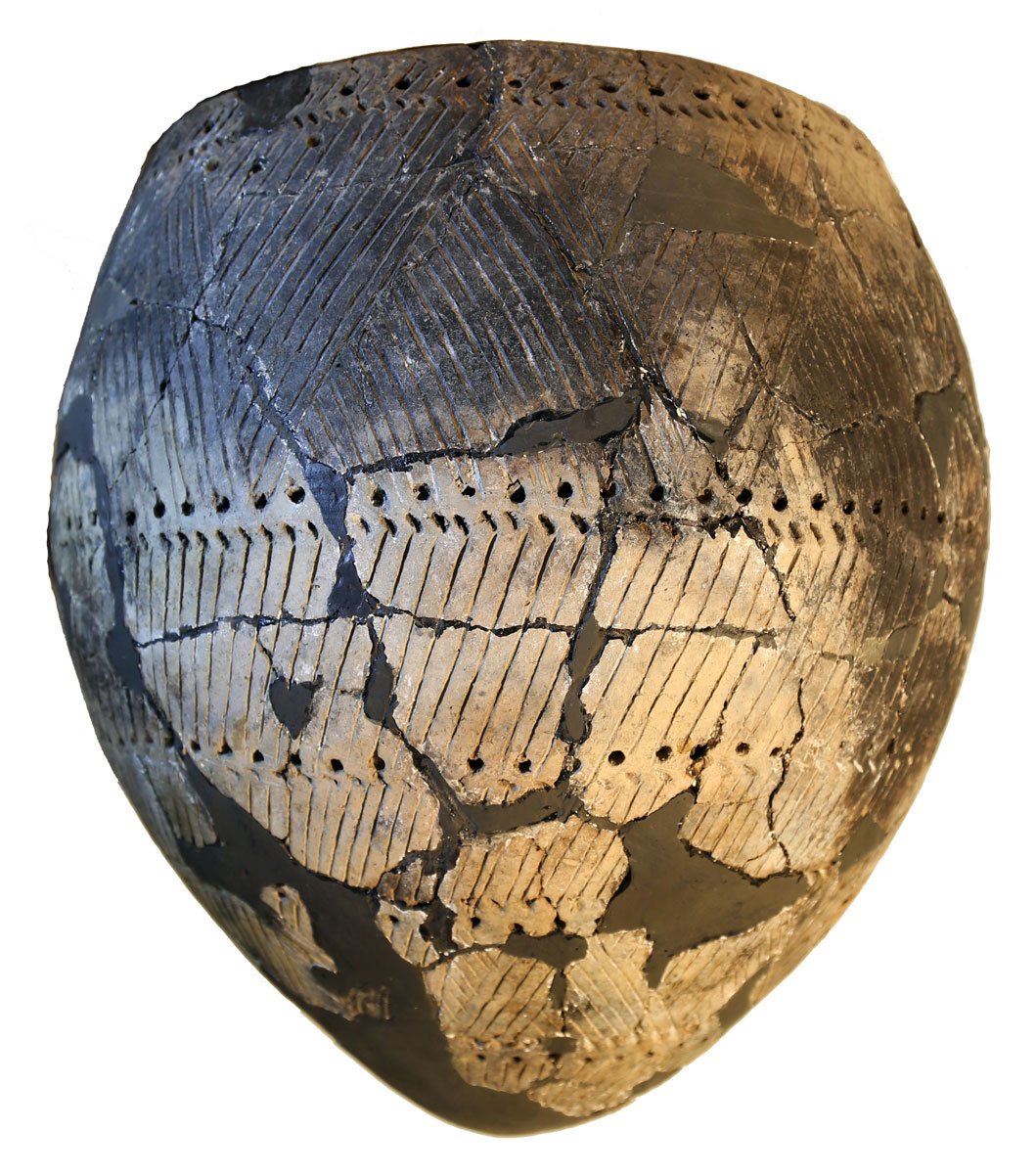
According to a statement released by the Public Library of Science, Lara González Carretero of the University of York and her colleagues analyzed residues in 58 pieces of pottery unearthed at 13 different archaeological sites in northern and eastern Europe. The pottery was dated to between the sixth and third millennia B.C. The scientists employed scanning electron microscopy to look for traces of plants in addition to chemical analysis of fatty residues left behind by animal foods. They detected traces of a wide variety of plants, including grasses, berries, leaves, and seeds, that had been cooked with a variety of seafoods and meats. The ingredients in these complex meals varied by region according to what would have been locally available, González Carretero said. Read the original scholarly article about this research in PLOS One. To read about a study of food residues on pottery used by Indigenous Brazilians some 4,000 years ago, go to "Something's Fishy."Residue samples were taken from Mesolithic vessels such as this one for analysis.
Lara González Carretero
When did the pierogi era start?
Paczki, Pasties, Pierogis...
Or some people traded with hunters for meat?
Perhaps some raised animals?
Smacznego!
Easy...really low cal and healthy...until you add the butter, onions and top them off with sour cream.
I'm frying potatoes this morning...and I have sour cream...need I say more?
OMG!! Over 3,000 years there were dietary changes in Poland, amazing!!!!! /sarc
Until someone looks, no one knows. /fact
Conditions change whether or not someone looks, and it does not take a great education to understand that.
All the “discovery” showed was what a good general understanding of human history already knew would be the case - conditions change and humans adapt and respond to them, including what humans eat; its not a mystery.
The Poles also created aces during WWII Battle of Britain, RAF Squadron 303,(Neanderthals playing pocket pool) :

“Repeat, Please”
For the non-cognoscente: https://www.bing.com/videos/riverview/relatedvideo?q=battle+of+britain+repeat+please&mid=86C8EE00AFBA4A9CADF086C8EE00AFBA4A9CADF0&FORM=VIRE
Impressive archeological work; now maybe they can find out who stole the kishka.
imho, one during that period came from the population that arrived from the steppe around today’s Ukraine. They were steppe herders. they were big consumers of dairy products.
No, not general, very specific. IOW, you don’t know what you’re talking about.
Perhaps some people were better hunters than others? /s
The blockheadedness of supposedly smart people never fails to amaze me...
This is really life changing! I cant tell you how much I wondered what dietary changes in the people who lived in Poland from 4100BC to 1200 BC were.
Disclaimer: Opinions posted on Free Republic are those of the individual posters and do not necessarily represent the opinion of Free Republic or its management. All materials posted herein are protected by copyright law and the exemption for fair use of copyrighted works.