Skip to comments.
How This Gem Could Be The Future Of Technology [45:38]
YouTube ^
| August 2, 2025
| Progress - Science Documentaries
Posted on 12/24/2025 7:11:51 PM PST by SunkenCiv
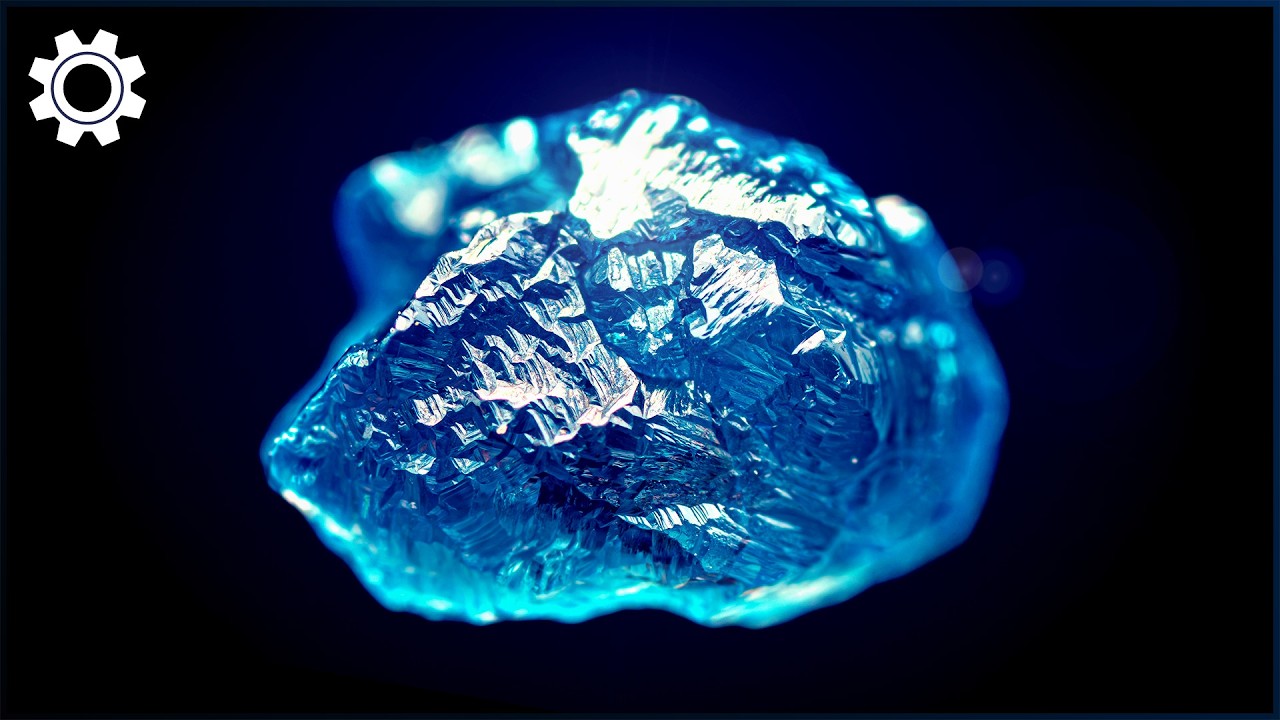
Diamonds aren't just for jewelry. From their cosmic origins in dying stars to their formation deep within the Earth, these gems possess unique properties that could revolutionize our world. This documentary uncovers the science behind both natural and man-made diamonds, exploring how scientists are creating "super diamonds" that are tougher and more efficient than anything found in nature. Discover how these new diamonds could replace silicon in our electronics, power space exploration, and usher in a new technological age. How This Gem Could Be The Future Of Technology | 45:38
| 284K subscribers | 777,488 views | August 2, 2025
(Excerpt) Read more at youtube.com ...
TOPICS: Astronomy; Business/Economy; Science
KEYWORDS: astronomy; business; diamonds; electronics; science; spaceexploration
1
posted on
12/24/2025 7:11:51 PM PST
by
SunkenCiv
YouTube transcript reformatted at textformatter.ai
Diamonds aren't just for jewelry. From their cosmic origins in dying stars to their formation deep within the Earth, these gems possess unique properties that could revolutionize our world. This documentary uncovers the science behind both natural and man-made diamonds, exploring how scientists are creating "super diamonds" that are tougher and more efficient than anything found in nature. Discover how these new diamonds could replace silicon in our electronics, power space exploration, and usher in a new technological age.
Welcome to Progress - the home of engineering marvels, space exploration and history's greatest inventions. From rockets that took us to the stars to the world's most advanced military vessels, we'll be bringing you world-class documentaries every week.
Do you love uncovering the past, exploring historic sites, and venturing to distant lands? Join History Hit today and stream hundreds of exclusive documentaries, with new releases every week. Plus, enjoy ad-free access to our podcast network for even more history every week. Sign up to History Hit to start watching now https://bit.ly/45CPh5u
This channel is part of the Little Dot Studios Network. For any queries, please contact owned-enquiries@littledotstudios.com.
Diamonds: The New Diamond Age
Diamonds, 4 billion years old, and they still dazzle us. But these rocks aren't just for show anymore. Hidden inside are powers that could change your life. The future of diamond is very exciting and opens up what many of us have been calling the new diamond age. To reach that shining future, scientists have to outdo nature and build a better diamond. The new synthetic diamonds, that's a technology that's going to take us places we've never been before. It's a dazzling challenge. Can science do the unnatural and make a super diamond?
[Music]
Diamonds are like no other substance. They're four times harder than any mineral on the planet. They resist corrosion. The best are completely transparent and they conduct heat. Some can conduct electricity. What you have is a material such as diamond that has a fantastic range of unique properties. And it's the combination of these unique properties that makes diamonds special. If science can harness the powers of these stones, it could revolutionize our lives. From the microchips in our phones to the machines that explore space, they'd be super durable. They'd last forever. They'd be resistant to heat and cold and the other kinds of extremes.
It's said diamonds are forever, but they aren't. Most contain natural flaws. Flaws that can't withstand extreme heat and pressure. To transform technology, science must do something unnatural: create the ultimate diamond in the lab. Nature is the guideline and the question is can we improve upon it? The race now is to produce a super diamond. A super diamond would have all the properties of a natural diamond but could be manufactured in any shape or size. Most of all, they would mimic the properties of the rarest gems, like this one, the Hope Diamond. Perhaps the world's most perfect natural diamond. It's kept behind bomb-proof glass in the Smithsonian Institution in Washington, DC. At 45.12 carats, this gem is over 100 times bigger than the average diamond ring. It's one of the largest and most valuable diamonds ever discovered, worth around $250 million.
But that's not all. This gem has some unusual properties that highlight what makes diamond so special. Jeffrey Post, the curator of the National Gem Collection, is researching this stone. In the lab, he demonstrates a phenomenon that sets the Hope Diamond apart from most others. We can take an ultraviolet light and we can expose the Hope Diamond to the ultraviolet light and we'll leave it on for about 10 or 15 seconds. Also notice that one of the white diamonds on the outside fluoresces very bright blue. And so now we're going to turn the room lights off. And I'll turn off the ultraviolet light. And we can see the intense orange glow, the property called phosphorescence. For years, this glow was attributed to a curse cast over the diamond when it was stolen from an Indian temple centuries ago. But Post isn't superstitious. So here you've got supposedly a cursed diamond that glows this blood red color. Well, you know, that's a great story in itself, but then the scientist in many of us says, "Well, why does it do that?" Post and his team investigate using a spectrometer, an instrument that analyzes wavelengths of light. The spectrometer shows that the Hope's distinct hue comes from two colors, aqua and red. The team can now identify two chemical elements in the diamond: boron and nitrogen. Suddenly now I understand what is going on. When this diamond is phosphorescent, boron makes the stone blue. When combined with nitrogen, the stone shines red. Chemicals, not a curse, make the Hope glow.
[Music]
It's not the red glow that excites scientists, but the element that makes the Hope blue: boron. Boron does more than color diamonds. It also allows them to conduct electricity. Blue diamonds, because of the boron present in them, are in fact semiconductors of electricity, which makes them very different than other diamonds that are pure carbon. Pure white diamonds are electrical insulators. Try to pass a current through them and nothing happens. But blue boron-rich diamonds like the Hope are electrical conductors. The extra atoms of boron interact with the existing diamond atoms letting an electrical current pass through.
But all diamonds, not just blue diamonds, have another useful property. They transfer heat better than any material known. If science could make synthetic diamonds that both conduct electricity and transfer heat, they could revolutionize a critical component of daily life, the semiconductor. Semiconductors are the vital component in nearly every electronic device in transmitting electricity to the precision control of microchip technology. For the past 50 years, these devices have been made almost exclusively from silicon. But silicon has a major drawback. The more electricity it carries, the hotter it gets. The result, most silicon chips require complex cooling technology. If they exceed about 300° F, they'll shut down.
One of the huge hurdles that are facing manufacturers is that they have to be able to remove the heat away from these electronic systems. You know, think of your own laptop at home as you're operating it. It gets hot and so this becomes a big problem. Right now, they're using metals mostly to do that. But diamonds, in fact, are much better conductors of heat than metals are. With the discovery that blue diamonds transfer heat and conduct electricity, scientists can imagine the unimaginable: a world beyond silicon. A world where everything from your cell phone to a spacecraft runs on diamonds. Diamonds can carry 30 times more power than silicon and operate three times faster. And they're so efficient at transferring heat, they could run a computer at speeds that would melt a silicon chip. They also resist temperatures over 1,800° F.
[Music]
To be able to coat electronics with diamond or use pieces of diamond as the heat sinks would certainly offer a whole new direction for the manufacture of even smaller, more powerful electronic devices. Despite their eye-catching sparkle, diamond's real potential has been overlooked for centuries. The possibilities for technology are almost endless. But there's one problem. Diamonds are rare and expensive. Natural semiconducting diamonds like the Hope are thousands of times more rare, and they don't come in the right shape or size for industrial use.
So scientists are trying to create a synthetic super diamond with all the powers of a natural blue diamond but in a size and shape of our design. To succeed in creating a super diamond, scientists must first discover how nature made hers. And for the answer, they look to the stars.
For scientists to create a synthetic super diamond, they must first get back to basics and investigate the ingredients of a natural diamond. For all their rarity, diamonds are made from one of the most familiar elements on Earth, carbon.
[Music]
Carbon is so fundamental. It forms the basis of everything around us. Even we are 18% carbon. It's so common it's estimated that our planet contains over 100 million billion tons of it. But carbon doesn't originate on Earth. It comes from long ago and far away: a star on the brink of death, a red giant. Astrophysicist Neil Degrasse Tyson studies carbon's dramatic formation. Well, the universe is born without any carbon. Our sort of birth ingredients are hydrogen and helium and just trace amounts of lithium. So carbon comes later. Carbon is forged in the cores of stars. This red giant star once looked like our sun. But as it ages, it grows over a thousand times bigger. Instead of glowing white hot, it glows red as it reaches the end of its life. It's running out of fuel.
[Music]
Its core is now composed almost completely of helium. In its death throes, a nuclear reaction in the core breaks down helium and fuses it together in a new configuration: carbon. Dying red giants are the universe's carbon factories. Eventually, the star explodes in a white hot flash so strong that billions of tons of carbon are flung out into the farthest reaches of space. What happens is the star collapses and the entire core in response to this collapse rebounds and explodes. Titanic explosion we call a supernova and its guts are scattered everywhere. And it's a spectacle. It's so much of a spectacle that you can see these stars explode halfway across the universe.
In time, the vast cloud of debris from the explosion is pulled into orbit around a new star. As this debris spins, it clumps together. Over millions of years, these clumps grow and planets begin to form. This is how our solar system and our planet itself was born. And it's why Earth holds the raw ingredient for diamonds buried deep in huge quantities: carbon. For scientists hoping to create a super diamond, a problem. The form carbon usually takes is weak. Carbon in its most familiar form is graphite. Great for pencils, but far too soft for high-tech products.
Bob Hazen, research scientist at Washington DC's Carnegie Institution, is an expert on carbon and diamond formation. You know, it's amazing. Diamond and graphite are made out of the same element, carbon, but they're so vastly different. Graphite has these planes of weakness. And you can see how every one of these black dots, the carbon atoms, are connected to three other carbon atoms in a triangle. But in diamond, every carbon atom is now connected to four adjacent. And this trellis, this network, this lattice, makes diamond strong in every direction. That's the difference. For scientists hoping to create a super diamond, making it hard will be tough. They have to recreate a diamond's lattice-like structure. To do that, they have to figure out how nature turns basic carbon into a dazzling diamond.
Scientists are on a quest to figure out how to make a super diamond. Their search begins here, South Africa, diamond capital of the world. Diamonds were discovered in these rocks in the 19th century. Hundreds of thousands have been mined here, but only recently did scientists learn how they actually formed. Professor Steve Hagerty is an expert on how diamonds are created. Diamonds were a real mystery in terms of their origin. They were found in clusters. So, you found one diamond and by golly, there would be others to be found as well. So that led to the notion that the process in which the diamonds were brought to the surface was possibly deep. Diamonds form deep within the earth in an area called the mantle, the layer between the earth's crust and its superheated core.
Down here, intense pressure changes the molecular structure of carbon by crushing its atoms together and forcing them into a new lattice-like structure. Under extreme pressure and temperatures, carbon becomes diamonds. The temperatures have to reach about 1500° centigrade and the pressures about 50 kilopascals. That's 2,700° F. And the weight of over 4,000 grown men standing on your foot. The journey from a dying star to a diamond mine is almost complete. 100 miles still remain between their source in the mantle and the Earth's surface. Luckily, they're fast-tracked to the surface by a substance called kimberlite. Kimberlite is a rock. It's the host rock to diamonds. Even though the diamonds do not form in the rock, it's the transporter. Kimberlite is a volcanic rock that forms deep within the earth. As it moves to the surface, it creates a carrot-shaped pipe filled with molten rock, mantle fragments, and diamonds. When it breaks through the crust, it erupts in small but violent volcanoes. I like to think of these as volcanoes of opportunity. These rows, they picked up the diamonds from their safe deposit boxes deep in the earth about 200 km down and then were explosively erupted. At the surface, magma builds up a mound of volcanic material that eventually cools and hardens. Hidden within the rock are diamonds, incredibly rare, perfectly formed crystals surrounded by kimberlite.
[Music]
Rarer still are blue boron-rich diamonds like the Hope. Less than 1 in 100,000 born this way. 4 billion years from a dying star to the earth's surface. Yet in a matter of days, scientists aim to turn raw carbon into super diamonds. In order to produce anything of that nature, it would require extraordinarily high temperatures and pressures. It turns out that it's not very easy to transform graphite into diamond. The attempt began in the 1950s when General Electric launched Project Super Pressure. Their goal was to create the first synthetic diamond. They developed machines to crush graphite at nearly 800,000 lb per square inch and heat it above 2,500° F, replicating the very forces in the Earth's mantle. It takes 5 years and millions of dollars, but finally in February 1955, GE announces they've done it: the world's first synthetic industrial diamond.
Over 50 years later, just outside Johannesburg, South Africa, a lab called Element 6 continues the quest for synthetic diamonds. Following GE's lead, they synthesize diamonds on a mass scale, not for jewelry, but for heavy industry. Scientist Richard Bodkin is a pioneer of industrial diamond research. We have banks and banks of presses that are capable of producing diamonds in no fewer than 45 minutes. To see such technology room after room is absolutely amazing. The diamonds they produce start as a highly pure form of graphite powder. It's baked inside a pressure chamber between 2,500 and 3,600° F. Effectively, you're stacking 20 sedan motor cars on it and heating it between 1,400 and 2,000° C. The result is a diamond 50% harder than those found in nature. And Element 6 can produce handfuls. These diamonds have revolutionized the drilling and mining industries. The friction from drilling into hard rocks like granite generates high temperatures that can damage ordinary drills. But diamond tip drills transmit heat away from the drill tip. Oil and gas drilling benefits immensely from diamonds simply because we can drill faster and deeper with diamonds.
One shortcoming: industrial diamonds are small.
[Music]
The next challenge is to create diamonds large enough to be printed with circuit boards or shaped into other high-tech devices. It's a challenge that the Sarasota, Florida company Genesis is tackling. Using a special machine, they actually grow large diamonds.
Super Diamonds
They start with a seed, a microscopic diamond, either natural or artificial, and surround it with graphite. It's a delicate process that shows how hard it is to create large diamonds. In charge of the process is Chief Operating Officer Clark Mchuan. We take graphite and we put it along with an actual diamond seed into an environment that emulates what happens within the Earth. These two forms of carbon, the diamond seed and the graphite, are placed inside the chamber where they're heated and crushed by a powerful hydraulic press.
As you apply that temperature and pressure, what happens is that graphite turns into individual carbon atoms and those atoms permeate down and find that diamond seed and attach to it. It acts as a template. As the graphite melts, it releases carbon atoms which crystallize on top of the diamond seed. Molecule by molecule, the diamond grows. What nature does in 4 billion years, they do in 4 days. The result is a large artificial gem up to three times larger than the seed.
With this breakthrough, scientists can now consistently make large diamonds. But the real breakthrough that scientists need is yet to come. Genesis can't grow diamonds in the shapes needed for high-tech use. We haven't gotten there yet, but we're constantly working on improving the process and making larger and better quality diamonds. Scientists are trying to create a large diamond with all the properties of a real diamond, but in shapes and sizes not found in nature. From circuit boards to scalpel blades, the uses could be endless.
As scientists struggle to perfect the diamond, a clue hurdles toward Earth from an unlikely place. After years of research, scientists discovered how to make gem-sized diamonds. One hurdle remains to making a true super diamond: making them in any shape and size. Science needs a breakthrough, and it comes from space.
These strange objects look like burnt stones. They've been found in South America and Central Africa. Tests reveal a surprise: the stones are actually diamonds—black diamonds. These are two of the famous black diamonds called carbonado because of the similarity to charcoal. Carbonado has been known for centuries, but how it forms remains a mystery. Only recently has its potential value to science emerged.
George Harlo of the American Museum of Natural History is investigating what makes carbonado so special. Carbonado is a conundrum because it doesn't have the characteristics that we associate with diamonds that formed in the mantle on Earth. Diamonds originating in Earth's mantle form under immense pressure and high temperature, so they're compact and dense. Not black diamonds.
Using a microscope, scientists find they're riddled with holes. It's got a lot of void space in it. Now, deep within the Earth, the void would have to be filled with something. Well, the something ain't there. Normal diamonds contain very little void space. As they form deep in the Earth, they're crushed into a single crystal. Carbonado seems to form differently. Unlike normal diamonds, it's composed not of one crystal, but millions, all linked together. Scientists conclude carbonado formed not under high pressure like normal diamonds, but low pressure.
But just where does carbonado come from? Once again, research leads to the last gasp of a dying red giant. The current theory for the origin and genesis of carbonado is that these small diamonds formed in supernova explosions.
Hagerty believes the vacuum of space explains carbonado's unique structure. The diamonds were hot at one diamond bashing into the other, and they finally became glued to form a larger diamond. During its explosive formation, specks of mineral dust are also trapped, making the large diamond appear black. The diamonds are then transported to Earth by a meteorite. When the meteorite hit, it showered diamonds. So, this must have been a truly amazing sight with carbonado diamonds being liberated from the meteorite on impact.
It's not just the large size of space diamonds that fascinate scientists. Carbonado has another advantage over regular diamonds. Its multi-crystal structure makes it not only larger but tougher. It's almost impossible to cut. Not so a natural diamond. Although it's one of the hardest materials known, it has its weaknesses.
You know, diamond's incredibly hard, but it can be broken along certain planes. They're called cleavage planes. And it just happens that there are certain directions in diamond where there are fewer strong bonds, and that's the direction the diamond opens. A natural single crystal diamond will split cleanly where its chemical bonds are weakest. By following this cleavage plane, a gem cutter can split the stone perfectly. For scientists, this weakness in single crystal diamonds is a fatal flaw. Diamonds that might fracture aren't durable enough for high-tech use.
The key to making a tough super diamond lies in replicating carbonado's multi-crystal structure. Their theory of how carbonado forms in the vacuum of space yields another breakthrough: a whole new way to make diamonds. The space diamonds have now taught us that, in fact, we don't need pressure at all. That's going to be done in a vacuum. Carbonado sets the stage for a new kind of super diamond—one tougher and larger than ever that can be made into multi-crystal shapes not found in nature. The key is using low pressure to simulate the vacuum of space.
How do you make a diamond in a vacuum when diamonds are only stable at high pressure? And the way you do it is by fooling the carbons into being so energetic, so excited that when you cool them down, they find a more stable configuration. And the first one they find is diamond, and they don't go any farther. This process is called chemical vapor deposition, CVD for short.
It begins with a tiny diamond seed sealed inside a vacuum chamber slightly below atmospheric pressure. The chamber is heated to 3,600°F. Then methane, a carbon-bearing gas, is pumped in. Then hydrogen. The gases are bombarded with microwaves, which agitates them, forcing the hydrogen and methane molecules to collide. This process releases a cloud of carbon atoms that settle on the seed, and gradually the diamond grows. This was the seed they started with. 24 hours later, it doubles in size.
At the US Naval Research Laboratory in Washington, DC, James Butler is taking this CVD process to the next level. They're growing not single stones, but wafer-thin diamond sheets. One of the materials we grow starts with a non-diamond material, for example, a silicon wafer onto which we put a very thin layer of these little diamond seeds. Think about shaking salt onto the kitchen table and having a whole bunch of salt crystals there. And then put them in the CVD environment, and they will grow. And as they grow together, they bump into each other and they become this mass. So it's all diamond but with many different grains of different orientations. Each diamond crystal bonds to another to form a mesh of crystals across the wafer less than a 50th of an inch thick. They can be made up to 8 inches wide. The shape of the template determines the shape of the diamond sheet. Perfect for making a wafer to replicate silicon. They're much tougher than natural diamonds. They conduct electricity and resist extreme heat. These are true super diamonds.
Super diamonds have been filmed with image intensifiers that show how much more efficient diamonds are at conducting heat than the copper traditionally used in electronic components. The left plate is made of synthetic diamond. On the right, copper. The two plates are placed in ice and attached to a thermal image intensifier, which records heat as it travels through an object. As the diamond plate on the left shows, it conducts heat faster than copper—up to five times faster.
It's this unparalleled quality that puts the super in super diamond. Scientists are excited. For the first time, they have a material that could challenge the domination of silicon. Microchips made from diamond wafers can run electronic devices at higher speeds and with more power without overheating. Faster, smaller, and more efficient. Razor-thin computers, long-lasting cell phones, and picture-perfect TV screens. I think the future of diamond is very exciting. Particularly, I think CVD diamond opens up what many of us have been calling the new diamond age.
Electronics are only the beginning. Today, scientists can make diamonds in shapes and sizes for uses that could revolutionize tomorrow. Researchers at the Carnegie Institution in Washington are trying to solve some of science's biggest mysteries. From how compressed gas can conduct electricity to how microscopic life can survive in extreme conditions. These investigations need extremely high pressures, which they create using a powerful vice called a diamond anvil cell. It squeezes an object between two diamond tips, creating a tiny environment of high pressure between them. It can recreate forces as extreme as pressure in the center of the Earth. For the Carnegie team's experiments, this wasn't extreme enough. But when they pushed the pressure higher, they hit a snag. The diamond shattered.
Russ Hemley, director of the Geophysical Lab, decided to upgrade the anvil by making an ultra-hard super diamond. Well, our group has been very interested in using diamond for high-pressure experiments for many, many years. And we basically needed to take this to the next level. We needed better diamond, stronger diamond, larger diamond than could be provided by Mother Earth or from conventional processes. To create his super diamond, Hemley used a version of the CVD method to speed up the growth rate. The team then exposed the crystals to a high pressure, high temperature treatment to further harden them. The result: another leap forward for super diamonds. The diamond not only grew many times faster, it also grew bigger—15 carats. In just six days, they created a stone one-third the size and 50% stronger than the Hope Diamond, a gem that took nature billions of years to forge. The new super diamond was so tough it broke Hemley's hardness gauge.
When used in the diamond anvil, this new super diamond proved the breakthrough he needed. This can produce pressures that are millions of times the pressures found at the surface of our planet. Now he can simulate forces so extreme they've never been studied before, like those deep in the Earth's mantle where pressures reach up to 300 kilobars. That's nearly 20 million pounds per square inch. This improved instrument lets Hemley study some of our biggest questions, like, is there life in outer space?
Hemley's team takes two common strains of bacteria, including E. coli. They place them in a liquid and crank up the super diamond anvil. The liquid turns into a dense form of ice. Under the intense pressure, most of the bacteria are destroyed, but incredibly, 1% survive. If bacteria can survive these harsh conditions, maybe life exists in outer space, perhaps on other planets.
Thanks to super diamonds created under low pressure, diamonds will reshape the future. Super diamonds will change communications everywhere, especially on the battlefield. In constant use and battered by the elements, equipment like radios often break down in the harsh conditions of combat. But imagine if they were made of super diamonds. Already they can be shaped into tiny sound transmitters called nano resonators, making vital radios and computers more robust and efficient. They can vibrate up to 100 billion times per second to create the highest quality sound yet achieved. Yet they're tough as nails. All this from a diamond a thousand times smaller than the width of a human hair.
It's not just soldiers who will benefit. Diamond resonators will eventually be used in everyday devices like cell phones, allowing longer talk time and crystal-clear reception. The same sparkle that attracts us to diamond jewelry reveals another of its secrets: its clarity. It's transparent to light. It slows down light that passes through it. As light enters a diamond, the dense carbon structure slows it down to less than half its normal speed. As it reflects inside the stone, the light appears to hang around longer. You can actually force light to completely internally reflect and come out at some other angle. That's why diamonds look radiant because light comes in from one direction and comes out another. It makes you think it's generating its own light, but it's not. All it did was redistribute the light coming in from other angles. It's remarkable. Now you know why diamonds sparkle.
The unique optical clarity of diamond is the perfect material for high-tech optical uses. Diamond is transparent across a huge spectrum of light. From ultraviolet to infrared, it's the only substance through which light passes virtually unaltered. From super diamonds, NASA can make super hard, super clear windows. The possibilities for super diamonds are endless. Soon you may find a diamond everywhere from your desk to your galaxy. The future of diamond—we're just seeing the very beginning of it. And I mean, the stars are the limit when it comes to what we're going to be able to do with diamond in the future. Nature took billions of years to perfect the diamond. Now we make super diamonds in days. Tougher, bigger, and better.
The new synthetic diamonds—that's a technology that's going to take us places we've never been before. It's going to take science in new directions. It's going to allow us to do things we could never do before. So the natural diamond, we treasure that as an object; the synthetic diamond will give us knowledge. Like steel, transistors, and silicon, synthetic diamonds could revolutionize life. Welcome to the age of super diamonds.YouTube transcript reformatted at textformatter.ai
2
posted on
12/24/2025 7:14:20 PM PST
by
SunkenCiv
(Merry Christmas to all, and to all a good night!)
3
posted on
12/24/2025 7:14:44 PM PST
by
SunkenCiv
(Merry Christmas to all, and to all a good night!)
The most recent (2021-2025) of the 'diamonds' in-title search and keyword topics, sorted:
4
posted on
12/24/2025 7:15:37 PM PST
by
SunkenCiv
(Merry Christmas to all, and to all a good night!)
To: SunkenCiv; dfwgator; Red Badger; null and void
Diamonds are Forever
Somewhere in this town,
Willard Whyte is playing
Monopoly with real buildings
5
posted on
12/24/2025 7:19:42 PM PST
by
SaveFerris
(Luke 17:28 ... as it was in the Days of Lot; They did Eat, They Drank, They Bought, They Sold ......)
To: SunkenCiv
Bah...I’m invested in a dilithium crystal mine!
6
posted on
12/24/2025 7:25:32 PM PST
by
xp38
To: SaveFerris
🕵️🕵️♂️🕵️♀️ Bond movies are all pretty crappy, but love the action in ‘em. DAF is often listed as the worst one, but the two supervillains Mr. Wint and Mr. Kidd, are pretty close to being my favorite Bond villains ever. 🦹🦹♂️🦹♀️
7
posted on
12/24/2025 7:25:37 PM PST
by
SunkenCiv
(Merry Christmas to all, and to all a good night!)
To: xp38
Good move!
I had some shares in a helium drilling company, but the stock float [rimshot!] was too small, the shares were under a buck (still are), it’s a Canadian company (go-go accounting), and, well, it’s a drilling company.
One of my favorite ST:TNG episodes was the one with the baryon sweep and the crooks who infiltrated to steal trilithium resin, Picard trapped while trying to retrieve his saddle, etc. [Starship Mine]
8
posted on
12/24/2025 7:29:54 PM PST
by
SunkenCiv
(Merry Christmas to all, and to all a good night!)
To: SunkenCiv
Loved them all up to Daniel Craig
Now A View to a Kill isn’t the best
but is has about the only Duran Duran
song I can stand (once in awhile)
Oh that one with Halle Barry - yawn
9
posted on
12/24/2025 7:38:42 PM PST
by
SaveFerris
(Luke 17:28 ... as it was in the Days of Lot; They did Eat, They Drank, They Bought, They Sold ......)
Barry Berry
Bery overrated
10
posted on
12/24/2025 7:39:46 PM PST
by
SaveFerris
(Luke 17:28 ... as it was in the Days of Lot; They did Eat, They Drank, They Bought, They Sold ......)
To: SunkenCiv
Diamonds are Forever
Budget
$7.2 million[3]
Box office
$116 million[3]
Not bad - oh my THAT’S Crispin Glover’s father?
Wow 😲
The other guy is still alive
So is Jill St. John
AND Robert Wagner
11
posted on
12/24/2025 7:50:42 PM PST
by
SaveFerris
(Luke 17:28 ... as it was in the Days of Lot; They did Eat, They Drank, They Bought, They Sold ......)
To: SaveFerris
12
posted on
12/24/2025 7:56:10 PM PST
by
SunkenCiv
(Merry Christmas to all, and to all a good night!)
To: SunkenCiv
Ever read Arthur C Clarke’s 4 book Odyssey series?
2001: The Monolith makes it’s appearance to modern man who’s achieved spaceflight, and discovers it buried on the moon. They dig it up, and when the sunlight hits it for the first time in millions of years, it fires a signal towards Jupiter. They investigate onboard the Discovery. In the end, the Monolith becomes merged with David Bowman -last survivor of Discovery.
2010: The unmanned derelict Discovery shows her orbit between Jupiter and Io to be erratic. The Leonov is sent to investigate. Giant Monolith found and vanishes. A Chinese ship crashed on Europa and is destroyed -the final survivor transmitting a message to Dr. Heywood Floyd (The man who initiated the Discovery mission. Later, trillions of Monoliths increase the mass of Jupiter causing it to go nova and become a second star called, “Lucifer.” David Bowman (Now called, “HalMan,” because his consciousness has merged with Discovery’s HAL 9000 computer) transmits a final message from Discovery:
“All these worlds are yours, except Europa. Attempt no landing there.”
2061: A ship is hijacked and forced to crash land on Europa. The sister ship of this vessel was at Haley’s Comet doing scientific studies when this happened, and they were sent to run a rescue mission -using the water from the comet as fuel. All the while, a message was bounced around stating, “Lucy is HERE!” Turns out that the core of Jupiter was a gigantic ball of compressed carbon.
A diamond.
When Jupiter erupted into Lucifer, shards of this diamond littered the entire solar system, with a massive mountain found on Europa called, “Mount Zeus.”
An old Beatles song is mentioned referring to, “Lucy.”
3001: Jupiter’s diamond shards have been collected and are being used to build space elevators on Earth.
OH! And they brought back Velociraptors, and trained them to be servants.
Going from memory here about Clarke’s Odyssey series, but that’s what I thought of with your post.
13
posted on
12/24/2025 8:01:15 PM PST
by
RandallFlagg
(Democrats should have been barred from elections since The Battle Of Athens.)
To: xp38
Bah...I’m invested in a dilithium crystal mine!
Naaa.
Kyber crystals are the bomb.
What's not to love about lightsabers and Death Stars?!?!
14
posted on
12/24/2025 8:06:34 PM PST
by
RandallFlagg
(Democrats should have been barred from elections since The Battle Of Athens.)
To: RandallFlagg
Nothing but it’s in a galaxy far far away. I’m expecting a call from Star Fleet or maybe Space Force any day now. :)
15
posted on
12/24/2025 8:23:11 PM PST
by
xp38
To: SunkenCiv
I could hear her voice in my first post to you
But I had forgotten about that crackling bass line
It REALLY stood out in the theater
I can remember it from way back in the 1970s
It struck me then - 50+ years ago
And she’s still alive (88)
16
posted on
12/24/2025 9:15:45 PM PST
by
SaveFerris
(Luke 17:28 ... as it was in the Days of Lot; They did Eat, They Drank, They Bought, They Sold ......)
To: SunkenCiv
We were talking about diamond as a microelectronic substrate material back in the 80s. Thermal dissipation was the objective.
17
posted on
12/24/2025 10:06:32 PM PST
by
Carry_Okie
(The tree of liberty needs a rope.)
To: SunkenCiv
Imagine diamond semiconductors . They could operate at much higher temperatures and transfer that heat quicker. They could be used for roving probes on Venus where the life span of Russia probes was measured in minutes.
18
posted on
12/24/2025 10:25:18 PM PST
by
Nateman
(Democrats did not strive for fraud friendly voting merely to continue honest elections.)
Disclaimer:
Opinions posted on Free Republic are those of the individual
posters and do not necessarily represent the opinion of Free Republic or its
management. All materials posted herein are protected by copyright law and the
exemption for fair use of copyrighted works.
FreeRepublic.com is powered by software copyright 2000-2008 John Robinson
