Posted on 07/11/2026 9:35:24 AM PDT by Red Badger
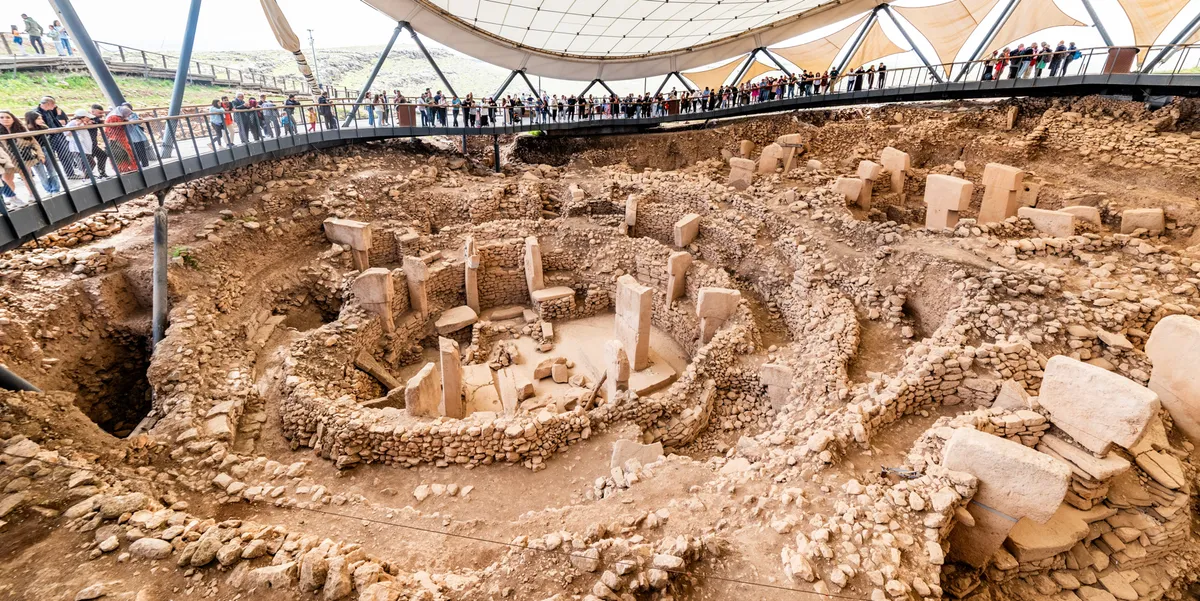
Göbekli Tepe was designated a UNESCO World Heritage Site in 2018, and it's not hard to see why. Image credit: Resul Muslu/Shutterstock.com
============================================================================
Did a cataclysmic comet impact 13,000 years ago spark the rise of civilization? That's the explosive claim behind a study of carvings at the world-famous site of Göbekli Tepe, which researchers say encode not just a catastrophic comet strike, but the world's oldest solar calendar.
Located in southern Türkiye, Göbekli Tepe is a pre-pottery Neolithic complex that is estimated to be around 12,000 years old. Analyzing an intricately carved pillar at the site, the study authors propose that V-shaped symbols represent days of the year, with a total of 365 markings divided into 12 lunar months plus 11 additional – or epagomenal – days.
The summer solstice, meanwhile, is depicted as a bird-like deity – possibly representing the constellation Virgo, where the sun would have been located at this time of year – with a V around its neck. According to the researchers, representations of figures with similar V-shaped necklaces at associated sites have been interpreted as “time-controlling or creator deities”.
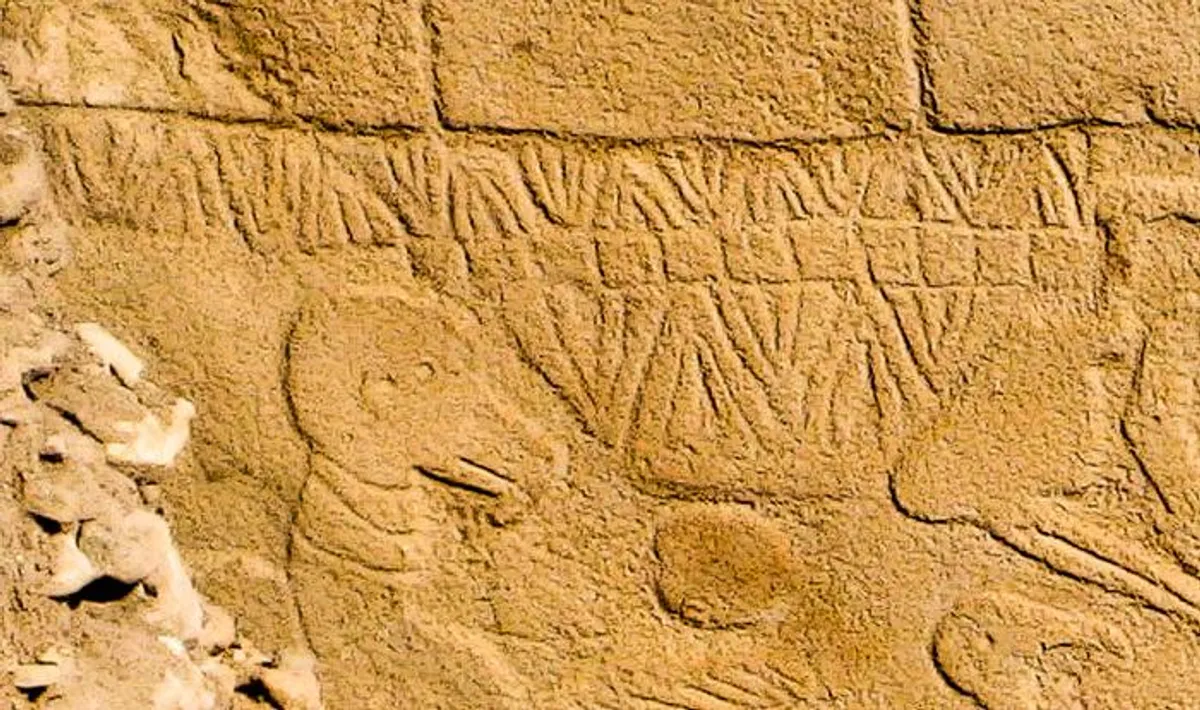
Carvings at Göbekli Tepe are thought to represent the world's oldest calendar. Image Credit: Dr Martin Sweatman
=================================================================================
Because the carvings appear to track both the movement of the Sun and the phases of the Moon, the study author suggests that the pillar represents the world’s earliest lunisolar calendar.
Perhaps even more astonishingly, the ancient engravings seem to illustrate the changing positions of constellations in the sky, indicating an appreciation of the concept of precession 10,000 years before it was first documented by the Ancient Greek astronomer Hipparchus.
Yet the study’s most striking find relates to a separate pillar, which appears to illustrate the Taurid meteor stream moving through the constellations Aquarius and Pisces over a period of several weeks. This barrage of bolides has been proposed as the source of a comet strike some time around 10,850 BCE, which may have triggered a mini Ice Age known as the Younger Dryas.
It’s important to note that the Younger Dryas Impact Hypothesis is strongly opposed by many researchers, who say there is no evidence that the event was caused by a collision. As such, all of these arguments should be taken with a large pinch of salt.
Nevertheless, the study author proposes that Göbekli Tepe itself may have been constructed as a memorial to this hypothetical strike.
“It appears the inhabitants of Göbekli Tepe were keen observers of the sky, which is to be expected given their world had been devastated by a comet strike,” Dr Martin Sweatman, the sole study author from the University of Edinburgh, said in a statement. “This event might have triggered civilisation by initiating a new religion and by motivating developments in agriculture to cope with the cold climate,” he said.
VIDEO AT LINK.................
In his write-up, the researcher develops this idea by explaining that “religion might already have existed elsewhere… but the Younger Dryas impact might have triggered a novel, catastrophic form.”
“Fear is a powerful organizing principle in human society and the Younger Dryas impact would undoubtedly have inspired great fear and awe. Thus, this event can provide the motivation for the grand construction projects of Göbekli Tepe and related sites,” they say.
Such a fearful religion – which may have centered around a “skull cult” – might therefore have provided the spark for large-scale communal organization and the building of monumental structures, effectively “triggering the origin of civilization,” the researchers conclude.
The study was published in the journal Time and Mind.
An earlier version of this article was published in August 2024.
what does the text say?
Showing results for isti mirant stella
Isti Mirant Stella is a Latin phrase from the Bayeux Tapestry that translates to “These people marvel at the star” (or “These men wonder at the star”). [Brave search]
Thank you much.
My pleasure.
edmund halley
https://search.brave.com/search?q=edmund+halley&summary=1
Edmond Halley (1656–1742) was an English astronomer, mathematician, and physicist who served as the second Astronomer Royal in Britain. He is best known for calculating the orbit of Halley’s Comet, predicting its return in 1758, a prediction confirmed after his death.
Key Contributions and Discoveries:
Comet Prediction: Halley demonstrated that comets of 1531, 1607, and 1682 were the same object, establishing that comets orbit the Sun.
Is there any artistic or traditional meaning
behind that one guy’s neck is bent over backwards?
The tapestry was made by amateurs.
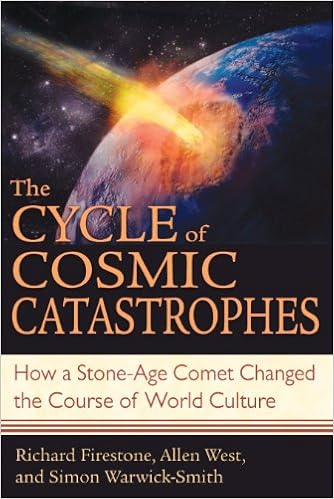
How about posting Firestone etc Al’s book. I have not seen anything in the past 10 years that has shaken my opinion that they had a generally correct cosmic disaster theory hypothesis.
The column had writing in Ancient dialect from a time traveling Ancient. Left for what they called the Tauri....
Good call.
Flood, Fire, and Famine
in the History of Civilization
by Richard Firestone,
Allen West, and
Simon Warwick-Smith
Graham Hancock nailed in in his book “American Before” in 2019.
They have only excavated 10% of the Gobekle site, and even less at other near by similar site - Karahani hill [ which means in Turk whore house hill ].
These sorts of sites reflect badly on Islam, which accepts nothing that came before it having any value. So of course the Turks are reluctant and would rather rebury them all.
Yep. The pilings they mounted deep into the structures… who know what else they damaged doing that.
The interesting thing about the entire structure is the difference in stone work. Whoever erected the pillars did not make the enclosures, with their crude field stone walls.
Found this today on Carolina Bays:
In 2018, a Russian–American team quietly published a short but stunning report in Experiment in Geosciences that should be front‑page news for anyone following the Carolina Bays mystery. Working with sediments from three Bays about 10 km north of Myrtle Beach, South Carolina, they ran magnetically extracted grains under a Tescan Vega II SEM at the Geophysical Observatory “Borok” of the Russian Academy of Sciences.
What did they see? Pure nickel films coating ilmenite, magnetite, and quartz grains. Microparticles of native metals and alloys. Nanoparticles of pure Ni. All of it locked onto the surface of rounded sand grains as if flash‑welded there by intense heat
https://cosmictusk.com/nickel-films-in-the-carolina-bays-smoking-gun-fired-from-russia/
I often think about that. It must have been awe-inspiring, spectacular….. and downright frightening. It’s no wonder all of the early great civilizations emphasized it, created worship of it, studied it in the minutest detail.
Disclaimer: Opinions posted on Free Republic are those of the individual posters and do not necessarily represent the opinion of Free Republic or its management. All materials posted herein are protected by copyright law and the exemption for fair use of copyrighted works.