Posted on 05/23/2026 6:47:49 PM PDT by Red Badger
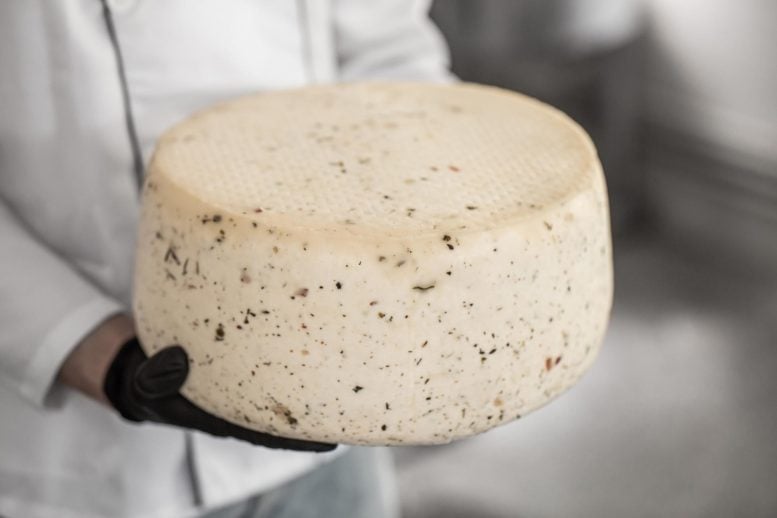
Cheese is one of the world’s most beloved foods, enjoyed by millions of people across countless cultures and cuisines. Credit: Shutterstock Scientists have traced the changing microbial communities inside three artisan British cheeses, revealing how bacteria shape their flavor, texture, and potential benefits for gut health.
Cheese can seem like a simple pleasure, but every bite is the result of a microscopic transformation. As milk becomes cheese, bacteria and fungi break down sugars, proteins, and fats, creating the flavors, aromas, and textures that make each variety distinct. New research suggests that some of these tiny cheesemakers may do more than shape flavor. They could also help explain why certain traditional cheeses may interact with the gut in potentially beneficial ways.
Scientists at the University of Reading studied three artisan cheeses made by Nettlebed Creamery in Oxfordshire to see how their microbial life changed as they matured. The team tracked both the bacterial communities and the chemical makeup of the cheeses during aging, revealing how fermentation helps build a cheese’s character from the inside out.
Published in ACS Food Science & Technology, the study examined a soft white-rind cheese aged for just over a week, a washed-rind semi-soft cheese matured over several weeks, and a semi-hard cheese aged in hay for about nine months.
Lead author Sabrina Longley, a PhD researcher in the Department of Food and Nutritional Sciences, said: “”Good cheese is delicious, and the artisan varieties we studied are full of microbial life that could have benefits to your gut health.
“The aging process creates more complex aromas and textures through the work of an army of helpful bacteria. The matrix of fats and proteins in the cheese may also help protect the bacteria as they travel along the digestive tract, making cheese an excellent vehicle for delivery of probiotics to the gut.”
Beneficial Bacteria in Every Cheese
Researchers collected samples at several points during cheese maturation and analyzed their bacterial communities and chemical makeup.
Each cheese contained bacteria with recognized probiotic potential, which may help support beneficial bacteria in the gut. Streptococcus thermophilus, also used as a yogurt starter, remained dominant in the semi-soft and harder cheeses through maturity. Lactococcus lactis was found in all three cheeses throughout the process.
The washed-rind and hay-aged cheeses also contained Propionibacterium freudenreichii, which produces propionic acid, a compound linked to anti-inflammatory effects, reduced cholesterol synthesis, and appetite regulation.
People who eat cheese rind may have another reason to enjoy it. The white mold Penicillium candidum, used to create the rind of the soft cheese in the study, produces chitin, a dietary fiber that may act as a prebiotic. Prebiotics feed beneficial gut bacteria and can help encourage positive changes in the gut microbiota.
Hay Aging and Microbial Diversity
Aging the harder cheese in hay appeared to increase its microbial diversity as it matured. By the end of the process, the mature cheese contained nearly four times as many bacterial species as it had earlier in maturation.
The researchers also found that lactose, the sugar in cow’s milk that some people have difficulty digesting, was almost entirely gone from all three cheeses by the time they reached maturity. Lactic acid bacteria had broken it down during fermentation.
Longley is also a cheesemaker at the independent Nettlebed Creamery in Oxfordshire, which partly funded the study. She is completing her PhD part-time with support from a University of Reading regional bursary, a program that helps people from the local area pursue research studies.
The authors say more research (dietary intervention trials) is needed to determine how these bacteria behave in the gut after the cheese is eaten, how they affect the gut microbiota, and what their broader effects may be on the human body.
Reference: “Microbial and Biochemical Characterization of Three Artisan British Cheeses throughout the Maturation Process” by Sabrina Longley, Glenn Gibson and Anisha Wijeyesekera, 1 May 2026, ACS Food Science & Technology.
DOI: 10.1021/acsfoodscitech.5c01243

|
Click here: to donate by Credit Card Or here: to donate by PayPal Or by mail to: Free Republic, LLC - PO Box 9771 - Fresno, CA 93794 Thank you very much and God bless you. |
I eat Aldi’s store brand Strawberry nonfat Greek yogurt!............
Wondering if any of the benefits of cheese is related to how you cut it?
You’re just not livin’ man. 60/40 ratio blue cheese and kerrygold butter brought to room temp and mixed with finely chopped garlic. Let that melt on a filet and you will be a believer.
😫
You either love it or hate it. Sorry. I have tried it. It’s just not for me.
My Dad made me try everything, so I would grow up being able to eat most everything (just in case I was ever invited to dine with the Queen of England). That never happened, and I’ve never developed a fondness for Roquefort, bleu cheese, or goat cheese. I will eat it if served, but I don’t enjoy it.
Thanks for your efforts, though!
Still, there is a big difference in the way that U.S. and European cheeses are made. Pretty much any U.S. Cheese is pasturized. A lot of the better European cheeses are Grass Fed milk has has Not been pasturized. (Pasturization destroys the natural bacterial and Vitamin K present in milk.)
I agree with you! Blue cheeses or Stilton cheese raise welts on my tongue so I avoid them.
And....look for NATURAL animal rennet.
Much of today’s store bought cheese uses gmo/microbial enzymes, instead of actual rennet.
Welts on your tongue! Ouch! You are right not to try those again. Next time, you might stop breathing.
I get it about cheese, Extremely yum, even Limburger.
But I’m uber careful about my health. Weigh 112, Eat mostly organic fruits and veggies, grass milk. Alaskan salmon, pasture-raised chicken and eggs,. no beef or pork. Expensive stuff but cheaper than hospital bills and funerals. Tossed salt shaker years ago, no butter, just organic extra-virgin olive oil, whch is good for your heart.
Will be 90 next month,Xlnt posture, still look and feel good. Sure looked better 40 years ago. Didn’t we all?
Have;t had cheese in tears but when you mentioned goat cheese my stomach smiled. Loved the stuff.
Wish I hadn’t read your post as I don’t eat cheese, but gotta say blue cheese and Kerry Gold mix sounds delish.
I like cheese, also. Unfortunately, few people don’t like it when I cut the cheese.
In particular those that make Stilton, Red Leicester and Cotswold. Oddly English cheese is not world renowned. Aside from French soft cheeses they put France to shame.
I have been known to do the same but I use Stilton and Butter. It is delicious.
If I’m too tired to make something for dinner I just do a little plate of ritz crackers and dip them partway in blue cheese as I go munching along. Glass of red with. Very satisfying.
Have you ever had a grilled cheese sandwich made from Cotswold? Add some bacon on either sourdough or multi grain bread. It’s a nice change from a regular grilled cheese. Tomato soup is elevated with this combo.
Sometimes I cut the cheese while eating cheese.
I always wanted a cabin with a stone fireplace and moose head on the wall. And a stuffed squirrel on the mantle.
Me too - and I used to also quote Tom T. Hall’s song - “I like beer”
But, alas, I drank my lifetime quota and stopped 38 years ago....
Disclaimer: Opinions posted on Free Republic are those of the individual posters and do not necessarily represent the opinion of Free Republic or its management. All materials posted herein are protected by copyright law and the exemption for fair use of copyrighted works.