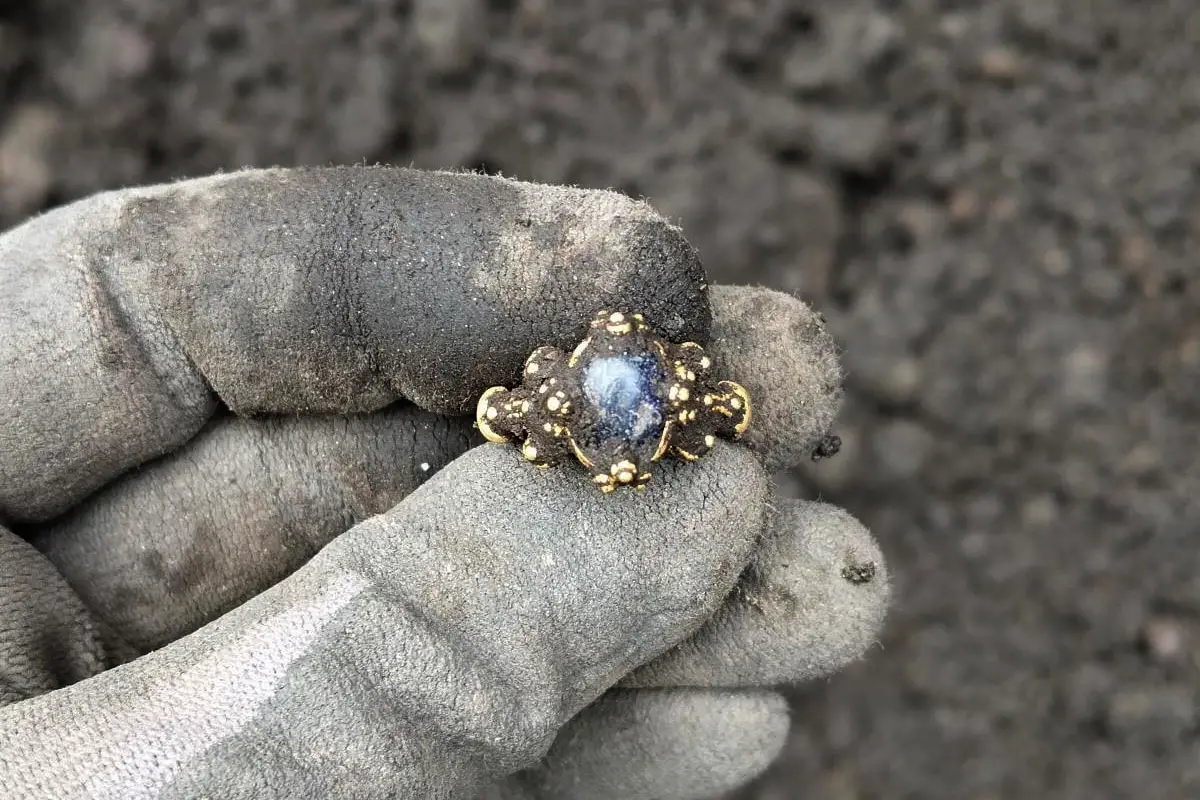
Image Credit : NIKU
Posted on 06/24/2026 9:32:29 AM PDT by SunkenCiv
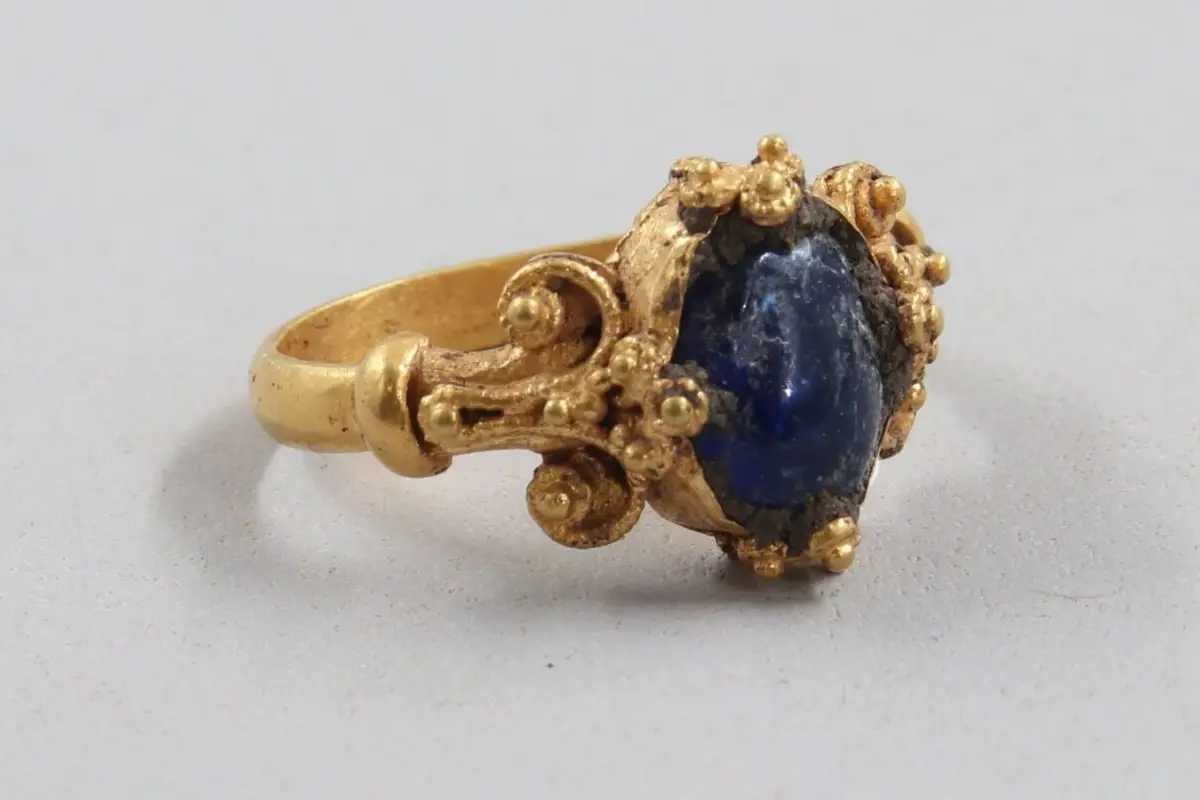
The oval-set stone, deep blue in colour, was framed by exquisite filigree: thin gold wires twisted and soldered into spirals, accented with tiny granulated beads.
Although the blue "stone" is likely coloured glass rather than sapphire, such materials were prized for their symbolic power -- believed to cool inner heat, preserve chastity, and confer divine protection.
With its rich decoration and small size, experts believe the ring once belonged to a woman of high status.
The discovery was made during extensive excavations in the Norwegian city of Tønsberg, specifically in Prestegaten and its surrounding streets, where archaeologists from the Norwegian Institute for Cultural Heritage Research (NIKU) are working on behalf of Tønsberg Municipality.
The excavation area lies within the automatically protected cultural heritage site of Tønsberg Medieval Town, beneath the shadow of the former royal fortress Tunsberghus on Slottsfjellet.
The ring emerged from a cultivation layer beneath a stratum dated by a spruce twig to between AD 1167 and 1269, placing the jewel firmly in the Middle Ages...
The spiral motifs resemble 9th- to 11th-century designs seen in Norway, England, and Denmark, while the combination of filigree and granulation reflects techniques introduced from the Byzantine and Carolingian worlds.
(Excerpt) Read more at heritagedaily.com ...
Thanks for the link!
They could at least clean the mud off of it and shine it up a bit!...............

Was it unearthed in a grave site?
It’s almost hard to believe that sodering dates back 3500-4000 BCE. I personallyhad no idea that practicw has been around that long.
“They could at least clean the mud off of it and shine it up a bit!...............”
The did.
You didn’t.
I blew the pic up to full screen an you could still see mud or something black all around the stone..............
"By brightest day, by darkest night..."
The practice of soldering's pretty old. It took longer for someone to figure out spellcheck. Hey, I'll take a cheap shot, as long as I get one of these:
I blew the pic up to more than full screen an could still see no mud or anything black all around the stone..............
Beetlejuice: I’m tellin’ ya, honey, she meant nothin’ to me. Nothin’ at all!
Bad typist, failed hitting the l key hard enough to register it, and didn’t bother to look at what I had typed.

“It may be pitch, used as a glue to hold the stone in place.”
Most likely.
Works pretty good to last nearly a thousand years!..........
That ring keeps soldering on….
That’s beautiful.
So much for calling that time period “ The Dark Ages”.
Disclaimer: Opinions posted on Free Republic are those of the individual posters and do not necessarily represent the opinion of Free Republic or its management. All materials posted herein are protected by copyright law and the exemption for fair use of copyrighted works.