Skip to comments.
Newly Discovered Evidence: Is The Trojan Horse History's Biggest Deception? [51:39]
YouTube ^
| May 5, 2026
| Odyssey - Ancient History Documentaries
Posted on 05/06/2026 10:17:59 AM PDT by SunkenCiv
The history of the Trojan horse is probably one of the most famous stories ever told. A gigantic wooden horse is loaded with Greek soldiers and presented to the Trojans as a gift. Unsuspecting, they swallow the bait and pull the horse into the city. Under cover of darkness the Greeks slip out of the horse and open the gates to their comrades. Only hours later the mighty Troy goes up in flames. But what if the myth of the horse is not true at all? New, groundbreaking findings show that one of the most famous stories of all time will probably have to be rewritten. The Trojan horse was probably not a horse at all. But then how did the Greeks outwit their enemies? And what history will we find in the history books in the future? Newly Discovered Evidence:
Is The Trojan Horse History's Biggest Deception? | 51:39
Odyssey - Ancient History Documentaries | 1.02M subscribers | 3,127 views | May 5, 2026
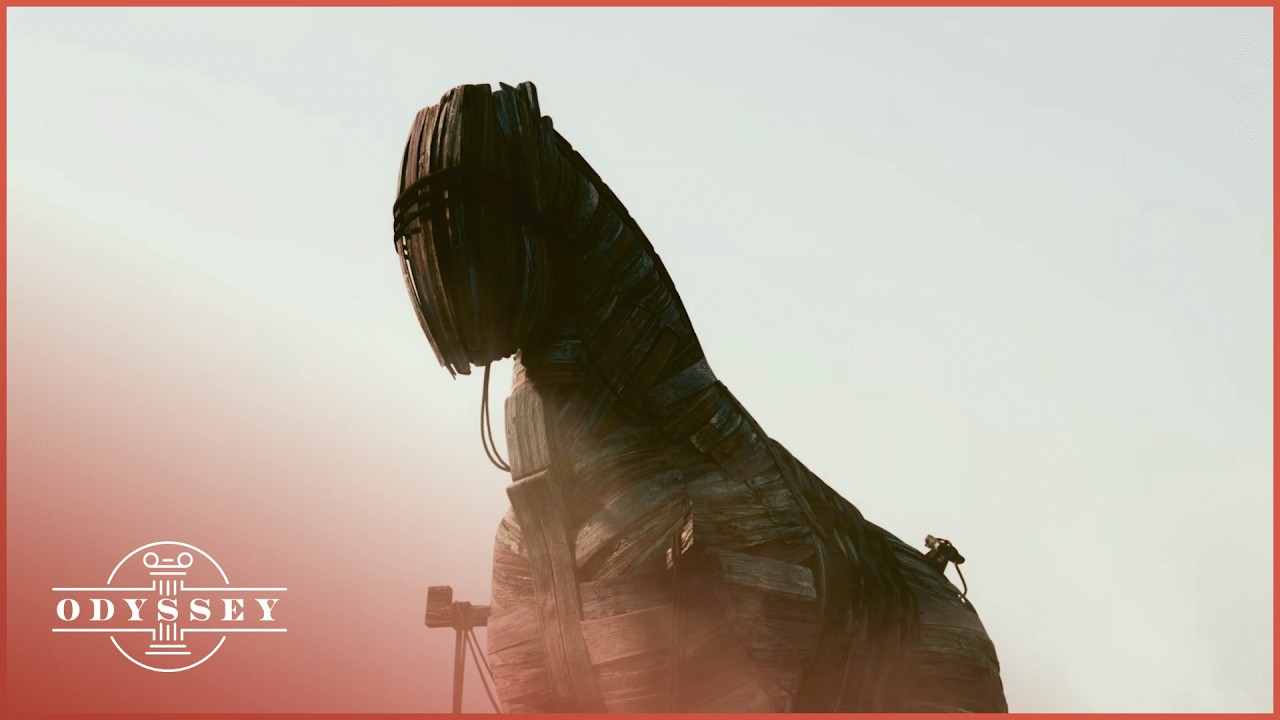
(Excerpt) Read more at youtube.com ...
TOPICS: History; Science; Travel
KEYWORDS: archaeology; archeology; catastrophism; covid; ggg; godsgravesglyphs; heinrichschliemann; hisarlik; homer; iliad; trojanwar
Navigation: use the links below to view more comments.
first 1-20, 21-40, 41-60, 61-80, 81-92 next last
1
posted on
05/06/2026 10:17:59 AM PDT
by
SunkenCiv
To: StayAt HomeMother; Ernest_at_the_Beach; 1ofmanyfree; 21twelve; 24Karet; 2ndDivisionVet; 31R1O; ...
2
posted on
05/06/2026 10:19:31 AM PDT
by
SunkenCiv
(TDS -- it's not just for DNC shills anymore -- oh, wait, yeah it is.)
To: SunkenCiv
Does anybody actually believe the story? Even as a child I found it to be very suspect...........
3
posted on
05/06/2026 10:23:35 AM PDT
by
Red Badger
(Iryna Zarutska, May 22, 2002 Kyiv, Ukraine – August 22, 2025 Charlotte, North Carolina Say her name)
Transcript (pt. 1)
One of the most mysterious stories ever told. The war outside the city gates has been going on for almost 10 years. Greeks are fighting against Trojans. The mighty city remains steadfast. Its walls seem impenetrable.
Until the Trojans receive a fateful gift. In the belly of the huge wooden horse they drag into their city lie hidden the best fighters of the Greeks. They seal the downfall of the glorious city.
The idea of the horse was a fascinating one. But you have to ask yourself, why a horse? And why should the Greeks hide in a big wooden statue? An open mind is necessary to better understand the ancient myths. The story of the Trojan horse continues to fire people’s imagination to this day. Myths are created to help us get through life.
For thousands of years, the Trojan horse was a symbol of a bold plan, of cunning and treachery. This image has become imprinted in our cultural memory and even found its way into the world of computer science. But what if the horse was not a horse at all?
Franchesco Tiboni doubts the story of the Trojan horse. The Italian archaeologist has made it his task to check the millennia-old tradition on its validity. The first known work in which the legend of the Trojan horse is told is by one of the most famous poets of antiquity, Homer.
We all know the story of the Trojan horse. But what we don’t know is what actually happened. We have no precise idea of how the destruction of Troy came about and what really happened that night because that night was not clearly described by Homer. He only told us about what happened afterwards.
Franchesco Tiboni is an underwater archaeologist. His areas of expertise are shipbuilding and seafaring. Every shipwreck from antiquity that is found brings more information about times long past to light. Perhaps something will be found in the depths of the Mediterranean that will help Tiboni investigate the Trojan past.
Among his most important sources are the ancient epics, and there it becomes apparent. Doubts about the story with the Trojan horse existed even back then. One of the main questions is whether there’s something real behind the description. Throughout history, there have been several authors, several scholars who’ve asked themselves whether this horse was really a horse.
The Roman scholar Pliny the Elder suspects that the war machine was rather a kind of battering ram. Euphorion, a Greek poet, wrote as early as 400 BC in connection with the Trojan horse that the Greeks possessed a ship called a horse. What is behind the traditions? Did the Trojan horse really exist?
4
posted on
05/06/2026 10:24:37 AM PDT
by
SunkenCiv
(TDS -- it's not just for DNC shills anymore -- oh, wait, yeah it is.)
To: SunkenCiv
I would say Obama is history’s biggest deception.
But maybe that’s for another thread.
🤔
Transcript (pt. 2)
Homer’s epics tell of the late Bronze Age from around 1200 BC. It is a time full of conflicts and crises in which one of the most powerful and highly advanced civilizations perishes: the Mycenaeans. The stories of wars, heroes, and gods are passed on through the centuries by rhapsodes, Greek singers. Among them is the poet Homer and his depiction of the Greek world.
These were texts that serve to define one’s own culture, oneself, one’s location, one’s reflection. Actually, these were extraordinarily complex processes from a cultural-historical point of view. I think it’s hard for us to imagine this mythical world. What remains for the people of the time is the memory of their own past.
The Trojan horse is a myth. It is a myth that Homer tells, and he tells this myth on the basis of many hundreds of years of oral tradition. In the period around 1200 BC, the Bronze Age, Mycenaean advanced civilization collapsed. At this time, we already have an advanced civilization with palaces, with kings, with trade relations, and all the trimmings.
But it collapses. It loses its written form. It loses its structures, its trade contacts, its economic system, and it falls back to a much simpler civilizational level. After the collapse of this golden era, the time of the so-called dark centuries begins. It is not until more than 400 years later that Homer enters the world stage. He is the first to write down the stories of the Greeks. The Iliad and the Odyssey are written. His epics become the myth of the century. They continue to pose riddles to this day.
In the course of this oral tradition, elements of each person’s own reality of life naturally come into play. With everything that Homer writes, we have to consider whether it actually refers to something that has been handed down from the Bronze Age or to the reality of life in Homer’s time. Both are in there.
Homer’s work establishes a typically European material that is still present: the hero’s journey in search of fame and glory at any cost. The heroic epic in its original form. This is how we still tell our stories today. And the Trojan horse also still fascinates us. It represents cunning and treachery on the one hand, but also shows how easy it is to trick people on the other.
The horse is a fantasy object, just like the leather sack where he keeps the winds. Those are fantasy objects. It’s a wonder. Even during antiquity, the image of the Trojan horse changed through different depictions, copies, and translations, and the originals of Homer’s texts are no longer available.
Early copies are very carefully preserved so that only rarely anyone gets to see them. Perhaps the oldest copy of the Iliad is in London. It dates from the 1st century AD and is in Greek. The papyrus contains the narrative that has captivated us like no other for over 2,500 years, recorded in 24 books and over 15,000 verses.
6
posted on
05/06/2026 10:25:08 AM PDT
by
SunkenCiv
(TDS -- it's not just for DNC shills anymore -- oh, wait, yeah it is.)
Transcript (pt. 3)
It’s a fascinating idea, of course, and if it were just a story, it would work as such. But when we think of Homer, we have to think of more than a story because Homer is like a holy book. And a holy book must have something credible in it.
The Iliad is about the conflict between the Greeks and the Trojans. The war initially develops between Sparta and Troy, and the world of the gods is also involved. The Trojan War is triggered by Paris. He is the son of Priam, the Trojan king.
When the Trojans visit Sparta, Paris meets the beautiful Helen. She is not only the king’s wife but is also considered the most beautiful woman in the world. For Paris, it is love at first sight. He decides to abduct the beautiful Helen to his homeland.
When the Trojans refuse to return Helen, the Greeks take this as a reason to take up arms. An impressive armada of supposedly 1,200 ships sails against Troy. But the war is not easy for the Greeks to win. It lasts 10 grueling years. Troy’s walls stand firm.
In this never-ending phase of the war, the attackers become tired and begin even to mutiny. Some of the exhausted fighters do not want to continue the dirty war. They just want to go back home. But nine years of the great Zeus have already passed us by. And already the wood of the ships is faltering and the ropes are rotting. Our wives and our infant children sit at home and pine for us. But we’re here in vain. We’ll never finish the work for which we came. Let us flee in ships to the dear land of our fathers. We will never conquer Troy, which is spread out far and wide.
Despite the mutiny and the heavy losses on the Greek side, Odysseus succeeds in rallying his men. The king of Ithaca does not want to give up. The end of the war, however, is sealed only by a god-sent thought. As Homer says, a cunning trick.
In pretense, the Greeks break off the war and board their ships. They leave the Trojans a supposed gift, a huge horse made of wood as a consecration gift for the goddess Athena. But in the belly of the horse sit Odysseus and the best warriors of the Greeks. Unsuspectingly, the Trojans drag the horse into their city. At night, the men get out of the wooden horse unnoticed and seal Troy’s bloody end. This is how Homer tells it.
7
posted on
05/06/2026 10:25:24 AM PDT
by
SunkenCiv
(TDS -- it's not just for DNC shills anymore -- oh, wait, yeah it is.)
Transcript (pt. 4)
If one goes in search of a more precise description of this night in his texts, there is a problem. In the Iliad, Homer only writes up to the eve of victory. In the Odyssey, he continues the story on the day after the victory. So, he actually leaves out the night of Troy’s destruction. In fact, the horse, the Trojan horse, this deception, this great machine, this mystery, this myth is not mentioned by Homer in the Iliad, probably because it’s not an essential part of the story.
So, Homer’s Iliad is a dead end. To find the right source for the Trojan horse, Franchesco Tiboni has to keep searching. The underwater archaeologist finds what he’s looking for in Homer’s second work, The Odyssey. The epic begins after the fall of Troy and tells of Odysseus’s desperate attempt to return home against the wrath of the gods.
Homer describes how Odysseus, after 10 years of wandering, strands in a distant kingdom. He remains unrecognized at first and is invited to the court. There he asks the rhapsodist to sing about the fate of Troy and Odysseus, i.e., his own fate. The singer describes the misfortune of the Trojans, how they brought the wooden horse into the city, how the Greeks got out of the horse and defeated the strongly fortified Troy.
Franchesco Tiboni was amazed how sparsely the wooden horse was described. We are not given a description of the horse. We have absolutely no description. In the Odyssey, Homer does not describe the horse. We don’t know what it looked like, how big it was, whether it had a head, legs, nothing. And that is strange because we know Homer as a writer is always very meticulous and very precise in his descriptions. But as far as the horse is concerned, nothing is precise.
If the wooden horse was so decisive for the war, why does Homer barely describe it? In an ancient Greek copy of the Odyssey, there is only the designation “duros hippos.” For Franchesco Tiboni, however, this is the decisive part of the script. Homer speaks precisely of “Adora Teos Hippos,” which only became a horse made of wood over the centuries.
What exactly is meant by “duros hippos”? What does it mean? The oldest documents show that “doratos” does not actually mean made of wood, but of planks. For Homer, “dura” is not wood in general, but is the word he uses to describe the planking of boats in all sections of the Iliad and the Odyssey. A horse made from the planks of a ship.
Homer chooses this specific designation at the point in the Odyssey where he recounts the ruse with the wooden horse in more detail. In the Greek city of Patras, Thomas Hondros, professor of engineering, has calculated how the Greeks might have built the horse. For him, the wooden horse is a war machine. This machine was designed to resolve a specific problem of the war. And this might be considered as a primitive design task.
They had to invent a specific tool to resolve the 10 years siege of Troy. When the Greeks set out for Troy, they probably did not think of building a wooden horse as a war machine. But since the huge fleet had to be constantly maintained, there were many shipbuilders. Epeios, who was the designer of the Trojan horse, was the chief naval architect of the Greek army in Troy.
8
posted on
05/06/2026 10:25:39 AM PDT
by
SunkenCiv
(TDS -- it's not just for DNC shills anymore -- oh, wait, yeah it is.)
Transcript (pt. 5)
When asked where the material for the horse came from, Hondros thinks of the ships of the many warriors who were killed in battle or died of diseases over the years. The galleys lay deserted and partly rotten on the beach. Since you have the main part of the construction ready, which comes from the ready parts from the two halves of the ship, then the masts were already available at the time. So they could put the whole structure on the four masts and secure them on the chariot on the chassis. The researcher estimates the weight of the horse at around 5 tons with a height of about 9 m and a length of about 11 m. They had to pull it with those 28 horses to climb upwards, and those 28 horses were enough to pull the five-ton construction up to the top of the hill inside the fortress. In Homer’s stories, the horse is pulled into the Trojan castle. Thomas Hondros has a specific gate in mind.
They call it the dark gate. And we depicted the entrance of the horse over there. We don’t know exactly because in Homer there is referred another gate that is in a hill cliff that was it was impossible for the horse to be transported through the gate that Homer describes. So we found a gate that was comfortable for the whole construction to pass through.
From case studies under ideal conditions to reality to the excavation site of Troy. It is located in the northwest of Turkey. The legendary city is said to have been located on a hill. Rustem Alan has been the excavation director there since 2013. Troy became insignificant about 3,000 years ago. It remained so until archaeologists discovered its ruins a good 200 years ago. The imposing complex bears witness to the city’s former power.
The special importance of Troy can also be seen in the numerous defensive walls around the entire city which are particularly attributed to the late Bronze Age. One can see that Troy took measures to protect itself. With its strategically important location, Troy was ultimately a place that everyone wanted to own.
The city of Troy lies on the Dardanelles, the only sea route between the Mediterranean and the Black Sea, an important trade route in the late Bronze Age. At that time, Troy controlled shipping traffic, levied custom duties, and became a flourishing metropolis.
In 1870, it was a German archaeologist who set out in search of the legendary city. Heinrich Schliemann suspects that Homer’s Troy is on the hill of Hisarlik. He begins to dig and makes a find. Schliemann succeeds in uncovering the various settlement layers and causes a worldwide sensation. Schliemann’s work aimed to prove this important site archaeologically. He wanted to prove that the scenes from the Iliad were a historical fact.
9
posted on
05/06/2026 10:26:08 AM PDT
by
SunkenCiv
(TDS -- it's not just for DNC shills anymore -- oh, wait, yeah it is.)
Transcript (pt. 6)
The remains of Troy have been found, but what led to the city’s downfall? Homer’s Iliad describes how Helen, Priam, and Paris watch the battlefield from the fortress wall. They see the Trojan warriors trying to recapture the lower city.
This is one of the most important and tragic scenes in the Iliad. In Homer’s epics, the war ends Troy’s heyday. Research allows several conclusions. Did a great final blow seal the end of the city or a long series of grueling wars and natural disasters? Especially at the south gate, there are clear signs of destruction. And the objects found, such as arrowheads, other tools of war, and skeletons, although not many, prove that they were not buried, but simply lay there. Troy was destroyed in a single war, a fire, or an attack from outside. Troy was like a fortress. In some places, the inner city walls were 5 m thick and 10 m high, impregnable by the standards of the time. Only thanks to their cunning could the Greeks overcome the walls. But would the Trojans have been fooled by a wooden horse?
There is evidence of many horse bones from the final phase of the Bronze Age. This shows us that horses were of great importance to the Trojans. In the Iliad, Homer also speaks of a Troy that has beautiful ponies, beautiful horses. The ruins of Troy do not provide an answer to the riddle of the Trojan horse. Just as Homer failed to describe the horse in detail in both the Iliad and the Odyssey, the archaeological finds in Troy leave many questions unanswered.
Franchesco Tiboni did not get far on the trail of the horse, the hippo. Perhaps the term duratos made of planks gives a clue. In Malta, he meets the marine archaeologist Tim Gambin. The researcher is investigating a shipwreck from the time of Homer.
We were serving off Schlendy Bay using a high-resolution sonar in this area. And one of the targets we came across somewhere here turned out to be this beautiful ancient shipwreck which is considered to be the oldest one in the central Mediterranean. The ancient wreck is not easy to reach. The dive is not only technically but also physically extremely demanding.
It’s a very challenging site. The site is situated at a depth of 110 m. So the boat is tied directly over the site. It takes divers about 8 minutes to descend. We’ve got a maximum of 12 minutes on the site. And after 12 minutes, the divers would have been in the water for a total of 20 minutes. Then they start this slow, slow ascent. For the short stay at the wreck, the divers have to allow an additional 5 hours for the ascent, but the effort is worth it for Gambin and his team.
10
posted on
05/06/2026 10:26:22 AM PDT
by
SunkenCiv
(TDS -- it's not just for DNC shills anymore -- oh, wait, yeah it is.)
Transcript (pt. 7)
The first sign that material will be well preserved is this gray material. This is big news for us because now we have a good indication that the wooden remains of the ship will be there. The wreck at the bottom of the sea promises to be a treasure for archaeologists. It is a ship of the Phoenicians, legendary seafarers who once ruled the Mediterranean. Their trading bases stretched from the eastern Mediterranean to the Atlantic.
We know next to nothing about Phoenician shipbuilding. So yes, one of our primary aims is to locate, uncover, and study the wooden remains of this Phoenician ship. It will be several years before the wreck can be salvaged. The archaeologists meticulously bring up parts of the cargo, including ancient amphorae. These allow the scientists a glimpse into the past.
This is an amphora 2,700 years old. This is of the 7th century BC. That is the time of Homer. It could well be that while leaving the port of Schlendy, the ship was using the Cape as a waypoint to now change direction and continue on its journey.
Something that in Homeric seafaring or Homeric descriptions of seafaring comes up quite often. I believe that first of all, an open mind is necessary to better understand the ancient myths because we can read the Homeric epics and just see them as these sort of fantastical descriptions, but not very deep under the surface. You can actually link these descriptions to realities. Homer describes the Phoenicians as skilled seafarers. Construction plans of their ships, however, have not yet been found.
Franchesco Tiboni discovers depictions of Phoenician ships. Ancient reliefs show them with horse heads. Did Homer know this type of ship from his own observations? These ships were called hippos or hippo, meaning horse. They were probably about 15 m long and were built with a horse’s head at the bow or at the bow and stern and were ships of Levantine origin. We know very well that the early Greeks already knew this type of ship.
For Tiboni, the question arises whether Homer could have meant the Phoenician type of ship, the Hippos by Duros Hippos. Was the Trojan horse a ship? Seafaring plays a major role in Homer’s narratives. Therefore, his texts are an important source for studies on ancient seafaring.
Osman Ecort also refers to the Greek poet. For over 30 years, he has been collecting data referring to the construction of ancient ships. Homer is a very important traveler who recorded his travels in writing and whose word can be relied upon. Fortunately, he existed and we can refer to him from this point of view. He is of course an important source for those of us who want to rebuild an ancient ship. But Homer was not a shipbuilder. He was only an observer. In his travels, he only observed how the ships were built and how they were launched into the water.
We can’t communicate the whole subject by just writing articles about it in books and journals. What we do is called experimental archaeology. We only get the experimental findings through our project work. For this reason, Osman Kut and his team are rebuilding ancient ships, including the hippos. There are various techniques that have been handed down for joining planks. One method is the tongue and groove technique. Another is the so-called lacing technique. We gain knowledge by building the hippo.
How is it loaded? How are the sails, the oars used? The best way to get answers is to just build it. Homer describes the lacing of the planks as a shipbuilding technique of the Greeks. The planks were firmly connected to each other with the help of ropes. When the boat is launched, they automatically pull together. The boat becomes tight and stable. The poet also describes the Greeks’ huge fleet knowledgeably.
In his catalog of ships in the Iliad, he meticulously lists which ships sailed against Troy. Franchesco Tiboni is convinced that Homer did not mean a horse, but a ship. The idea of the horse and the ship is very widespread in antiquity. That is, the parallel between horse and ship is even so widespread that there are texts in which ships are described as horses. It was common in antiquity to call ships horses. We find the first evidence of this in Homer’s fourth book. There the ships are called halos hippo, that is, horses of the sea. And then there is evidence of this in all ancient literature up to late antiquity.
11
posted on
05/06/2026 10:26:52 AM PDT
by
SunkenCiv
(TDS -- it's not just for DNC shills anymore -- oh, wait, yeah it is.)
Transcript (pt. 8)
The Greek ships as horses of the sea, an image from mythology. In fact, Poseidon is the god of the sea, but also the god of horses. And he sails across the sea with a team of horses, not as we might expect with a ship. Despite all the evidence, there are early accounts that speak against the theory of the Trojan horse as a ship. The representations of the Trojan horse already since the time of Homer or very shortly after are real horses. So the Trojan hippos was obviously already considered a horse by Homer himself. For him, it was a horse.
If a misunderstanding happened here between the hippos as a ship and the hippos as a horse, this misunderstanding must have happened in the time of this oral tradition, between the collapse of the Mycenaean civilization and the recovery of writing in Homer’s time. For example, from the early 7th century, we have the pithos in Mykonos, a relief pithos with rich figurative decoration. And there, very prominently on the neck is the horse of joy. The image on the clay pot suggests that Homer’s audience understood the hippo to be a horse from the beginning.
Of course, I cannot ignore the fact that the idea of a horse as an animal was already present in ancient iconography in the seventh century. The illustrations show very different Trojan horses down to the smallest detail. For Tiboni, this precisely is a contradiction. Not even two depictions can be assigned to one prototype. The horse is a fantasy. You can fill it, and it has been filled. In the beginning with Homer, it’s all still very plain black and white television. But in late antiquity, it becomes more and more colorful. So in late antiquity, you have a horse in technicolor.
More than 600 years after Homer, a Roman author with a masterpiece in Latin fuels the myth of the Trojan horse: Virgil. In fact, the horse is much more horse in Virgil than in Homer. In Homer, the whole thing remains relatively in limbo linguistically speaking. Homer could speak of a horse, but he could also speak of a ship. Tiboni knows the impact of Virgil’s epic. Virgil is the author who first introduced the idea of a horse into Roman culture. Or rather, he’s the one who permanently consolidated it.
In Virgil’s work, the Aeneid, the story of the Trojan horse is further embellished. In it, he describes how the Seer warns the Trojans about the trickery of the Greeks and the wooden horse.
Wretches, he cries from afar. What frenzy delusion, oh ye citizens, do you think the enemy has sailed away? And do you hope that a gift will come from the Greek people? Do you know Ulysses? Thus here, either the Greeks are secretly locked in the wood or the armor was built on our walls to look high into the houses and to approach the city from above, or else it holds treachery. Do not trust the steed. Oh, you Trojans.
Virgil is a very learned poet. He has the ideal of the poeta, the learned poet. Not only had he studied Homer, but he also knew the secondary literature very well. There were all kinds of interpretations. For example, it’s a war machine, a siege engine, a battering ram. All kinds of things were invoked. And Virgil knew this discussion and used it for his poetry.
Virgil’s description is indeed the description of a horse up to the point where he translates duros hippos as equis lenos. Thus, he finally transforms it into a wooden horse. Why would the Trojans drag the Greeks’ wooden horse into the boughels of their castle after 10 years of bitter warfare? Perhaps one of the greatest finds of the 20th century can shed light on the matter.
12
posted on
05/06/2026 10:27:11 AM PDT
by
SunkenCiv
(TDS -- it's not just for DNC shills anymore -- oh, wait, yeah it is.)
To: SunkenCiv
13
posted on
05/06/2026 10:27:26 AM PDT
by
NonValueAdded
(First, I was a clinger, then deplorable, now I'm garbage. Feel the love? )
Transcript (pt. 9)
Around 1330 BC, a ship fully laden with treasures from various countries sailed along what is now the Turkish coast. The merchant ship is said to have sunk in a storm off Cape Oluburun. In 1982, a sponge diver discovers the cargo of an ancient wreck. It is a chance find. The salvage by archaeologists begins 2 years later. During the numerous dives, it turns out that the wreck could not have been a simple merchant ship. The cargo indicates that it must have been on a special mission. Scientists spent more than 10 years diving the wreck.
Harun Azdash is one of the leading underwater archaeologists. This find is one of the greatest discoveries of the last century because the Uluburun wreck has made accessible a unique body of knowledge about Bronze Age shipbuilding since 1984. The wreck of Uluburun has also been a project for experimental archaeologist Osman Ekot. The Uluburun simply has everything. The oldest sails found so far. The oldest keel, the oldest rudder, everything you can think of in terms of details. In addition to the important information about shipbuilding, the Uluburun wreck offers another unique treasure.
This ship is no ordinary cargo ship. In no other ship do we have a cargo that has such a wide variety of raw materials and other precious items. All this shows that there was an exchange on a royal level.
On no normal ship would you find 22 anchors, 150 aereay, 10 tons of copper, and a ton of tin. That’s an enormous cargo and very expensive even nowadays. The destination of the journey was the Masonian Empire.
On the Ula Baroon, archaeologists found seals and personal items belonging to two high-ranking officials, unusual passengers on a simple merchant ship. Researchers therefore suspect that the oliberun is evidence of diplomatic relations in the late Bronze Age. It is possible that the practice of giving gifts of precious goods between kingdoms was common at the time.
If the Ulaoon ship is accepted as evidence of a ruler’s gift, as payment or tribute to a prince, then this is crucial for research into the historical truth surrounding the Trojan horse. Because this boat sank towards the end of the 14th century BC, that is shortly before the destruction of Troy.
At the time of Homer, it was mainly the Phoenicians who ventured far out with their ships. They had outstanding nautical knowledge. Their shipbuilding technology enabled them to establish dominance in the Mediterranean, or at least to play a decisive role in trade.
The Phoenicians built ships with technologies they developed themselves, including the hippo, the boat with the horse’s head. According to Homer’s narrative, the Trojan horse was a gift from the Greeks to the Trojans. If it had really been a ship, a hippo, would the Trojans have accepted it as a gift? Franchesco Tiboni is convinced of this.
As evidence for his theory, he brings into play the so-called bronze freeze of Balawat. It depicts the subjugation of various peoples before the Assyrian king Salman Assasar III, including seafarers in their ships. In particular, queen here. Above all, two hippo are depicted, or rather there are three metal bands with two hippo per band. And they are Phoenician ships. We can tell that they are Phoenician by this pointed headgear and clothing. They bring their tribute after defeat in a battle in a war for control of the sea lanes.
14
posted on
05/06/2026 10:27:28 AM PDT
by
SunkenCiv
(TDS -- it's not just for DNC shills anymore -- oh, wait, yeah it is.)
Transcript (pt. 10)
So here we see what basically happened in Troy. It was a war for the control of the sea routes and the loser paid his tribute with a hippo. The fact that we find the hippo at this gate that they are paid as tribute by the losers at the end of a war is very important for my research.
We know that these boats loaded with lapis lazuli, gold, silver, precious metals, and ivory very often came from Phoenician territory. They were Phoenician boats. Phoenician hippo or predecessors of the hippo used for the payment of tributes. The bronze reliefs depicting the hippo for the Assyrian king are dated to the 9th century BC.
Whether Homer was aware of the custom of such gestures and included them in his epic cannot be proven. However, if we imagine that the horse is left on the beach or the ship called the horse is left on the beach, then it is quite conceivable that the Trojans understand it as a gift left by the Greeks at the end of the war.
But if the cargo was meant as a tribute, why would the Trojans pull the whole ship into the city? The whole story only works because the Greeks leave a vault of gift which is meant for Athena. This means that it belongs to the goddess Athena and must be brought to the sanctuary of Athena which is located in the city.
The Greeks at the time of Homer, Franchesco Tiboni surmises, could assume that a ship left behind would be understood as a gift and a sign of retreat. And the Trojans in turn would have accepted this form of submission and brought the hippos to their city in the certainty that the grueling war for Troy was finally over.
As researchers, we must always be in search of the truth. That is what drives us. We must not be afraid to debunk the myths and dare to make difficult interpretations. I have tried to be constantly in search of the truth. A bit like Ulysses starting a journey without knowing the entire route. You have to have the courage to move forward even if the current is against you and try to reach your destination, your etha, and your truth.
The legend of the war for Troy was only passed on orally for many centuries until Homer immortalized it in his epics. The tales continue to have an effect. The Trojan horse of yesterday has long since become part of today’s culture. The Trojan horse has been seen as a horse for 2,000 years. In literary terms, it was a horse and not a ship. This means that it must have at least appealed to something in people’s imagination. That there was a wooden horse that was then pulled into the city. It is the story of the end of a legendary city.
After endless years of bloody battles brought about by the cunning Odysseus, he is the hero of Troy. Whether a hippo, a horse of the sea, or a larger-than-life wooden horse served the Greeks as a hiding place and sealed Troy’s downfall cannot be proven. Despite exciting research, the myth of the Trojan horse lives on.
[end of Transcript]
15
posted on
05/06/2026 10:27:43 AM PDT
by
SunkenCiv
(TDS -- it's not just for DNC shills anymore -- oh, wait, yeah it is.)
To: SunkenCiv
What next? maybe we will find out the Braizen Bull was just brazen bulls#it ?
16
posted on
05/06/2026 10:27:58 AM PDT
by
algore
( )
To: Red Badger
I don’t think it would have resonated down through the past 100-150 generations if there weren’t a true story behind it. Just because George Washington didn’t chop down the cherry tree doesn’t mean he never lived.
17
posted on
05/06/2026 10:29:19 AM PDT
by
SunkenCiv
(TDS -- it's not just for DNC shills anymore -- oh, wait, yeah it is.)
To: Leaning Right
For now. Records are made to be broken.
18
posted on
05/06/2026 10:29:47 AM PDT
by
SunkenCiv
(TDS -- it's not just for DNC shills anymore -- oh, wait, yeah it is.)
To: NonValueAdded
19
posted on
05/06/2026 10:30:12 AM PDT
by
SunkenCiv
(TDS -- it's not just for DNC shills anymore -- oh, wait, yeah it is.)
To: SunkenCiv
Why a horse? Because the patron god of Troy was Poseidon. Is everyone illiterate now?
20
posted on
05/06/2026 10:30:14 AM PDT
by
Merrick
(It's a car - that runs on water, man!)
Navigation: use the links below to view more comments.
first 1-20, 21-40, 41-60, 61-80, 81-92 next last
Disclaimer:
Opinions posted on Free Republic are those of the individual
posters and do not necessarily represent the opinion of Free Republic or its
management. All materials posted herein are protected by copyright law and the
exemption for fair use of copyrighted works.
FreeRepublic.com is powered by software copyright 2000-2008 John Robinson
