Posted on 03/30/2021 12:53:46 PM PDT by Red Badger
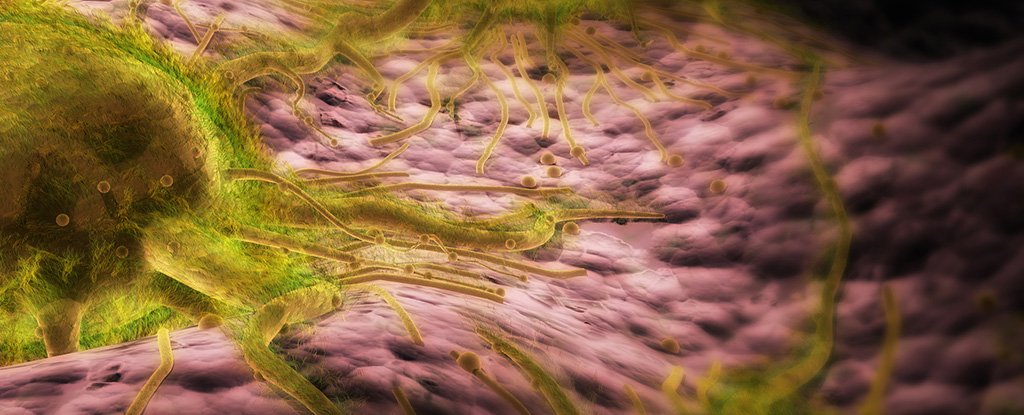
Conceptual illustration of breast cancer cells. (MedicalRF.com/Getty Images)
Researchers in Australia have discovered a gene responsible for a particularly aggressive type of hormone-sensitive breast cancer which has tragically low survival rates.
"Hopefully this will dramatically improve the poor outcomes these patients currently suffer," said Harry Perkins Institute of Medical Research epigeneticist Pilar Blancafort.
It's hard to overstate just how different cancers can be from one another. Even under the umbrella of 'breast cancer' lie several types, such as hormone receptor sensitive, HER2 positive, or non-hormone sensitive breast cancer; within those groups, there are even more types that can respond to treatments differently from one another.
Hormone-sensitive breast cancers grow in response to hormones such as estrogen or progesterone; we have a number of medications to treat them, such as hormone therapy. This type of breast cancer typically has better outcomes than non-hormone sensitive cancers.
"However, a small percentage of patients experience a very aggressive cancer that results in the worst outcomes of all breast cancers, with half of all women dying from the disease," said Blancafort.
"When we look at these cancers, we find that they are bigger and tend to spread more commonly to lymph nodes and have a higher death rate. What we needed was a way to identify them."
Back in 2012, a group of researchers designated a breast cancer classification called Integrative Clustering (IntClust), which split up breast cancer into 10 different subgroups - each with different genetic changes and clinical outcomes.
One of these clusters within the estrogen receptor-positive (ER+) cancers called IntClust2 has a particularly poor prognosis, with only one cluster faring worse.
The team in 2012 noted that IntClust2 tumors were characterized by a section of DNA in chromosome 11 being significantly amplified. That part of the chromosome has plenty of potentially cancer-causing genes – called oncogenes - we already knew about, but one gene in particular, called AAMDC, made the current researchers sit up and take notice.
So, the team went to work. First, they looked at 119 human luminal B breast cancer samples and analyzed just how much AAMDC was being expressed in the cancers. They found that around 25 percent of the tumors showed this AAMDC amplification, and these were predominantly in the ER+ tumors.
When the team knocked down the AAMDC levels in breast cancer cells in mice, they found that cancer cells were inhibited and more cells underwent programmed cell death, meaning the cell is undergoing its normal function once it realizes it's damaged.
The team thinks that the treatment for ER+ cancer is one of the reasons that IntClust2 is just so effective. Hormone treatments work by starving the cancer of the hormones it would use to grow, but extra copies of AAMDC can protect the cancer from this fate.
"AAMDC can protect cancer cells from dying and maintain their growth when the tumor is placed in conditions where nutrients are scarce and when it is starved of estrogen which would kill most hormone sensitive cancers," Blancafort explains.
"Therefore, we believe the cancer promoting function of AAMDC is to act as a 'survival kit', allowing tumors to adapt to these conditions supporting the growth and multiplication of breast cancer cells in conditions of metabolic stress."
Interestingly, this amplification of AAMDC is also found in ovarian, prostate, and lung cancers, so this result might be relevant to other cancer types as well.
"Importantly we can now find these cancers by looking for high levels of AAMDC in the tumor cells," Blancafort adds.
"This is the significant discovery."
The research has been published in Nature Communications.
Amen. ❤
Not that any Birth Control Pills influence production of those hormones.....
First wife died of aggressive breast cancer. It’s been 24 years now. She was only 45.
Indeed it would! It does feel like they’re getting closer and closer to understanding it.
God bless you, sir. This May will be 17 years since I lost my beautiful 35 year old wife. You just learn to live with it.
I survived Her2. Most of the women being treated at the cancer center with me with Her2 didn’t. Mine was stage 2 when I found it and I jumped on it. Had lumpectomy along with all the lymph nodes on that side removed. The lymph nodes were already 99% positive. I’m sorry about your wife and her mother. I’ve seen many women die from breast cancer and it’s not pretty. My mother died from a different type of breast cancer.
Sheana, I am so proud of you to be able to face the beast and beat it. Please stay on top of it and continue the treatments the doctor ordered. HER2 likes to hide for a while and then rear its ugly head again.
My wife had a complete mastectomy and removal of half her Lymph Nodes. My wife faced weekly chemo for the rest of her life. We were told early on that the cancer was going to be the cause of her death. She fought it for over 9 years, but when it spread to the brain, we knew it was just a matter of time.
Keep the fight up. I counseled a woman a few years ago on what to expect and how to treat the symptoms. To date, we are still in constant contact and she has written and had published 3 books and is working on another.
Thank you for sharing your story.
Well, I love my oncologist...and apparently he loves me...because when I asked him when he was going to set me free he said...never, because then I wouldn’t get to see you again. I have my annual mammos and then my annual visit with him.
Disclaimer: Opinions posted on Free Republic are those of the individual posters and do not necessarily represent the opinion of Free Republic or its management. All materials posted herein are protected by copyright law and the exemption for fair use of copyrighted works.