Skip to comments.
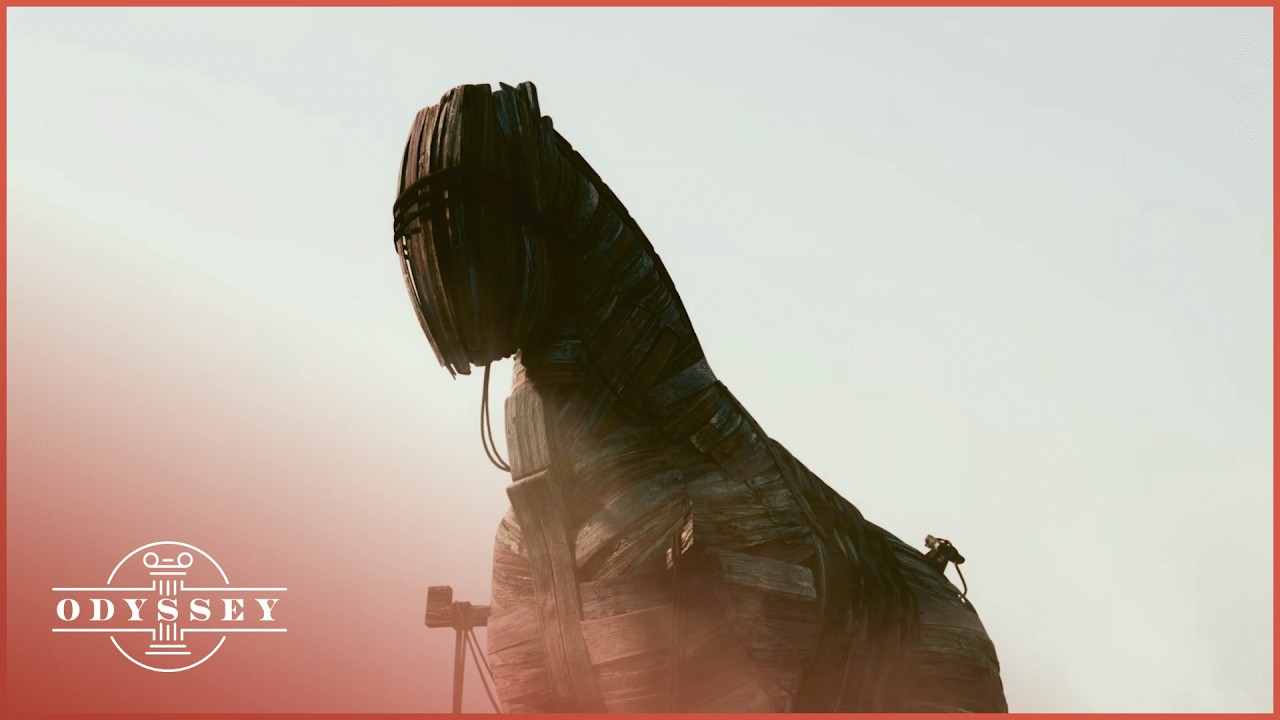
Newly Discovered Evidence: Is The Trojan Horse History's Biggest Deception? [51:39]
YouTube ^
| May 5, 2026
| Odyssey - Ancient History Documentaries
Posted on 05/06/2026 10:17:59 AM PDT by SunkenCiv
The history of the Trojan horse is probably one of the most famous stories ever told. A gigantic wooden horse is loaded with Greek soldiers and presented to the Trojans as a gift. Unsuspecting, they swallow the bait and pull the horse into the city. Under cover of darkness the Greeks slip out of the horse and open the gates to their comrades. Only hours later the mighty Troy goes up in flames. But what if the myth of the horse is not true at all? New, groundbreaking findings show that one of the most famous stories of all time will probably have to be rewritten. The Trojan horse was probably not a horse at all. But then how did the Greeks outwit their enemies? And what history will we find in the history books in the future? Newly Discovered Evidence:
Is The Trojan Horse History's Biggest Deception? | 51:39
Odyssey - Ancient History Documentaries | 1.02M subscribers | 3,127 views | May 5, 2026
(Excerpt) Read more at youtube.com ...
TOPICS: History; Science; Travel
KEYWORDS: archaeology; archeology; catastrophism; covid; ggg; godsgravesglyphs; heinrichschliemann; hisarlik; homer; iliad; trojanwar
Navigation: use the links below to view more comments.
first previous 1-20, 21-40, 41-60, 61-80, 81-92 last
To: SunkenCiv
I read somewhere that the Merovingians claimed that they were descended from Paris of Troy. I always thought this was why they named their capital city Paris.
81
posted on
05/06/2026 1:23:25 PM PDT
by
virgil
(The evil that men do lives after them )
To: mairdie
I do. Thanks. I am sorry for your loss.
To: SunkenCiv
The Trojan horse’s name was Anthony Davis. USC rode that horse, crushing Notre Dame. ND had deceived itself, after leading 24-0, that they were conquering the hated Trojans. 55 unanswered points later, the Irish cries from defeat were nationwide (ha ha)
83
posted on
05/06/2026 2:03:23 PM PDT
by
Zuriel
(Acts 2:38,39....Do you believe it?)
To: SunkenCiv
84
posted on
05/06/2026 3:26:18 PM PDT
by
GOP Poet
(Super cool you can change your tag line EVERYTIME you post!! :D. (Small things make me happy))
To: virgil
85
posted on
05/06/2026 5:28:24 PM PDT
by
SunkenCiv
(TDS -- it's not just for DNC shills anymore -- oh, wait, yeah it is.)
To: virgil
Paris is so called because it was the chief city of the ancient Gallic tribe of the Parisii (the city was called Lutetia in Roman times).
To: 75thOVI; Abathar; agrace; aimhigh; Alice in Wonderland; AnalogReigns; AndrewC; aragorn; ...
87
posted on
05/06/2026 5:51:29 PM PDT
by
SunkenCiv
(TDS -- it's not just for DNC shills anymore -- oh, wait, yeah it is.)
The Dark Age of Greece | Chapter I: The Homeric Question
The Allies of Priam | Immanuel Velikovsky
Phrygians are named as allies of Priam; also Ethiopians are counted among his allies. The identification of both these nations carries indications as to the century to which the most famous war of ancient times needs to be ascribed... Altogether the Phrygian kingdom in Asia Minor had a short duration. Already the Körte brothers, the early excavators of Gordion, noted that of the royal mounds (kurgans) only three could be dated before the Cimmerian invasion of the early seventh century which put an end to the Phrygian kingdom, and probably the number of royal successions did not exceed this number. Little is known of its history besides the fact that ca. -687 Gordion was overrun by the Cimmerians... themselves pursued by the Scythians, would limit the period of the Trojan War to the years between -720 and -687... What is called here Ethiopians were actually Sudanese: in Egyptian history the Ethiopian Dynasty and their most glorious period is dated from ca. -712 to -663... The tradition concerning Memnon, the Ethiopian warrior who came to the help of Troy, would reasonably limit the time of the conflict also to the end of the eighth and the beginning of the seventh century. The possibility of an Ethiopian landing at Troy in the days of the Ethiopian pharaoh Tirhaka need not be dismissed because of the remoteness of the place: as just said, close to the middle of the seventh century, and possibly at an earlier date, Gyges, the king of Sardis, sent in the reverse direction Carian and Ionian mercenaries to assist the Egyptian king Psammetichus in throwing off the Assyrian hegemony.
88
posted on
05/06/2026 5:52:36 PM PDT
by
SunkenCiv
(TDS -- it's not just for DNC shills anymore -- oh, wait, yeah it is.)
New Light on the Dark Age of Greece
The Trojans and their Allies | Jan Sammer
In the tenth year of the siege, after the action described in the Iliad, Priam was said to have received a contingent of Ethiopians under the leadership of Memnon. The brave Ethiopians fought valiantly against the Greeks and caused them much hardship, till Achilles finally slew Memnon and caused them to depart. Some of these traditions are very ancient, in the Odyssey Nestor recalls the death of his son Antilochos, who died by the spear of "the glorious son of shining Dawn” which is an epithet of Memnon. Later in the Odyssey the Ethiopian warrior is mentioned by name as "great Memnon”. The epic Aethiopis, a sequel to the Iliad, recounted the deeds of Memnon and of the Ethiopians at Troy -- it is considered to be among the earliest of the post-Homeric epics, possibly as early as the seventh century... Again and again we are brought to the same period -- the time of Phrygian power in Asia Minor, of its destruction by the Cimmerian invasion, and of the Ethiopian rule in Egypt is the end of the eighth and beginning of the seventh centuries before the present era. Then this is the historical background of the Trojan War, and if there be any core of truth to the story it must be seen in relation to these events.
89
posted on
05/06/2026 5:54:46 PM PDT
by
SunkenCiv
(TDS -- it's not just for DNC shills anymore -- oh, wait, yeah it is.)
To: SunkenCiv
Next they’ll tell us Bamby wasn’t real.
90
posted on
05/06/2026 7:29:12 PM PDT
by
E. Pluribus Unum
(If it ain't fun, you ain't doin' it right.)
To: Verginius Rufus
That may be right, but I wonder where they got the name Parisii? 🙂
91
posted on
05/06/2026 7:57:03 PM PDT
by
virgil
(The evil that men do lives after them )
To: virgil
I have no idea if linguists can determine a meaning for the name Parisii...one of numerous Gallic tribes mentioned by Julius Caesar in his commentaries. If I run into Asterix I’ll ask him if he knows.
Navigation: use the links below to view more comments.
first previous 1-20, 21-40, 41-60, 61-80, 81-92 last
Disclaimer:
Opinions posted on Free Republic are those of the individual
posters and do not necessarily represent the opinion of Free Republic or its
management. All materials posted herein are protected by copyright law and the
exemption for fair use of copyrighted works.
FreeRepublic.com is powered by software copyright 2000-2008 John Robinson
