Skip to comments.
Grok, how many years of crude oil reserves do we have at current consumption levels?
X ^
| 2/7/26
| Grok
Posted on 02/07/2026 4:14:41 AM PST by Duke C.
As of recent data (reflecting 2024-2025 estimates):Proven global crude oil reserves are around 1.77 trillion barrels (or approximately 1,765 billion barrels). At current consumption levels (roughly equivalent to recent production of about 100-103 million barrels per day), this equates to about 47 years of reserves left.
This figure comes from sources like Worldometer, which bases it on 2025 reserve data and 2024 consumption levels.
(Excerpt) Read more at x.com ...
TOPICS: Miscellaneous
KEYWORDS: candlelightvigil; howcanigoon; ohwowanyway
Navigation: use the links below to view more comments.
first previous 1-20, 21-40, 41-60, 61-80, 81-94 last
To: BroJoeK
Economics and its laws are all about money.
Where does money come from? It is created on a whim by central banks. How can there be any laws of nature managing a substance created from nothingness, effortlessly, on a whim?
When one faces geologic scarcity, one does not look to see how one can build more of something by paying for it with a substance that came from nothing. Instead, what does one do?
One dies.
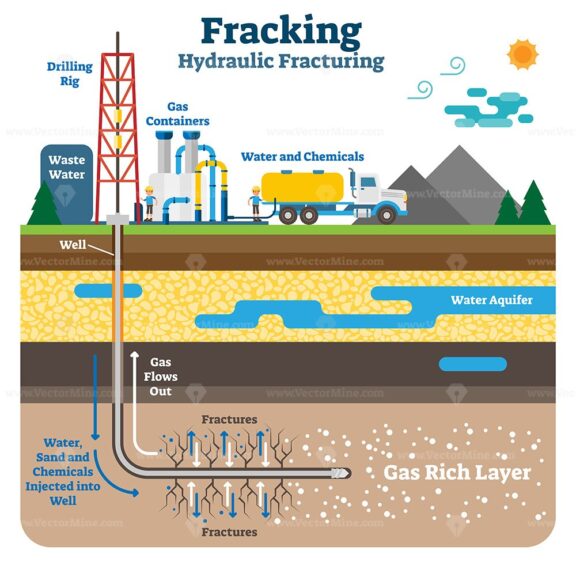
Spend a bit of time examining the typical production curve of a fracked shale oil well. The curve is nearly vertical on the right side. It’s like that without any great shock to cause it. It’s typical. Shale wells are drilled horizontally and they die vertically.
It would not matter what the price is. You would send troops to mow down the company owner and force additional drilling right next to that well. You would strive to get every drop out. Money would be inconsequential, because those droplets power the transport of food to shelves. You can’t create food with quantitative ease.
81
posted on
02/09/2026 10:40:33 AM PST
by
Owen
To: Owen; The Duke; Duke C.
 Owen
Owen:
"Economics and its laws are all about money.
Where does money come from?
It is created on a whim by central banks.
How can there be any laws of nature managing a substance created from nothingness, effortlessly, on a whim?""Fiat money", as it's called, has driven the world's economies since at least 1971, when Pres. Nixon ended the post-war Bretton Woods agreements.
One result is that today it takes up to $15 to buy what $1 bought in 1971.
But regardless, the laws of supply and demand were never repealed, nor were technological substitutions -- of more expensive materials for now less expensive ones -- ever ended.
Owen: "When one faces geologic scarcity, one does not look to see how one can build more of something by paying for it with a substance that came from nothing.
Instead, what does one do?
One dies."
 Seriously, why are you babbling stupid nonsense?
Do you think there's a cogent idea behind such word-vomits?
FRiend, you need to take a break and clear your head of garbage-thoughts before posting yet more gibberish.
Owen: "It would not matter what the price is.
You would send troops to mow down the company owner and force additional drilling right next to that well.
You would strive to get every drop out.
Money would be inconsequential, because those droplets power the transport of food to shelves.
You can’t create food with quantitative ease."
Really??!
You know what I think, I think you're talking about Russia here, maybe your home country?, which is in major, major economic troubles, and can no longer produce even the one commodity on which everything else depends -- oil.
Your FSB chief, Mad-Vlad the Invader has screwed up everything so bad that he may have to send the Russian military to force oil wells to remain in production.
Good luck with that, comrade.
But in the real world, with natural economies and outside of extreme wartime conditions, the laws of Basic Economics 101 still rule and people will substitute one commodity for another whenever prices, availabilities and technologies make that advisable.
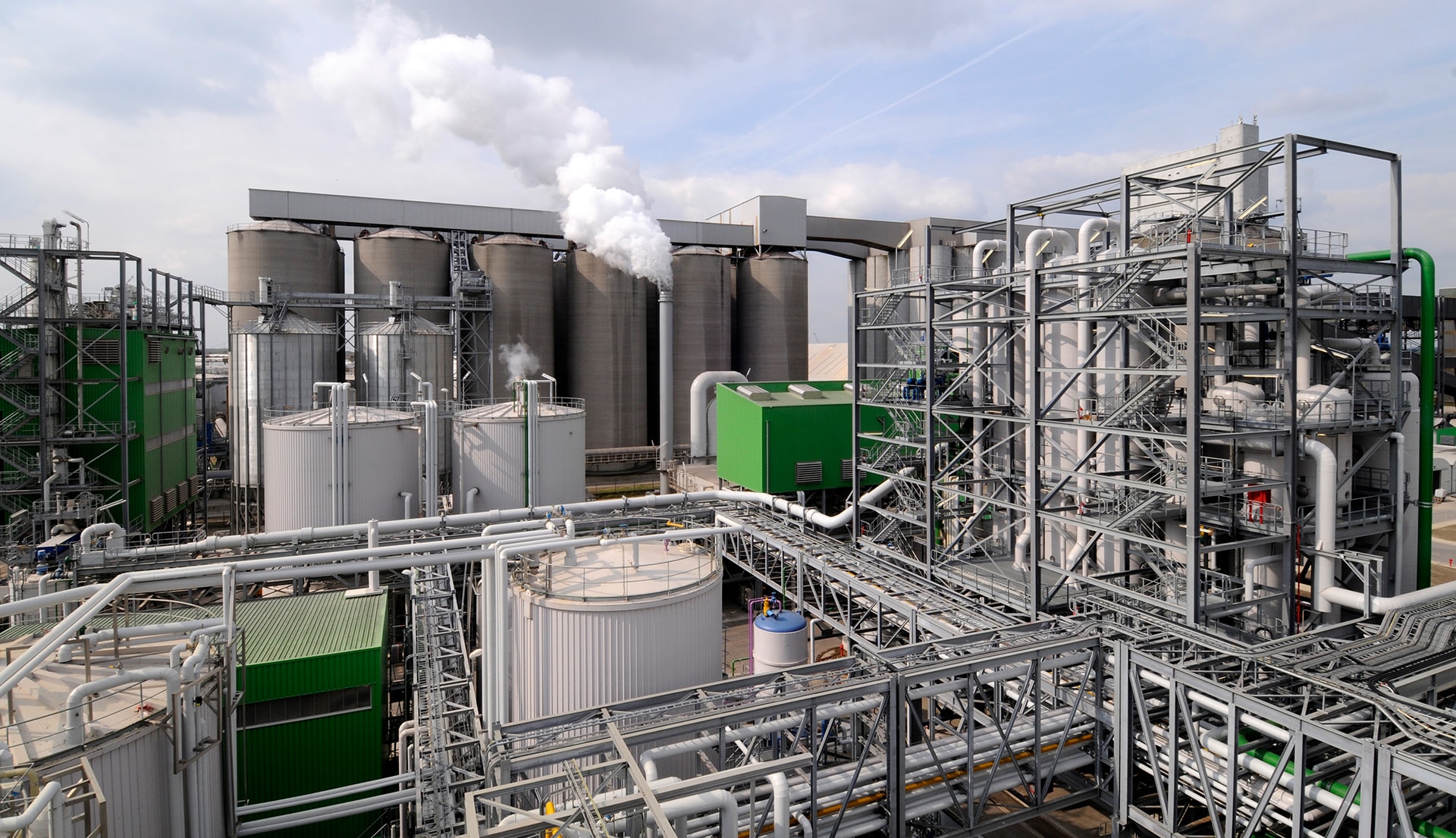
Biofuel production plant:
 So, nobody "dies" just because an oil well runs dry.
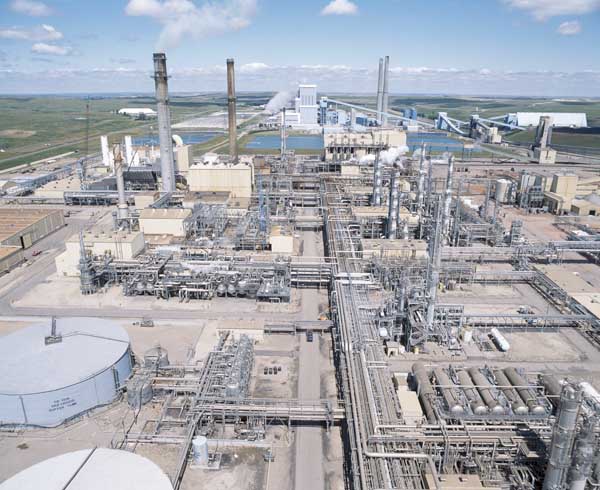
Instead, depending on circumstances, they simply drill a new well, or build a nuclear power plant, a hydroelectric dam, expand bio-fuel production, build plants to convert coal to gasoline, geothermal, or whatever makes the most sense at that time.
Today, in the US, oil represents ~1/3 of all energy used, which is down from ~1/2 in 1970.
As oil becomes more expensive and less available, it will shrink from 1/3 to much lower numbers at a rate dictated by basic Laws of Economics.
Which part of that do you not understand?
Coal liquefaction -- making oil from coal:
82
posted on
02/10/2026 5:23:47 AM PST
by
BroJoeK
(future DDG 134 -- we remember)
To: BroJoeK
CTL and GTL plants have been explored in the literature as a counter to grinding scarcity.
The quickest phrase about them is . . . they don’t scale. Oil consumption is 102 million barrels/day globally. You can’t scale to that magnitude. Nothing to do with money. It’s a water issue, as I recall. Germany of course tried it in WWII. South Africa has a plant or two. Same problem as always. Doesn’t scale.
Ask an AI how much food in the US is transported to grocery store shelves by electric truck. The reply will be hopeful verbage about proposals and methodologies, all before the crushing “there is no indication of any substantial food transport to shelves via electric truck”.
83
posted on
02/10/2026 6:52:22 AM PST
by
Owen
To: BroJoeK
"You know what I think, I think you're talking about Russia here, maybe your home country?, which is in major, major economic troubles, and can no longer produce even the one commodity on which everything else depends -- oil." If Russia is in major economic trouble (which I suspect must be the case) then my words to them would be ... "Welcome to the party, Pal!". The increasingly violent riots happening around the world all have economic issues at their roots.
84
posted on
02/10/2026 8:49:13 PM PST
by
The Duke
(Not without incident)
To: Owen
 Owen
Owen:
"CTL and GTL plants have been explored in the literature as a counter to grinding scarcity.
The quickest phrase about them is . . . they don’t scale.
Oil consumption is 102 million barrels/day globally.
You can’t scale to that magnitude." You don't have to scale any one alternative to match 100 million barrels per day.
Instead, there's a long list of alternatives, each of which can provide a few million barrels of oil-equivalent per day.
The biggest of those is converting gas- & diesel-powered vehicles to electric power.
This can be done by roughly doubling today's number of nuclear power plants, or equivalents gas or coal fired electricity generation.
Other alternatives include biofuels, algae-fuels, coal liquefaction and ammonia to replace bunker fuel for large cargo ships.
The list goes on -- higher fuel prices will increase US railroads usage, saving 1 million barrels per day, while converting railroad engines from diesel-electric to electric powered and also doubling railroad milage to what it was back in 1900 could reduce another 1/2 million barrels.
Electric powered train engine:
 None of these alone solves the problem, but all of them together, over time, can replace oil that is past "peak oil" and gradually decreasing in volumes while increasing in price.
Owen: "Ask an AI how much food in the US is transported to grocery store shelves by electric truck.
The reply will be hopeful verbage about proposals and methodologies, all before the crushing “there is no indication of any substantial food transport to shelves via electric truck”."
Of course not, today, but if or when oil becomes scarce and prices grow higher, then conversion from diesel to electric would only take a few years.
Which part of this are you not understanding?
85
posted on
02/11/2026 8:51:10 AM PST
by
BroJoeK
(future DDG 134 -- we remember)
To: BroJoeK
Which part of this are you not understanding?
///////////////////////////////////////////////////
Your imagination of how long it would take find a way not to starve.
Oh and there is no law of the universe that says the price of oil increases if it is scarce, when faced with rifles held to heads at NYMEX ordering them to lower the price — and assuming the Saudis and Russians would particularly care what price is specified by trading venues located in hostile countries.
The most feared sentence in the world for decades was “what happens if overnight the Saudis decide to keep in the the ground for their grandchildren?” This still works, btw. See Norway’s Sovereign Wealth Fund, and the Saudis.
Then there is also the issue of China having ZERO reason to provide neodymium magnets to hostile countries who think they can build alternatives.
86
posted on
02/11/2026 11:42:32 AM PST
by
Owen
To: Owen
Owen:
"Your imagination of how long it would take find a way not to starve." But my "imagination" is no more active here than is yours in posing a world where suddenly 100 million barrels of oil per day just disappear.
But there's no realistic scenario outside WWIII or an asteroid strike where than happens.
The realistic scenario is that at some point -- 10 years? 100 years? 1,000 years? -- we pass "peak oil" and daily production begins to decline from 100 million barrels per day to something less.
This happens gradually because the world has some 6,000 oil fields in over 50 countries covering hundreds of thousands of square miles, with millions of wells pumping oil daily.
Yes, most wells are relatively small and every year some stop producing, but also every year some 70,000 new wells are drilled into known oil fields.
 Bottom line: the decline in global oil production will not be sudden, but gradual over many years, decades and centuries.
This will allow plenty of time for economies to adjust, adapt, innovate and bring alternate fuels online.
Owen: "Oh and there is no law of the universe that says the price of oil increases if it is scarce, when faced with rifles held to heads at NYMEX ordering them to lower the price — and assuming the Saudis and Russians would particularly care what price is specified by trading venues located in hostile countries."
Sorry, but all that kind of talk is still 100% pure bull shite, a sign of your highly corrupted education.
It's not how the world works on many levels including:
- Sure, you can post armed guards at a single well in one country and force it to produce at prices which are lower than its costs -- even while owners who do not earn enough money to cover their costs (i.e., repair parts, electricity, transportation fees, etc.) will soon be forced out of production, regardless of how many men with guns you put there.
- Oil prices naturally go up and down every year, meaning that while prices average $80 per barrel, they have spiked as high as $180 (in 2008, adjusted for inflation) and collapsed as low as $15 (2020) just since 2000.
When prices spike, every producer maximizes their output and drills more wells where possible.
When prices collapse, then marginal producers stop pumping and drill no new wells.
The results adjust supplies back to demand levels, bringing prices back to their long-term averages -- circa $80/barrel in today's values.
West Virginia Stripper well:
 So, FRiend, if you fantasize that you can use your guns to shoot your way into higher oil production, then, no, it doesn't work that way, certainly not in the long-term or on a global scale.
Of course, if you are a Communist and seize all the means of production, while also controlling & channeling demand to your preferred projects, then you can do a lot in the short & medium term.
But in the long run, how well did Communism work out for the people of Russia, Eastern Europe, China, North Korea, Cuba & everywhere else it was tried?
Owen: "The most feared sentence in the world for decades was “what happens if overnight the Saudis decide to keep in the the ground for their grandchildren?”
This still works, btw.
See Norway’s Sovereign Wealth Fund, and the Saudis."
- Saudi Arabia produces roughly 10% of the world's oil and can readily increase or decrease that by 1% or 2%, that's what makes them economically powerful.
Saudi Arabia has the world's second largest oil in place (geological endowment) -- circa 1 trillion barrels. - The USA produces more oil than Saudi Arabia, though with fewer "proven reserves".
- Venezuela produced ~4 million barrels per day in the 1970s, today only 1 million barrels/day, despite having in-ground oil totaling 1.3 trillion barrels.
This means: if/when the day comes that Saudi Arabia shuts down its oil production, Venezuelan oil could increase to make up some of the lost supplies.
Yes, short term, the loss of Saudi Arabian oil (10% of global supplies) would double prices of oil, but longer term the world would adjust, adapt and innovate in finding new sources for oil and alternatives to oil.
Owen: "Then there is also the issue of China having ZERO reason to provide neodymium magnets to hostile countries who think they can build alternatives."
There is ZERO REASON for the USA, or anybody else, to ever be dependent on CCP China for anything, much less critical raw materials.
Chi-Coms cannot be trusted with anything ever and Congress should make all dependence (meaning sole sourcing) on CCP China illegal.

87
posted on
02/12/2026 7:37:56 AM PST
by
BroJoeK
(future DDG 134 -- we remember)
To: BroJoeK
Well, this remains interesting. In no special order . . . pretty much by now everyone knows rare earth metals are not rare, but processing is. Total Chinese monopoly. 95+% of neodymium magnets come from them.
Can the US make its own? Yes. After 10-15 years of process development. Is 15 yrs required to produce a single neodymium magnet? No. You can do that in a few months. But how long to produce domestically the amount imported from China in 2024? That’s the 10-15 yrs.
In about October/November of last year, in the trade talks with China while in Seoul, it appeared to me that was the first occasion when the President was briefed on the situation. There was a late night Truth Social post saying “We HAVE to have the magnets”. As the talks drew to a close, the administration announced an agreement framework was defined and would be fleshed out and presented publicly the next week. I watched very carefully that next week. It never appeared, and there is no agreement. There is a unilateral announcement with no Chinese confirmation.
I have also noticed that after this first awareness of the situation, he stopped using (and shipping to Ukraine) precision weapons. The inventory is all we have, and will have for 10-15 yrs. It must not be widely spoken of for fear of encouraging enemies, but this is a horrible constraint on foreign policy. Those weapons must be conserved for something important, which Iran and Ukraine are not.
As for oil timelines, as noted before shale wells die vertically. Talking about Reserves is always somewhat weak. You mentioned KSA. If you hit the Global Reserves wiki you can find things country by country. For KSA in particular, pumping about 7 billion barrels/year, they quote a number of about 260Billion barrels in some year 20-30 yrs ago. Then each year after that the reserves hold at that number. Year after Year. Same number. No particular exploration budget, but essentially they said they were finding exactly the same amount of new oil each year as they pumped. Exactly. This went on 20+ yrs.
Iran and Iraq both have a law on their books that the other may not announce a new oil find unless they announce one themselves. This extends back to OPEC’s initial quota formula, that made allowed production dependent on a country’s Reserves. Iran and Iraq production needed more Reserves claimed to not have their quota cut. So, they wave a hand in the air and declare new discoveries.
As for what most defines a timeline, well, of course it is war. China consumes 17 million bpd and domestic production is 4.5 mbpd. So they import. A lot. It only takes the slightest interference in those imports for them to be forced . . . note that, forced . . . to grab the flow to Japan, which has zero domestic production. The US responds? With what? Escorting middle east tankers along that huge Chinese coastline north to Japan? The first actual action will require use of precision weapons. Reluctance. Ship oil from the US to Japan? We don’t have enough excess for that, certainly not with the Permian peaking. Japan is a big consumer of oil.
If you really care about oil, the bible of oil is the Statistical Review of World Energy published yearly the last 70 years by BP. It’s a huge spreadsheet laying out country by country production and consumption. BP outsources distribution now to https://www.energyinst.org/statistical-review. Scroll down about 10 lines to the orange excel link on the lower left.
88
posted on
02/12/2026 8:10:24 AM PST
by
Owen
To: Owen
Owen:
"pretty much by now everyone knows rare earth metals are not rare, but processing is.
Total Chinese monopoly.
95+% of neodymium magnets come from them.
Can the US make its own? Yes.
After 10-15 years of process development.
Is 15 yrs required to produce a single neodymium magnet? No.
You can do that in a few months.
But how long to produce domestically the amount imported from China in 2024?
That’s the 10-15 yrs." I think your information is outdated.
What's true is that: 
- The US produced our own Neodymium Magnets for around 25 years, ending circa 2011, when production was moved to China.
So, we know how to do it, and we did it for decades. - In recent years, the US has returned to Neodymium Magnet production, currently at the rate of circa 3,000 tons per year, which is a drop in the bucket compared to US total consumption of some 80,000 tons per year, 90% of that in consumer electronics and other imported equipment.
- The US current 3,000 tons is barely enough to cover critical national security needs and is being expanded to 12,000 tons by the end of 2028.
12,000 tons of Neodymium Magnets is enough to cover all US manufactured products' requirements, but not enough to replace magnets in imported consumer goods. - A US "green field" project to add another 10,000 tons capacity will cost ~$6 billion and take 5 years (under Trump) to 10 years (under anyone else).
But "brown field" projects to expand existing infrastructure cost only half as much and take only half the time -- as little as 2-3 years.
Bottom line: in the foreseeable future, Chinese Neodymium Magnets will continue to fill the vast majority of consumer goods imported into the US, but US domestically produced magnets will go into every US produced application, prioritized for national security and technological advancements.
Owen: "I have also noticed that after this first awareness of the situation, he stopped using (and shipping to Ukraine) precision weapons.
The inventory is all we have, and will have for 10-15 yrs. "
Domestic Neodymium Magnet manufacturing will increase from 3,000 tons today to 12,000 tons by the end of 2028.
That will supply all of our national security needs, though none for imported consumer electronics & other general applications.
Owen: "It must not be widely spoken of for fear of encouraging enemies, but this is a horrible constraint on foreign policy.
Those weapons must be conserved for something important, which Iran and Ukraine are not."
Since at least the Obama presidency, US national defense documents have identified China as the US major "geostrategic threat".
There is a long list of CCP Chinese threats to Western Civilization, beginning with military threats against Taiwan, the South China Sea and others, and including such things as intellectual property thefts, cultural corruptions, etc.
Owen: "As for oil timelines, as noted before shale wells die vertically.
Talking about Reserves is always somewhat weak. You mentioned KSA.
If you hit the Global Reserves wiki you can find things country by country.
For KSA in particular, pumping about 7 billion barrels/year, they quote a number of about 260Billion barrels in some year 20-30 yrs ago.
hen each year after that the reserves hold at that number.
Year after Year.
Same number."
Sure, I understand all that, which is why the numbers I've used here are not "proven reserves" (which are fictitious) but rather the larger estimates of "oil in place", or "oil in the ground".
Yes, you can argue against those too, however, they do represent the total potential of oil now known to be available, given necessary oil prices and extraction technology.
What "oil in place" numbers tell us is that there are huge reserves of energy remaining to be extracted as current "proven" resources are consumed.
Owen: "As for what most defines a timeline, well, of course it is war.
China consumes 17 million bpd and domestic production is 4.5 mbpd.
So they import. A lot.
It only takes the slightest interference in those imports for them to be forced . . . note that, forced . . . to grab the flow to Japan, which has zero domestic production."
- Japan maintains huge Strategic Oil Reserves, approaching nearly a year's supply at peacetime usage rates.
- China produces roughly 1/3 of its own peacetime oil requirements and maintains Strategic Oil Reserves to cover those imports for 121 days.
- The USA's Strategic Oil Reserve, when full will cover about 90 days of US imports -- though the US is a net exporter of oil, imports are still necessary to keep some refineries busy.
So, yes, of course, wartime changes everything, however, there's no need to hyperventilate over one or two bulk oil ships being hijacked by terrorists on their way to China or Japan.
Neither country will suffer in the least from minor disruptions.
But a major war which, God forbid, lasts for months or years, is a very different situation.
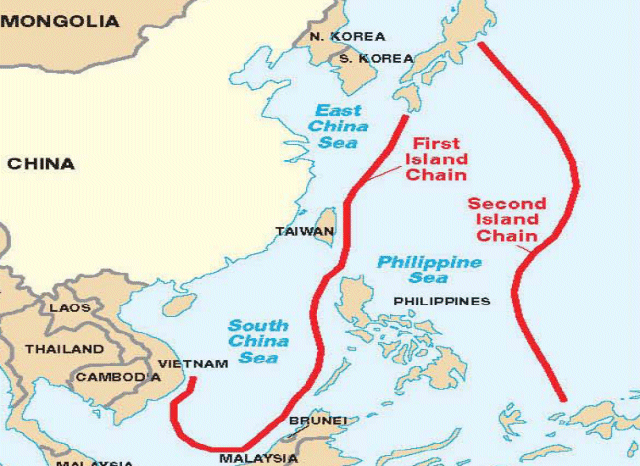
And this could only happen under conditions we have not seen since 1945 -- a CCP Chinese invasion of Taiwan and closure of the South China Sea would roil the planet like nothing we've seen in my lifetime.
Every US ally from Japan, South Korea, Taiwan, Philippines, Australia & Thailand to Canada, UK & France would be forced into whatever major adjustments are necessary to deal with lunatic Chi-Com leadership.
Of course, nobody wants that to happen, but please keep in mind, if it ever did, then a few redirected oil tankers would be the least of the world's problems.
 Owen: "The US responds? With what?
Escorting middle east tankers along that huge Chinese coastline north to Japan?
The first actual action will require use of precision weapons. Reluctance.
Ship oil from the US to Japan?
We don’t have enough excess for that, certainly not with the Permian peaking.
Japan is a big consumer of oil."
- Japan consumes ~3 million barrels of oil per day.
- China consumes ~16 million barrels of oil per day.
- The USA consumes ~20 million barrels of oil per day.
Under emergency conditions:
- Japan's oil reserves can last nearly a year.
- Middle Eastern resupply tankers will reach Japan along the Second Island Chain, not via China's coastline.
- US Gulf Coast refineries can process up to 2 million barrels per day of Venezuelan crude oil for export to Japan via the Panama Canal and north-Pacific ocean.
So, Japan will not run out of oil absent direct Chinese attacks on Japan's infrastructure, which will certainly evoke an equal and opposite response.
Bottom line: WWIII or an asteroid strike will end civilization as we know it today, but anything short of that will not destroy life on earth and, indeed, the world can adapt and respond to a lot, if we have to.
89
posted on
02/13/2026 9:12:06 AM PST
by
BroJoeK
(future DDG 134 -- we remember)
To: BroJoeK
Okay, first of all the introduction of Neodymium into the discussion was to show how this magical transition to alternatives to oil, when faced with grinding scarcity, faces its own obstacles — namely no magnets for the motors.
As for MP Materials, that website is under rapid modification and I have followed the text within for sometime. Production of ore (even refined) vs production of magnets far too often gets presented as the same thing, which it is not. Rare Earths (the focus was neodymium and samarium) were the #1 topic at the Xi trade talks in S. Korea. That is not consistent with belief that the US can readily replace Chinese inputs — and yes, to national security requirements.
The probably most quietly important development on this matter took place just a few weeks ago, when Ford Motor Company announced that their application for magnets from China had been approved after 8 months. The small print said “these products must not have any military application and if it is found that these products were transferred by Ford to any sanctioned entities, all magnet shipments to Ford will end.”
The US, in December, announced a $12 Billion Taiwan weapons package. Two days later China announced sanctions against all US defense firms including some senior executives of those firms (who cannot now fly over any Chinese held territory, including oddly, large swaths of Africa) without being seized.
This is why the US made them the #1 priority in the trade talks. Rapid replacement would have made them 0 priority.
Now then, some oil matters:
The world of oil consumption has evolved to be embarrassing and controversial. The World Statistical Review releases June of each year so our newest info is 2024, until June.
Japan consumption, 3.24 mbpd. Pop 123.3 million.
KSA consumption 3.96 mbpd with Pop of just 37 million.
This is a Japan cut almost in half over just 20 years. Population loss nowhere near that. In contrast, the Saudi increase ran afoul the Green crowd globally. The Saudis have challenged the consumption number for Japan, claiming it is intended to humiliate the Saudi royal family.
Regardless, the Middle East flow to Japan is along the Chinese coast and it is that which is the easiest for the Chinese to grab if somehow their own imports were obstructed.
Chinese domestic production is near the Daqing fields of Manchuria. Their offshore stabs of the sea floor have been many, with the usual declarations of potential, but nothing is flowing. Other than near the Senkaku islands, there is likely nothing there, and Senkaku is Japanese.
Japan’s SPR is about 200 days of crude capacity, and this must be reduced by 12% because storage is typically in rock structures that absorb oil. All countries face this. You can not recover every barrel you inject into an SPR. Then there is the flow rate issue. The US SPR is far larger than Japan’s, but the flow rate outwards from the US SPR is only 4 million bpd, only 20% of daily consumption. Japan would face the same issue and so the 200 days becomes much longer because they cannot extract it at 3 million bpd. Their society would face a slash to daily consumption.
This stuff has been thoroughly analyzed. There are no magical solutions.
Of interest: https://tinyurl.com/mryycve7 this is Google Earth’s look at the Neodymium production region of China. Scroll upwards on the map a few miles north to see size. Then do the same for the MP Materials facilities/mines.
Not even in the same ballpark of extent.
90
posted on
02/13/2026 10:10:53 AM PST
by
Owen
To: Owen
Owen:
"Rare Earths (the focus was neodymium and samarium) were the #1 topic at the Xi trade talks in S. Korea.
That is not consistent with belief that the US can readily replace Chinese inputs — and yes, to national security requirements." Did you read what I posted on Neodymium Magnets?
I'll summarize it:
- 80,000 tons of Neodymium Magnets -- annual US consumption.
- 3,000 tons of Neodymium Magnets -- current annual US production
- 12,000 tons of Neodymium Magnets -- new US production capacity to be online by 2028.
- 3,000 tons of Neodymium Magnets -- barely adequate for US national defense requirements.
- 12,000 tons of Neodymium Magnets -- enough to cover all of US domestic production requirements.
Do you understand what that means?
Today we make only enough for national defense needs.
By 2028 we will make enough for all US domestic production.
We will never make enough Neodymium Magnets (under current plans) to supply magnets to foreign companies who put magnets in products they then export to the USA.
That is the current situation with Neodymium Magnets.
Owen: "Japan consumption, 3.24 mbpd. Pop 123.3 million...
This is a Japan cut almost in half over just 20 years. Population loss nowhere near that."
Yes, measured from peak oil consumption in 1996, Japan now uses 45% less than it did, and there are multiple reasons, only one of which is demographics.
Others include restoration of nuclear power plants (since Fukushima shutdowns), increasing energy efficiencies plus some deindustrialization -- though through 2024, Japan still produced more steel than the USA.
Japan's oil reserves are calculated at 241 days (8+ months), assuming no imports and current usage rates of ~3 mb/d.
But both assumptions are dubious at best, since, as I pointed out: 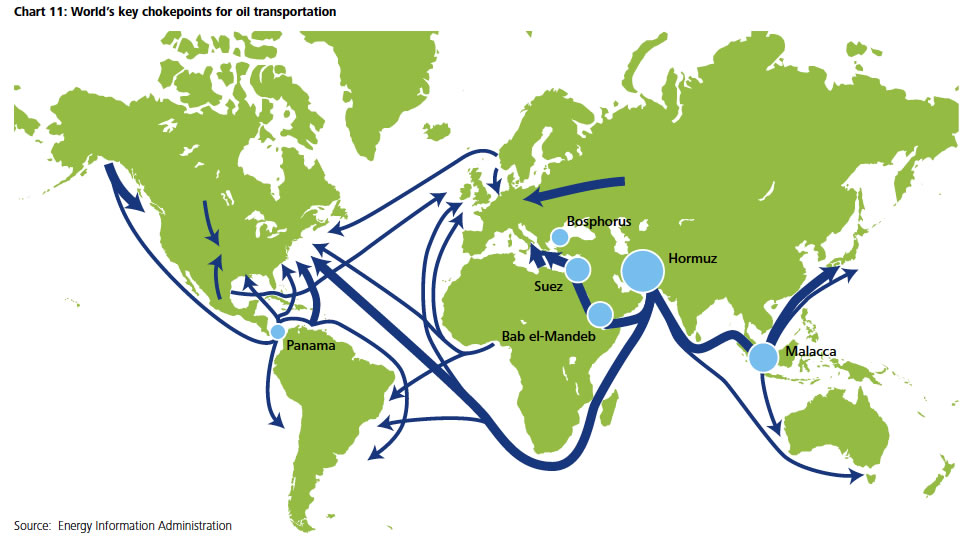
- Oil tankers from the Middle East will not hug China's coast after the first ships are seized by CCP pirates.
Instead, Japan-bound oil tankers will sail further east and then north along the Second Island Chain to Japan. - Even if, hypothetically, all oil to Japan was cut-off by Chi-Com terrorists, the USA could still refine and ship up to 2 mb/d of Venezuelan crude from US Gulf Coast refineries.
These oil tankers would transport through the Panama Canal and across the Northern Pacific to Japan, eliminating any need to depend on vulnerable middle eastern supply routes. - Only 25% of Japan's energy requirements come from oil, the rest comes from other sources like coal, natural gas (LNG), nuclear power and renewables, none of which reach Japan via tankers hugging China's coastline.
Owen:
"The US SPR is far larger than Japan’s, but the flow rate outwards from the US SPR is only 4 million bpd, only 20% of daily consumption." Theoretically, the US does not need any strategic petroleum reserve, since we are a net energy exporter.
However, because of specialized refineries along the Gulf Coast, the US imports up to 4 million barrels per day to refine there.
These imports are what is protected by the US Strategic Petroleum Reserve, in amounts that can last up to six months.
Owen: "Japan would face the same issue and so the 200 days becomes much longer because they cannot extract it at 3 million bpd.
Their society would face a slash to daily consumption."
Let's remember:
- First, it's important to understand that oil supplies only 25% of Japan's energy needs -- so even a 40% reduction in Japan's oil imports would still leave Japanese with 90% of the energy they had before.
- Second, taking oil out of Japan's Strategic Oil Reserves would begin from readily available tank farms before going onto longer term underground storage deposits.
This would allow time to install whatever infrastructure is missing there. - Third, only half of Japan's ~3 mb/d oil usage goes into transportation.
The rest goes into applications which could be replaced by other energy sources, should oil shortages or high prices ever dictate that.
Bottom line: Japan's 241-day strategic petroleum reserves would actually last indefinitely given relatively simple adjustments in oil transportation routes, energy sources, and replacement of oil by other energies in non-critical applications.
91
posted on
02/14/2026 8:33:37 AM PST
by
BroJoeK
(future DDG 134 -- we remember)
To: Duke C.
Oil is organic and continually being produced deep in the bowels of the earth.
92
posted on
02/14/2026 8:45:10 AM PST
by
newfreep
("There is no race problem...just a problem race")
To: BroJoeK
I did note your quote of US consumption, for military particularly. I went looking for it and found your number, but the AI cite was singular, and more bothersome, I went searching for this back in November when it became clear the trade deal with China was essentially non existent. I did not find it then. The 3000 ton number post dates those events in Korea. Like all projections, maybe best to consider it suspect.
I found some IEEE discussion that somewhat shoots down the repurposing proposals. Much to my surprise, they point out that when a neodymium magnet is produced, it is produced to a form factor spec. If you cut it and try to re-shape it, it loses magnetism. This re-purpose concept was somewhat loud by Lutnick in Korea. He had not been briefed.
As for Japan and its oil dependence, it has always been an error to talk about energy rather than oil. Energy does not plant or harvest food, nor move it to store shelves. Oil does that. I have watched carefully the presentations of the Tesla cybersemi and reality is what it somewhat has been since the early 1900s.
Trains moving food by steam engine could indeed do that. This was where the term “cattle car” came from. But the cattle had to be alive, and a huge % of steer mass is not edible. Huge blocks of ice were put in ceilings to try to ship frozen meat, but this failed in summer.
It took oil to have enough power to move the food and keep it frozen. There is zero talk of cooled cyber semi products. They just don’t have the power.
This is why oil matters, everywhere not just Japan. Not energy. You won’t find 400 HP John Deere tractors that are electric. You can’t plant and harvest food before the season ends without oil. The initial electric tractors were presented as something that would need multi recharges per day, perhaps with battery replace in the field. The time consumed at the critical parameter — how long growing season is, and harvesting season before it rots in the field.
This stuff has been pounded on by the oil community for decades. There is nothing new here. Everyone knows.
93
posted on
02/15/2026 8:22:56 AM PST
by
Owen
To: Owen
Owen:
"The 3000 ton number post dates those events in Korea.
Like all projections, maybe best to consider it suspect." I consider all internet data to be suspect but, sadly, often that's all we have to work with.
AI generated data, while sometimes mistaken, at least goes through basic screening, and can usually be checked against themselves for better reliability.
But AI, just like Wikipedia (on which AI often depends) is still subject to G.I.G.O. and cannot give better responses than what its data bases provide.
Owen: "As for Japan and its oil dependence, it has always been an error to talk about energy rather than oil.
Energy does not plant or harvest food, nor move it to store shelves."
Yes, "Energy" in general can and does do all of those things since vehicles can run on not only oil, but also propane, LNG, electricity (i.e., trains, street cars), batteries (even trucks), ammonia (cargo ships), coal (power plants to charge batteries and heat industrial furnaces), etc.
The degree to which oil dominates transportation is more a function of price and availability than necessary technologies.
In Japan, it looks to me like roughly half of oil consumption goes into transportation, meaning there is still room for Japanese to live on less oil imports, should an international emergency ever require that.
So, the point of this discussion is that Japanese will not be brought to their economic knees by a situation where Chinese pirates begin hijacking a few Japanese oil tankers.
They can adjust and adapt for many months before things get critical.
Owen: "It took oil to have enough power to move the food and keep it frozen.
There is zero talk of cooled cyber semi products.
They just don’t have the power."
They don't need it.
If overhead electricity can power trains, and large batteries trucks, then the small extra power for refrigeration can come from oil without seriously drawing down dwindling oil stocks.
My point is: you never have to replace 100% of oil right away.
Every improvement in efficiency or shift to an alternate fuel can help if, or when, oil supplies become more expensive and less available.
Owen: "This is why oil matters, everywhere not just Japan.
Not energy.
You won’t find 400 HP John Deere tractors that are electric.
You can’t plant and harvest food before the season ends without oil.
The initial electric tractors were presented as something that would need multi recharges per day, perhaps with battery replace in the field. "
Propane can power large engines.
Gas/diesel made from coal can power large engines.
But, more important, for every large tractor engine, there are many smaller truck and car engines running on gasoline that can switch to batteries or propane to save diesel fuel for large tractors and other critical engines.
That's all I'm saying here:
- "Peak oil" will not be followed by a sudden disappearance of all oil, but rather by slow declines and rising prices allowing time for economies to adapt.
- Some current oil powered applications are easier to convert than others, and those will go first, leaving enough oil to power equipment more difficult to convert.
![]()
94
posted on
02/17/2026 4:15:37 AM PST
by
BroJoeK
(future DDG 134 -- we remember)
Navigation: use the links below to view more comments.
first previous 1-20, 21-40, 41-60, 61-80, 81-94 last
Disclaimer:
Opinions posted on Free Republic are those of the individual
posters and do not necessarily represent the opinion of Free Republic or its
management. All materials posted herein are protected by copyright law and the
exemption for fair use of copyrighted works.
FreeRepublic.com is powered by software copyright 2000-2008 John Robinson