That is not consistent with belief that the US can readily replace Chinese inputs — and yes, to national security requirements."
Did you read what I posted on Neodymium Magnets?
I'll summarize it:
- 80,000 tons of Neodymium Magnets -- annual US consumption.
- 3,000 tons of Neodymium Magnets -- current annual US production
- 12,000 tons of Neodymium Magnets -- new US production capacity to be online by 2028.
- 3,000 tons of Neodymium Magnets -- barely adequate for US national defense requirements.
- 12,000 tons of Neodymium Magnets -- enough to cover all of US domestic production requirements.
Today we make only enough for national defense needs.
By 2028 we will make enough for all US domestic production.
We will never make enough Neodymium Magnets (under current plans) to supply magnets to foreign companies who put magnets in products they then export to the USA.
That is the current situation with Neodymium Magnets.
Owen: "Japan consumption, 3.24 mbpd. Pop 123.3 million...
This is a Japan cut almost in half over just 20 years. Population loss nowhere near that."
Yes, measured from peak oil consumption in 1996, Japan now uses 45% less than it did, and there are multiple reasons, only one of which is demographics.
Others include restoration of nuclear power plants (since Fukushima shutdowns), increasing energy efficiencies plus some deindustrialization -- though through 2024, Japan still produced more steel than the USA.
Japan's oil reserves are calculated at 241 days (8+ months), assuming no imports and current usage rates of ~3 mb/d.
But both assumptions are dubious at best, since, as I pointed out: 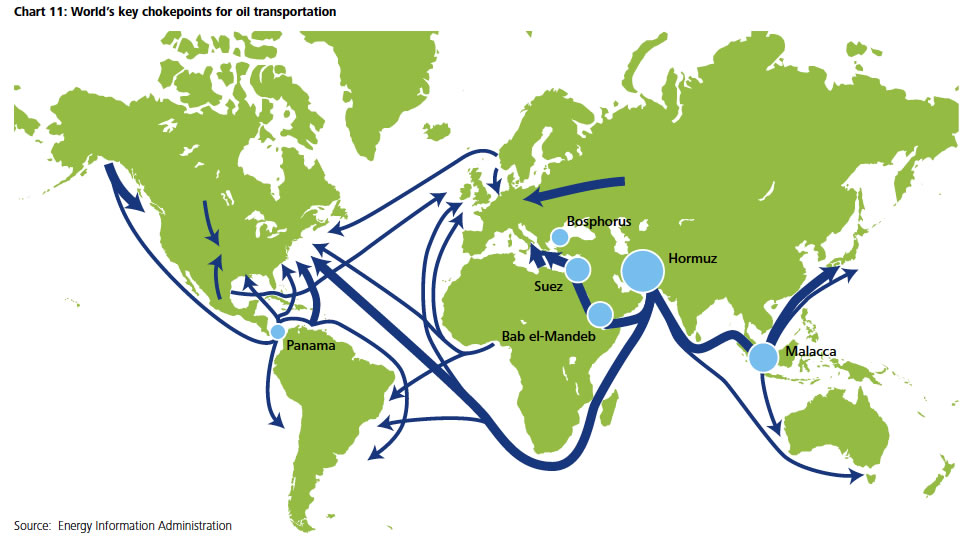
- Oil tankers from the Middle East will not hug China's coast after the first ships are seized by CCP pirates.
Instead, Japan-bound oil tankers will sail further east and then north along the Second Island Chain to Japan. - Even if, hypothetically, all oil to Japan was cut-off by Chi-Com terrorists, the USA could still refine and ship up to 2 mb/d of Venezuelan crude from US Gulf Coast refineries.
These oil tankers would transport through the Panama Canal and across the Northern Pacific to Japan, eliminating any need to depend on vulnerable middle eastern supply routes. - Only 25% of Japan's energy requirements come from oil, the rest comes from other sources like coal, natural gas (LNG), nuclear power and renewables, none of which reach Japan via tankers hugging China's coastline.
Theoretically, the US does not need any strategic petroleum reserve, since we are a net energy exporter.
However, because of specialized refineries along the Gulf Coast, the US imports up to 4 million barrels per day to refine there.
These imports are what is protected by the US Strategic Petroleum Reserve, in amounts that can last up to six months.
Owen: "Japan would face the same issue and so the 200 days becomes much longer because they cannot extract it at 3 million bpd.
Their society would face a slash to daily consumption."
Let's remember:
- First, it's important to understand that oil supplies only 25% of Japan's energy needs -- so even a 40% reduction in Japan's oil imports would still leave Japanese with 90% of the energy they had before.
- Second, taking oil out of Japan's Strategic Oil Reserves would begin from readily available tank farms before going onto longer term underground storage deposits.
This would allow time to install whatever infrastructure is missing there. - Third, only half of Japan's ~3 mb/d oil usage goes into transportation.
The rest goes into applications which could be replaced by other energy sources, should oil shortages or high prices ever dictate that.