Owen: "Economics and its laws are all about money.
Where does money come from?
It is created on a whim by central banks.
How can there be any laws of nature managing a substance created from nothingness, effortlessly, on a whim?"
"Fiat money", as it's called, has driven the world's economies since at least 1971, when Pres. Nixon ended the post-war Bretton Woods agreements.
One result is that today it takes up to $15 to buy what $1 bought in 1971.
But regardless, the laws of supply and demand were never repealed, nor were technological substitutions -- of more expensive materials for now less expensive ones -- ever ended.
Owen: "When one faces geologic scarcity, one does not look to see how one can build more of something by paying for it with a substance that came from nothing.
Instead, what does one do?
One dies."
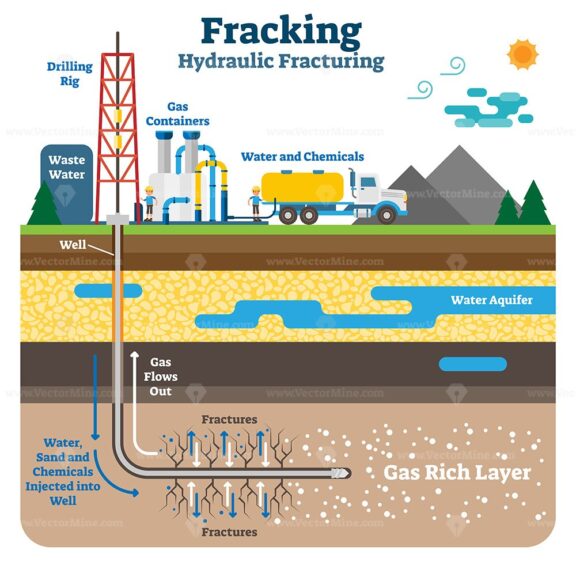 Seriously, why are you babbling stupid nonsense?
Do you think there's a cogent idea behind such word-vomits?
FRiend, you need to take a break and clear your head of garbage-thoughts before posting yet more gibberish.
Owen: "It would not matter what the price is.
You would send troops to mow down the company owner and force additional drilling right next to that well.
You would strive to get every drop out.
Money would be inconsequential, because those droplets power the transport of food to shelves.
You can’t create food with quantitative ease."
Really??!
You know what I think, I think you're talking about Russia here, maybe your home country?, which is in major, major economic troubles, and can no longer produce even the one commodity on which everything else depends -- oil.
Your FSB chief, Mad-Vlad the Invader has screwed up everything so bad that he may have to send the Russian military to force oil wells to remain in production.
Good luck with that, comrade.
But in the real world, with natural economies and outside of extreme wartime conditions, the laws of Basic Economics 101 still rule and people will substitute one commodity for another whenever prices, availabilities and technologies make that advisable.
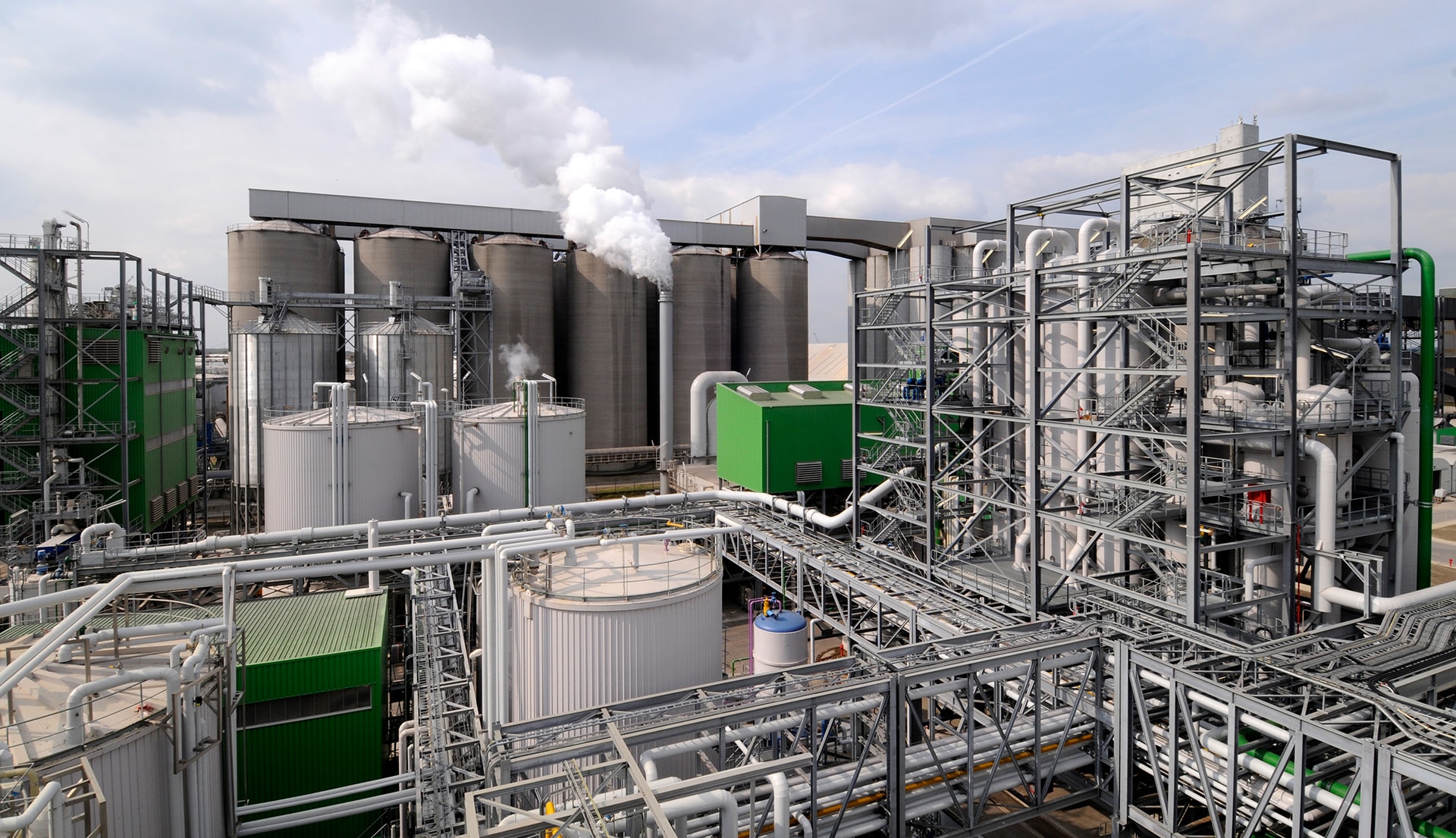
Biofuel production plant:
 So, nobody "dies" just because an oil well runs dry.
Instead, depending on circumstances, they simply drill a new well, or build a nuclear power plant, a hydroelectric dam, expand bio-fuel production, build plants to convert coal to gasoline, geothermal, or whatever makes the most sense at that time.
Today, in the US, oil represents ~1/3 of all energy used, which is down from ~1/2 in 1970.
As oil becomes more expensive and less available, it will shrink from 1/3 to much lower numbers at a rate dictated by basic Laws of Economics.
Which part of that do you not understand?
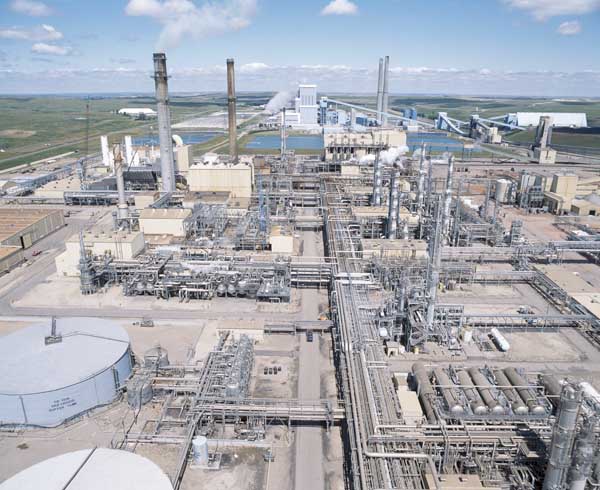
Coal liquefaction -- making oil from coal: