Okay, first of all the introduction of Neodymium into the discussion was to show how this magical transition to alternatives to oil, when faced with grinding scarcity, faces its own obstacles — namely no magnets for the motors.
As for MP Materials, that website is under rapid modification and I have followed the text within for sometime. Production of ore (even refined) vs production of magnets far too often gets presented as the same thing, which it is not. Rare Earths (the focus was neodymium and samarium) were the #1 topic at the Xi trade talks in S. Korea. That is not consistent with belief that the US can readily replace Chinese inputs — and yes, to national security requirements.
The probably most quietly important development on this matter took place just a few weeks ago, when Ford Motor Company announced that their application for magnets from China had been approved after 8 months. The small print said “these products must not have any military application and if it is found that these products were transferred by Ford to any sanctioned entities, all magnet shipments to Ford will end.”
The US, in December, announced a $12 Billion Taiwan weapons package. Two days later China announced sanctions against all US defense firms including some senior executives of those firms (who cannot now fly over any Chinese held territory, including oddly, large swaths of Africa) without being seized.
This is why the US made them the #1 priority in the trade talks. Rapid replacement would have made them 0 priority.
Now then, some oil matters:
The world of oil consumption has evolved to be embarrassing and controversial. The World Statistical Review releases June of each year so our newest info is 2024, until June.
Japan consumption, 3.24 mbpd. Pop 123.3 million.
KSA consumption 3.96 mbpd with Pop of just 37 million.
This is a Japan cut almost in half over just 20 years. Population loss nowhere near that. In contrast, the Saudi increase ran afoul the Green crowd globally. The Saudis have challenged the consumption number for Japan, claiming it is intended to humiliate the Saudi royal family.
Regardless, the Middle East flow to Japan is along the Chinese coast and it is that which is the easiest for the Chinese to grab if somehow their own imports were obstructed.
Chinese domestic production is near the Daqing fields of Manchuria. Their offshore stabs of the sea floor have been many, with the usual declarations of potential, but nothing is flowing. Other than near the Senkaku islands, there is likely nothing there, and Senkaku is Japanese.
Japan’s SPR is about 200 days of crude capacity, and this must be reduced by 12% because storage is typically in rock structures that absorb oil. All countries face this. You can not recover every barrel you inject into an SPR. Then there is the flow rate issue. The US SPR is far larger than Japan’s, but the flow rate outwards from the US SPR is only 4 million bpd, only 20% of daily consumption. Japan would face the same issue and so the 200 days becomes much longer because they cannot extract it at 3 million bpd. Their society would face a slash to daily consumption.
This stuff has been thoroughly analyzed. There are no magical solutions.
Of interest: https://tinyurl.com/mryycve7 this is Google Earth’s look at the Neodymium production region of China. Scroll upwards on the map a few miles north to see size. Then do the same for the MP Materials facilities/mines.
Not even in the same ballpark of extent.
Owen:
"Rare Earths (the focus was neodymium and samarium) were the #1 topic at the Xi trade talks in S. Korea.
That is not consistent with belief that the US can readily replace Chinese inputs — and yes, to national security requirements." Did you read what I posted on Neodymium Magnets?
I'll summarize it:
- 80,000 tons of Neodymium Magnets -- annual US consumption.
- 3,000 tons of Neodymium Magnets -- current annual US production
- 12,000 tons of Neodymium Magnets -- new US production capacity to be online by 2028.
- 3,000 tons of Neodymium Magnets -- barely adequate for US national defense requirements.
- 12,000 tons of Neodymium Magnets -- enough to cover all of US domestic production requirements.
Do you understand what that means?
Today we make only enough for national defense needs.
By 2028 we will make enough for all US domestic production.
We will never make enough Neodymium Magnets (under current plans) to supply magnets to foreign companies who put magnets in products they then export to the USA.
That is the current situation with Neodymium Magnets.
Owen: "Japan consumption, 3.24 mbpd. Pop 123.3 million...
This is a Japan cut almost in half over just 20 years. Population loss nowhere near that."
Yes, measured from peak oil consumption in 1996, Japan now uses 45% less than it did, and there are multiple reasons, only one of which is demographics.
Others include restoration of nuclear power plants (since Fukushima shutdowns), increasing energy efficiencies plus some deindustrialization -- though through 2024, Japan still produced more steel than the USA.
Japan's oil reserves are calculated at 241 days (8+ months), assuming no imports and current usage rates of ~3 mb/d.
But both assumptions are dubious at best, since, as I pointed out: 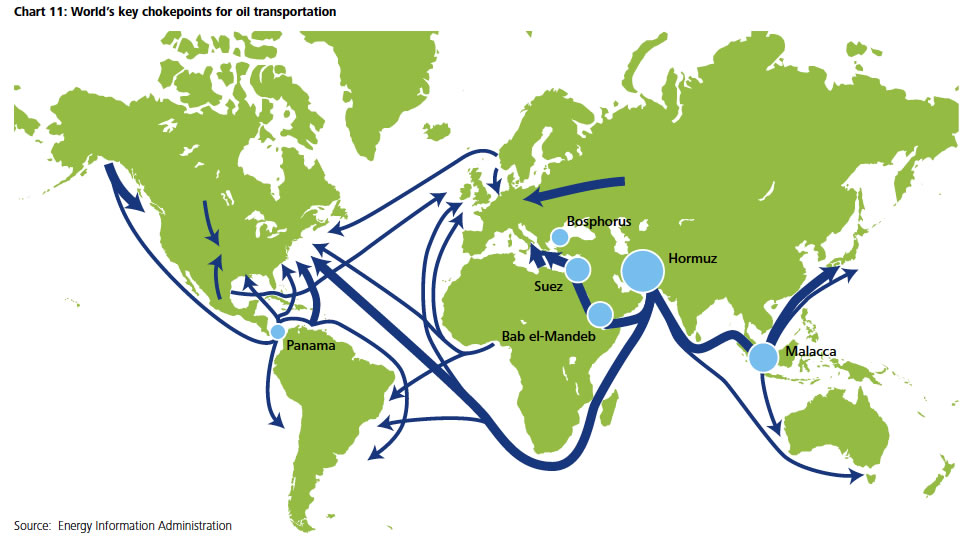
- Oil tankers from the Middle East will not hug China's coast after the first ships are seized by CCP pirates.
Instead, Japan-bound oil tankers will sail further east and then north along the Second Island Chain to Japan. - Even if, hypothetically, all oil to Japan was cut-off by Chi-Com terrorists, the USA could still refine and ship up to 2 mb/d of Venezuelan crude from US Gulf Coast refineries.
These oil tankers would transport through the Panama Canal and across the Northern Pacific to Japan, eliminating any need to depend on vulnerable middle eastern supply routes. - Only 25% of Japan's energy requirements come from oil, the rest comes from other sources like coal, natural gas (LNG), nuclear power and renewables, none of which reach Japan via tankers hugging China's coastline.
Owen:
"The US SPR is far larger than Japan’s, but the flow rate outwards from the US SPR is only 4 million bpd, only 20% of daily consumption." Theoretically, the US does not need any strategic petroleum reserve, since we are a net energy exporter.
However, because of specialized refineries along the Gulf Coast, the US imports up to 4 million barrels per day to refine there.
These imports are what is protected by the US Strategic Petroleum Reserve, in amounts that can last up to six months.
Owen: "Japan would face the same issue and so the 200 days becomes much longer because they cannot extract it at 3 million bpd.
Their society would face a slash to daily consumption."
Let's remember:
- First, it's important to understand that oil supplies only 25% of Japan's energy needs -- so even a 40% reduction in Japan's oil imports would still leave Japanese with 90% of the energy they had before.
- Second, taking oil out of Japan's Strategic Oil Reserves would begin from readily available tank farms before going onto longer term underground storage deposits.
This would allow time to install whatever infrastructure is missing there. - Third, only half of Japan's ~3 mb/d oil usage goes into transportation.
The rest goes into applications which could be replaced by other energy sources, should oil shortages or high prices ever dictate that.
Bottom line: Japan's 241-day strategic petroleum reserves would actually last indefinitely given relatively simple adjustments in oil transportation routes, energy sources, and replacement of oil by other energies in non-critical applications.