Posted on 07/07/2026 9:48:30 AM PDT by Red Badger
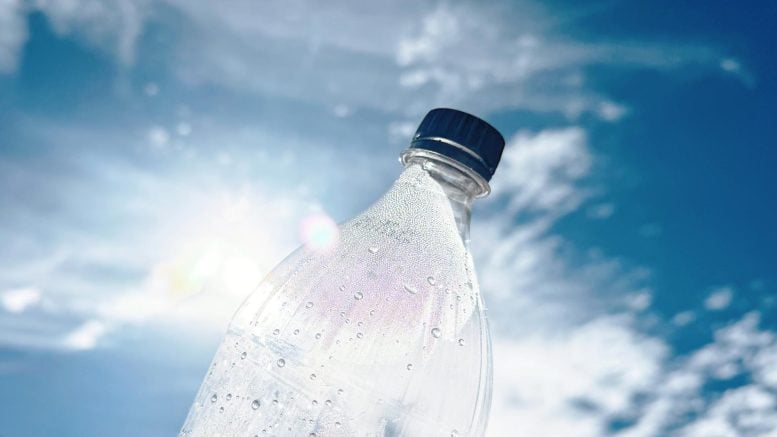
Plastics – rich in carbon and hydrogen – can be converted into a clean energy source, using sunlight. Credit: Adelaide University Scientists are exploring a method to convert plastic waste into fuels and valuable chemicals using sunlight, potentially addressing both pollution and energy challenges.
Scientists are developing a potential solution to two major global problems, plastic pollution and clean energy, by using sunlight to turn discarded plastics into useful fuels.
A new study led by University of Adelaide PhD candidate Xiao Lu examines how solar-powered systems can convert plastic waste into hydrogen, syngas, and other industrial chemicals. This approach could support the transition to a more sustainable, circular economy.
Worldwide, more than 500 million tons of plastic are produced each year, and millions of tons end up in the environment. At the same time, growing pressure to cut fossil fuel use has intensified the search for cleaner energy alternatives.
The study, published in Chem Catalysis, shows that plastics, which are rich in carbon and hydrogen, could be treated as a valuable resource rather than simply waste.
“Plastic is often seen as a major environmental problem, but it also represents a significant opportunity,” said Ms Lu. “If we can efficiently convert waste plastics into clean fuels using sunlight, we can address pollution and energy challenges at the same time.”
How Solar-Driven Photoreforming Works
This method, called solar-driven photoreforming, relies on light-sensitive materials known as photocatalysts to break down plastics at relatively low temperatures. The process can generate hydrogen, a clean fuel that produces no emissions at the point of use, along with other useful industrial chemicals.
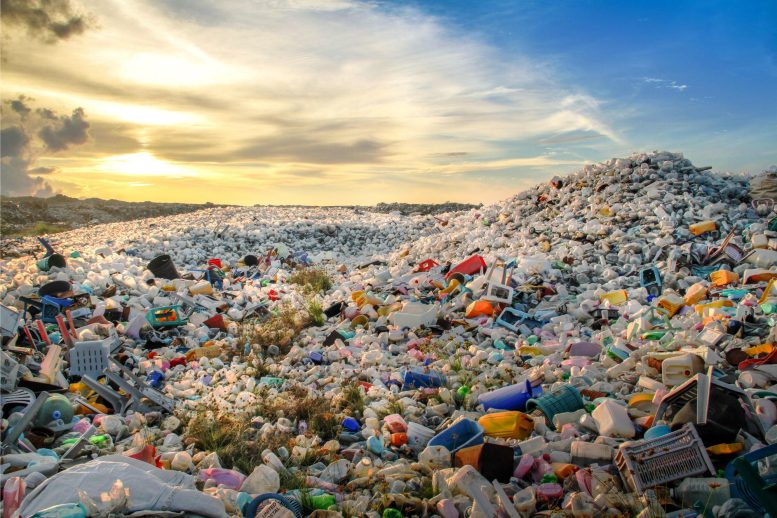
Plastic Waste Garbage - Plastic waste is a growing environmental problem as production continues to rise and recycling remains limited. Durable plastics persist for decades, breaking down into microplastics that spread through ecosystems and food systems, posing risks to both environmental and human health. Credit: Stock
Compared with conventional hydrogen production through water splitting, this approach requires less energy because plastics are easier to oxidize. That advantage could make it more practical for large-scale use.
Recent research has reported strong performance, according to senior author Professor Xiaoguang Duan from the School of Chemical Engineering at the University of Adelaide.
Scientists have achieved high hydrogen output along with the production of acetic acid and diesel-range hydrocarbons. Some systems have operated continuously for more than 100 hours, showing improving stability and efficiency.
Technical Challenges and Limitations
Despite these advances, several obstacles remain before the technology can be widely used.
“One major hurdle is the complexity of plastic waste itself,” Prof Duan said. “Different types of plastics behave differently during conversion, and additives such as dyes and stabilizers can interfere with the process. Efficient sorting and pre-treatment are therefore essential to maximize performance and product quality.”
Designing better photocatalysts is another challenge. These materials must be highly selective and durable so they can perform under harsh chemical conditions without losing efficiency. Current systems can degrade over time, limiting long-term use.
“There is still a gap between laboratory success and real-world application,” Prof Duan said. “We need more robust catalysts and better system designs to ensure the technology is both efficient and economically viable at scale.”
Scaling Up and Future Directions
Separating the final products also remains difficult. The process often produces a mix of gases and liquids that require energy-intensive purification, which can reduce overall sustainability.
To overcome these issues, researchers suggest a more integrated strategy that combines advances in catalyst design, reactor engineering, and system optimization. New ideas include continuous-flow reactors, systems that combine solar energy with heat or electricity, and improved monitoring to boost efficiency.
The team also outlines a path toward scaling up the technology, with goals such as higher energy efficiency and continuous industrial operation in the years ahead.
“This is an exciting and rapidly evolving field,” Ms Lu said. “With continued innovation, we believe solar-powered plastic-to-fuel technologies could play a key role in building a sustainable, low-carbon future.”
Reference:
“Opportunities and challenges in sustainable solar fuel production from plastics” by Xiao Lu, Wenjie Tian and Xiaoguang Duan, 28 April 2026, Chem Catalysis.
DOI: 10.1016/j.checat.2026.101746
Funding: Australian Research Council
this conversion is already being done using other energy sources. the only question is as to whether solar is a better cheaper, smarter, faster source of power.

"Great, Scott!"
Pay particular attention to the part about if The United States was the size of a football field. Enough of the grift, the scam, the lie.
“hydrogen, a clean fuel that produces no emissions at the point of use”, but is insanely expensive and dangerous to transport and store due the extreme difficulty in preventing leaks of the universe’s smallest atom, and the extreme combustible and explosive nature of hydrogen [see Hindenburg disaster] ...
Plastic burns nicely, it burns very cleanly if the AFR is correct, same as diesel or kerosene or gasoline or any other petroleum product.
““There is still a gap between laboratory success and real-world application,””
there always is with these laboratory processes, right?
“Separating the final products also remains difficult. The process often produces a mix of gases and liquids that require energy-intensive purification, which can reduce overall sustainability.”
ruh, roh ...
You are just dumb if you believe plastic waste is not a problem. There is a floating patch of plastic waste larger than Texas in the central Pacific.
Don’t be stupid any process that turns waste into something useful is a plus for the whole planet.
I just spent two weeks on an island at one of my condos the beach was littered with plastic every morning from the high tide over night the bozers came by every morning to scrape it and the seaweed away into piles to be hauled off to the landfill. Tonnes and tonnes of it every single day.
You couldn’t be more wrong if you tried. Sit down and let the adults work on real world issues.
Crude Oil > Refined > Plastic > Sunlight > Clean Fuel... So, what should we do? ... Drill baby Drill!
On a related note: I watched the trash pickup early this morning. They had a single truck yet emptied both the recycling can and trash can. Magic? They used to have a smaller truck specifically for recyclables.
” At the same time, growing pressure to cut fossil fuel use has intensified the search for cleaner energy alternatives. “
Silly rabbit, plastics ARE hydrocarbons.
Why it is even in its very description: “ shows that plastics, which are rich in CARBON and HYDROgen”
So, the end game will be your empty bottle will now be worth something to someone that can make fuel, so the price to make them will go up so the manufacturers can get their cut of the energy money on the front side and the product producers will charge more for having to pay for them, but you still won’t get anything for yours and you are to be expected to discard them in the green or blue cans and get fined if you don’t.
I agree 100%. Years ago I looked into the possibility of having an electrolyzer produce hydrogen into a tank buried in the ground outside, then when needed use the hydrogen gas for a fuel cell to make electricity. In that case there'd be no transportation danger -- production, storage, and consumption would all be local. And I could use the excess solar power my system generates on sunny days that my home battery stack was charged -- might as well put that excess energy into creating hydrogen for long term energy storage. Sounded good in theory.
But the cost was extremely high, as you said. As well as inefficient. It'd take a lot of incoming solar power to produce only a little hydrogen gas from the electrolyzer and get a little power back from the fuel cell in return. (A strongly negative ROI.)
It was more efficient to find other things to do with the excess solar power. For example, one thing I do is make sure the EV is charged to at least 50% for the next day's local driving even if power isn't free (rainy days). But on excess solar days charge the EV to the top (80%) to not have to charge it if the next few days are rainy days. No change in driving habits, just changes on when I "top it off".
Mr. Fusion started life as a Krups coffee grinder. Where might this new contraption originate? I checked the Sunbeam line of small home appliances...

Dottie West had good things to say about country sunshine.
India will be rich and have all the energy it needs ,LOL
India will be rich and have all the energy it needs they’re up to their eyeballs in plastic ,LOL
You know that is there because it was dumped in the ocean.

Disclaimer: Opinions posted on Free Republic are those of the individual posters and do not necessarily represent the opinion of Free Republic or its management. All materials posted herein are protected by copyright law and the exemption for fair use of copyrighted works.