
Posted on 06/18/2026 8:37:25 PM PDT by Red Badger
Trenta, Helion`s 6th fusion prototype. Helion
Helion Energy has an agreement with Microsoft to supply 50 MW of fusion power by 2028.
US-based fusion energy company Helion has received the regulatory clearances to build the world’s first fusion energy power plant. The company has received a Radioactive Materials License (RML) and a Radioactive Air Emissions License (RAEL) from the Washington Department of Health (DOH), clearing the way to begin construction of the generator building at the power plant site.
As the world looks for newer ways to meet it energy demands without emitting carbon, fusion energy seems to be the most likely option. Using the chemical reaction that occurs on the Sun, fusion energy can potentially generate large amounts of energy from simpler atoms like hydrogen and its isotopes.
Unlike its counterpart, nuclear fission, fusion energy does not produce large amounts of radioactive waste that need to be stored safely. Moreover, unlike renewables like wind and solar, fusion energy plants can work on demand, meeting energy requirements as they arise, without the investments required in energy storage too.
Commercializing nuclear fusion For all its benefits, nuclear fusion is still not a commercially available technology because the fusion reactors have not been able to generate more energy than they consume. Washington-state-based Helion Energy, though, is confident that it can achieve this fairly soon.
While it has not yet published any peer-reviewed papers demonstrating how its fusion reactor works, the company is proceeding to build a fusion reactor that it will deploy commercially. It also has an agreement in place with Microsoft to supply 50 MW of power to a data center from its fusion reactor by 2028.
The facility dubbed Orion is under construction in Malaga, Washington state and recently became the first such facility in the world to secure regulatory licenses to construct the nuclear plant. So far, the assembly and office building of the plant were completed but the recent grant of licenses from the DOH allows Helion to begin constructing the reactor as well.
Why is NRC not involved? As a nuclear energy company, Helion should ideally be seeking approval from the US Nuclear Regulatory Commission (NRC). However, the NRC regulates nuclear fusion under the byproduct material framework, putting it in the same category for approvals as particle accelerators and hospitals, instead of nuclear reactors.
This is not just a distinction made by the NRC but one also ratified by the US Congress in the ADVANCE Act of 2024, and it shows that nuclear fusion has a very different safety profile from fission and hence its path to deployment is also different.
The issuance of the RML and RAEL licenses by the Washington DOH is a major milestone for Helion as it confirms that it has facilities, personnel, and safety programs that meet the safety standards for a fusion facility at the Malaga site.
“We are extremely proud to be granted these licenses from the Washington DOH, making us the first company in the world with the regulatory approvals in place for fusion power plant operations,” said David Kirtley, CEO of Helion Energy, in a press release shared with Interesting Engineering.
“We have a long history of working with the DOH to license our previous fusion activities. Today’s announcement represents the rigor of that work and opens the door for practical, commercial, safe fusion power.”
In addition to the approvals needed to build its reactor, Helion has also secured a transmission interconnection agreement with Chelan County Public Utility District that will enable energy generated from its fusion power plant to be supplied to the grid, a global first as well.
The question now is whether Helion will be able to meet its deadline to power Microsoft’s data center by 2028 from its fusion power plant.
No yet demonstrated positive energy output.
I wish them well, but they are likely still 10 years away.
fusion? We shall see. Don’t get your hopes up.
1989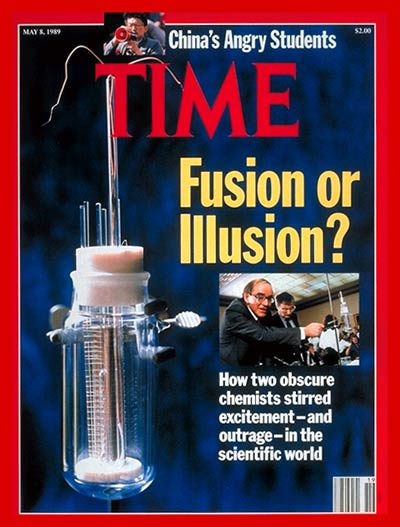
2015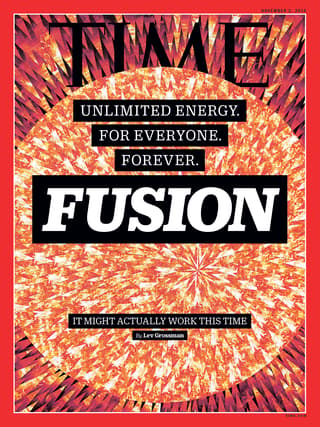
We use the energy from fusion everyday. It is turned into chemical energy by plants. It literally powers our bones.
Now that we have early AI, can’t we get Cold Fusion to work on a regular basis?
Doncha just love gasohol?
“Using the chemical reaction that occurs on the Sun, fusion energy”
idiots ... fusion isn’t a chemical reaction, it’s a nuclear reaction ...

The saying at Lawrence Livermore National Laboratory was “ Fusion is and shall always remain the energy source of the future”
I really hope that this works out but scaling up from a system that has not reached breakeven to reliable multi MW power output in 2 years is a very ambitious schedule.
“fusion reactors have not been able to generate more energy than they consume. Washington-state-based Helion Energy, though, is confident that it can achieve this fairly soon.”
Yeah, just around the corner.

Fusion electrical generation has been 10 years from commercial operation for the last 60-70 years.
This fusion outfit has gotten 10 million in FedGov funding early on
But these has received 1.5 billion from private investors. Suckers? Clowns dreaming of a Tesla like score?
-
-
-
-
-
-
-
-
-
-
-Yes, Helion Energy has received US Government (USG) funding, primarily in its early stages, though it is now primarily backed by substantial private investment (over $1.5 billion total raised).
helionenergy.com
Key USG Funding Details:ARPA-E (Advanced Research Projects Agency–Energy, part of DOE): Helion received multiple grants, including a notable ~$3.97 million award under the ALPHA program for “Compression of FRC Targets for Fusion” (Staged Magnetic Compression of FRC Targets to Fusion Conditions). This supported prototype development for a potential low-cost fusion path.
arpa-e.energy.gov
Total early government support: Reports indicate Helion received about $7 million combined from NASA, the US Department of Energy (DOE), and the Department of Defense (DoD) in its initial phases. This non-dilutive funding helped with foundational research and early prototypes before major private rounds.
en.wikipedia.org
Helion has been involved in DOE/ARPA-E programs and milestones related to fusion commercialization. Recent DOE efforts (under Biden and continuing) have supported fusion developers, including milestone-based grants, though Helion’s largest funding is now private.
eenews.net
Context on Current FundingHelion’s funding is now dominated by private investors (e.g., Sam Altman, Thrive Capital, SoftBank, Lightspeed, Mithril, etc.), with recent rounds like the $465 million Series G in 2026 valuing the company at $15.5 billion post-money. It has also launched its own programs (like HERCULES) to fund external research institutions.
helionenergy.com
In short, yes—early USG support (especially ARPA-E/DOE) was important for Helion’s technology development, but the company has since scaled dramatically with private capital. For the latest specifics, check ARPA-E project pages or Helion’s updates.
5 web pages
too cheap to meter fusion electricity + no limits on AI data centers construction = Skynet
Fusion is theoretically the way to go!
But it has been researched since I was a kid.
They have been pretty close to achieve it for maybe 70 years.
Maybe this time they will really make it!
I wish them good luck!
A neat stunt. Generally, nobody else would bother applying until they had something viable. All they accomplished was “being the first at applying”, with no evidence of any actual working device.
I’d love to be proven wrong.
I agree but what if they just don’t want to reveal their method at this time?
They signed a contract with Microsoft for 50MW of power, and I’m pretty sure MS lawyers aren’t fools.............
Per AI...
“Malaga, Washington is situated within a geologically complex region of the Yakima Fold Belt, notable for the Entiat Fault and the Chelan Fault Zone. While no single trace runs directly through the immediate town site, the area is highly prone to fault-induced seismic activity and historic large-scale, deep-seated landslides.”
The DoE might want to have a word...
Fusion reactors are not like fission reactors.
They don’t tend to blow up, they just stop the fusion process.........
Disclaimer: Opinions posted on Free Republic are those of the individual posters and do not necessarily represent the opinion of Free Republic or its management. All materials posted herein are protected by copyright law and the exemption for fair use of copyrighted works.