Skip to comments.
Newly Discovered Evidence: Is The Trojan Horse History's Biggest Deception? [51:39]
YouTube ^
| May 5, 2026
| Odyssey - Ancient History Documentaries
Posted on 05/06/2026 10:17:59 AM PDT by SunkenCiv
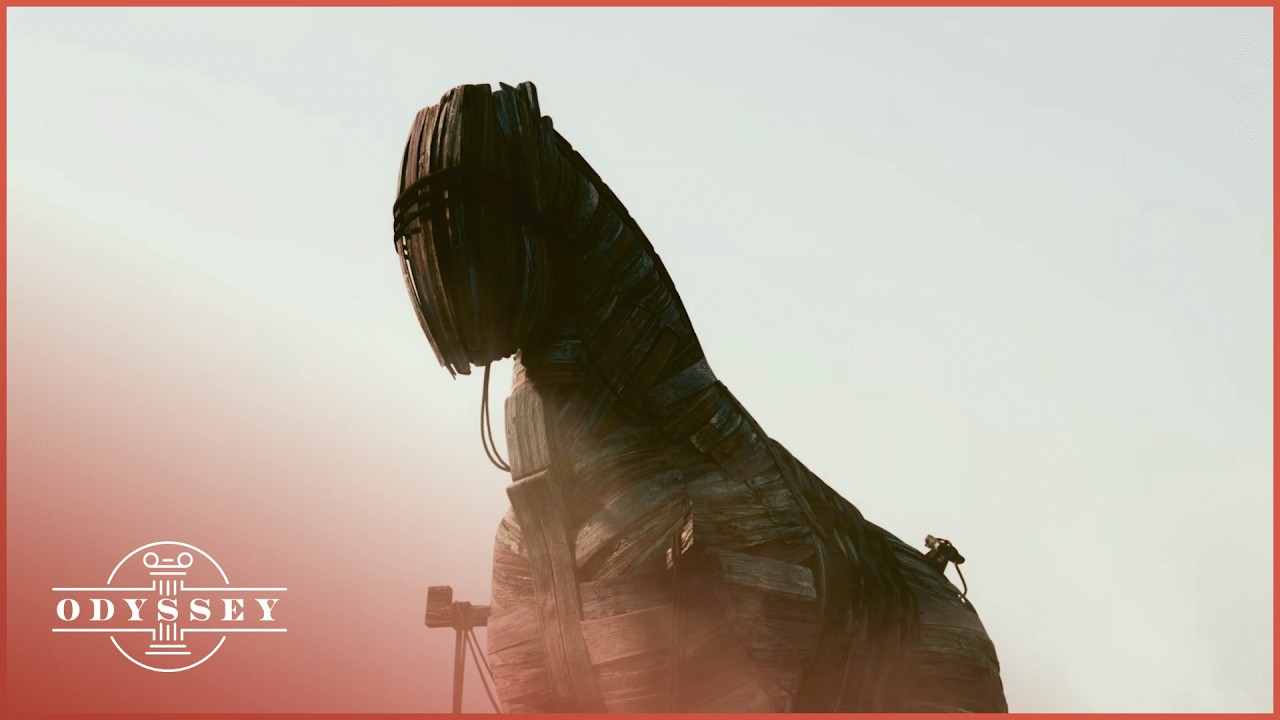
The history of the Trojan horse is probably one of the most famous stories ever told. A gigantic wooden horse is loaded with Greek soldiers and presented to the Trojans as a gift. Unsuspecting, they swallow the bait and pull the horse into the city. Under cover of darkness the Greeks slip out of the horse and open the gates to their comrades. Only hours later the mighty Troy goes up in flames. But what if the myth of the horse is not true at all? New, groundbreaking findings show that one of the most famous stories of all time will probably have to be rewritten. The Trojan horse was probably not a horse at all. But then how did the Greeks outwit their enemies? And what history will we find in the history books in the future? Newly Discovered Evidence:
Is The Trojan Horse History's Biggest Deception? | 51:39
Odyssey - Ancient History Documentaries | 1.02M subscribers | 3,127 views | May 5, 2026
(Excerpt) Read more at youtube.com ...
TOPICS: History; Science; Travel
KEYWORDS: archaeology; archeology; catastrophism; covid; ggg; godsgravesglyphs; heinrichschliemann; hisarlik; homer; iliad; trojanwar
Navigation: use the links below to view more comments.
first previous 1-20, 21-40, 41-60, 61-80, 81-92 next last
The story of the Trojan Horse originates from ancient Greek mythology, specifically within the Epic Cycle of poems, though the most detailed and familiar account comes from the Roman poet Virgil’s Aeneid (Book II, written around 19 BC). While the Greek poet Homer briefly mentions the wooden horse in his Odyssey, his earlier epic, the Iliad, ends before the war concludes and does not describe the event.
The narrative was further elaborated in lost works such as the Little Iliad and the Sack of Troy, which survive only in fragments and summaries by later authors like Quintus Smyrnaeus and Pausanias. These sources describe how the Greek hero Odysseus devised the plan to hide soldiers inside a large wooden horse, which the Trojans brought into their city as a trophy, leading to their defeat.
Primary Source: Virgil’s Aeneid provides the most complete version, including characters like Sinon, Laocoön, and Cassandra.
Earlier References: Homer’s Odyssey references the horse but offers no detailed narrative.
Lost Epics: The Little Iliad and Iliou Persis likely contained the original detailed accounts, now lost to history.
Historical Basis: There is no physical evidence that the wooden horse existed; historians believe the story may be a mythologized account of a siege engine or a ship with a horse figurehead used to breach Troy’s walls.
AI-generated answer. Please verify critical facts.
https://search.brave.com/search?q=where+does+the+trojan+horse+story+come+from%3F&summary=1
61
posted on
05/06/2026 11:53:02 AM PDT
by
SunkenCiv
(TDS -- it's not just for DNC shills anymore -- oh, wait, yeah it is.)
62
posted on
05/06/2026 11:54:52 AM PDT
by
SunkenCiv
(TDS -- it's not just for DNC shills anymore -- oh, wait, yeah it is.)
To: SunkenCiv
beware of greeks bearing gifts
63
posted on
05/06/2026 11:56:58 AM PDT
by
joshua c
Aeneid book ii
https://www.poetryintranslation.com/PITBR/Latin/VirgilAeneidII.php#anchor_Toc536009309
https://en.wikipedia.org/wiki/Helen_of_Troy#During_the_Fall_of_Troy
...In Virgil’s Aeneid, Deiphobus gives an account of Helen’s treacherous stance: when the Trojan Horse was admitted into the city, she feigned Bacchic rites, leading a chorus of Trojan women, and, holding a torch among them, she signaled to the Greeks from the city’s central tower. In the Odyssey, however, Homer narrates a different story: Helen circled the Horse three times, and she imitated the voices of the Greek women left behind at home — she thus tortured the men inside (including Odysseus and Menelaus) with the memory of their loved ones, and brought them to the brink of destruction.[85]
85. Homer, Odyssey, IV, 277–289; Vergil, Aeneid, VI, 515–519.
* Hughes, Helen of Troy, 220; Suzuki, Metamorphoses of Helen, 99–100.
64
posted on
05/06/2026 12:06:45 PM PDT
by
SunkenCiv
(TDS -- it's not just for DNC shills anymore -- oh, wait, yeah it is.)
To: T.B. Yoits
Figures that the Trojan prince was called “Paris”.
65
posted on
05/06/2026 12:09:47 PM PDT
by
SunkenCiv
(TDS -- it's not just for DNC shills anymore -- oh, wait, yeah it is.)
66
posted on
05/06/2026 12:10:36 PM PDT
by
SunkenCiv
(TDS -- it's not just for DNC shills anymore -- oh, wait, yeah it is.)
To: joshua c
I also won’t let gifts bearing Greeks in the house.
67
posted on
05/06/2026 12:11:13 PM PDT
by
SunkenCiv
(TDS -- it's not just for DNC shills anymore -- oh, wait, yeah it is.)
68
posted on
05/06/2026 12:11:47 PM PDT
by
SunkenCiv
(TDS -- it's not just for DNC shills anymore -- oh, wait, yeah it is.)
To: SunkenCiv
My daughter’s high school history books could not get the facts right on the Vietnam war. How could they possibly get the facts right on something thousands of years in the past?
I often wonder: The children of Abraham, Isaac, Jacob had a clear understanding of the difference between objective fact and allegories and dreams and wishful thinking. The Old Testament, above all else, reflects those distinctions. But to what extent did those distinctions exist in other ancient cultures.
Even today we argue over what the meaning of is is.
To: SunkenCiv
Parson Weems, who invented the cherry tree story, didn’t say George Washington chopped down the tree. Rather he “girdled” it with his hatchet, causing the tree to die.
To: Wuli
In the Iliad Poseidon and Apollo BUILT the walls of Troy. Apollo AND Poseidon were the patron gods of Troy. Poseidon was pissed at Troy before the war, but then was again on the Troy’s side when Zeus’ favored Greeks attacked. The horse was an homage to Poseidon.
71
posted on
05/06/2026 12:23:07 PM PDT
by
Merrick
(It's a car - that runs on water, man!)
To: joshua c
When Spiro Agnew was forced to resign the Vice Presidency because of taking bribes when Governor of Maryland, the saying was “beware of gifts baring Greeks.”
To: SunkenCiv
What next? Gilgamesh exaggerated the number of lions he slew in single combat?
73
posted on
05/06/2026 12:35:20 PM PDT
by
Pilsner
To: All
Nah! The biggest deception was, we have been lead to believe that Helen was not a sub-Saharan African. Christopher Nolan is soon to set us right in the new Odyssey movie.
74
posted on
05/06/2026 12:40:59 PM PDT
by
Reily
To: SunkenCiv
“Adora Teos Hippos,”
So there’s your answer...it was Adora the Hippo...
You can put more Greeks in a hippo than a horse, anyway...
75
posted on
05/06/2026 12:41:27 PM PDT
by
Adder
(End fascism...defeat all Democrats.)
To: Jet Jaguar
Younger siblings are, indeed, trusting. Cherish your sibling. I just lost mine.
76
posted on
05/06/2026 12:50:49 PM PDT
by
mairdie
To: Reily
77
posted on
05/06/2026 1:01:21 PM PDT
by
Reily
To: SunkenCiv
The horse is likely a myth, like the Washington cherry tree or Robin Hood. Perhaps more important though is that there’s no doubt Troy existed, in fact 9 cities on the treasured trading site over a couple millenia. And archelogical evidance of a war around the time cited by Homer, as well as earthquake destruction 30 or 40 years before which could have weakened Troy making an invasion attractive, Helen or not.
78
posted on
05/06/2026 1:01:51 PM PDT
by
SJackson
(All of us could take a lesson from the weather. It pays no attention to criticism)
To: SunkenCiv
S.C.... That picture makes it look like a wooden Godzilla, with little tiny T Rex arms...... (”I sing of arms, and the man, er, Lizard?? :0
Will try to come back and read it later!
To: Pete from Shawnee Mission
Oh no, there goes Tokyo...
80
posted on
05/06/2026 1:21:48 PM PDT
by
SunkenCiv
(TDS -- it's not just for DNC shills anymore -- oh, wait, yeah it is.)
Navigation: use the links below to view more comments.
first previous 1-20, 21-40, 41-60, 61-80, 81-92 next last
Disclaimer:
Opinions posted on Free Republic are those of the individual
posters and do not necessarily represent the opinion of Free Republic or its
management. All materials posted herein are protected by copyright law and the
exemption for fair use of copyrighted works.
FreeRepublic.com is powered by software copyright 2000-2008 John Robinson