
Posted on 12/24/2025 4:53:20 AM PST by Red Badger
(Photo by Önder Örtel on Unsplash)
===============================================================
When it comes to brain health, not all dietary dairy is equal.
In A Nutshell
* Swedish researchers followed nearly 28,000 people for up to 30 years and found those eating 50+ grams daily of high-fat cheese (more than 20% fat) had a 13% lower dementia risk compared to light consumers
* Not all dairy showed benefits — milk, yogurt, low-fat cheese, and low-fat cream had no clear link to dementia risk, while butter showed mixed results depending on overall diet quality
* Vascular dementia saw the biggest drop — people eating the most high-fat cheese had a 29% lower risk of this dementia type caused by reduced blood flow to the brain Genetics mattered — the protective effect of high-fat cheese on Alzheimer’s disease appeared only in people without the APOE e4 gene variant, a major genetic risk factor
========================================================================
For decades, dietary guidelines have warned against high-fat cheese because of concerns about saturated fat and heart health. Now, a Swedish study that followed 27,670 people for nearly 30 years has uncovered a surprising benefit associated with fatty cheeses. Those who ate more high-fat cheese showed lower rates of dementia.
The research found that participants consuming at least 50 grams daily of cheese with more than 20% fat content had a 13% lower risk of developing dementia compared to those eating less than 15 grams daily. Compared with non-consumers, those eating 20 grams or more per day of high-fat cream showed a 16% lower dementia risk.
Not all dairy products showed these associations. Milk, fermented milk products (like yogurt), low-fat cheese, and low-fat cream showed no clear links to dementia risk overall. Butter was more complicated. In one analysis, higher butter intake was linked to higher Alzheimer’s risk. When it comes to brain health, the type and fat content of dairy products may matter more than simply eating “more dairy” or “less dairy.”
30-Year Study Tracked Nearly 28,000 People
Researchers used data from the Malmö Diet and Cancer cohort, where participants underwent detailed dietary assessments between 1991 and 1996. The evaluation combined three methods: a seven-day food diary, a 168-item food frequency questionnaire, and a 45-60 minute dietary interview conducted by trained personnel.
The study, published in Neurology, identified 3,208 dementia cases through Swedish health registries by December 2020. Cases diagnosed through 2014 underwent additional validation by trained physicians who reviewed symptoms, cognitive test results, brain imaging, and biomarkers when available. The validated cases included 1,126 with Alzheimer’s disease and 451 with vascular dementia.
Participants were followed from their baseline examination until dementia diagnosis, death, emigration, or December 2020 (whichever came first). The median follow-up period was about 25 years.
Genetics May Influence Cheese’s Brain Benefits
Among people without the APOE e4 gene variant, a major genetic risk factor for Alzheimer’s disease, eating more high-fat cheese was associated with a 13% lower risk of Alzheimer’s specifically. The gene variant had no effect on the cheese-dementia association overall, but it modified the relationship with Alzheimer’s disease itself.
About 30% of study participants carried at least one copy of the APOE e4 variant.
People who consumed the most high-fat cheese tended to be younger, have lower body mass indexes, and have higher education levels. They also had lower rates of diabetes, high blood pressure, cardiovascular disease, and stroke. They were less likely to use cholesterol-lowering medications. However, they were more likely to be current or past smokers and had higher alcohol consumption.
The researchers adjusted their analyses for age, sex, education level, physical activity, smoking status, alcohol consumption, family history of cardiovascular disease, marital status, living alone, diet quality, body mass index, and hypertension. Even after accounting for all these factors, the protective associations with high-fat cheese and cream remained.
Strongest Protection Against Vascular Dementia
High-fat cheese consumption showed particularly strong protective effects against vascular dementia, the second most common form of dementia caused by reduced blood flow to the brain. People eating 50 grams or more daily had a 29% lower risk of vascular dementia compared to those consuming less than 15 grams daily.
High-fat cream consumption also showed inverse associations with both Alzheimer’s disease and vascular dementia when researchers analyzed intake as a continuous variable rather than categories.
The researchers used specific thresholds to categorize dairy products. High-fat cheese meant more than 20% fat, high-fat cream meant more than 30% fat, and high-fat milk and fermented milk meant more than 2.5% fat.
How Researchers Tried to Reduce ‘Reverse Causation’
A major concern in dementia research is reverse causation (the possibility that early cognitive decline changes eating habits years before diagnosis occurs). Dementia can have a long preclinical phase during which subtle brain changes begin but symptoms haven’t appeared yet.
The researchers addressed this by excluding dementia cases that occurred within the first 10 years of follow-up. Surprisingly, this strengthened the protective associations with high-fat cheese, suggesting the findings aren’t simply due to sick people changing their diets before diagnosis.
The study also examined people who reported no substantial diet changes during a five-year follow-up examination. Among this subset, the associations weakened and no longer reached statistical significance, though they remained in the protective direction.
Why High-Fat Cheese May Benefit Brain Health
Cheese is a whole food with protein, calcium, and other compounds packaged together in a way that may affect how the body responds to it. Previous randomized controlled trials have shown that regular-fat cheese doesn’t cause the adverse changes in blood cholesterol that researchers once feared when they issued blanket warnings about saturated fat.
Some animal studies suggest that regular-fat cheese may provide metabolic benefits by altering gut bacteria and altering fat absorption. Regular-fat cheese has been linked to increased fecal fat excretion, meaning the body may absorb less of the fat consumed. The cheese-making process and fermentation may also create beneficial compounds not found in milk.
Mendelian randomization studies, which use genetic variants to infer causal relationships, have linked cheese consumption to lower risks of diabetes and high blood pressure (both risk factors for dementia).
An unmeasured factor would need to substantially increase dementia risk to completely explain away the observed protective association with high-fat cheese. That threshold exceeds the effect sizes of several established dementia risk factors like smoking, high blood pressure, and diabetes.
Butter consumption showed a different pattern. Among people consuming 40 grams or more daily, there was a 27% higher risk of Alzheimer’s disease compared to non-consumers. However, among participants with higher overall diet quality, butter consumption was inversely associated with dementia risk. The authors stress this finding is speculative and might relate to overall dietary fat intake (butter might be protective in an otherwise low-fat diet, but increases risk when added to a diet already high in fat).
Low-fat milk consumption showed an unexpected finding. People consuming 500 grams or more daily (about two cups) had a 24% higher risk of dementia when follow-up ended in 2014. However, this association wasn’t significant when the follow-up was extended to 2020, despite increased statistical power from more cases.
Neither high-fat nor low-fat fermented milk products showed associations with dementia risk in the overall analysis. Regular milk, regardless of fat content, showed no significant associations with dementia, Alzheimer’s disease, or vascular dementia.
The researchers conducted substitution analyses to estimate what might happen if people replaced 20 grams of high-fat cheese with equivalent amounts of other foods. Replacing high-fat cheese with milk, fermented milk, high-fat red meat, or processed meat was associated with increased dementia risk.
The study’s strengths include its population-based design, validation of dementia diagnoses, exceptionally long follow-up period, low loss-to-follow-up rate, and the use of a seven-day food diary alongside questionnaires. However, diet was assessed only at baseline. The study lacked detailed information about specific cheese types beyond fat content. As an observational study, it cannot prove that eating more high-fat cheese directly prevents dementia.
[more at link...]
Cheesy Ping..................
Sounds like a well done study, much better than most.
It shows Alzheimer’s is a very complex disease.
How many dropped dead of heart attack?
But they all had smiles on their faces............
High fat is good for you, low fat actually keeps you
hungry then put on more lbs hence more heart problems
and type II diabetes.
And no I’m not a doctor but I do research all of their lies
and problems with their prescriptions.
I think I’d rather drop dead of a heart attack in my 70’s than live into my 90’s with dementia.
Cholesterol is brain food. They keep pushing drugs to lower cholesterol, & then the dementia rates are soaring. There might be a clue there.
Maybe that’s the point...................

.
My grandfather had dementia the last 3-5 years of his life.
Didn’t know anybody, even his adult children or grandchildren. Sat in a chair all day like a piece of furniture. They finally had to put him in a terminal care facility. His body was alive, but his mind was gone...................
Cheese provides one of the best examples of the dairy matrix effect. Even though cheese is high in saturated fat (often 20-35%), its unique structure appears to blunt or neutralize the negative effects typically associated with saturated fats, such as raising LDL (“bad”) cholesterol.
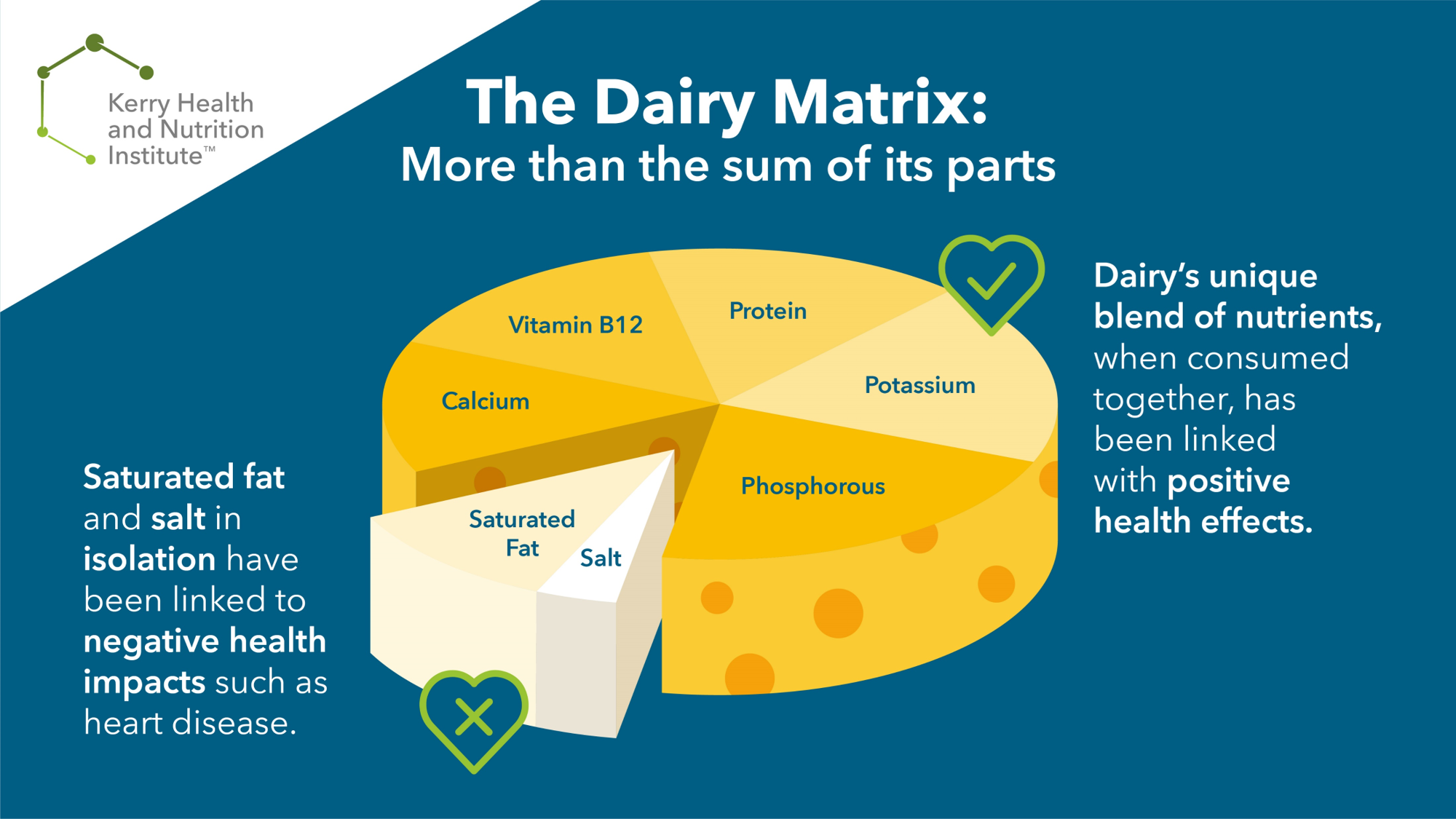
Cheese exemplifies the dairy matrix effect. Despite high saturated fat (20–35%), its structure often neutralizes expected harms like raising LDL cholesterol.
Supporting Evidence:
Butter lacks this structure, so its fats impact cholesterol more directly.
The matrix explains why full-fat cheese often shows neutral/positive outcomes despite saturated fat. It challenges blanket low-fat advice—whole fermented dairy like cheese behaves uniquely.
The cheeses involved were cheddar, Parmesan, Gouda, Gruyère (sp?), Brie, and Mozzarella.
Also, did you hear about the explosion at the cheese factory?
Da Brie was everywhere!
I had dinner with my 87 year old friend on Monday. We talked of our other friends that have died as a result of bowel obstruction.
He began to recount the measures he was taking to insure regular bowel movement. He noted that he was not eating any cheese because it was constipating.
My mama had vascular dementia. She was also lactose intolerant, so ate very little cheese. Fortunately, I’m not lactose intolerant. I eat whole fat cheese on a nearly daily basis.
This is true but it doesn’t apply to everybody. Hard cheeses can, but softer cheeses usually do not..............
I regularly eat cheese. Now, mostly Swiss.
In college, I ate a lunch of cheese and day old bread purchased at a severe discount from A&P.
The fact is, bread and cheese were major diet components for centuries.
I guess I should be plagued with constipation, but I’m not. Not at all.
And, one more thing. Americans no longer eat bread.
They eat dough that is universally sold as bread.
Disclaimer: Opinions posted on Free Republic are those of the individual posters and do not necessarily represent the opinion of Free Republic or its management. All materials posted herein are protected by copyright law and the exemption for fair use of copyrighted works.