Cheese provides one of the best examples of the dairy matrix effect. Even though cheese is high in saturated fat (often 20-35%), its unique structure appears to blunt or neutralize the negative effects typically associated with saturated fats, such as raising LDL (“bad”) cholesterol.
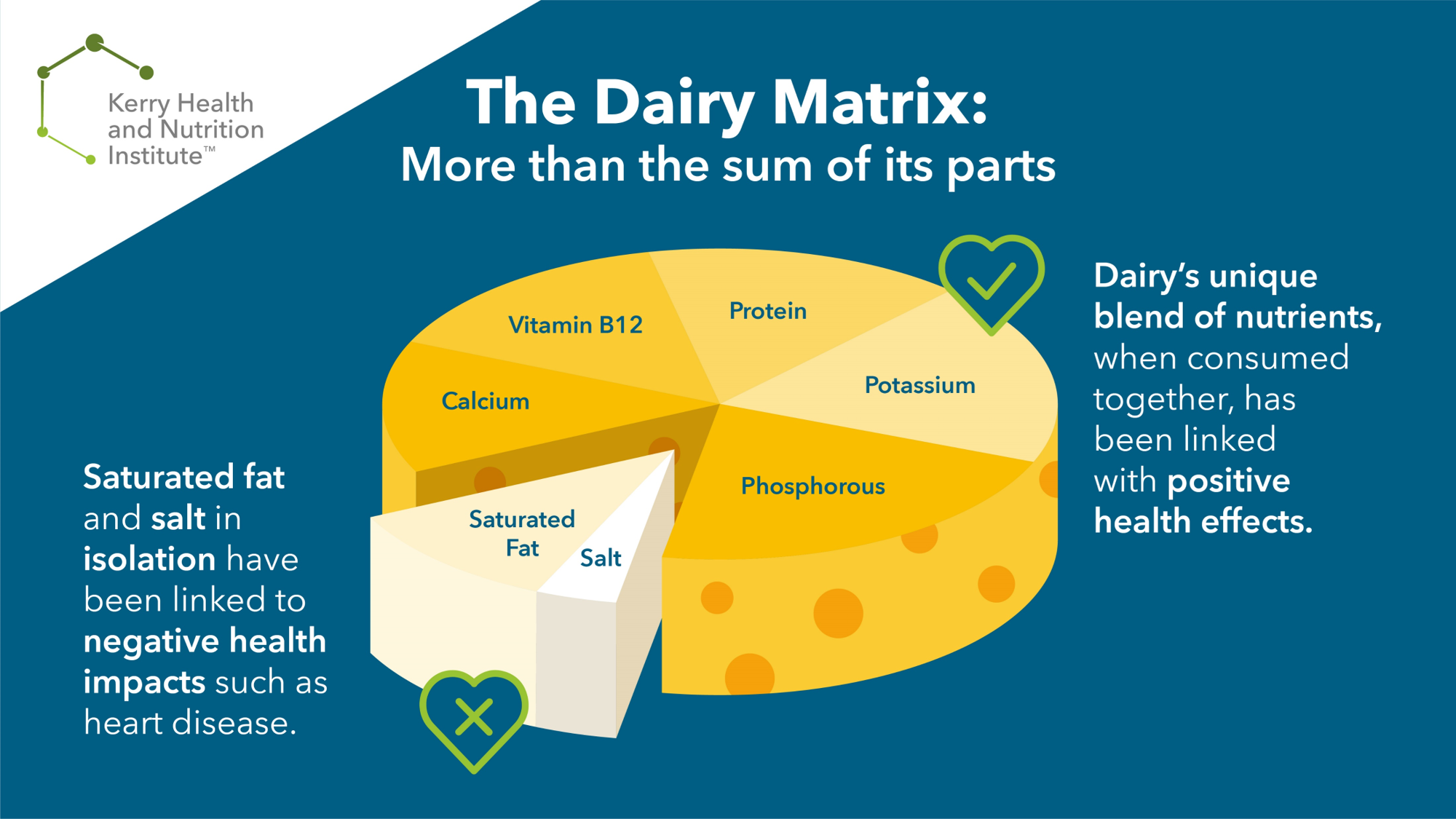
Cheese exemplifies the dairy matrix effect. Despite high saturated fat (20–35%), its structure often neutralizes expected harms like raising LDL cholesterol.
Key Cheese Matrix Components
- Casein proteins: Form a gel-like network, cross-linked by calcium.
- Fat globules: Trapped in the protein structure.
- Calcium/phosphorus: Bind fats and aid excretion.
- Fermentation byproducts: Bioactive peptides and compounds from ripening.
Health Impact (Saturated Fat)
- Calcium forms “soaps” with fatty acids → excreted, not absorbed.
- Protein slows digestion → limits rapid fat release.
- Fermentation benefits gut health and reduces inflammation.
- Semi-solid form alters nutrient release vs. milk or butter.
Supporting Evidence:
- RCTs: Cheese lowers LDL more than equal fat from butter.
- Meta-analyses: Cheese neutral or beneficial for heart risk.
- Swedish dementia study: High-fat cheese linked to lower risk, likely via matrix protecting vascular health.
Butter lacks this structure, so its fats impact cholesterol more directly.
The matrix explains why full-fat cheese often shows neutral/positive outcomes despite saturated fat. It challenges blanket low-fat advice—whole fermented dairy like cheese behaves uniquely.