Posted on 12/13/2025 7:59:22 AM PST by MtnClimber
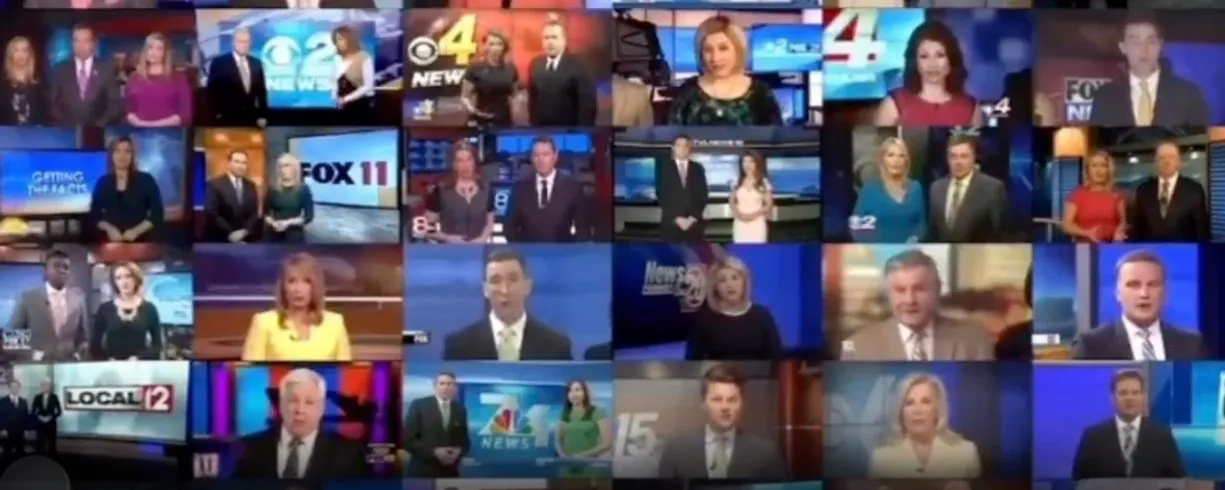
Elon Musk recently asked a question that millions of Americans have been asking for years: “Who sends them their instructions!? Real question.” He was reacting to a familiar spectacle, within minutes or hours of an event, leading Democrats, left leaning pundits, and drive-by media outlets suddenly begin using the same phrase, the same framing, sometimes almost the same sentence, on TV, on 𝕏, and across the web. The pattern is so obvious that it has become a kind of dark joke on the right. We all see the copies, the question is whether there is in fact a script.
There is. Not a single email from a single mastermind, but something more durable and more effective, a layered system of lists, war rooms, donor funded messaging shops, and informal chat networks that function together as a kind of distributed politburo for the American left. In what follows I will trace that system’s history, describe its current machinery, and then answer Musk’s question as precisely as the public record allows. The picture that emerges is not of spontaneous consensus, it is of deliberate coordination.
Begin with the phenomenon itself. A president warns of a border emergency, within hours Democrats declare it a “manufactured crisis.” A state tightens its voting rules, the same politicians and the same set of networks denounce “voter suppression” and “Jim Crow 2.0.” A Republican appointment or policy is announced, and suddenly everything is framed as a “threat to democracy”. These phrases are not inevitable descriptions of the facts. They are chosen, tested, and distributed. The oddity is not that parties use slogans, it is that the slogans appear everywhere at once, from Senate leadership to cable anchors to mid level influencers with uncanny speed and uniformity.
If we ask how this became possible, we are quickly led to the world of closed listservs that took shape in the mid 2000s. The basic technology was simple, a private email list, but the social innovation was new. A small group of progressive strategists and writers realized that they could turn what used to be informal chatter into a disciplined backroom. The early Townhouse list gathered liberal bloggers, activists, and media figures into a single confidential thread where stories could be pitched, spins tested, and responses coordinated before anything went public. That list set the pattern, a private room where partisans could plan the next day’s narrative while the public imagined they were watching independent minds at work.
The model reached its most famous, and infamous, form in JournoList, a private Google Group created by Ezra Klein in 2007 for roughly 400 left leaning journalists, academics, and policy professionals. Its stated purpose was to discuss politics and the media. Its practical function, as the leaked emails showed in 2010, was often to shape messaging in ways that helped Democrats and hurt Republicans. When Barack Obama’s relationship with Reverend Jeremiah Wright threatened his 2008 campaign, some participants did not simply analyze the story, they proposed a tactic, pick a conservative critic and call him a racist in order to change the subject and make the controversy about bigotry rather than about Obama’s judgment. Others brainstormed ways to discredit Sarah Palin before she had said much of anything. The point here is not that every member of JournoList agreed with every strategy, it is that a large group of ostensibly independent commentators explicitly discussed how to coordinate lines of attack and defense for one party’s benefit.
The exposure of JournoList caused some embarrassment, and the list was shut down. But the practice did not disappear, it migrated. Smaller successor groups such as Cabalist took shape. More importantly, progressive activists built even wider networks, such as Gamechanger Salon, a closed Google group of more than a thousand writers, operatives, and organizers. That group mixed journalists from outlets like CNN, Reuters, and major online platforms with staff from unions, environmental groups, and Planned Parenthood. Its members shared talking points, tested narratives, and warned one another not to leak the discussions. The result was an informal but powerful alignment mechanism. Advocacy professionals supplied the “red meat,” journalists and commentators supplied the megaphone, and the White House and DNC could count on a friendlier public sphere.
Over time this improvised architecture hardened into institutions. David Brock’s Media Matters for America began as a “watchdog” that monitored conservative media, and it still plays that role, but it also developed a second face that is less visible to the public. Through its Action Network and its “Message Matters” project it has sent daily talking point memos, not to the general public, but to thousands of Democratic aligned “progressive talkers” and influencers. When a scandal threatened the Justice Department over seizures of reporters’ phone records, a memo went out providing lines to defend the administration and downplay the danger. The memo was not a newspaper article, it was a script, crafted so that sympathetic hosts, columnists, and surrogates would use the same arguments and even the same phrasing when they appeared on air.
The Center for American Progress played a parallel role at the level of ideas. It was a think tank in form, with policy papers and fellows, but it also ran what it openly called “Progressive Media.” Staff convened daily calls, circulated a “message of the day,” and coordinated language across left leaning groups. The public facing blog and newsletters were the tip of the spear. Behind them stood a routine in which Democratic campaigns, CAP staff, and allied media agreed on how to describe events and opponents. When internal emails later revealed close coordination between CAP leaders and the Clinton campaign, it simply confirmed what had long been visible to anyone paying attention, the lines between party, think tank, and media were porous, and messaging flowed freely among them.
By the mid 2010s, this messaging ecosystem had something like a backbone. At the core were party institutions such as the DNC’s communications shop, which ran a rapid response “war room” whose explicit mandate was to drive a unified daily message. Around that core were a constellation of allied organizations, Media Matters, CAP, American Bridge, Shareblue, and others, many tied together by common donors in the Democracy Alliance. A significant share of this network’s funding can be traced directly or indirectly to George Soros and his Open Society Foundation, which for decades has invested heavily in progressive media, policy advocacy, and narrative shaping. Those donors did not merely sprinkle money across random progressive charities, they invested strategically in media, research, data, and narrative shaping. They funded the factories that would write the lines, test them, and then push them out across the ecosystem.
We should pause here and confront a possible objection. Is this not simply what all campaigns do? Republicans have talking points too. There were Republican fax blasts in the 1990s and there are conservative email lists today. This is true, and it is important to be candid about that. But there is a difference in scale, structure, and above all, the informational environment in which each party operates. On the left, messaging did not remain a campaign tactic used for a few months every two or four years. It grew into a permanent infrastructure, with full time staff, endowed organizations, and a standing army of pundits and influencers who treat the daily line as a kind of professional briefing. And unlike Republicans, Democrats enjoy something else: the almost uniform political alignment of the major media institutions themselves. The country’s largest newspapers, legacy networks, cable outlets, and prestige publications overwhelmingly lean left and reliably amplify Democratic narratives. They function, willingly or through shared worldview, as the PR wing of the Democrat Party. Republicans do not benefit from anything remotely comparable. Their messaging must fight its way into public view through outlets that are either openly hostile or structurally disinclined to take their framing seriously.
When the DNC in 2025 launched a live “Daily Blueprint” show from its War Room, a short broadcast designed to set the message every weekday, it was formalizing what had already been happening in private emails for years, central guidance for an entire political ecosystem. For Democrats, this ecosystem includes not only party infrastructure but the country’s dominant newsrooms—creating a seamless highway for narratives to travel from strategists to headlines. For Republicans, by contrast, the road is uphill, fragmented, and lacking the megaphone effect of institutionally aligned media.
Overlay this formal machinery with the communications tools of the last decade, Slack, Signal, WhatsApp, encrypted DMs, and you have something even more nimble. JournoList taught one lesson clearly, written records can leak. The response was not to abandon coordination, it was to move it into channels that are harder to subpoena and harder to search. Reporters embedded with Democratic campaigns trade texts with staff in real time. Influencers who want to stay in good standing are folded into group chats where staff share “background” framing and preferred language. When the Biden White House invited TikTok stars to a special briefing on the war in Ukraine and rising gas prices, the message was not subtle. You are being deputized as an arm of the communications shop. Here is what you should say about Putin. Here is how you should explain energy prices. Think of it as press briefing plus direct distribution network.
The role of the White House itself deserves emphasis. During the debate over the Iran nuclear deal, deputy national security adviser Ben Rhodes openly described building an “echo chamber.” His team fed narratives and talking points to sympathetic experts and reporters, who would then echo them in op-eds, television segments, and think tank reports. The administration would then point to that chorus as evidence of consensus. The key sentence in his description was that outside voices were “saying things that validated what we had given them to say.” Replace the words “Iran deal” with any other initiative, climate, health care, voting rules, and you have the template for modern liberal messaging. The government writes the sheet music, friendly institutions and media play it back, and the public is assured that they are hearing a spontaneous symphony.
Sometimes the cooperation is comically direct. When Donna Brazile, then a CNN contributor and later DNC chair, fed primary debate questions to the Clinton campaign in advance, she crossed an ethical line so clear that even CNN could not ignore it. Yet the deeper lesson was not that one person cheated, it was that a senior party insider felt entirely at home using a supposedly neutral news platform to give one candidate an advantage. The wall between Democratic strategy and media coverage was already fragile. Brazile simply tore a hole big enough that outsiders could see through it.
If we step back from the details, a pattern comes into focus. There are three concentric circles that answer Musk’s “who sends them their instructions” question. At the center is a relatively small group of party leaders, Democrat leader’s communications staff, and senior strategists at places like CAP and Media Matters. They decide the themes that serve the party’s interest on any given day, which story to elevate, which scandal to bury, what phrase has tested well in focus groups. Slightly farther out are the institutional nodes, the DNC War Room, Media Matters’ list operations, American Bridge’s research shop, progressive donor consortia that tie funding to message discipline. They convert themes into consumable lines. They write the memos, compile the “fact sheets,” and produce the talking point documents that circulate each morning.
The outer ring is the visible part, elected Democrats, staffers, cable hosts, op-ed writers, podcast hosts, and social media influencers. Many of them are not given marching orders in a formal sense. They sign up for the lists, they sit in on the calls, they join the Signal chats. They absorb the norms of the ecosystem, do not break ranks, do not contradict the narrative, amplify the line of the day and you will be rewarded with access, positive coverage, and maybe a job the next time the administration changes. The result is that a phrase can move from an internal memo written by a junior staffer at a think tank to the mouth of a Senator and the chyron of a cable show in less than twenty four hours.
One might object that this story makes too much of coordination and too little of genuine ideological agreement. Perhaps every Democrat calls the same law “voter suppression” because they truly believe that is what it is. Perhaps every cable anchor describes a border emergency as “manufactured” because they read the same data. There is some truth in this. A shared worldview makes certain framings seem natural. Yet the timing, the verbatim repetition, and the documented existence of organized messaging hubs make it implausible to treat this as coincidence. If you see identical language appearing in a thousand mouths at once, and you know there are central institutions tasked with producing and distributing that language, the more reasonable explanation is not mass telepathy but a functioning system.
There is another objection worth confronting. Why should conservatives care if the other side has simply built a more professional communications machine? After all, many Republicans envy the discipline Democrats often show. There is no easy answer. A democratic republic does not forbid parties from arguing strategically. But there are two dangers that should concern us. The first is the collapse of any meaningful distinction between news and spin. When journalists see themselves as part of a messaging team, when their private lists are used to coordinate political attacks rather than to test arguments or share information, the public loses the benefit of independent scrutiny. The press becomes an extension of one party’s communications office. The second danger is that of manufactured consensus. If donors, think tanks, party officials, and media allies can create an echo chamber and then point to that echo as proof that “everyone” agrees, dissenting citizens are more easily marginalized as cranks or extremists.
In principle, the cure for propaganda is more speech, not less. Conservatives can and should build their own research shops and media platforms, and many already exist. But a healthy system also requires honesty about what is happening. It is not paranoid to say that Democrats and their allies coordinate messages. They say so themselves in candid moments. It is not conspiratorial to suggest that lists, war rooms, and donor networks structure public debate. That is their explicit purpose. The real question is whether the rest of the country will continue to treat disciplined narrative control as if it were neutral journalism and organic public opinion.
Before we reach the final answer to Musk’s question, we must note the newest and most alarming example of this machinery at work. In recent weeks, a bloc of Senate Democrats, quickly dubbed the Seditious Six, have begun circulating the claim that President Trump’s lawful orders to the National Guard and armed forces are “illegitimate” and should be defied. This is unprecedented messaging in modern American politics, and yet the way it spread was entirely familiar. Within hours of the first statement, the same framing appeared across the drive-by media, cable panels, and 𝕏 influencers, all insisting that military personnel have an “obligation” to reject the commander in chief’s directives. The danger is obvious: by laundering this rhetoric through the narrative apparatus, Democrats attempt to turn a fringe legal theory into a normalized talking point. The coordination is the story. Who decided they ought to record 90 second TikTok videos sharing their message with young soldiers? No one seriously believes half a dozen senators simultaneously and spontaneously adopted the same language and delivery strategy about insubordination without prompting. It moved the same way every other narrative does, through donor funded messaging shops, party comms channels, and media allies who treat Democratic politicians’ phrasing as if it were scripture. Their goal is not to persuade soldiers, who know the law, but to manufacture the appearance of elite consensus, hoping the public will see a chorus rather than a coordinated campaign.
So who, finally, sends them their instructions? No single hand presses “send” on every message that appears in your feed. Yet if we follow the evidence from Townhouse and JournoList to Gamechanger Salon, from Media Matters and CAP to the DNC War Room and the Daily Blueprint, from Ben Rhodes’s echo chamber to White House influencer briefings, we see the outline of an answer. “They” are the small cluster of strategists, donors, and institutional gatekeepers who sit at the junction of party, advocacy, and media. They decide which words are rewarded and which deviations are punished. They provide the scripts that so many others read from. And until that system is named and understood, Americans will go on confusing an echo for a conversation.
I should have said, “they”.
The GOP should hire hackers to hijack the messages. Play by the dnc rules.
“When the Biden White House invited TikTok stars to a special briefing on the war in Ukraine and rising gas prices, the message was not subtle. You are being deputized as an arm of the communications shop. Here is what you should say about Putin.”
I was wondering about the Zeepers...
You beat me to it. "Gravitas" was the first thing I thought of when reading this article.
In many cases junior members of the group come up with 2 or 3 catchy phrases. They are then tested among a larger group with senior members of the group gravitating toward one finalist as the best for the larger audience.
“They” often consider WHO IS THE AUDIENCE? 1) Are we trying to unify our own troops? Or 2) create chaos and divisivness on the other side? or 3) something else.
When I moved to inner city Chicago in 1964 everything was attributed to ‘THEY’. My question was “Who is THEY?”
Current methods just build on what was done with the old techology. I remember many phone calls to coordinate citywide coalitions back in the 60s and 70s.
One thing not mentioned...but worth mentioning: Who you sleep with... or want to sleep with. You might be surprised how often that plays a significant role.
If you see identical language appearing in a thousand mouths at once, and you know there are central institutions tasked with producing and distributing that language, the more reasonable explanation is not mass telepathy but a functioning system.
With the advent of AI LLMs, who depend upon it, the frequency of such unique terms and identical proximities of words is not only obvious but measurable. The obvious ones, however, are apparent to nearly everyone who reads them and have been labelled buzzwords for decades. As the author points out, this is nothing new but is empowered by the near unanimity of political alignment in the popular media.
When journalists see themselves as part of a messaging team, when their private lists are used to coordinate political attacks rather than to test arguments or share information, the public loses the benefit of independent scrutiny.
The credibility of the media participating also suffers to the point where the public seeks other media, which is evidenced by the plummet that CNN and MSNBC viewership has experienced, to the dismay in media ownership, and is the reason for the EU's ongoing attack on X and the UK's draconian Online Safety Act, to the point of fines for the former and for the latter, literal prison sentences for disapproved statements. The public isn't being protected, it is being corralled and everybody knows it.
Well written. VERY important points.
Thank you for finding it, for publicizing it.
The invisible war room is still invisible and unnamed.
Republicans need to come up with a catchy name and ridicule them. The general public does not even see it.
ICYMI: DNC Launches Daily Blueprint, a New Messaging Broadcast to Highlight Democrats’ Wins and Counter Trump’s Lies
June 13, 2025
. . .Key Point: “DNC Deputy Communications Director Hannah Muldavin, who hosted the debut episode on Monday, June 9, added that the show is ‘nothing like the Democratic Party has ever seen before, and that’s by design.’ New episodes will air each weekday on YouTube at 10 a.m. ET and are part of the DNC’s broader War Room efforts to challenge Trump and mobilize supporters.”
National Journal: “Hannah Muldavin, deputy communications director and host of The Daily Blueprint, said the show aims to call viewers to action and cut through the noise of the Trump administration. . .
https://www.influencewatch.org/person/hannah-muldavin/
Hannah Muldavin
Hannah Muldavin is a Democratic Party staffer and liberal activist. She is a senior communications advisor to the Congressional Integrity Project, which targets Republican Party members of Congress, their associates, and their family members to expose allegedly compromising information about them. Muldavin was previously the deputy communications director for the January 6th Select Committee, the Democratic Party-dominated panel created in response to the riot on Capitol Hill in January 2021. She also worked for the office of U.S. Representative David Trone (D-MD), and for the rapid response team of the Democratic National Committee during the 2020 election season. 1 2
Career
Hannah Muldavin received a bachelor’s degree in government from Georgetown University, where she also worked in the communications department. Afterwards, she spent several years with the Washington, D.C.-based consulting firm Gartner. In 2018, she was the deputy communications director for the campaign of U.S. Represetnative David Trone (D-MD) and became his communications director when he was elected. During that time, she also helped manage emergency public relations for the Virginia Democratic Party’s 2020 election activity. 3
January 6th Committee
Muldavin was a spokesperson and deputy communications director for the nominally bipartisan, majority Democratic congressional committee convened with the claimed goal of investigating the causes and details of the riot at the United States Capitol building in January 2021. 3 Then-House Speaker Nancy Pelosi (D-CA) rejected the nominations of Reps. Jim Banks (R-IN) and Jim Jordan (R-OH), who had previously expressed concerns over the integrity of the process, over her preferred Republican representatives. 4 The committee attempted to subpoena former President Donald Trump, whom it claimed was responsible for instigating the riot, but dropped the effort in December 2022. 5 The following month, the committee released the Social Security numbers of nearly 2,000 associates of the former President in a report. The committee claimed that the leak had been an accident. 6
Muldavin appeared to develop positive relationships with at least one Republican on the committee, former Rep. Liz Cheney (R-WY). During one of the committee’s hearings, Cheney was seen with an armed figurine her spokesperson said was given to the congresswoman by Muldavin. Cheney spokesperson Jeremy Adler told CNN that Muldavin’s grandfather made figurines for many of the committee’s members “to recognize their defense of democracy.” 7
Adler later praised Muldavin’s qualifications on “congressional investigations” and “committees” when her departure from the committee was announced. 8
Congressional Integrity Project
Muldavin transitioned out from her position on the January 6th Committee in January 2023 to become an advisor to the Congressional Integrity Project. This left-wing activist group targets Republican members of Congress, as well as their associates and family members, investigating them to expose allegedly embarrassing or compromising information with the goal of damaging their public images and re-election prospects. The leadership and senior staff of the organization is made up of Democratic Party staffers, many of whom, like Muldavin, have worked for Democratic congressional and presidential campaigns, including those of President Barack Obama and former Vice President Al Gore. Like the January 6th Committee, the organization has used the Capitol riot for publicity purposes: after the incident, it issued a statement identifying dozens of Republican Senate staffers by name and demanding that they undermine the Senators for whom they worked by resigning and issuing public statements criticizing those senators. 1
Personal Views
Hannah Muldavin has claimed that the January 2021 Capitol riot was an attack on democracy and that her life had been in danger during the incident. 9
In November 2015, Muldavin criticized a television commercial for including white football players, calling it “a joke.” 10
In February 2023, Muldavin attacked congressional Republicans for holding a hearing on the Twitter Files and the apparent role of the social media giant in suppressing reports of potentially illicit behavior by Hunter Biden, son of President Joe Biden. Muldavin called the hearing a “partisan stunt” and suggested that Republicans were using it to distract from the accomplishments of the Biden administration. 11
References
Katherine Tully-McManus. “House amendments: cheaper by the dozen.” Politico. January 26, 2023. Accessed February 5, 2023. https://www.politico.com/newsletters/huddle/2023/01/26/house-amendments-cheaper-by-the-dozen-00079602
Chelsey Cox, Sarah Elbeshbishi. “Who is on the January 6 committee? Meet the members and chair.” USA Today. June 8, 2022. Accessed February 5, 2023. https://www.usatoday.com/story/news/politics/2022/06/08/january-6-house-committee-members-list/7552965001/
Hannah Muldavin. LinkedIn. Accessed February 5, 2023. https://www.linkedin.com/in/hannah-muldavin-939a33111
Mike Lillis. “Pelosi rejects Jordan, Banks for Jan. 6 committee.” The Hill. July 21, 2021. Accessed February 5, 2023. https://thehill.com/homenews/house/564122-pelosi-rejects-jordan-banks-for-jan-6-committee/
Misty Severi. “Jan. 6 committee withdraws Trump subpoena.” Washington Examiner. December 28, 2022. Accessed February 5, 2023. https://www.washingtonexaminer.com/news/campaigns/january-6-select-committee-withdraws-trump-subpoena
Brady Knox. “Jan. 6 committee documents share Social Security numbers of 2,000 Trump officials and allies.” Washington Examiner. January 6, 2023. Accessed February 5, 2023. https://www.washingtonexaminer.com/news/jan-6-committee-social-security-numbers
Clare Foran, “Cheney wore Capitol Police pin and had ‘protector’ figurine with her during January 6 hearing.” CNN. June 10, 2022. Accessed February 6, 2023. https://www.cnn.com/2022/06/10/politics/liz-cheney-protector-figurine-pin-jan-6-hearing/index.html
@JeremyAdler, “Huge get…” Twitter. January 26, 2023. Accessed February 6, 2023. https://twitter.com/JeremyAdler/status/1618611687590068226
@HannahMuldavin. “If you neeed…” Twitter. December 18, 2022. Accessed February 5, 2023. https://twitter.com/HannahMuldavin/status/1604681019138908162
@AlexDe_Luca. “Highlights from the…” Twitter. November 10, 2015. Accessed February 5, 2023. https://twitter.com/AlexDe_Luca/status/664281514788671488
@HannahMuldavin. “Let the partisan…” Twitter. February 2, 2023. Accessed February 5, 2023. https://twitter.com/HannahMuldavin/status/1621199528203362305
Great information.
The Soros paid propaganda machine also creates the deep state agit prop hoaxes used to tie Republicans in knots. Russia, Russia, Impeachment I, 51 CIA lies about hunter’s laptop, J6 Reichstag Fire, Impeachment II etc. They plot how to undermine Republicans daily.
I was thinking the same thing.
The leaders of said machine, with the exception of a few suppositions, are the only unknown.
JMO, YMMV
. “They” are the small cluster of strategists, donors, and institutional gatekeepers who sit at the junction of party, advocacy, and media. They decide which words are rewarded and which deviations are punished. They provide the scripts that so many others read from. And until that system is named and understood, Americans will go on confusing an echo for a conversation.
Disclaimer: Opinions posted on Free Republic are those of the individual posters and do not necessarily represent the opinion of Free Republic or its management. All materials posted herein are protected by copyright law and the exemption for fair use of copyrighted works.