Skip to comments.
Are You Eating Shellfish Contaminated With This Paralysis-Causing Toxin?
Based Underground ^
| June 24, 2024
| Dr. Joseph Mercola
Posted on 06/24/2024 5:43:47 AM PDT by Red Badger
The U.S. Food and Drug Administration (FDA) recently released an advisory about shellfish harvested from Oregon and Washington, as they were found to have elevated levels of paralytic shellfish toxins (PSTs)
Saxitoxin, a naturally occurring neurotoxin produced by algae, can be harmful to human health as it damages nerve tissue
Symptoms of paralytic shellfish poisoning (PSP) include numbness of the mouth and lips, vomiting, diarrhea, dizziness and nausea, dissociation and respiratory paralysis
Apart from toxin-contaminated shellfish, radioactive fish may also soon find its way onto your dinner plate, as the U.S. government recently endorsed the consumption of seafood harvested off the coast of Fukushima, Japan
~~~~~~~~~~~~~~~~~~~~~~~~~~~~~~~~~~~~~~~~~~~~~~~~~~~~~~~~~~~~~~~~~~~~~~~~~~~
(Mercola)—In a perfect world, fish and other types of seafood are some of the healthiest foods you can consume, as they offer omega-3s and other beneficial nutrients. But with most of our waterways and oceans now heavily polluted with toxic wastes, these once-nutritious foods can become ticking time bombs that can land you in the hospital.
A recent advisory1 about Pacific Northwest shellfish is a grim example of how toxic some types of seafood can be. According to the U.S. Food and Drug Administration (FDA), shellfish harvested from Oregon and Washington were found to be contaminated with a dangerous neurotoxin that can lead to severe symptoms, including paralysis.
Paralysis-Causing Toxin Found in Pacific Northwest Shellfish
According to the FDA website, on May 30, 2024, the Oregon Agriculture Department and the Washington Health Department sent out an advisory about the recall of oysters and bay clams harvested from their waters. Apparently, the shellfish were found to have elevated levels of paralytic shellfish toxins (PSTs),2 which can lead to paralytic shellfish poisoning (PSP).3
“Paralytic shellfish poisoning, or PSP, happens after someone eats shellfish contaminated with saxitoxin, which can cause gastrointestinal distress, neurological symptoms and a sensation of ‘floating’ or disassociation,” NBC News reports.
Oysters and bay clams that were harvested from Northern Oregon (specifically in Netarts and Tillamook bays) since May 28 are affected. Shellfish harvested since May 26 from around Willapa Bay in southern Washington may also be contaminated with this dangerous toxin.4
As of June 11, 2024, at least 31 people in Oregon have fallen ill after eating the shellfish.5 These contaminated shellfish are also circulating, as they were bought by consumers and distributed to restaurants and food retailers, not only in the two aforementioned states, but also in Arizona, California, Colorado, Hawaii, Nevada and New York.6
What Caused This Widespread Shellfish Contamination?
Saxitoxin is a naturally occurring neurotoxin produced by algae, mainly freshwater cyanobacteria and marine dinoflagellates. Matthew Hunter, shellfish program manager for the Oregon Department of Fish and Wildlife, explained that the unprecedented levels of saxitoxin in the Pacific Northwest occurred because of a massive algal bloom along the coast of Oregon.7
According to the National Oceanic and Atmospheric Administration, harmful algal blooms (HABs) can occur naturally; however, disruptions in the ecosystem brought on by human activities play a role not only in their frequency but also their intensity.8 The toxin levels don’t immediately subside — in fact it may take weeks, months or even up to a year for the contamination to subside, as noted by Oregon officials.9
“Oregon authorities have closed the state’s entire coastline to the harvesting of mussels, razor clams and bay clams. Agriculture officials have also closed three bays, including those named in the FDA advisory, to commercial oyster harvesting.
Officials in neighboring Washington have also closed the state’s Pacific coastline to the harvesting of shellfish, including mussels, clams, scallops and oysters, a shellfish safety map produced by the Washington State Department of Health shows,” ABC News reports.10
Symptoms of Paralytic Shellfish Poisoning Saxitoxin can be harmful to human health, as it damages nerve tissue.11 What makes it even more dangerous is that the contaminated shellfish can appear perfectly safe and normal — they look, smell and taste just as other clean shellfish products do.
The FDA also warns that contaminated shellfish can retain saxitoxin for different periods of time. Some shellfish may eliminate this toxin rapidly, while others are slower to remove it from their system. This lengthens the period of time they can be toxic to humans.12
What’s more, PSP toxins cannot be killed or eliminated by cooking or freezing. Once you ingest the toxin, gastrointestinal distress and neurological symptoms may arise within minutes to a couple of hours. The symptoms, which may be mild or severe, depending on how much toxin you’ve ingested, and include:
Numbness of the mouth and lips
Vomiting
Diarrhea
Shortness of breath
Irregular heartbeat (in severe cases)
A “pins and needles” sensation (numbness in the arms and legs)
Dizziness and nausea
Loss of muscle coordination
Feeling as if you’re floating (dissociation)
Respiratory paralysis
At present, there is no antidote for saxitoxin poisoning.15 Medical treatment requires giving fluid and providing respiratory support.16 The good news is that if you survive 24 hours with the toxin, the prognosis is usually positive, and the toxin will not have lasting effects.
In severe cases, though, poisoning can be serious, and will require mechanical ventilation to help the patient breathe.17 Saxitoxin poisoning can be fatal and can happen in as little as two hours. It occurs because of asphyxiation, as the muscles used for breathing can be paralyzed.18 Because of the range in severity of its symptoms, the FDA advises consulting with a health care provider if you develop the symptoms mentioned above.19
Radioactive Fish for Dinner, Anyone?
Toxin-contaminated shellfish is just one of the many problems plaguing your seafood options. Soon, you may even find radioactive fish in your supermarkets, as the U.S. government recently endorsed the consumption of seafood harvested off the coast of Fukushima, Japan,20 which experienced a major nuclear accident after the 2011 Tohoku earthquake and tsunami.
Last year, the Fukushima Daiichi Nuclear Power Plant started discharging nuclear wastewater, which was used to cool down the nuclear reactors, into the ocean,21 exposing seafood and marine life to radioactive substances. Many fishing groups have opposed these wastewater discharges, which are expected to continue for decades.22
Stock up on long-term storage beef before prices SKYROCKET. 25-year shelf life, premium cuts, all-American, no mRNA jabs. Promo code “VETERANS25” at Prepper All-Naturals for 25% off. Neighboring countries like China and South Korea, and even Russia, have also expressed concerns about radioactive contamination of marine life and imposed a ban on Japanese seafood imports as a precaution.23 However, the Japanese government claims their seafood is safe, even going as far as having officials eating Fukushima fish on video and declaring it “safe and delicious.”24
The U.S. government supports these claims; in September 2023, officials even attended a “sushi and sake” event at Capitol Hill, where around 40 members of the House of Representatives sampled fresh Japanese fish, such as flounder and seabass, from Fukushima.25
This was followed a month later by an announcement from U.S. Ambassador to Japan Rahm Emanuel, saying that the U.S. military would buy Japanese seafood in bulk and feed it to service members stationed at military bases in Japan. According to an article in The Defender, Emanuel says they will start with a metric ton of scallops, and then eventually expand to all types of seafood.26
But to bring in potentially radioactive seafood in our food supply is like playing Russian roulette with people’s health. What’s worse, the effects can build up gradually. You may not see any symptoms right away, but they can manifest years later. Hongkong’s Centre for Food Safety reports:
“According to a report issued by Tokyo Electric Power Company Holdings (TEPCO) earlier, a fish sampled from the port area of the FNPS [Fukushima nuclear power station] was found to contain 18 times the Codex guideline level of the radioactive substance Caesium.
Caesium can be taken into the body by eating food or drinking water. After ingestion, it is absorbed into the bloodstream, distributes throughout the body, and tends to concentrate in muscles. The fish, if consumed, may pose a risk to health and increase the likelihood of inducing cancer.”
Farmed Fish — Another Dangerous Type of Seafood to Avoid
This issue of radioactive poisons from seafood has caused many to either give up eating fish or opt for farmed fish, believing it’s a safer choice. However, you may be swapping one problem for something that’s even more dangerous. Choosing farmed fish to avoid radiation is not going to do your health any favors. You may avoid nuclear radiation, but you’re getting far more of other toxins instead.
Aside from being one of the least sustainable approaches to farming, fish farming also causes many environmental problems and poses unique risks to your well-being, maybe even far worse than radioactive contamination. In fact, fish farms have been called the “CAFOs of the sea,” as they raise many of the same concerns about chemicals and pollutants associated with feedlot cattle and factory chicken farms.
Unlike wild-caught fish, which feed on natural organisms and thrive in its natural habitat, farmed fish are raised on a diet of processed, high-fat, high-protein feed that can include everything from genetically engineered (GE) soybeans and pesticides, to polychlorinated biphenyls (PCBs) and dioxins, to antibiotics.28
Salmon is one of the most widely sold types of factory farm fish, and salmon factory farms are now the fastest-growing type of food production system in the world.29 However, farmed salmon contain far more toxins than wild salmon, mainly due to their elevated fat content.
Since toxins from fish feed accumulate in salmon fat, farmed salmon generally has higher levels of contaminants than wild salmon. For example, a study found that among 700 salmon samples collected from around the world, farmed salmon have eight times higher levels of PCB concentration than wild salmon.30
How to Find Safe Seafood
With most of our waterways and oceans heavily polluted with neurotoxins, radioactive poisons, and heavy metals like mercury, dioxins and PCBs, it can be a challenge to find uncontaminated fish these days. The key is to be a smart shopper. Be selective in the types of fish you consume, focusing on those high in healthy fats and low in contaminants.
I strongly recommend buying wild fish, and wild-caught Alaskan sockeye salmon, in my opinion, is one of the absolute best, both in terms of nutrition and potential contamination. Aside from being rich in omega-3 fats DHA and EPA, wild-caught Alaskan salmon has a short life cycle, meaning it has a lower risk of accumulating toxins. It also doesn’t feed on other already contaminated fish, further reducing the risk of contamination.
Other great choices are small, cold-water, fatty fish like anchovies, sardines, mackerel and herring. A general guideline is the closer to the bottom of the food chain the fish is, the less contamination it will accumulate.
TOPICS: Agriculture; Business/Economy; Food; Health/Medicine
KEYWORDS:
To: Red Badger
We call it Red Tide here in NW...nothing new
2
posted on
06/24/2024 5:45:23 AM PDT
by
goodnesswins
(Climate cultists think we should go back to the goo"d times when people starved)
To: Red Badger
Whenever you eat shellfish you’re taking a chance... They can be contaminated with toxins because they are filter feeders and they mostly eat fish sh*t.
What did you think was going to happen?
There are outbreaks of sickness and deaths associated with eating shellfish on a yearly basis.
3
posted on
06/24/2024 5:53:55 AM PDT
by
jerod
(Nazis were essentially Socialist in Hugo Boss uniforms... Get over it!)
To: goodnesswins
We have Red Tide here on the Gulf Coast as well.
Last time it killed thousands of fish that washed up on the beach and stunk for days until they could be removed..................
4
posted on
06/24/2024 5:53:59 AM PDT
by
Red Badger
(Homeless veterans camp in the streets while illegals are put up in 5 Star hotels....................)
To: jerod
They can be contaminated with toxins because they are filter feeders and they mostly eat fish sh*t.I remember a local (Oregon) girl talking a midfde-aged Sacramento woman through her first fried oyster....“That green stuff is kelp. Oysters love kelp.” ...and I’m thinking “Oysters love raw sewage, if they can get it.”
5
posted on
06/24/2024 5:59:59 AM PDT
by
gundog
(It was a bright cold day in April, and the clocks were striking thirteen. )
To: goodnesswins
I got Saxitoxin from Kenny G. Violently ill.
6
posted on
06/24/2024 6:05:44 AM PDT
by
dangus
To: gundog
Why Jews don’t eat shellfish. (At least the indirect reason. Of course the direct reason is that God told them not to.)
7
posted on
06/24/2024 6:07:10 AM PDT
by
dangus
To: dangus
8
posted on
06/24/2024 6:19:19 AM PDT
by
larrytown
(A Cadet will not lie, cheat, steal, or tolerate those who do. Then they graduate...)
To: goodnesswins
Yep. No shellfish in months with no “R” in the name.
9
posted on
06/24/2024 6:29:40 AM PDT
by
Rio
To: Rio
Grew up near the coast in Massachusetts. Everybody knew you did not take shellfish in months with no “R” in the name.
10
posted on
06/24/2024 6:57:33 AM PDT
by
Chad C. Mulligan
(Your insults are my rocket fuel. More please!)
To: Rio
Month letters have noting to do with Red Tide - rather month letters have to do with shellfish spawning times.
11
posted on
06/24/2024 7:16:47 AM PDT
by
PIF
(They came for me and mine ... now its your turn)
To: Red Badger
"Are You Eating Shellfish Contaminated With This Paralysis-Causing Toxin?" At this moment? No, I thought I might leave the shellfish contaminated with this paralysis-causing toxin for my supper.
This is as click-baitish as the tripe Dallas Biff is incessantly posting.
To: Paal Gulli
This was primarily for the people who indulge in eating raw oysters. They are literally taking their lives into their own hands............
13
posted on
06/24/2024 9:12:31 AM PDT
by
Red Badger
(Homeless veterans camp in the streets while illegals are put up in 5 Star hotels....................)
To: Red Badger
Numbness of the mouth and lips
Vomiting
Diarrhea
Shortness of breath
Irregular heartbeat (in severe cases)
A “pins and needles” sensation (numbness in the arms and legs)
Dizziness and nausea
Loss of muscle coordination
Feeling as if you’re floating (dissociation)
Respiratory paralysis
..............
Sounds like any properly prepared Szechuan dish to me.
Bring it on!
14
posted on
06/24/2024 12:16:22 PM PDT
by
Ignatz
(The bees don't bother to tell the flies that honey tastes better than dung.)
To: Ignatz
I’ve paid good money for a lot of those ‘symptoms’ in my younger days!................
15
posted on
06/24/2024 12:18:05 PM PDT
by
Red Badger
(Homeless veterans camp in the streets while illegals are put up in 5 Star hotels....................)
To: Ignatz; Red Badger
Szechwan hot or a dish of pufferfish!
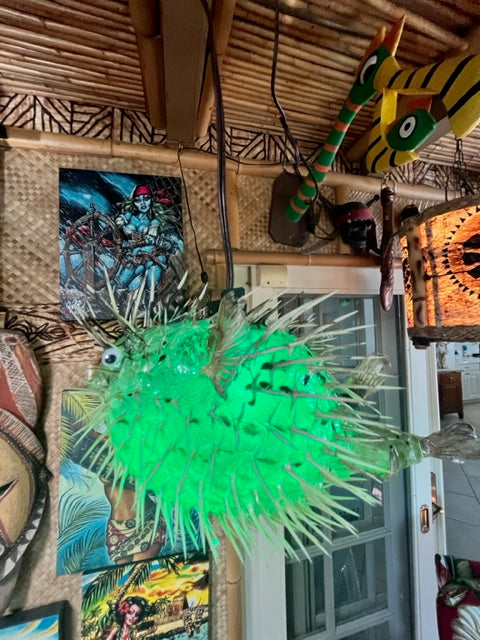
Toyko Food and Safety...good things to know! Maximum danger! Fugu
As pufferfish contain a deadly poison, improper preparation will result in food poisoning and can lead to death. Do not attempt to prepare pufferfish unless you are a profession and do not allow other non-professionals to attempt to prepare pufferfish.
Symptoms of pufferfish poisoning
Pufferfish poisoning proceeds extremely rapidly, with death occurring around four to six hours after eating pufferfish.
Between 20 minutes and 3 hours after eating, numbness begins to occur in the lips, the tip of the tongue, and the fingertips. This is accompanied by pain such as a headache or stomachache and may also result in continuous and violent vomiting. A person experiencing pufferfish poisoning will totter or stagger when attempting to walk. Before long, sensory paralysis, slurred speech, and difficulty breathing will occur. Blood pressure will also drop. Thereafter, total body motor paralysis will occur and the sufferer will become unable to even move a finger. Consciousness remains clear until immediately prior to death. Once consciousness is lost, the heart and breathing will stop, resulting in death.
Disclaimer:
Opinions posted on Free Republic are those of the individual
posters and do not necessarily represent the opinion of Free Republic or its
management. All materials posted herein are protected by copyright law and the
exemption for fair use of copyrighted works.
FreeRepublic.com is powered by software copyright 2000-2008 John Robinson