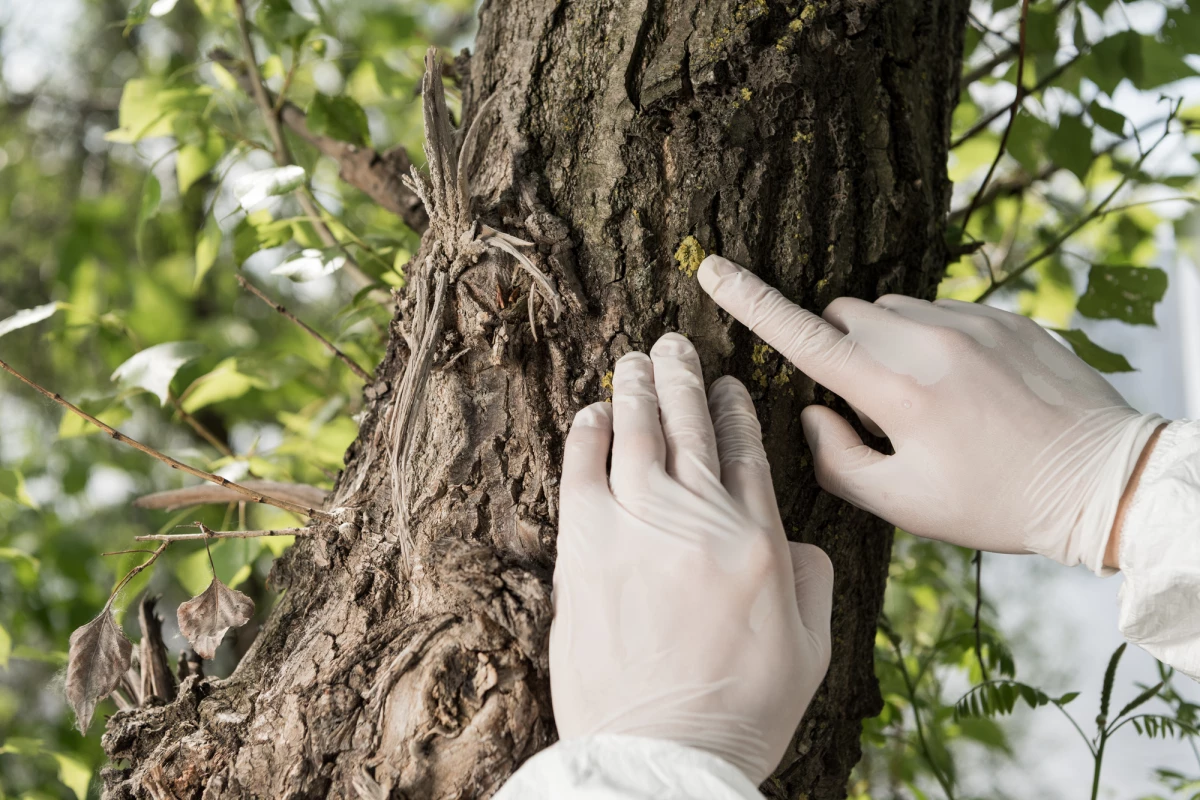
Scientists have used cellulose nanofibrils found in wood as the basis for a new battery electrolyteHayDmitriy/Depositphotos
Posted on 11/05/2021 12:45:18 PM PDT by Red Badger
Today's lithium batteries commonly use a liquid electrolyte to carry ions between the two electrodes, but scientists eyeing solid alternatives see some exciting opportunities ahead. Among them are the authors of a new study who have used cellulose derived from wood as the basis for one of these solid electrolytes, which is paper-thin and can bend and flex to absorb stress as the battery cycles.
One shortcoming of the electrolytes used in today's lithium batteries is that they contain volatile liquids that carry a risk of fire if the device short circuits, and can promote the formation of tentacle-like growths called dendrites that compromise performance. Solid electrolytes, meanwhile, can be made from non-flammable materials, make the device less prone to dendrite formation, and might open up entirely new possibilities around battery architecture.
One of these possibilities relates to the anode, one of the two electrodes, which in today's batteries is made from a mix of graphite and copper. Some scientists see solid electrolytes as a key stepping stone to making batteries work with an anode made from pure lithium metal instead, which could help break the energy-density bottleneck and enable electric cars and planes to travel much farther without charging.
Many of the solid electrolytes developed so far have been made from ceramic materials, which are highly effective at conducting ions but don't stand up so well to stress during charging and discharging owing to their brittle nature. Scientists from Brown University and the University of Maryland sought an alternative to this, and used cellulose nanofibrils found in wood as their starting point.
These wood-derived polymer tubes were combined with copper to form a solid ion conductor boasting a conductivity similar to ceramics and between 10 and 100 times better than other polymer ion conductors.
(Excerpt) Read more at newatlas.com ...
Scientists have used cellulose nanofibrils found in wood as the basis for a new battery electrolyteHayDmitriy/Depositphotos
All trees are to be destroyed or put off limits since they can help with energy.
“Made from wood” == carbon. Wood sounded cooler in the press release than coal or oil.

Clearcut them for solar panels, then eliminate all plant food AKA CO2!!
/s
What are the Enviro-Weenies gonna do about this? They NEED those batteries to run their phones and laptops and e-cars and e-bikes, but the ‘scientists’ now want to use TREES to power these things, versus filling landfills full of poisonous lithium, leaching into waterways...which they dare not even WHISPER about!
Heads Exploding! ;)
Dendrites are a bit like the tin-whiskers that plague engineers ever since the EU passed those laws requiring the use of tin/silver solder instead of the much better tin/lead solder...grrrrr
An electrolyte from wood is an unexpected turn...
The holy-grail of battery tech is development of a super-capacitor that can replace the batteries we use now.. a suitable supercap would last pretty much forever, be lightweight, charge almost instantly and hold an enormous load of electrons... you can charge a supercap so quickly that you must limit the inrush current or your power supply/charger will fail.
I have worked with small supercaps, mostly while investigating their use for implanted bio-medical devices that can be recharged using a simple method almost exactly like the wireless chargers for cellphones.
woodn’t ya know it? Just as i was abotu to invent one that runs on rhubarb
First I’ve heard of this.
My guess - just a guess - is that the cellulose referenced is a high purity dissolving cellulose, probably from Southern pine. The last time I checked, there were only two or three manufacturing plants in the U.S. that could manufacture it.
The stuff is amazing.
If this is a true solution to the dendrite problem (which I first became aware of circa 1973) I will be very surprised. I hope it is... this is a persistent material science conundrum.
Disclaimer: Opinions posted on Free Republic are those of the individual posters and do not necessarily represent the opinion of Free Republic or its management. All materials posted herein are protected by copyright law and the exemption for fair use of copyrighted works.