Posted on 05/17/2021 12:54:15 PM PDT by Red Badger
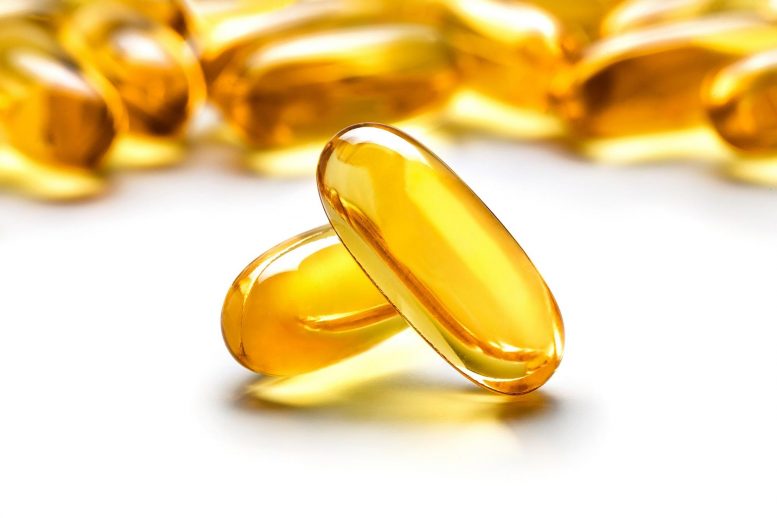
Doctors often recommend Omega-3s to help patients lower their cholesterol and improve heart health. Those Omega-3s can come from fatty fish like salmon and mackerel, or supplements that often contain a combination of the acids eicosapentaenoic acid (EPA) and docosahexaenoic acid (DHA).
Now, new research from the Intermountain Healthcare Heart Institute in Salt Lake City finds that higher EPA blood levels alone lowered the risk of major cardiac events and death in patients, while DHA blunted the cardiovascular benefits of EPA. Higher DHA levels at any level of EPA, worsened health outcomes.
Results of the Intermountain study, which examined nearly 1,000 patients over a 10-year-period, will be presented virtually at the 2021 American College of Cardiology’s Scientific Session on Monday, May 17.
“The advice to take Omega-3s for the good of your heart is pervasive, but previous studies have shown that science doesn’t really back this up for every single omega-3,” said Viet T. Le, MPAS, PA, researcher and cardiovascular physician assistant at the Intermountain Heart Institute and principal investigator of the study. “Our findings show that not all Omega-3s are alike, and that EPA and DHA combined together, as they often are in supplements, may void the benefits that patients and their doctors hope to achieve.”
In this study, Intermountain researchers used the INSPIRE registry, an Intermountain Healthcare database started in 1993 that has more than 35,000 blood samples from nearly 25,000 patients.
Through INSPIRE, researchers identified 987 patients who underwent their first documented coronary angiographic study at Intermountain Healthcare between 1994 and 2012. From those blood samples, the circulating levels of EPA and DHA in their blood was measured. Researchers then tracked those patients for 10 years, looking for major cardiac adverse events, which included heart attack, stroke, heart failure requiring hospitalization or death.
They found that patients with the highest levels of EPA had reduced risk of major heart events. When evaluating how EPA and DHA affect one another, they found that higher DHA blunts the benefit of EPA. In particular, they also found that those patients with higher levels of DHA than EPA, were more at risk for heart problems.
Le said that these results raise further concerns about the use of combined EPA/DHA, particularly through supplements.
“Based on these and other findings, we can still tell our patients to eat Omega-3 rich foods, but we should not be recommending them in pill form as supplements or even as combined (EPA + DHA) prescription products,” he said. “Our data adds further strength to the findings of the recent REDUCE-IT (2018) study that EPA-only prescription products reduce heart disease events.”
Meeting: American College of Cardiology 2021
Other members of the research team include: Stacey Knight; Kirk Knowlton; Raymond McCubrey; Jeramie D. Watrous; Mahan Najhawan; Khoi Dao; Tami Bair, Benjamin Horne; J. Brent Muhlestein; Donald Lappe; Madisyn Taylor; John Nelson; John Carlquist; Mohit Jain; and Jeffrey Anderson.
For some people, Glucosamine does nothing. For people like me, it is a wonder drug
For some people, CBD does nothing. For people like me, it is a wonder drug.
I’m about to try Delta 8 to see what it does
Better to take k2 and nattokinase
I had a bad reaction to my original dose of Simvastatin so I had them cut it in half. No problems after that
>I’m about to try Delta 8 to see what it does
You’re going to get legally high. It’s basically the body high of weed without the paranoia.
I’m really hoping more for getting to sleep. I bought the oil to take sublingually.
Weed never made me paranoid. It did allow me to get to sleep easily but that was 40 years ago.
There was a time whenever Gerber’s added that to
some baby foods as a additive. Need a study on that too.
It is pure EPA:
“Vascepa (icosapent ethyl) is a prescription omega-3 fatty acid that is similar to fish oil but not exactly the same. The main differences between Vascepa and fish oil is that Vascepa only contains eicosapentaenoic acid (EPA), whereas supplemental fish oils contain both EPA and docosahexaenoic acid (DHA). By only containing EPA, Vascepa reduces high triglycerides without raising levels of “bad” cholesterol or LDL-C. Vascepa is also up to four times stronger than most OTC fish oils, more expensive, carries a higher risk of bleeding and heart rythym disturbances, and is only available on prescription to people who meet certain criteria.”
https://www.drugs.com/vascepa.html#faq
bump
interesting
Why doesn't this doctor tell us how they documented every source of EPA and DHA consumed by all of the heart patients over ten years? Why didn't they have a control group of individuals that were not heart patients for a proper comparison? Why didn't they survey all of the patients to find out who took fish oil capsules or ate flax seed. This new study sounds like worthless supposition.
I have a poor diet because I would vomit up most vegetables, sauces, dressing, and various combinations of food. I'm the proverbial meat and potatoes man you've heard about. I almost didn't make it through the first month of my 46 year marriage when I sat down for dinner and exclaimed to my bride, what is this, onion stew!?!"
I take mega doses of vitamins and minerals and have for decades to make up for my poor diet.
Cut the potatoes and go full carnivore. You will thank me. Morning wood has returned.
At this point, I don’t think Big Medicine has any clue how to postpone heart attacks and I don’t believe a word they say anymore, in any event.
I hear you, and I'm glad you are a survivor! But I question that "ending up with" cancer can be tied directly to your conclusion that most supplements are worthless.
Diet is a major element of health, but it is not fully determinative. Your supplements may have helped you avoid any number of conditions that could have weakened you or taken you out before you developed the cancer. Many factors figured in to an "attack" of cancer, such as environmental toxins or genetic predisposition; and there are a wide variety of cancers. Many cases are more individual than not. My hard-drinking and roll-your-own smoking granddads both lived cancer-free and died of heart conditions. But both my non-smoking, non-drinking parents died of lung cancer. How is that possible? I suspect radon in their leaky suburban cinder-block basement and lawn chemicals from their daily golf games; but I'll never know.
Doctors from med school onward are trained to say that supplements are no good; I've heard it for years. So I challenged my latest doctor and stopped taking them for 6 months. My next lab tests showed a measurable elevation in the bad cholesterol and other markers. Then I took them again and there was a measurable improvement. Now she tolerates my supplement "habit" with a watchful eye, but has stopped scoffing.
There has been a lot of original research about supplementation that is not merely a claim by pharmaceutical companies. And it's not hard to imagine that test results that show a possible benefit lay persons at an affordable price is suppressed or condemned by pharm lobbyists and sales reps. You'd be shocked at the amount of "bribery" in the form of gifts, all-expenses-paid "medical seminars" (in locations like Las Vegas and Hawaii) and other pelf the drug reps lavish on their M.D., Pharm.D. and med school faculty clientele. I learned this while worked in marketing in the prescription drug industry for many years, with a degree in liberal arts but no scientific education beyond high school biology, like many of us in the background who promoted BigPharma's bottom line.
You can see from the recent pandemic how cheap, available medications such as hydroxychloroquine and ivermectin were viciously attacked in the media for both political and BigMed interests, in favor of expensive hospitalizations paid for by a Democrat spending bill and BigPharma drug treatments. Why would their attacks on affordable supplementation by us non-elites be any different?
My primary physician has been skeptical of my use of vitamins and minerals; yet she had to admit that during the pandemic, suddenly many credible sources started recommending supplements I'd already been taking for years: especially C, D and zinc.
Supplement-takers should be scientific about researching not only the anticipated good effects of adding or deleting a supplement from their diet, but also the possible side effects, including the combination of other elements in the diet and the timing of taking the doses, since some elements can cancel out the effects of others, or contribute to mild harms over time. They should also obtain objective measurement of the effects through blood tests at regular intervals.
“But I question that “ending up with” cancer can be tied directly to your conclusion that most supplements are worthless.”
You seem to have done your homework, which is pretty important if you plan on treating yourself. I suspect you are in the minority of people who take supplements. I don’t disagree with much of what you say which is based on your own research and discussion with your doctor.
While I agree we have a capitalist system where both drug companies and supplement manufacturers promote their product in the best way they know how I personally come closer to listening to my medical doctor, with years of training and certification (and reputation) than a supplement promotor who is not regulated. So far, that seems to have worked out pretty well.
In my mind, the key is what you described. That is look for deficiencies through your blood tests. If you have them and they can be treated with supplements then by all means do it. I mentioned I do take them still, but they are from deficiencies and actually recommended by my doctor.
My previous method of using them was to hear about a particular supplement that would improve my health and buy it and start gulping them down. I think that is what most do — not the research as you have done.
By the way, my cancer was a rare form of blood cancer with no hereditary relationship and actually no known cause — except a genetic mutation that occurs as cells are copied about a million times a day and one goes wrong.
Diet and exercise go a long way to minimizing your chance of disease, but they don’t prevent it. They also make a huge difference when it comes to the survival of both a disease and the treatment.
Good luck.
“The Name of Jesus is the Name above every name, including the names of illnesses.”
Amen, my brother! I’ve lived with this disease for over seven years and while I remain in remission, it almost always returns.
It’s a funny thing. Cancer forces you to face your own mortality and gives you a chance to get things right with your God and those around you. Frankly, my disease has been a blessing. I’m at peace now and have a whole new set of priorities. While I don’t want to leave, I am not at all worried about it. We all die! It is as natural as birth.
One other thing that has helped me is to seek out the best possible care for what can be a deadly disease. I go to the top cancer center in the nation (MD Anderson)where cancer is like the common cold and that’s all that they do. Most all forms of cancer are treatable with the right diagnosis and treatment, which can only be found at a few top centers in the country. It’s one thing to head off to your local doctor with a head cold, but when the word “cancer” pops up it is best to get to the absolute best you can find for a second opinion — even if you have to travel 500 miles to get there (if living is important).
And one more thing. God helps those who help themselves but none of that help happens without a loving, caring God who oversees all that we do and can intervene on our behalf when we get over our head (which is pretty often).
Good luck!
Amen, hallelujah! Very glad to hear it!
Disclaimer: Opinions posted on Free Republic are those of the individual posters and do not necessarily represent the opinion of Free Republic or its management. All materials posted herein are protected by copyright law and the exemption for fair use of copyrighted works.