Posted on 03/25/2021 8:33:21 PM PDT by nickcarraway
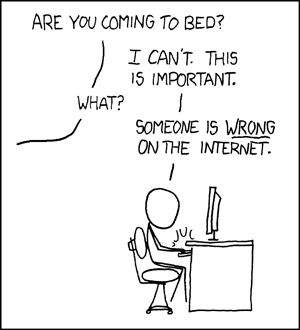
The phrase revenge bedtime procrastination rings strangely, and its meaning is, perhaps, unintuitive. Yet, it has seen lots of attention from the press and the public. What is the phenomenon of bedtime procrastination, and what is it revenge on? We investigate.
It is late at night. Your day’s work — day job duties, homework for your course, house chores — is all done.
You glance at the clock: it is past midnight already. You are all ready for bed and so tired that you could almost pass out.
However, instead of closing your eyes and drifting off to sleep, something else happens. You start reading a book, watching an episode of your favorite show, or adding one more row to that knitting project.
Before you know it, one more page has become five more chapters, you have binge-watched an entire season of that show, or all but finished your knitting project.
By this time, however, it is 3.00 a.m., and you know you have to wake up at 6.00 a.m. You are very tired, and you know you will be sleep-deprived, but you could not help yourself. Why?
If this scenario seems familiar, it is because many people around the world have been increasingly engaging in this form of behavior. This phenomenon has become so widespread that it has earned the moniker: revenge sleep procrastination.
What is revenge bedtime procrastination, why does it happen, and who does it affect? Are there ways to modify this behavior to avoid sleep deprivation? In this Special Feature, we investigate.
Article highlights:
What is it, and why does it happen?
The concept of bedtime procrastination first came up in a study paper by Dr. Floor Kroese — a behavioral scientist from Utrecht University in the Netherlands — and colleagues, which appeared in Frontiers in Psychology in 2014.
Dr. Kroese and her collaborators described bedtime procrastination as the act of “going to bed later than intended while no external circumstances are accountable for doing so” — that is, choosing to delay bedtime without a practical reason for this delay.
One study that appeared in the <>International Journal of Environmental Research and Public Health in 2020 focused on adolescents, the most obvious bedtime procrastinators.
This study found that many adolescents put off sleep to watch videos, listen to music, or send text messages. However, the reasons behind this purposeful delay remained unclear, and the study did not address this phenomenon’s occurrence in adults.
Besides, why should bedtime procrastination be an act of revenge? Who or what are bedtime procrastinators taking revenge on?
“Blurring boundaries between work and domestic lives”
Medical News Today spoke to Sara Makin, M.S.Ed., NCC, LPC, founder and CEO of online counseling practice Makin Wellness, and Lee Chambers, M.Sc. M.B.Ps.S., an environmental psychologist and well-being consultant, to find out more about the possible reasons that might drive people to procrastinate on sleep.
Makin told us that “[r]evenge sleep procrastination is still a new concept, so there are still debates regarding the psychology of this.”
“There may be a connection between heightened daytime stress and bedtime procrastination,” she noted.
A study from the Netherlands that appeared in Frontiers in Psychology in 2018 aimed to answer the question as to why people may delay their bedtime on purpose, even when they are tired.
The study authors found that the more a person had to “resist desires” during the rest of their day, the more likely they would be a bedtime procrastinator.
This means that the less enjoyable things a person could do during the day, the likelier it was that they would try to reclaim that time at night and engage in the more pleasurable activities they had not been able to do during the day.
“One of the significant causes of revenge sleep procrastination is where our current working culture intersects with our personal and leisure time expectations in our p.m. bookend,” Chambers told MNT.
It all comes down to trying to reclaim that much-needed “me time,” he explained: “The desire to gain a level of personal freedom drives a desire to stay awake beyond a time that will provide an optimal level of sleep.”
“Factors that contribute [to bedtime procrastination] are working hours, often elevated to 12 hours and beyond, workplace expectations to be available outside of hours, and overtime to be worked. Modern working patterns and technologies are blurring boundaries between work and domestic lives, giving rise to a feeling of living at work. Peer pressure to achieve, self-learn, have valuable hobbies, and practice well-being can all drive behavior that eats into a sleep schedule.”
– Lee Chambers
The “revenge” aspect of bedtime procrastination comes almost as an act of rebellion against ever-increasing demands at work and at home, which leave many of us little time or energy to invest in leisure activities.
The COVID-19 pandemic and ensuing local and national restrictions have made matters worse by blurring the boundaries between home and office, blocking parents’ and caregivers’ access to daycare, schools, and their support networks, and forcing students to study from home.
Self-dubbed "the greatest pillow ever invented," the Purple Harmony Pillow is designed to cradle your neck, keep you cool and help you drift off to dreamland in no time.
Who is likely to procrastinate on sleep?
While anyone can engage in bedtime sleep procrastination, some people may be more likely than others to delay going to bed.
According to Makin, “[i]t appears that women and students are most [likely]” to engage in bedtime procrastination.
This is also the conclusion reached by the authors of a 2019 study in a Polish population. The study indicates that “the chance of severe bedtime procrastination is more than twice as high for females than for males.”
Moreover, they write that “[d]ifferences between the sexes in delaying sleep already appear in schoolchildren.”
Although this study does not explain why women may be more likely to go to bed late, it is possible to make some inferences based on other available information.
An American Psychological Association survey from 2010, for example, noted that women are more likely than men to report that they experience significant stress.
The data revealed that “[w]omen are more likely to report physical and emotional symptoms of stress than men,” including headaches, feeling that they were about to cry, or having an upset stomach.
This may come as no surprise given women’s demonstrable time poverty Source — the amount of unpaid work they engage in, often as primary caretakers of children and older family members.
When it comes to bedtime procrastination, though, Chambers also notes that there appears to be an age gap, with younger Millenials and Generation Z-ers being more likely to engage in this behavior.
“In my professional experience, this [behavior] presents most often in late Millennials and Gen Z’s in high-pressure positions with ambitious goals and career objectives,” Chambers told MNT.
Why? He explained that “[t]heir behaviors are, in a way, a rebellion against the organizational cultures they are trying to navigate, and they are often aware of just how pivotal sleep is to health and performance.”
Many studies have shown that lack of sufficient, good quality (uninterrupted) sleep is crucial for maintaining both physical and mental health.
Researchers have tied sleep not just to our ability to focus on work and being productive but also to mood regulation, weight gain, cardiovascular health, and inflammation, among others.
“Sleep deprivation, reduced decision-making capacities, and challenges with [cognitive performance] are all potential negative effects of sleep procrastination,” Makin told MNT.
We asked her if bedtime procrastination could have any positive effects:
“The only positive with revenge sleep procrastination is that there’s a false appearance that you have more control over your life. This is very reinforcing and will entice you to continue this behavior, even though the risks outweigh the rewards. There is no genuine positive effect to reducing the quality and time of your sleep. Consistent and good quality sleep is the foundation of sound physical and mental health.”
– Sara Makin
It can be difficult to dislodge the feeling of regaining freedom and control over one’s life, even when a person knows that the sleep deprivation that tends to follow bedtime procrastination can feed a vicious cycle of exhaustion and lack of productivity.
“With the awareness of the importance of sleep often present in those who procrastinate, the solutions often lie in setting boundaries around working patterns, considering flexibility in work, and creating psychological separation between work and home environments,” Chambers told MNT.
“Honoring our ultradian rhythmicity by taking regular breaks to disconnect from tasks improves our ability to disconnect when we finish working, making it easier to fall asleep at a reasonable time,” he advised.
Chambers also noted the importance of having a digital curfew, a time at which we consciously put our digital devices aside: “I often suggest that clients find ways to actively rest during the day, and commit to a digital sunset in the evening, at a minimum removing workplace devices to a designated spot.”
This is important because screen time — particularly before bed — has links with less and poorer quality sleep.
Tips for better sleep
To get some more in-depth advice on what people can do to stop bedtime procrastination and have better-quality sleep, MNT spoke to therapist, hypnotherapist, and life coach Karl Rollison.
Like Chambers, Rollison strongly advised that people must avoid screen time before bed at all costs.
“[D]itch the tech an hour before bed. How can we seriously expect our brain to relax when we are bombarding it with information, videos, and bright images? Pick up a good, old-fashioned book instead and never allow your technology to infect your precious sleeping zone,” Rollison said.
He explained:
“Another reason for switching off all screens at bedtime (including the TV) is to restrict the amount of light we are receiving. The darker the sleeping environment, the more efficiently we produce the sleep hormone melatonin. A great way of doing this is via heavy-duty black-out blinds. However, these are expensive, so I would recommend investing in a quality, molded eye mask.”
He also suggested having a hot shower or bath before bedtime to leave the day’s stress behind.
“[H]ave a hot bath or shower an hour before bed — when we fall asleep, our body temperature drops, so when we artificially raise it then allow it to drop, we fall asleep,” Rollison told MNT.
One review of sleep studies published in 2019 also emphasizes the effectiveness of hot baths in preparing people for sleep. According to the review authors, it is preferable to bathe just 1 or 2 hours before bedtime for best results.
Journaling can also help. A study from 2017Trusted Source found that expressive writing — jotting down the thoughts, feelings, and experiences that stood out throughout the day — effectively reduces both mental and physical symptoms of anxiety.
Rollinson concurred. “If you still can’t get to sleep because of an active mind, then get up and write down all your worries and anxieties,” he said.
“I call this downloading. You are effectively giving your thoughts physical form and organizing them — tidying up the mess in the attic, so to speak. It sounds simple, but it works, and it’s surprising how many people have never done it,” he added.
How to cope with sleep deprivation Nevertheless, sometimes sleep refuses to come despite our best efforts and intentions, resulting in the inevitable tiredness the following day.
Should that happen, Rollison said that “the number one thing is to accept it and not fight it.”
“Acknowledge that it won’t last forever and try not to stress about it. Like any problem in life, it needs to be managed. This means factoring in more time to complete tasks, appointments, and engagements.”
– Karl Rollison
He also gave a potentially surprising piece of advice for those who find it hard to recover after a night of insufficient sleep.
“No one wants to hear this, but, in my opinion, the best mechanism for effectively coping with sleep deprivation is exercise,” he told MNT.
“This doesn’t mean signing up to a gym but […] just hitting the streets. Not just running or jogging but simply going for regular walks. The important thing is getting outside,” Rollison explained.
“[T]here is definitely a primordial relationship between the great outdoors and sleep. The people that I’ve helped deal with insomnia over the years are the ones that have taken this advice,” Rollison told us.
Top tips and tricks for sleep hygiene Finally, ensuring good quality sleep is a process that takes into consideration many factors.
MNT asked Rollison — who is also the author of Sleep Ninja, a self-help book for those who have a troubled relationship with sleep — for his top tips on ensuring better sleep quality in the long run.
“Protect your sleep environment and associate it (and your bed) with the joys of sleep. It’s a simple and effective idea: if you’re wide awake, get up and (move) away from your sleep zone,” he suggested.
Another tip is to “[m]ake your sleep environment as cold and airy as possible.” Rollison explained that “The worse sleep humans experience is during high-heat, low air levels.”
His other tips were to:
have a regular wake-up time and bedtime snack on nuts, seeds, and pulses, which are sources of the amino acid tryptophan, which helps produce melatonin take vitamin D and magnesium supplements, which may help induce sleep stay hydrated only drink caffeinated beverages in the morning Ultimately, for those who struggle to go to sleep because they feel there was not enough time in the day to engage both in chores and in leisure activities, the answer may be to learn to compartmentalize their worries as much as possible.
As therapist Lee Chambers told MNT: “[W]e all need time to mentally detach and distance ourselves from working and do something meaningful. Finding a healthy way to create that space while still being kind to ourselves is the key to finding harmony that doesn’t put us at risk of burnout, chronic stress, and reduced health.”
I’ve been engaging in that behavior my entire life. Glad to know there is a name for it.
People thought they would have “harmony” with the lockdowns and not having to go to work.
Now people are suffering because of the lockdowns and not going to work.
people inner clocks have just gone bonkers from binging, etc, etc., etc..
Reads like a bad case of insomnia to me. Dunno.

"Well....as long as I'm only going to get a few hours sleep anyway, I may as well....STAY UP ALL NIGHT!!!! Yeah! That'd be good for me. I don't mind going to that board meeting looking like Keith Richards. Yeah, I'll turn that around, make it work for me. And besides, as long as I get 31 hours sleep tomorrow ....cool."
Ping
Yeah. Good luck with that getting up at 5 am like I do everyday
My kids have struggled with insomnia so I can empathize. I’m the exact opposite - I can fall asleep within five minutes of my head hitting the pillow. Anytime, anywhere. When we were kids vacationing in my parents cabin cruiser I was the only one of the kids who, despite the pounding of the waves, I could sleep soundly.
Would be interesting to see if this phenomenon occurs more during DST?
Actually, it more likely happens to me during standard time. It’s less likely you got some sun.
Two really cool thing about being retired:
1- I don’t have a time that I “have to get up” in the morning.
...thus...
2- I don’t have a time that I “have to go to bed” at night.
Alarm clocks be dammed.
They are a demonic thing of the past.
“to reclaim that much-needed ‘me time.’” Most likely.
If a person cannot fall sleep by 11pm, then he needs to prepare for 11pm. Get a full meal at 10p, take calcium and magnesium powder at 10p, say a few prayers, and enjoy the feeling of getting sleepy.
I’m doing it right now.
Goodnight.
I find it to be my unwind time.
This is a good explanation in my book.
I do this all the time and for some reason, I do not sleep well until after 3AM. After that, the world could end and I would not know it, but before that, I toss and turn and get up to go to the bathroom, get a drink, whatever.
Dig in the garden, mow the lawn, wash the windows, clean your room.
It will make you feel good about having got something productive done and it will make your body tired as well as your brain.
Sounds like a Buncha longwinded bullshiite to me.
Disclaimer: Opinions posted on Free Republic are those of the individual posters and do not necessarily represent the opinion of Free Republic or its management. All materials posted herein are protected by copyright law and the exemption for fair use of copyrighted works.