Posted on 05/23/2026 6:47:49 PM PDT by Red Badger
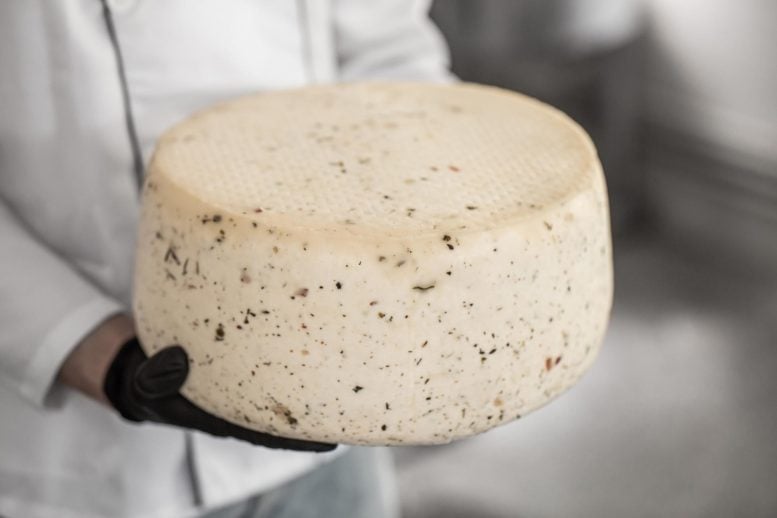
Cheese is one of the world’s most beloved foods, enjoyed by millions of people across countless cultures and cuisines. Credit: Shutterstock Scientists have traced the changing microbial communities inside three artisan British cheeses, revealing how bacteria shape their flavor, texture, and potential benefits for gut health.
Cheese can seem like a simple pleasure, but every bite is the result of a microscopic transformation. As milk becomes cheese, bacteria and fungi break down sugars, proteins, and fats, creating the flavors, aromas, and textures that make each variety distinct. New research suggests that some of these tiny cheesemakers may do more than shape flavor. They could also help explain why certain traditional cheeses may interact with the gut in potentially beneficial ways.
Scientists at the University of Reading studied three artisan cheeses made by Nettlebed Creamery in Oxfordshire to see how their microbial life changed as they matured. The team tracked both the bacterial communities and the chemical makeup of the cheeses during aging, revealing how fermentation helps build a cheese’s character from the inside out.
Published in ACS Food Science & Technology, the study examined a soft white-rind cheese aged for just over a week, a washed-rind semi-soft cheese matured over several weeks, and a semi-hard cheese aged in hay for about nine months.
Lead author Sabrina Longley, a PhD researcher in the Department of Food and Nutritional Sciences, said: “”Good cheese is delicious, and the artisan varieties we studied are full of microbial life that could have benefits to your gut health.
“The aging process creates more complex aromas and textures through the work of an army of helpful bacteria. The matrix of fats and proteins in the cheese may also help protect the bacteria as they travel along the digestive tract, making cheese an excellent vehicle for delivery of probiotics to the gut.”
Beneficial Bacteria in Every Cheese
Researchers collected samples at several points during cheese maturation and analyzed their bacterial communities and chemical makeup.
Each cheese contained bacteria with recognized probiotic potential, which may help support beneficial bacteria in the gut. Streptococcus thermophilus, also used as a yogurt starter, remained dominant in the semi-soft and harder cheeses through maturity. Lactococcus lactis was found in all three cheeses throughout the process.
The washed-rind and hay-aged cheeses also contained Propionibacterium freudenreichii, which produces propionic acid, a compound linked to anti-inflammatory effects, reduced cholesterol synthesis, and appetite regulation.
People who eat cheese rind may have another reason to enjoy it. The white mold Penicillium candidum, used to create the rind of the soft cheese in the study, produces chitin, a dietary fiber that may act as a prebiotic. Prebiotics feed beneficial gut bacteria and can help encourage positive changes in the gut microbiota.
Hay Aging and Microbial Diversity
Aging the harder cheese in hay appeared to increase its microbial diversity as it matured. By the end of the process, the mature cheese contained nearly four times as many bacterial species as it had earlier in maturation.
The researchers also found that lactose, the sugar in cow’s milk that some people have difficulty digesting, was almost entirely gone from all three cheeses by the time they reached maturity. Lactic acid bacteria had broken it down during fermentation.
Longley is also a cheesemaker at the independent Nettlebed Creamery in Oxfordshire, which partly funded the study. She is completing her PhD part-time with support from a University of Reading regional bursary, a program that helps people from the local area pursue research studies.
The authors say more research (dietary intervention trials) is needed to determine how these bacteria behave in the gut after the cheese is eaten, how they affect the gut microbiota, and what their broader effects may be on the human body.
Reference: “Microbial and Biochemical Characterization of Three Artisan British Cheeses throughout the Maturation Process” by Sabrina Longley, Glenn Gibson and Anisha Wijeyesekera, 1 May 2026, ACS Food Science & Technology.
DOI: 10.1021/acsfoodscitech.5c01243
Dear FRiends,
We need your continuing support to keep FR funded. Your donations are our sole source of funding. No sugar daddies, no advertisers, no paid memberships, no commercial sales, no gimmicks, no tax subsidies. No spam, no pop-ups, no ad trackers.
If you enjoy using FR and agree it's a worthwhile endeavor, please consider making a contribution today:
Click here: to donate by Credit Card
Or here: to donate by PayPal
Or by mail to: Free Republic, LLC - PO Box 9771 - Fresno, CA 93794
Thank you very much and God bless you,
Jim
Carr Valley Cheese, next town over from us, makes a ‘Cocoa Cardona’ which is out of this world!
“Carr Valley’s Cocoa Cardona cheese is a delicious, unique cheese. The Cocoa Cardona cheese is made from goat’s milk cheese aged for more than 8 months. The cheese is rubbed with cocoa powder, giving it a subtle cocoa flavor with a beautiful brown rind. This cheese comes in a five ounce package, and pairs wonderfully with dark chocolate or your favorite fruit jam! Produced by Carr Valley Cheese of La Valle, Wisconsin.”
They ship, via the Wisconsin Cheese Mart, with many other great cheeses to enjoy:
https://www.wisconsincheesemart.com/products/cocoa-cardona
And I don’t even LIKE goat milk-based cheeses. Or GOATS for that matter. ;)
I have some in the refrigerator right now. Better n Chedder I think!
Stilton cheese! Port Wine!
Commercial goat cheese is made with milk from big goat dairys where the bucks run with the does or are very nearby. The cheese has a rank taste I can’t eat it. I made goat cheese for 25 years. One summer I made 40 pounds of mozzarella, also made finished hard mozzarella, parmesan. If you don’t have a buck and properly take care of the milk there is no taste difference. When there were kids over I would serve milk in a storebought milk jug. No one noticed anything except to say wow delicious milk. Also served goats milk ice cream with the cake. And all our kids were bottle fed very tame, smart as dgs and well behaved. Brag over.....
But, what about some Ithaca love? LOL!
Yeah, I know it’s all in the processing. That Cocoa Caradona is really tasty; not ‘goaty’ at all. I worked with a guy who had a goat farm and he smelled like GOAT all the time. Ugh! Boss had to send him home a time or two because of it.
My Aunt’s goats were particularly ornery and it was my job to milk them in the summers. I seem to remember about 6 of them. And it never failed - as soon as that bucket was full if milk, they’d kick it over! Grrr!
I was just a little City Kid, learning Farm Life, but it was still frustrating.
Thats why you train them while they are young to hop up on the milk stand can have their collars clipped while they eat. Never lost a drop of milk. Bucks smell so disgusting but we kept an old sock in a half pint canning jar. The breeder rubbed one of her bucks down with it. Sealed the jar good. If you doubted when your doe was in heat give them a whiff. We also watched backsides and kept track on a calendar. Hop into the hatchback when its time, drive about an hour and the goat hops out, and about 3 minutes later she is back in the car. Always hit it right.
Diana, Chocolate, and cheese!
.
LOL! The reason our Beagle, Chief, was so valuable, was that he could tell you about a week in advance when a female was going into heat.
He helped us bring lots of puppies into this world, though the poor guy never had a family of his own. :(
I do too, along with Bell Pisa.
That and some dark chocolate have the food groups covered.
Disclaimer: Opinions posted on Free Republic are those of the individual posters and do not necessarily represent the opinion of Free Republic or its management. All materials posted herein are protected by copyright law and the exemption for fair use of copyrighted works.