Posted on 07/05/2026 7:20:46 PM PDT by Red Badger
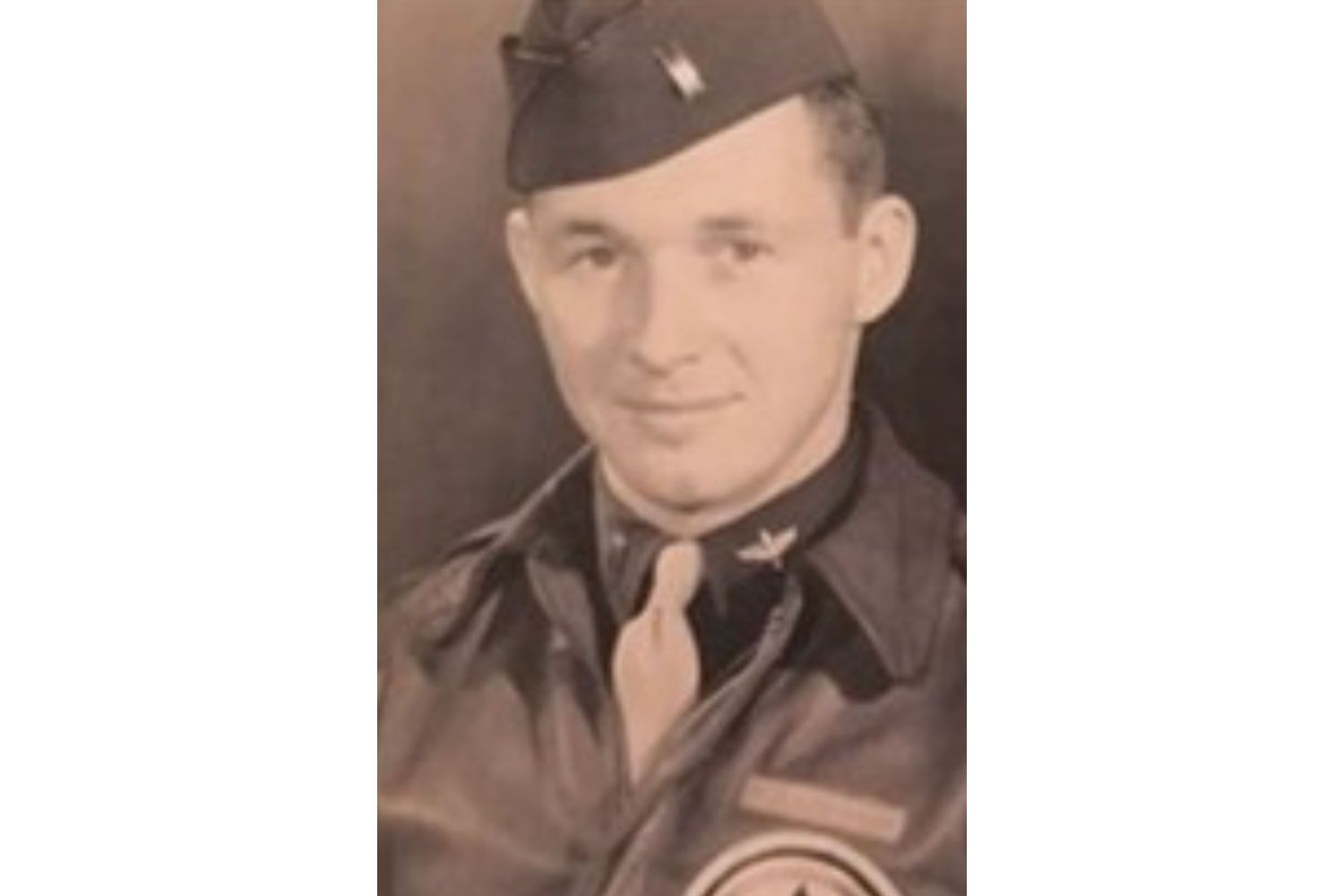
U.S. Army Air Forces 1st Lt. Franklin H. McKinney - Credit: Defense POW/MIA Accounting Agency
A pilot who went missing in 1944 during World War II has been found
The remains of 1st Lt. Franklin H. McKinney were accounted for on May 15, 2026
The Rhode Island resident was 21 years old when his airplane went down in Southeast Asia, and was recovered more than 80 years later
The remains of a U.S. pilot who went missing during a World War II mission have been found, more than 80 years after his plane went down in Southeast Asia.
U.S. Army Air Forces 1st Lt. Franklin H. McKinney of Rhode Island was just 21 years old when his F5E-2-LO Lightning aircraft failed to return from a reconnaissance mission from Yunnanyi, China, to targets in Thailand and Burma on Nov. 5, 1944, the Defense POW/MIA Accounting Agency said in a Wednesday, July 1 press release. His remains were accounted for on May 15, the release notes.
His squadron, nicknamed the "Redhawks," was known for daring spy missions, CBS News reported.
On June 28, the U.S. embassy in Thailand published photos of the repatriation ceremony, adding, "Thank you to the Royal Thai Government, local Lampang officials, and the archaeologists and students from Thammasat University, who worked side-by-side with DPAA and the UCLA partnership team to bring 1st Lt McKinney home to his family."
(Excerpt) Read more at aol.com ...
R.I.P.
Greg’s Airplanes and Automobiles is a great site for highly technical non-AI-slop WWII aircraft vids. Highly recommended. Greg is scathing in his critiques of the Bomber Mafia. We could have been escorting properly early in the war.
His main channel:
https://www.youtube.com/@GregsAirplanesandAutomobiles
P-38 playlist. First vid there is titled “The P 38 Lighting and the Bomber Mafia’s Failure In World War Two”
https://www.youtube.com/playlist?list=PLD2EcpzcvT-tbzZrbEuetBOalWtEiILpF
Fighting was done at high altitude in ETO. With no engines to warm the cockpit flying at altitude was miserable. What should have made it exceptional at altitude, turbochargers was actually a point of failure.
....well, the Germans called it “the fork-tailed devil”
so it must have been somewhat successful in the ETO...
I believe it was quite effective in the Pacific area
of operations because of its range....
The PW Twin Wasps in the P-47 and F4U didn't have any problems zooming to 40,000ft. The FW-190 got faggy at a little over 20K. Plus the latter disintegrated with just one quick burst of our .50s. Dive and Zoom.
Of course the P-51 had the advantage of both performing well at altitude and could maneuver in close up dogfights like the 109 and 190.
Engine Issues: The Allison V-1710 engines suffered from compressibility problems during dives
Compressibility has to do with the laws of physics. Due to the P-38s performance being higher than any other American fighter at the time, the P-38 was first to regularly encounter in dives what was then the largely unknown, or at least poorly understood phenomenon of compressibility... loss of control in the transonic zone.
No one at the time knew what compressibility was other than "P-38s can't recover from power dives".
I believe compressibility was the second undeserved strike against the P-38 in the ETO.
The first undeserved strike being the plane's poor initial reputation due to the intentionally crippled engines delivered to the British and French in 1940 which made takeoffs dangerous, destroyed maneuverability and all hope of high altitude performance. The Brits required that the engines not be counterrotating and Washington stripped turbosuperchargers from the order.
poor performance at the high altitudes (above 20,000 feet) typical of European air combat. Turbochargers often failed or froze in the extreme cold.
I believe your understanding about the superchargers stems from British experience with their disastrous 1940 order of crippled P-38s which arrived without superchargers, or counterrotating engines. That established a bad reputation. It was an undeservedly bad reputation.
My understanding is that the turbosupercharger of the P-38 was significantly superior to mechanical superchargers of the era enabling the P-38 to maintain sea-level power up to the critical fighting altitude of 25,000 - 28,000 feet which is where the B-17s and B-24s flew.
Yes, above that critical altitude, P-38 engine performance dropped profoundly but that was by design. As higher altitude variants of German fighter became available, the P-38 had to adapt to fly and fight higher but that is part of the normal progression of variants as each side adapts and improves equipment.
There were teething problems with the P-38 in the ETO but that was the case with every platform. Unfortunately for the P-38, it's high altitude, extreme cold air teething problems were delayed several years due to the 1940 British-French order being stripped of turbosuperchargers.
Mechanical Reliability: Early P-38s experienced frequent engine failures, including blown intercoolers, fouled plugs, and oil system issues in cold weather, leading to high abort rates.
I go back again here to that disastrous British 1940 P-38 order that Washington stripped of superchargers. Had the British P-38s been able to identify high altitude issues, they could have been resolved in the 1942/43 timeframe. At least the intercooler issue could have been been resolved.
I believe the other engine issues were due to differences in the fuel P-38s were designed for versus the British avgas which P-38s had to use once in the ETO. The issue with the British aviation gas tied in with the intercooler issues operating in extremely cold air resulting in the P-38 pilot being unable to slam the throttle and propellers forward as instinctive response to being ambushed. To do so could tear the engine apart and was pilot error. This "pilot error" was solved through a single automated control in a later variant
Combat Effectiveness: While the P-38 was highly effective in the Pacific Theater against Japanese fighters, its maneuverability and roll rate were considered inferior to German single-engine fighters in the ETO. German pilots reportedly considered the P-38 the “easiest Allied plane to shoot down” in Europe.
The initial German pilots the P-38s encountered were highly skilled and flew airframes incorporating multiple combat improvements. As such, there is a certain analogy to the Pacific when inexperienced American pilots initially encountered ultra skilled combat trained Japanese pilots flying upgraded zeroes.
The Americans had to learn some hard lessons about what not to do in fighting the Zero and by the time the F-6, F-4 and P-38 arrived in large numbers, Japans best pilots had been killed by Americans in their "inferior" aircraft.
As I see it, proper operation of the the early P-38 was overly complicated and required a higher level of pilot skill which is why I generally say the P-51 was the best fighter in the hands of the average pilot. Even then, the P-51 as shipped was a dog. How much of that initial low regard for the P-51 was due to the engine not performing well with the British aviation gas I do not know but it wasn't until the British fitted it with a Merlin that was designed to drink British aviation gas that the Mustang became what it was. But by then, the Merlin was a very mature engine.
Yes and no. The P-38 supercharger was designed to provide the same horsepower from sea level to ~28,000 feet. That is because it wasn't believed enemy fighters would operate higher. War has a way of changing things quickly and once high altitude variants of the ME-109 and FW-190 were developed, the supercharger of the P-38 had to be redesigned to permit higher altitude combat.
All of this happened as teething problems with the original superchargers were manifesting themselves.
Yes, an undeserved bad reputation Because of government interference........
Agreed. Back then products were deemed "good enough" and then shipped out for customer field testing. Had the British order contained P-38s with counterrotating engines and the superchargers, teething errors with the combination of British aviation fuel and high altitude operations could have been identified in the 1940/41 timeframe and corrected in updated variants by the 1942/43 timeframe.
Also the 8th Air Force was controlled by the "Bomber Mafia" at the time P-38s were available and they didn't want fighter escorts for the bombers. They actively quashed the whole idea of escorting bombers on missions to Germany.
That may also have influenced the pilot controls which were too complex for the average pilot... at least when flying with British aviation gas at high altitude in winter under emergency combat conditions.
True only for later "high altitude" versions of German fighters. But that was just part of the normal move-countermove process of wartime development. Initial P-38s maintained sea level power to ~28,000 feet, above that, power rapidly fell off due to the nature of the superghargers, but that was by design. As German fighters climbed higher, improved variants of the P-38 neutralized that.
In the Pacific where the Japanese aircraft could not operate at that high altitude, the P-38 was successful diving on its opponents at high speed, using that speed to zip away so that it could then regain altitude and do it again and again and again until it scored a kill. The Japanese planes never got the chance to dogfight against it - they were always the hunted and never the hunters.
That is one part of it. The other is that the "inferior" American P-36, P-39, P-40 and F4F had killed many of the elite Japanese pilots by the time P-38s began operating in significant quantities.
That's what electrically warmed suits were for.
What should have made it exceptional at altitude, turbochargers was actually a point of failure.
Pretty standard practice in that era was to get something "good enough" and then ship it to be "broken in"
The P-38s supercharger was unmatched in its ability to provide full sea level power up to the anticipated combat altitude of 25,000-28,000 feet. But it did have teething issues which in the ETO were compounded by forced use of British aviation gas. Issues with the supercharger and British aviation fuel seemed to revolve around the intercoolers and were resolved in two variants of the fighter.
Yeah those suits worked so well. P-38 was fine in MTO and PTO. There were far better options for ETO.
What did bomber gunners have?
Same crappy suits
That's utter BS. Aluminum and/or carbonfiber have less resistance than air, and electricity always follows the path of least resistance. If a lightning strike was well and truly harmless, you could never know to a certainty that you've been struck.
It tends to superheat whatever it hits and burn a hole where it goes in and another when it goes out. Lightning strikes are most common in the 'teens' (13,000-19,000 feet) and at 32°F, which is where turboprop "puddle jumpers" spend most of their flying lives, so they are most at risk. Spinning propellers/rotors collect a lot of static charge (remember the guy who got shocked by the helicopter in Hunt for Red October? That's fo realz!), which attracts lightning, so the prop is the most common point of entry.
There's always a chunk knocked out of the prop as the "entry wound." From there it passes through the engine and it exits from the trailing edge of the flaps or ailerons, burning an obvious hole in the skin as it exits.
THAT is how you know for sure you were hit.
And it also trashes the (turbine) engine, overheating the main bearings so they will anneal once they're allowed to cool. It probably will continue running until you can make an emergency landing, but once it shuts down the bearings become soft and even if it would re-start it's unsafe to fly.
If there's a bright flash outside the cockpit and one of the generators gets knocked offline, that's a pretty good indication you've been hit. Sometimes the generator will reset, sometimes not, but in any case you need to be looking for the nearest suitable place to land.
FWIW, statistically, every airliner in service is due for one lightning strike a year.
How is that a problem of the P-38?
It’s simple, I will explain. The twin engine design of the P-38 didn’t allow for effective cockpit heating given they’re on external booms. The heated suits were notorious for failing, hence P-38 pilots froze their ass off. Honestly after all of the problems with it were solved it was a good plane, just not a great plane. ETO had two great planes hence there was no need for the P-38.
Then so did bomber crews but I haven't heard much about that over the years.
Yes very dangerous
Disclaimer: Opinions posted on Free Republic are those of the individual posters and do not necessarily represent the opinion of Free Republic or its management. All materials posted herein are protected by copyright law and the exemption for fair use of copyrighted works.