Posted on 07/05/2026 7:20:46 PM PDT by Red Badger
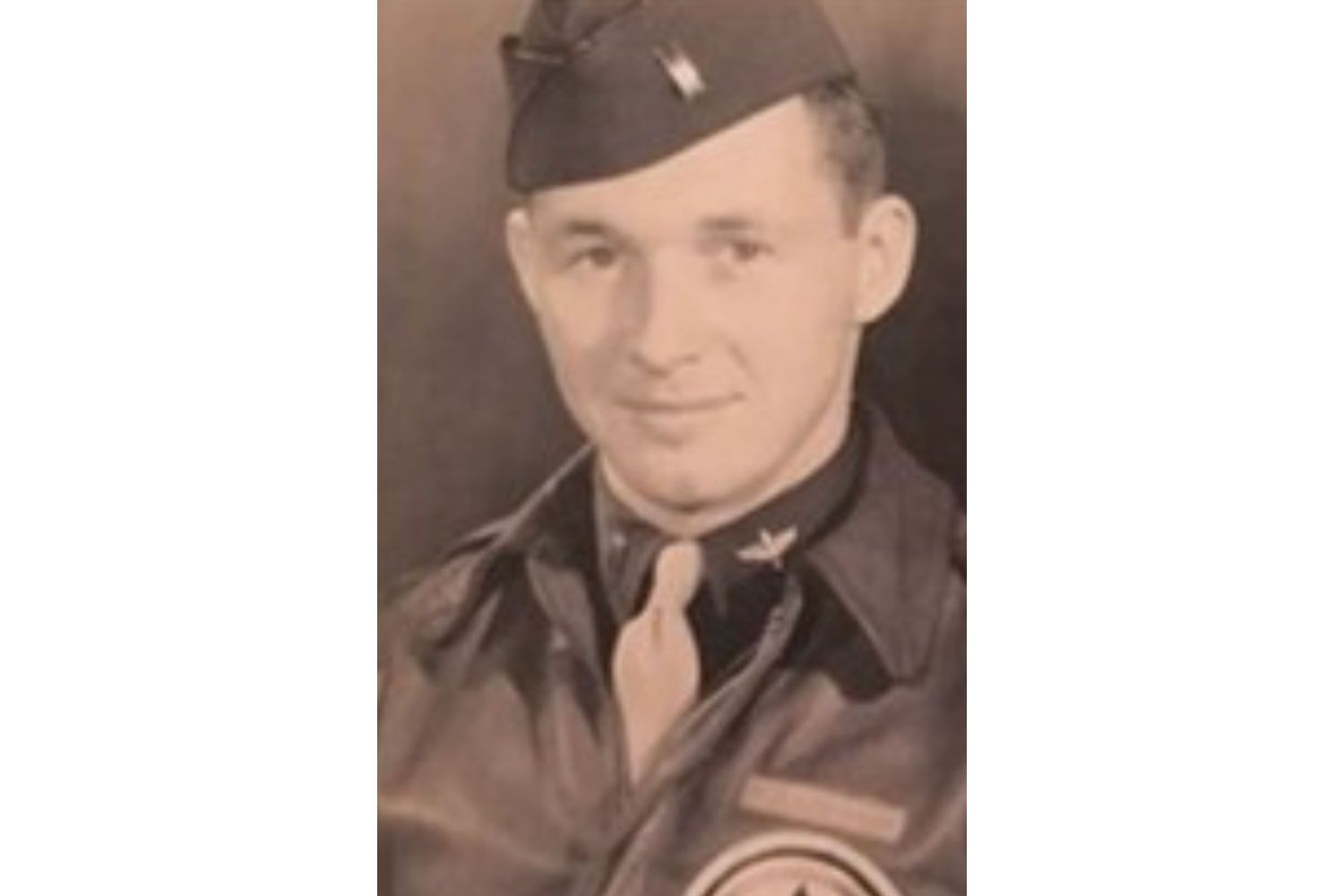
U.S. Army Air Forces 1st Lt. Franklin H. McKinney - Credit: Defense POW/MIA Accounting Agency
A pilot who went missing in 1944 during World War II has been found
The remains of 1st Lt. Franklin H. McKinney were accounted for on May 15, 2026
The Rhode Island resident was 21 years old when his airplane went down in Southeast Asia, and was recovered more than 80 years later
The remains of a U.S. pilot who went missing during a World War II mission have been found, more than 80 years after his plane went down in Southeast Asia.
U.S. Army Air Forces 1st Lt. Franklin H. McKinney of Rhode Island was just 21 years old when his F5E-2-LO Lightning aircraft failed to return from a reconnaissance mission from Yunnanyi, China, to targets in Thailand and Burma on Nov. 5, 1944, the Defense POW/MIA Accounting Agency said in a Wednesday, July 1 press release. His remains were accounted for on May 15, the release notes.
His squadron, nicknamed the "Redhawks," was known for daring spy missions, CBS News reported.
On June 28, the U.S. embassy in Thailand published photos of the repatriation ceremony, adding, "Thank you to the Royal Thai Government, local Lampang officials, and the archaeologists and students from Thammasat University, who worked side-by-side with DPAA and the UCLA partnership team to bring 1st Lt McKinney home to his family."
(Excerpt) Read more at aol.com ...
Salute!
He was flying a P-38 modified for photo reconnaissance missions.
The Lightning was apparently hit by lightning.
I didn’t even know there was such a thing - aircraft downed by a lightning strike. Tough, eh?
lightning strike is definitely a thing
AI Overview:
Modern aircraft are heavily protected by integrating exterior conductive meshes to create a Faraday cage effect. The electricity flows harmlessly over the fuselage and safely discharges out of the tail and wingtips.
The aviation industry has implemented several key measures to ensure aircraft survive lightning strikes without damage to passengers or critical systems:
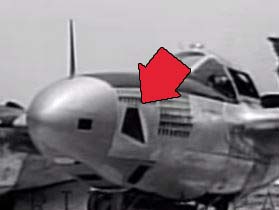
The P-38 is my WW-2 favorite. I never quite understood why it was so successful in the Pacific but not in Europe.
Awesome!
It couldn’t match the Messerschmitts........
If it had been Joe Kennedy Jr, the family could run him for office.
BRAVE AI:
The Lockheed P-38 Lightning struggled to match Messerschmitt Bf 109 and Focke-Wulf Fw 190 fighters in the European Theater of Operations (ETO) due to significant technical limitations, particularly at high altitudes.
Key factors limiting P-38 performance in Europe:
Engine Issues: The Allison V-1710 engines suffered from compressibility problems during dives and poor performance at the high altitudes (above 20,000 feet) typical of European air combat. Turbochargers often failed or froze in the extreme cold.
Mechanical Reliability: Early P-38s experienced frequent engine failures, including blown intercoolers, fouled plugs, and oil system issues in cold weather, leading to high abort rates.
Combat Effectiveness: While the P-38 was highly effective in the Pacific Theater against Japanese fighters, its maneuverability and roll rate were considered inferior to German single-engine fighters in the ETO. German pilots reportedly considered the P-38 the “easiest Allied plane to shoot down” in Europe.
Conversely, the P-38 was often considered superior to the Messerschmitt Bf 110 heavy fighter, outperforming it in power, ceiling, and maneuverability. Its success in the Pacific was attributed to its superior range, twin-engine safety over water, and adequate performance against less agile Japanese aircraft.
USC researchers reveal identity of Revolutionary War soldier discovered at Battle of Camden
It's nice to see that Steve Smith is still with the Archaeology Department at USC. I met him many years ago, when I provided him with research material I had collected on the black Civil War unit, the 55th Massachusetts, which he used to write reports and findings on two different digs that he conducted on Folly Island, S.C. The 55th had camped on the south end, and graves, mostly men of the 55th were discovered there. They were also stationed at Fort Green which was on the North end. Smith conducted a dig of that site as well. Back then he offered me the opportunity to take part in a dig. They were looking for the winter camp of "Swamp Fox" Francis Marion. I'm sorry now I never took him up on the offer. I'm far too old now for it.
Among other things the Brits didn't like it because the version they received early in the war (prior to Pearl Harbor) didn't have the turbo chargers installed because the Army Air Corps considered the technology secret and not allowable for export. Also the 8th Air Force was controlled by the "Bomber Mafia" at the time P-38s were available and they didn't want fighter escorts for the bombers. They actively quashed the whole idea of escorting bombers on missions to Germany. In the Pacific, the P-38s range was greatly appreciated so most P-38 production went to the Pacific.
As a side note, the F-5 unarmed photo-recon variant was highly successful in all theaters of the war.
The German planes could climb to the high altitudes at which it operated and the P-38 was not maneuverable enough to dog fight. In the Pacific where the Japanese aircraft could not operate at that high altitude, the P-38 was successful diving on its opponents at high speed, using that speed to zip away so that it could then regain altitude and do it again and again and again until it scored a kill. The Japanese planes never got the chance to dogfight against it - they were always the hunted and never the hunters.
I'm more inclined to see it as the highly experienced German pilots in updated versions of their fighters caused problems for the green American pilots, in their new and complex P-38s.
German Dornier 335 Pfeil (Arrow).
Disclaimer: Opinions posted on Free Republic are those of the individual posters and do not necessarily represent the opinion of Free Republic or its management. All materials posted herein are protected by copyright law and the exemption for fair use of copyrighted works.
