Skip to comments.
Populations Buried Near Megalithic Tomb Analyzed
Archaeology Magazine ^
| April 23, 2026
| editors / unattributed
Posted on 05/04/2026 7:29:26 PM PDT by SunkenCiv
According to a statement released by the University of Copenhagen, analysis of the remains of 132 individuals unearthed near a megalithic tomb in northern France suggests that the site was initially used by one group of people, but that population declined around 3000 B.C. and was eventually replaced by another group. "We see a clear genetic break between the two periods," said Frederik Valeur Seersholm of the University of Copenhagen. Genetic testing revealed that the earlier group was composed of early farmers from northern France and Germany, while the later group was linked to people in southern France and the Iberian Peninsula, he added. Genetic material retrieved from the bones also showed that the earlier group had been infected with Yersinia pestis, the plague bacterium, and Borrelia recurrentis, which causes louse-borne relapsing fever. "We can confirm that plague was present, but the evidence does not support it as the sole cause of the population collapse," said Martin Sikora of the University of Copenhagen. "The decline was likely driven by a combination of disease, environmental stress, and other disruptive events," Sikora explained. The researchers noted that the earlier burials contained the remains of people who were members of the same extended families. The later burials, however, contained the remains of people centered on a single male lineage. Finally, the researchers said that the decline of this earlier population coincides with the end of the construction of megalithic tombs across Europe. Read the original scholarly article about this research in Nature Ecology & Evolution. To read about megalithic monuments in central France, go to "Megalithic Mystery."
(Excerpt) Read more at archaeology.org ...
TOPICS: History; Science; Travel
KEYWORDS: ancientautopsies; godsgravesglyphs; helixmakemineadouble; megaliths; neolithic
a, Location of Bury and similar sites with genetic data available, with the geographical extent of the Paris Basin highlighted. b, Schematic overview of the Bury grave during Phase 1. p.slab, porthole slab. c, Schematic overview of the Bury grave during Phase 2 (adapted from ref. 12, De Gruyter). Basemap data from Natural Earth.adapted from ref. 12, De Gruyter

1
posted on
05/04/2026 7:29:26 PM PDT
by
SunkenCiv
To: StayAt HomeMother; Ernest_at_the_Beach; 1ofmanyfree; 21twelve; 24Karet; 2ndDivisionVet; 31R1O; ...
2
posted on
05/04/2026 7:30:19 PM PDT
by
SunkenCiv
(TDS -- it's not just for DNC shills anymore -- oh, wait, yeah it is.)
To: SunkenCiv
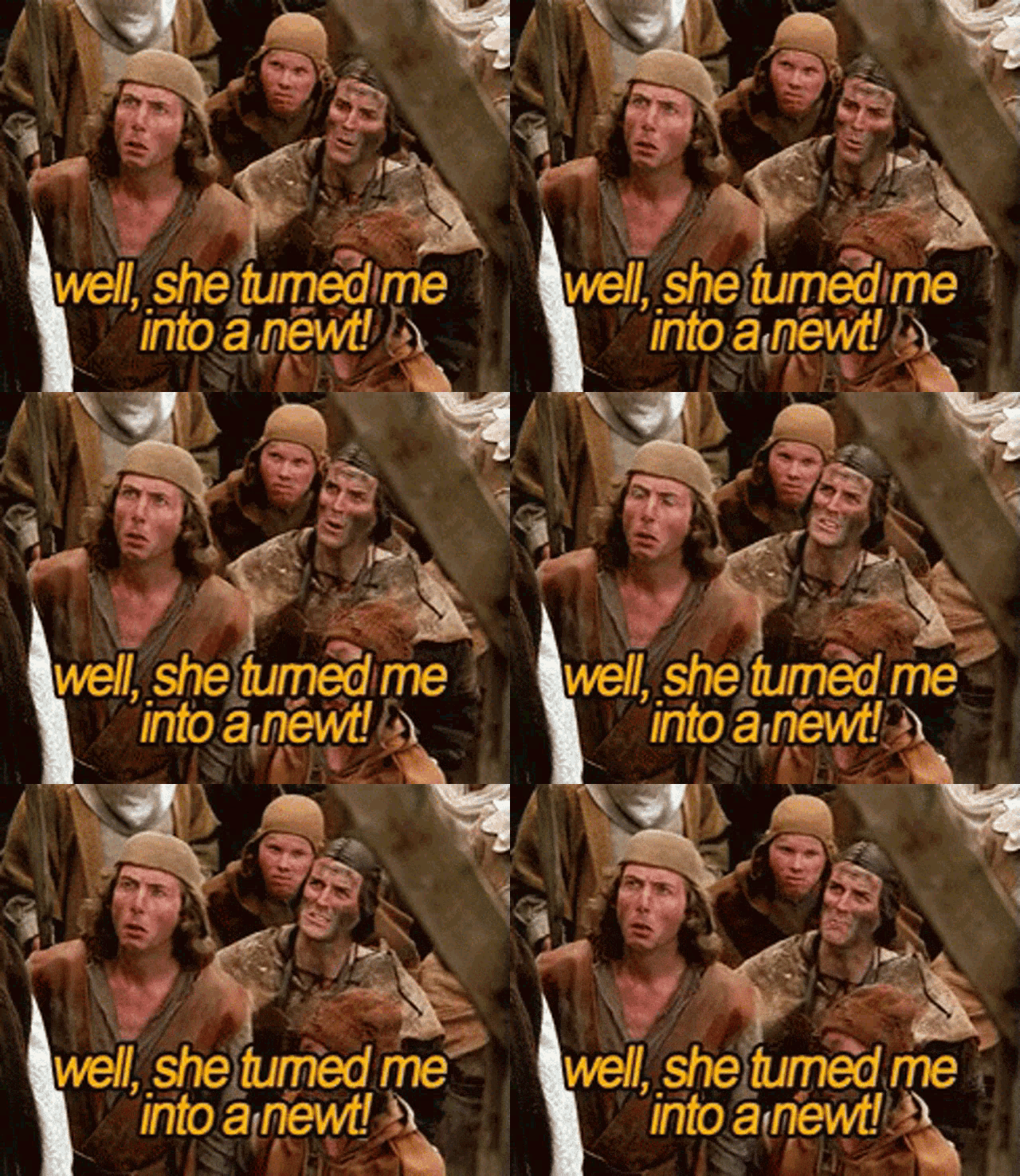
It was witchcraft. They kept turning people into newts..............
3
posted on
05/04/2026 7:49:08 PM PDT
by
Red Badger
(Iryna Zarutska, May 22, 2002 Kyiv, Ukraine – August 22, 2025 Charlotte, North Carolina Say her name)
Disclaimer:
Opinions posted on Free Republic are those of the individual
posters and do not necessarily represent the opinion of Free Republic or its
management. All materials posted herein are protected by copyright law and the
exemption for fair use of copyrighted works.
FreeRepublic.com is powered by software copyright 2000-2008 John Robinson
