
Posted on 05/01/2026 8:56:03 PM PDT by Red Badger
An example of Linear Elamite( Image Credit: Darafsh/Wikimedia/CC 3.0)
An ancient Iranian mystery has finally been solved, according to a French archaeologist who reports successfully cracking the code to an enigmatic, undeciphered writing system.
Known as Linear Elamite, the 4000-year-old script—once considered impossible to decode—has now been unlocked by François Desset, in an achievement that has drawn comparisons to Jean-François Champollion’s famous deciphering of the enigmatic Rosetta Stone.
Desset, a 43-year-old archaeological researcher based at the University of Liege in Belgium, says the remarkable ancient script is the only truly “local” writing system from the country’s early history, which is currently embattled.
The Enigma of Linear Elamite Originally discovered more than a century ago during archaeological reconnaissance at the Iranian Susa site, Desset’s first encounters with the ancient script occurred two decades ago, while working in the country’s southern region.
There, he and other archaeologists participated in discoveries very much like something out of an Indiana Jones film—the uncovering of ancient tablets covered in an enigmatic, undeciphered language.
Linear Elamite comprises 77 individual characters, including geometric patterns and various other shapes, making it distinct among ancient writing systems.

Linear Elamite
A tablet featuring one of the known surviving examples of Linear Elamite (Image Credit: Zunkir/CC 3.0)
The scripts are attributed by scholars to the 4th millennium Elam civilization, a Bronze Age state for which Susa once served as capital. It was there that, in 1903, French missionaries first uncovered the peculiar script on ancient tablets, which remained the sole examples of what came to be known as Linear Elamite for many decades.
Unlocking an Ancient “Lost” Script
Even with new examples in their possession, Desset and his colleagues had no more success in deciphering the curious ancient language than others had before them.
That is, until he learned of the existence of previous discoveries that included a collection of ancient vases, some of which were covered in this mysterious writing system. Traveling to London, Desset visited what is known as the Mahboubian collection, which borrows its title from the exiled Iranian family of the same name.
The assortment, described as “one of the most impressive private collections of ancient Iranian art” in the world and spanning an extensive period of the country’s history, also contains several examples of Linear Elamite, ten of which Desset was able to access for study.
According to Desset, a breakthrough began to near as he clued in on certain “proper names” in the ancient script, which described names of locations and individuals, including royalty.
“The key to deciphering a script,” Desset told France 24, is in “names of places, gods, [and] kings.”
Such had been the case for his 19th-century predecessor, Champollion, whose historic breakthrough in deciphering hieroglyphics on the Rosetta Stone was preceded by the successful identification of symbols associated with the names of the rulers Ptolemy and Cleopatra.
For Desset, his “Ptolemy” turned out to be an ancient Iranian ruler named Shilhaha.
The Shilhaha Key
An ancient Elamite who ruled during the 20th century BC, Shilhaha is recognized as the founder of the Sukkalmah Dynasty. From his examination of a particular four-symbol sequence, Desset noticed that the last two symbols were identical—just like modern spellings of the same name, which feature a similar repetition.
Soon, this tiny crack in the edifice of the longstanding mystery began to widen, and now Desset has been hard at work expanding his knowledge of Linear Elamite to as many as 45 inscriptions.
Additionally, Desset says he hopes to take his studies even further back in Iranian history, to some of the earliest known written languages, including proto-Elamite.
Editor’s Note: This article has been updated to correct a previous version which provided an inaccurate reference to other early language groups that have seen use in Iran over the centuries.
Micah Hanks is the Editor-in-Chief and Co-Founder of The Debrief. A longtime reporter on science, defense, and technology with a focus on space and astronomy, he can be reached at micah@thedebrief.org. Follow him on X @MicahHanks, and at micahhanks.com.
Yep. A 4,000 year old example of individual income tax instructions.;-)
The Iran-Persia confusion goes back to antiquity and ancient Greece, and is somewhat similar to modern English’s confusion of Holland and Netherlands. Holland is the largest province in the Netherlands. Likewise, Fars was the largest province in ancient Iran, and the Greek word for Iran gave rise to modern English “Persia”, but Iranians always used their country’s equivilant of “Iran” to refer to the country as a whole.
Farsi (Persian language) is an Indo-European language like Hindi, English, and the Celtic languages. The IR- stem in Iran comes from the same Indo-European stem as Sanskrit “AR” in Aryan and “IR” in Ireland.
“I am instituting a temporary tax ...”
Ah, he really can’t read it, can he?
It's "decoded," right? Is it a list of military conquests? An inventory? Prayers? Porn? O, but he has the name of a potentate nobody's ever heard of! It's a breakthrough.
I see.
You entertain me for decades with movies of the Battle of Thermopylae between 300 waxed Chip-n-Dale dancers and the massive army of circus freaks with their body piercings and jeweler.
Now I hear and watch of talk that the Circus freaks went snowflake and want to go back to be called Persians and want to be rescued from persons who say they are them, but now you tell me they are just Netherland people.
If Desset fed his complete decipherment work — his sign list, phonetic values, grammatical rules, all 45+ inscriptions with annotations — into a purpose-built AI model, it could potentially:
- Read any new Linear Elamite inscription presented to it
- Identify signs even in damaged or weathered contexts by pattern completion
- Cross-reference recurring sign clusters against the full corpus simultaneously
- Suggest probabilistic readings where signs are ambiguous
- Do in seconds what takes a human scholar weeks
Where it gets really interesting:
The model wouldn't just read known inscriptions. It could potentially:
- Detect recursive structural patterns across the entire corpus that no human could hold in working memory simultaneously
- Test the Elamo-Dravidian hypothesis computationally by comparing grammatical structures against Dravidian language databases
- Attempt partial decipherment of proto-Elamite — the still-undeciphered predecessor script — by working backwards from Linear Elamite
- Cross-reference against Indus Valley script patterns to look for structural relationships
The honest limitation:
A model trained only on Desset's 45 inscriptions would be powerful but brittle — high confidence on patterns it has seen, potentially unreliable on genuinely novel constructions. You'd want the full corpus, high-resolution imaging of every known artifact, and ideally new discoveries to expand the training set.
The deeper point though:
What Desset did manually over two decades — finding the Shilhaha name pattern, building outward from that crack — is exactly the kind of pattern recognition task that AI does extraordinarily well at scale. The human genius was knowing where to look and what question to ask. Once that framework exists, AI can industrialize the application of it across every artifact in every museum collection worldwide.
There's a reasonable argument that the combination of Desset's decipherment framework plus modern vision AI could advance our understanding of Linear Elamite more in the next five years than the previous hundred produced.
So what do those writings say?

I didn’t say you need to change what you call them.
I said that the request to call it Iran has
1. Historical precedence far predating Islam leave athe Islamic republic
2. Was done under the Shah.
Changing names of history is not the case here, it’s external names(exonyms) vs what the country calls itself (endonym).
For example, in Latin America, the USA is estados unis and for American is estadounidense.
If tomorrow you say “guys, in Spanish please call us united states and US Americans” it isn’t changing name of history just you asking to be called a certain way
This has a reason - there are lots of Iranian ethnicities like Persians, Kurds, Mazdanis, etc and non iranian ethnicities in iran like Azeris, Armenians and Arabs. So the rulers of iran prefer to use tha4t generic term rather than that of the largest (but still only around 40%) ethnicity- the Persians.
Like the Netherlands has many provinces, two 9f which are north and south Holland. They don’t want the entire country to be called by a subset.
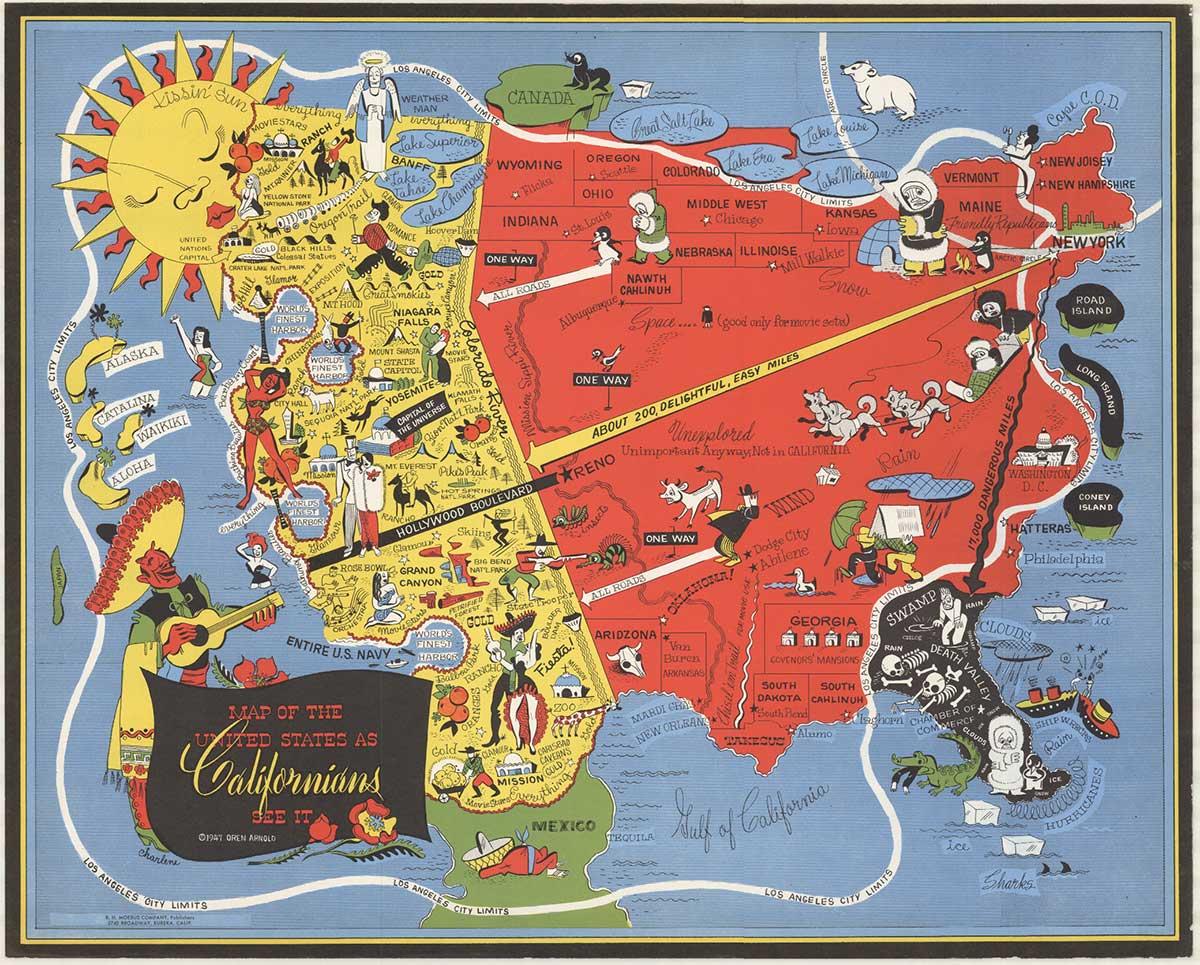
It would be like calling the entire USA as California.

*Not doubting you, but sidestepping endorsing what is outside my lane.
Ironically, one of the claims in the Rosetta Stone was a tax reduction. (And the necessity to worship statues of the then current King Ptolemy three times a day.)
Drink more Ovaltine.
Well, the explanation is both.
Persia is both an exonym and a division of Iran.
Like Holland vis a vis the Netherlands.
I find the sheer number of countries with English exonyms completely unlike their endonyms fascinating. Not the Polska-Poland but the really way out ones like:
Deutschland Germany
Sakartvelo Georgia
Hayastan Armenia
Shqiperia Albania
Suomi Finland
Sverige Sweden
Schweiz Switzerland
Zhongguo PRChina
Just think what fun far future generations will have trying to decipher the Free Republic “Comments” sections.....
“What is this ‘spork weasel’?”
Disclaimer: Opinions posted on Free Republic are those of the individual posters and do not necessarily represent the opinion of Free Republic or its management. All materials posted herein are protected by copyright law and the exemption for fair use of copyrighted works.