Posted on 04/19/2026 11:09:24 AM PDT by MtnClimber
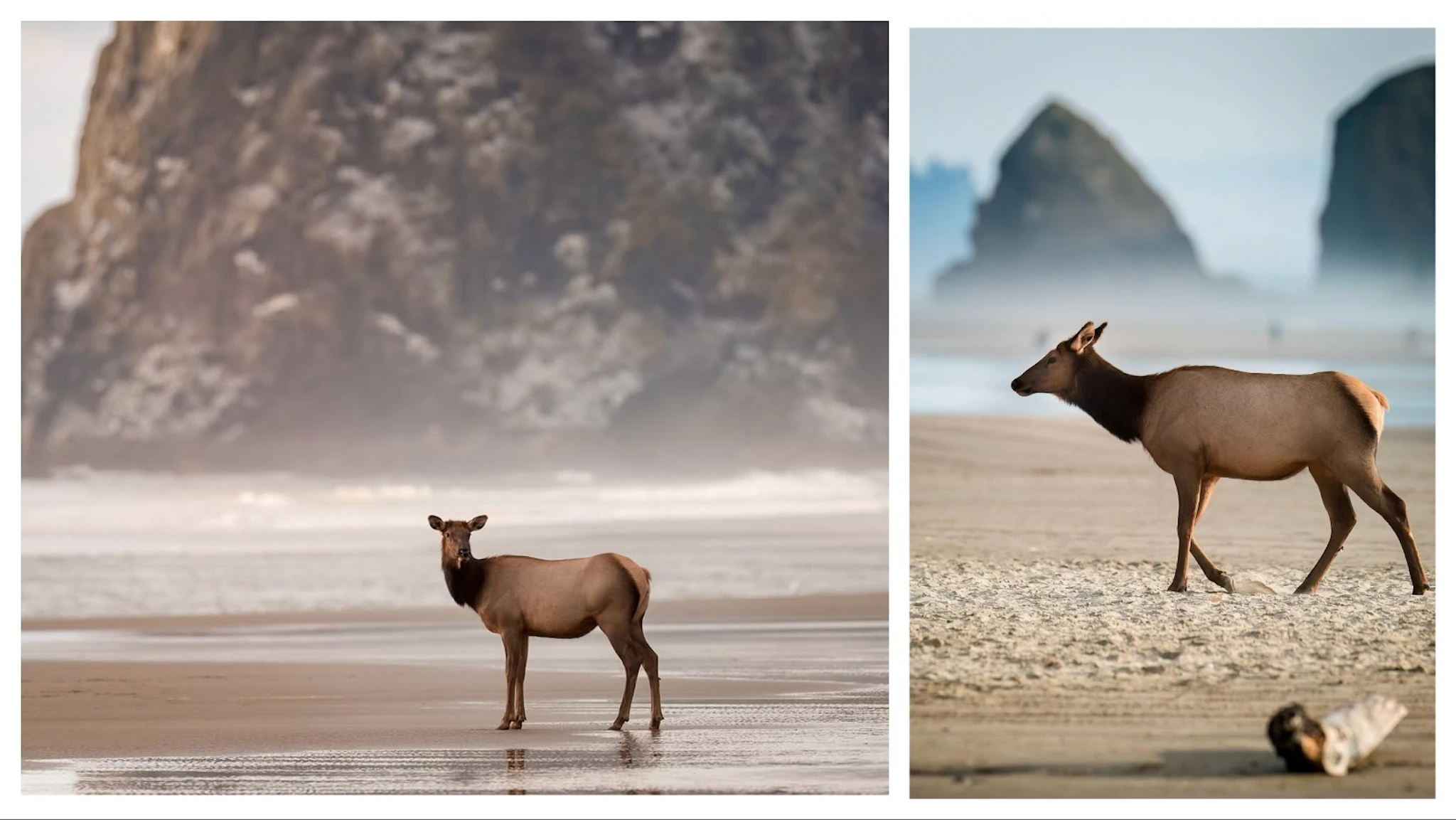
As herds of elk have overtaken a beach in a small Oregon coastal town, tourists have tried to put their children on them to ride and others attempt to feed them carrots. “We have visitors who don't know elk are wild animals,” said the local chamber.
It’s a sight most in Wyoming would consider extremely odd: herds of elk lounging around the beach.
That’s what’s happening in the small Oregon coastal town of Cannon Beach, where elk are taking over the beaches, looking completely out of context in the sand and surf.
And as in Yellowstone National Park, Estes Park, Colorado and other places where people and elk are in close proximity, some people behave stupidly, said James Paino, executive director of the local chamber of commerce.
“We have a lot of visitors who just don't think that it (an elk) is a wild animal,” he said. "I’ve seen people try to put their kids on an elk’s back, or walk up and feed them carrots."
The elk could possibly drawn to the beach seeking saltwater therapy for biting pests.
“It’s not uncommon to see elk going out into saltwater. It’s commonly thought to be therapeutic for external parasites, such as fleas,” said Paul Atwood, a district wildlife biologist for the Oregon Department of Fish and Wildlife.....SNIP
Here in NC we have wild horses, supposedly.
The State of Oregon will probably change the game laws to include Cannon Beach in legal hunting areas. That’s what they did near Reedsport some years back when a herd of over 100 elk used to graze alongside Highway 38. On opening day, pretty much the entire herd was slaughtered.
We were in Estes Park about 15 years ago when our son was at CU Boulder. My wife was out for a morning walk and saw an elk that size with his harem. Don’t want to get between the bull and his girls!
The other entrants just should pack up and go home.
Surely you of all people can tell your sister from a moose.

There are three primary subspecies of elk (also known as wapiti, scientific name Cervus canadensis) in the western US:
The Tule Elk were almost wiped out in CA by the early 1870s. They had been hunted nearly to extinction due to market hunting after the Gold Rush and habitat loss from agriculture and livestock grazing. They were thought to be gone by around 1870. Henry Miller (born Heinrich Alfred Kreiser), was a prominent German-American cattle baron and landowner in California's San Joaquin Valley and he is widely credited with starting the conservation of tule elk in the state.
In 1874, while draining a marsh on his vast Miller & Lux ranch near Bakersfield (in the Buena Vista Lake/Tulare Lake area), Miller's workers discovered a small remnant herd—estimates range from as few as 2–10 to about 30 animals.
Miller took decisive action. He immediately protected the elk on his property, banning hunting there. He sent vaqueros (cowboys) to search for any remaining animals. He ordered the herd to be safeguarded at all costs and kept its existence relatively quiet to avoid poachers (offering rewards for reports of threats).
By 1905, the protected herd had grown to around 140 animals. When the growing herd began damaging crops and fences, Miller captured some and moved them to other parts of California—the first deliberate conservation translocations of the subspecies.
Miller's efforts were among the first environmental programs in CA.
Today, the Tule Elk herds have grown and have been extended to many parts of the state. Pt. Reyes has a famous herd. There's a herd close to downtown San Jose. You can see Tule Elk in a fenced area at the San Luis National Wildlife Refuge in Los Banos. There's a five mile drive around the fenced-in area. It's a fun visit.
 If you would like more information about what’s happening in Oregon, please FReepmail me. Please send me your name by FReepmail if you want to be on this list.
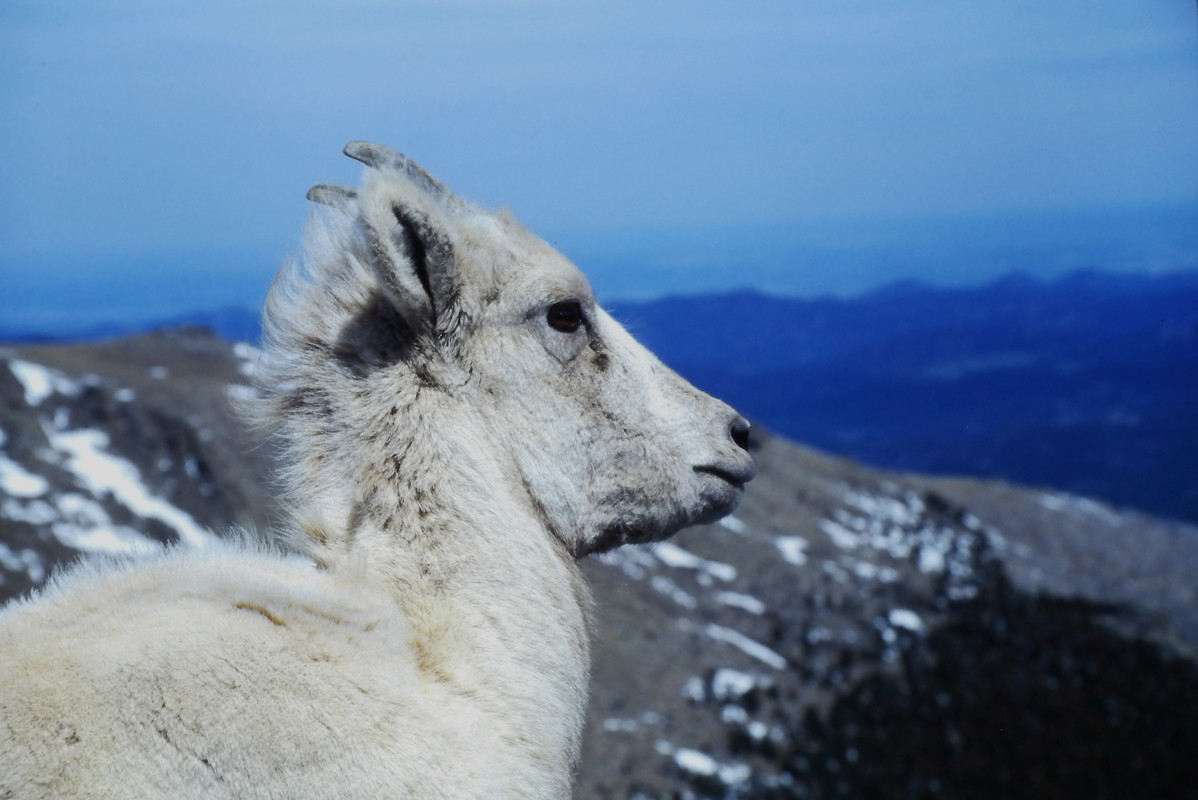
When I first moved to Colorado I did a solo ascent of Mt Evans in springtime (winter conditions). It was ice axe and crampons ice climbing. A steep ascent, but I did come down the normal hiking route. When I got back to my car, as I took off my backpack and other gear I spotted a group of juvenile bighorn sheep. I got my camera out of my backpack and rolled down my window. I waited really still as they got closer and closer. And one of them stuck his head in through my open window and was sniffing and looking around, I guess to see if I had something to feed him. I am guessing tourists feed them. All I was thinking is that if he catches his horns inside my car and panics....how would I explain it to my insurance company. I snapped this picture as he seemed disappointed that I did not have food for him.
I think they take over the town every hunting season .
We had a annual fall meeting at the Hotel Stanley .
Pennsylvania imported a hard of elk into the forest adjoining my friends apple orchard. You can’t imagine how much damage a bull elk can do to an apple tree.
After he warned the game commission several times to get their elk out of his orchard, and they didn’t do anything, he shot several of them.
After he shot them, he called them up to come get the dead elk. Instead they came and arrested him.
He filed suit against the game commission and won a huge lawsuit. I think the elk he killed are the ones mounted and on display at Cabela’s near Hamburg, PA.
More than being fed, they are looking for salt. Many years ago a group of us hiking in the mountains east of Santa Fe and stopping for lunch were approached by a small number of young female big horns. If you had a sweaty sweatshirt off for drying in the sun, or a sweaty daypack off they would taste then try to chew it for the salt. If offered something salty, they would take it. They didn’t intimidate us but scared my black lab who cowered in fear.
I like the sign on the building that confirms the location!
Of course he can, and don’t call him Shirley.
The traffic was stopped as the herd crossed the road with the large bull in the lead. I took the picture out of the driver side window and waited for him to line up just right.

The Eastern elk (Cervus canadensis canadensis), a distinct population of North American elk that lived in the forests and woodlands from the northern and eastern U.S. to southern Canada. They are extinct.
The reintroduced herds in the East are Rocky Mountain Elk.
Take the child away from whoever is stupid enough to do that.
I have been hiking in the mountains near Albuquerque, Santa Fe and Taos many times.
I wish we had more elk in KS.
Disclaimer: Opinions posted on Free Republic are those of the individual posters and do not necessarily represent the opinion of Free Republic or its management. All materials posted herein are protected by copyright law and the exemption for fair use of copyrighted works.