Posted on 03/22/2026 2:22:32 PM PDT by Signalman
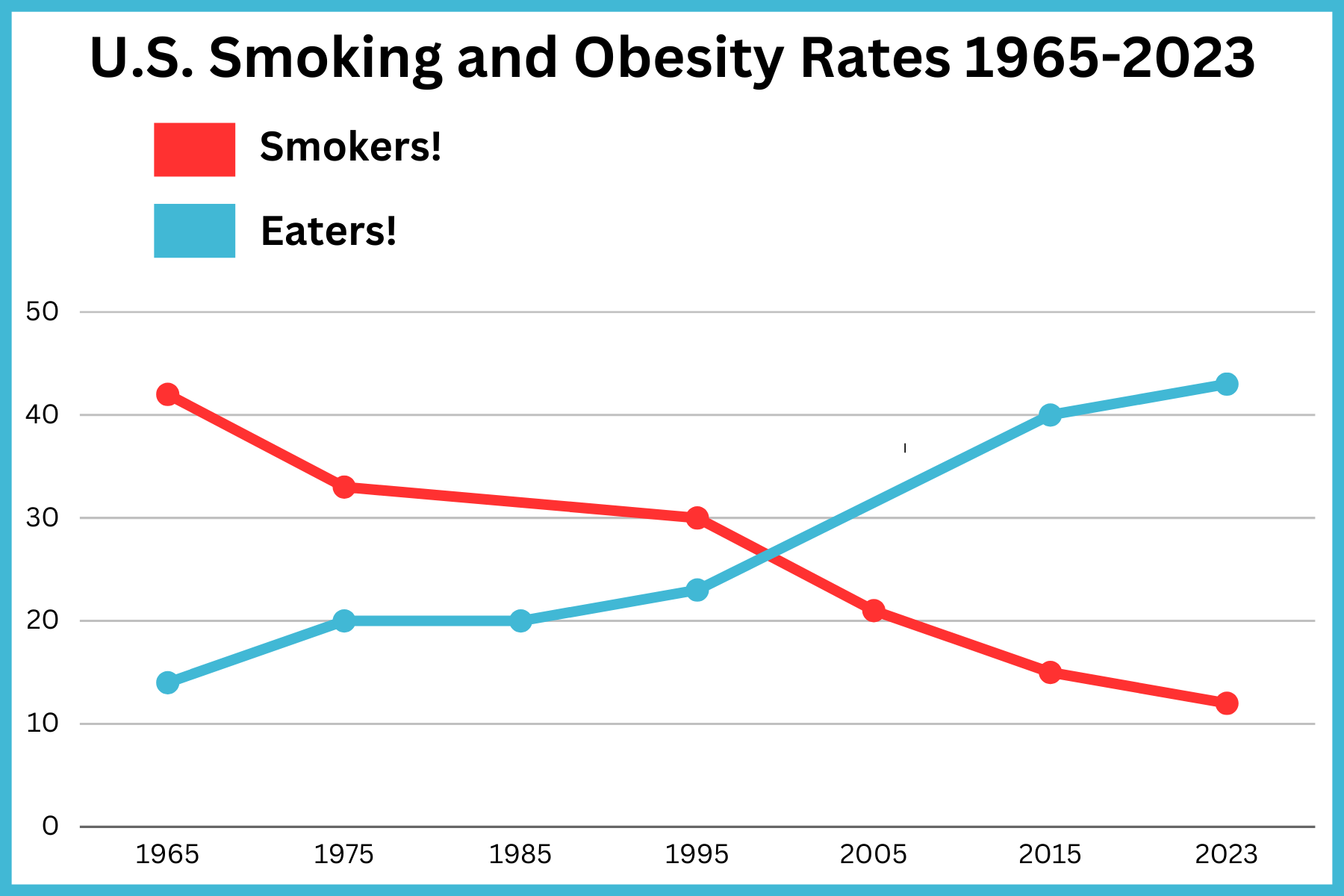
Yes, cigarette smoking is declining and has been for decades. Globally, the number of tobacco users dropped from 1.38 billion in 2000 to 1.2 billion in 2024. In the United States, 11.6% of adults smoked cigarettes in 2022, down from roughly 21% in 2005 and over 42% in the mid-1960s. The trend is clear and consistent, but the decline is uneven, with certain populations and regions lagging behind.
The Global Picture
About one in five adults worldwide still uses tobacco or nicotine products, roughly 20% of the global adult population. That’s a significant number, but it represents real progress. The drop of nearly 180 million users over two and a half decades happened even as the world’s population grew by about 2 billion people during the same period. In percentage terms, the shift is even more dramatic than the raw numbers suggest.
Over the past 50 years, tobacco control efforts have contributed to a 55% decrease in smoking prevalence and prevented an estimated 2 million smoking-related deaths. Still, the WHO warns that progress is insufficient to meet global reduction targets for 2030, and some countries continue to see flat or rising tobacco use rates.
U.S. Smoking Rates Hit Historic Lows The United States has seen one of the steepest declines of any country. In 2022, an estimated 28.8 million U.S. adults smoked cigarettes, representing 11.6% of the adult population. For context, that’s about a quarter of the rate recorded in the 1960s, when nearly half of American adults smoked. The drop accelerated after 2000, driven by a combination of higher taxes, indoor smoking bans, public awareness campaigns, and expanded access to cessation treatments.
Youth Smoking Is Nearly Gone Among young people in the U.S., traditional cigarette smoking has essentially collapsed. In 2024, only 1.4% of middle and high school students reported smoking cigarettes in the past 30 days, the lowest level ever recorded by the National Youth Tobacco Survey. That’s a fraction of what it was in the late 1990s, when roughly a third of high school students smoked.
E-cigarettes have replaced traditional cigarettes as the dominant tobacco product among teens. In 2024, 5.9% of middle and high school students (about 1.63 million) reported current e-cigarette use, down from 7.7% the year before. Nicotine pouches, at 1.8%, were the second most popular product, followed by cigarettes at 1.4%. The total number of young people using any tobacco product also fell, from 2.8 million in 2023 to 2.25 million in 2024.
What’s Driving the Decline No single policy explains the drop. The most effective interventions have worked in combination: tobacco taxes, smoke-free laws in workplaces and restaurants, state-funded cessation programs, and Medicaid coverage for quitting aids. Among these, total government spending on tobacco control programs has been the strongest predictor of whether people actually use cessation treatments like nicotine replacement therapy, quitlines, or behavioral counseling.
Price increases have been particularly powerful. A 10% increase in cigarette prices reduces overall demand by about 3 to 5% in the short term and roughly 8% over the long run. Young people are up to three times more sensitive to price than adults. A sustained 10% price hike reduces youth smoking prevalence by 5% or more, and for young adult smokers, it raises the probability of quitting by 11 to 12%. In practical terms, making cigarettes more expensive is one of the most reliable ways to prevent people from starting and to push existing smokers toward quitting.
The Decline Isn’t Equal The biggest gap in progress is socioeconomic. Lower-income adults consistently smoke at higher rates than wealthier ones, and this pattern holds across every age group, racial and ethnic group, and U.S. region, regardless of sex. While smoking has plummeted among college-educated, higher-income Americans, it remains stubbornly common among people with less education and lower incomes.
This disparity isn’t just about individual choices. Lower-income communities often have more tobacco advertising, fewer smoke-free spaces, and less access to cessation support. The same policies that have driven the overall decline, like higher prices and coverage for quitting aids, tend to have the biggest impact on these groups when they’re actually implemented and funded. But state-level investment in tobacco control varies enormously, leaving some populations behind.
Fewer Smokers, New Challenges The shift away from cigarettes hasn’t meant a shift away from nicotine. E-cigarettes, nicotine pouches, and heated tobacco products have created a more fragmented landscape. For adults trying to quit smoking, some of these products may serve as less harmful alternatives. For young people who would never have picked up a cigarette, they represent a new route into nicotine dependence.
Globally, 1.2 billion people still use tobacco. Even with steady declines, that number translates to millions of preventable deaths each year from lung cancer, heart disease, stroke, and chronic lung disease. The trajectory is encouraging, but “declining” and “solved” are very different things. Cigarette smoking is fading, particularly among younger generations in wealthier countries, but it remains one of the leading preventable causes of death worldwide.
The good news...pot smoking is on the rise...you can even grow your own.
I was hoping President Trump would return my right to chose Menthol Cigarettes to me, by EO, if need be.
But that kind of decision may be something a State’s Governor is expected to consider, not a President.
Gov. Gavin does not care about tobacco smokers, only those into MJ or ‘other’.
I reject the patronizing attitude that blacks don’t know what’s good or bad for them, so the government has to make those decisions for you! I do not dwell on any ‘Plantation’!
I don’t know about whom you’re talking.
Here’s some data: https://www.lung.org/quit-smoking/smoking-facts/impact-of-tobacco-use/tobacco-use-racial-and-ethnic
Adult Smoking Rates among Racial and Ethnic Populations
Total Men Women
African-Americans. 11.7% 20.9% 13.5%
American Indians/Alaska Natives. ~21.9% 19.0% 24.0%
Asian-Americans. 5.4% 12.0% 2.6%
Hispanics 7.7% 13.1% 7.1%
Non-Hispanic Whites 12.9% 17.3% 16.0%
How odd is this. Cigarettes are made of tobacco. When it is just tobacco, the nicotine in it is known from the turn of the last century to treat cancer. The product being foisted on the public today is combined with a poison packet, which causes cancer symptoms, added sometime in the early 50’s.
People purchasing less cigarettes???
Oh, Noooooooooooooooo!!
In some places, some of the huuuuge taxes on cigarettes go to fund health care for "the children."
The 1998 California Proposition 10 (the Children and Families Act) established a 50-cent-per-pack surtax on cigarettes and equivalent tax on other tobacco products to fund early childhood development programs. It created the First 5 California commission, allocating revenue for child health, education, and development services for children from prenatal through age 5.
The more cigarette sales rise, the more $$$ "for the children."
The more cigarette sales plummet, the less $$$ "for the children."
El Rush-Bo had a great quote:
""I thought you liberals cared about people, but here you're perfectly content to get them addicted to tobacco and make them pay taxes through the nose and continue to pay taxes through the nose and raise their taxes. And then you try to make 'em think you care about 'em by running PSAs telling them how they shouldn't smoke and how they should quit. You're exactly right. If they really cared, they would ban the product, but they can't, because the revenue from tobacco taxes - I'm not kidding you - funds children's health care programs.""
https://www.cdc.gov/pcd/issues/2023/22_0375.htm
From 2011 to 2020, smoking prevalence significantly decreased from 9.9% to 8.0% among non-Hispanic Asian adults, from 19.4% to 14.4% among non-Hispanic Black adults, from 12.9% to 8.0% among Hispanic adults, and from 20.6% to 13.3% among non-Hispanic White adults. Among non-Hispanic American Indian and Alaska Native adults, prevalence was 31.5% in 2011 and 27.1% in 2020, but the difference was not significant.
Used to score smokes for 50 cents a pack on a military ration card back in the 80s. Today? $9? A pack? Fegedaboudit.
After being a smoker for 54 years I finally quit 2 years ago, feel & breathe better but the damage is still done with having COPD. I’m 74, never too late to quit although the 10 week nicotine cessation daily patches helped immensely.
It’s not real progress when cigarette smoking is exchanged for smoking dope and vaping srange concoctions,
Did I quit? NO, I reduced the number of cigarettes I smoked each day after Labor Day last year, down to 3 or 4 per day. Started Varenicline (the non-cancerous generic version of Chantix) end of November, and last one on 12/6.
The price in Illinois is ridiculous, like the price of everything else. And I got tired of standing outside in the northern Illinois winters. So as the weather gets better, I might have one every now and then over the warmer weather.
but it remains one of the leading preventable causes of death worldwide.
You can never prevent death, only prolong it. So what if people die from smoking or drinking, they are going to die anyway, sooner or later. If I die at 80 and they told me I could have lived to 90 if I had not smoked or drink, I really could not care less.
Put heavy taxes on milk and the use will plunge.
Kids vape.
The tobacco industry is still booming by mostly unloading its product to semi-literates overseas (as well as semi-literates here).
Hollyweird still supports smoking. I can’t say whether they’re still paid for product placement like they were for about a hundred years but they’re still trying to glamorize it.
Remember the TV series “Mad Men?” That was a clinic on how to contract small-cell carcinoma of the lungs. And it wasn’t/isn’t alone.
At least now the prevailing condition is no smoking unless expressly permitted, as opposed to what we had for most of my life, which was smoking allowed anywhere not expressly prohibited. Parents smoking in a car full of kids and self-deluding that they were protecting them by cracking open the vent window.

The country has gone down hill since they banned smoking everywhere even though I always thought it was a gross habit
Smoking just about everywhere & anywhere used to be chronic. Glad to see itgetting much reduced.
Disclaimer: Opinions posted on Free Republic are those of the individual posters and do not necessarily represent the opinion of Free Republic or its management. All materials posted herein are protected by copyright law and the exemption for fair use of copyrighted works.