Skip to comments.
Mosquitoes Hint at Homo Erectus Migration
Archaeology Magazine ^
| March 5, 2026
| editors / unattributed
Posted on 03/13/2026 2:35:43 AM PDT by SunkenCiv
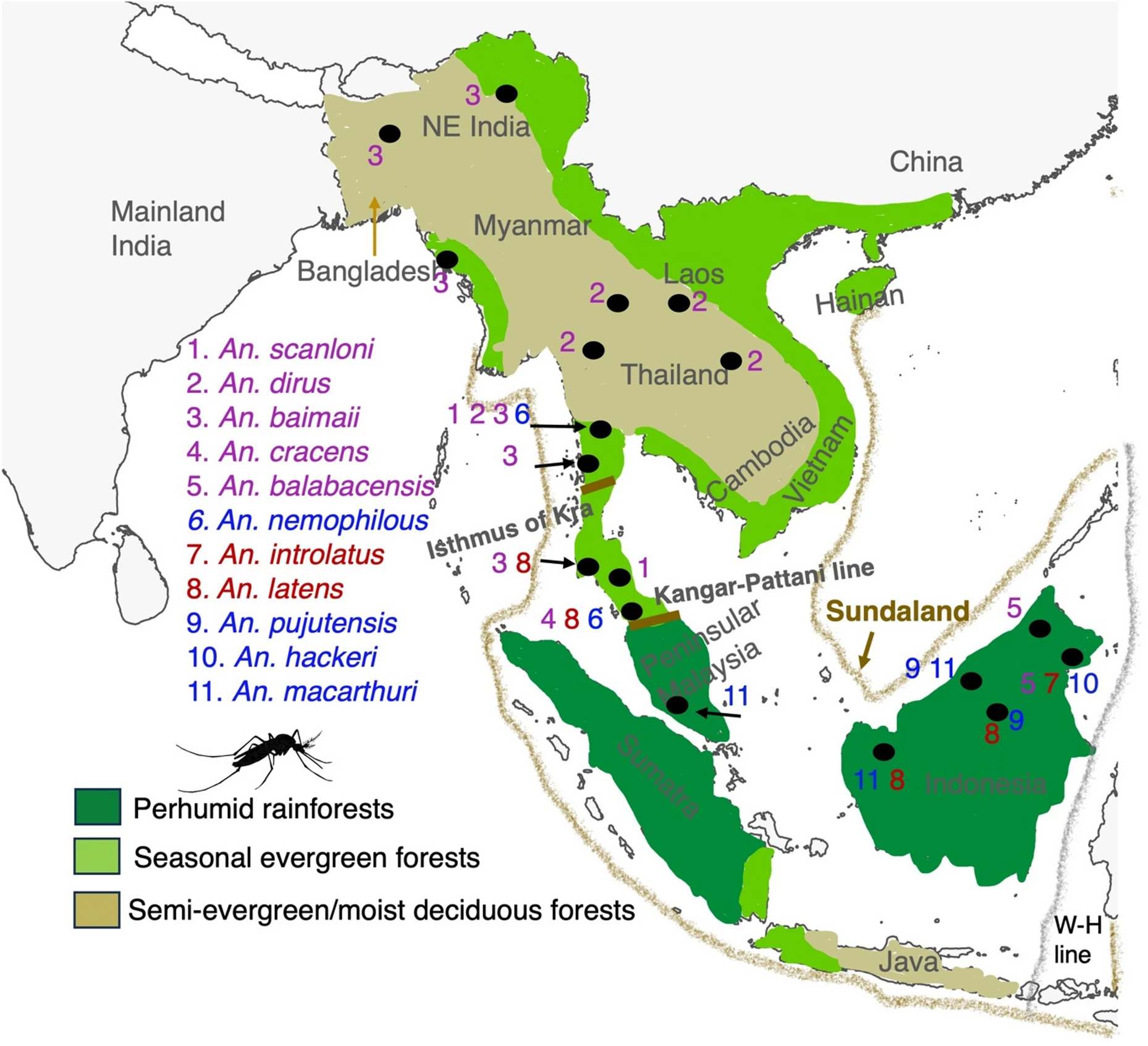
According to a statement released by the Nature Publishing Group, Anopheles leucosphyrus mosquitoes may have evolved to feed on humans in Southeast Asia. Upasana Shyamsunder Singh of Vanderbilt University, Catherine Walton of the University of Manchester, and their colleagues sequenced DNA from 38 modern-day mosquitoes from 11 species in the leucosphyrus group. Then the researchers employed computer models and estimates of DNA mutation rates to reconstruct the evolution of these mosquitoes. The study suggests that the bugs switched from feeding on non-human primates to early humans in the region of Sundaland, an area including the Malay Peninsula, Borneo, Sumatra, and Java, between 2.9 and 1.6 million years ago. This timeline supports the limited fossil evidence indicating that Homo erectus lived in Southeast Asia some 1.8 million years ago, the researchers concluded. Read the original scholarly article about this research in Scientific Reports. To read about the arrival of Homo sapiens to the region, go to "Settling Southeast Asia."
(Excerpt) Read more at archaeology.org ...
TOPICS: History; Science; Travel
KEYWORDS: anthropophily; godsgravesglyphs; helixmakemineadouble; homoerectus; pleistocene; sundaland
Map representing the distributions of specimens collected in Southeast Asia. Shading indicates the present-day distributions of forest types in mainland and insular Southeast Asia, adapted from Morley55. Black dots on the map represent collection sites. The number adjacent to the dots represents individual species collected from that site according to the species list on the left. The color of the numbers and species names indicate distinct blood-feeding behaviors; blue–NHP feeding, red–mixed-feeding, purple–human feeding, derived from published literature (listed in Supplementary Table S1). The brown outer line represents the outline of the exposed Sunda Shelf at the Last Glacial Maxima (currently 120 m below sea level)57. The two short brown lines represent biogeographic barriers: the Kangar-Pattani line in the south and the Isthmus of Kra in the north. The Isthmus of Kra and the W-H (Wallace-Huxley) line (grey line) in the east mark the boundaries of Sundaland.Scientific Reports (Sci Rep) ISSN 2045-2322 (online)
1
posted on
03/13/2026 2:35:43 AM PDT
by
SunkenCiv
To: StayAt HomeMother; Ernest_at_the_Beach; 1ofmanyfree; 21twelve; 24Karet; 2ndDivisionVet; 31R1O; ...
2
posted on
03/13/2026 2:36:57 AM PDT
by
SunkenCiv
(TDS -- it's not just for DNC shills anymore -- oh, wait, yeah it is.)
To: SunkenCiv
We’ve more than enough Erect Homos as it is… don’t need more migratin’ here….
(Sorry… had to… couldn’t resist 😁)
3
posted on
03/13/2026 3:03:13 AM PDT
by
NFHale
(The Second Amendment - By Any Means Necessary.)
To: SunkenCiv
Sometimes I wonder why Mosquitoes were created. Maybe for population control?
4
posted on
03/13/2026 3:23:32 AM PDT
by
no-to-illegals
(The enemy has US surrounded. May God have mercy on them.)
To: no-to-illegals
“Sometimes I wonder why Mosquitoes were created. Maybe for population control?”
To give vampire bats something to eat?
5
posted on
03/13/2026 3:58:32 AM PDT
by
Ignatz
("Look, if I offend anybody today, I don't care." -Tom Homan)
To: SunkenCiv
Let's migrate somewhere else...

6
posted on
03/13/2026 4:33:48 AM PDT
by
DannyTN
To: SunkenCiv
“Homo Erectus”
That just sounds WRONG!
7
posted on
03/13/2026 6:39:38 AM PDT
by
faucetman
(Just the facts, ma'am, Just the facts )
To: DannyTN
8
posted on
03/13/2026 6:41:12 AM PDT
by
dfwgator
("I am Charlie Kirk!")
To: SunkenCiv
Life imitates at (at least the television version of it).
Paging Gil Grisson, paging Dr Gil Grissom, ... you’re wanted in forensic entomology ....
To: Paal Gulli
I meant "Life imitates art"
To: dfwgator
11
posted on
03/13/2026 7:23:48 AM PDT
by
DannyTN
To: All
What about the homo erectus dysfunctionalists?
12
posted on
03/13/2026 7:30:02 AM PDT
by
BipolarBob
(Call my personal secretary, Jennie, at 867-5309.)
To: All
in before good name for a rock band
13
posted on
03/13/2026 9:09:28 PM PDT
by
SteveH
To: Ignatz
Uh oh …. I didn’t realize my thought could collapse an entire ecosystem. Thank You for helping.
14
posted on
03/14/2026 2:23:22 AM PDT
by
no-to-illegals
(The enemy has US surrounded. May God have mercy on them.)
Disclaimer:
Opinions posted on Free Republic are those of the individual
posters and do not necessarily represent the opinion of Free Republic or its
management. All materials posted herein are protected by copyright law and the
exemption for fair use of copyrighted works.
FreeRepublic.com is powered by software copyright 2000-2008 John Robinson

