Posted on 12/15/2025 7:01:50 AM PST by Red Badger
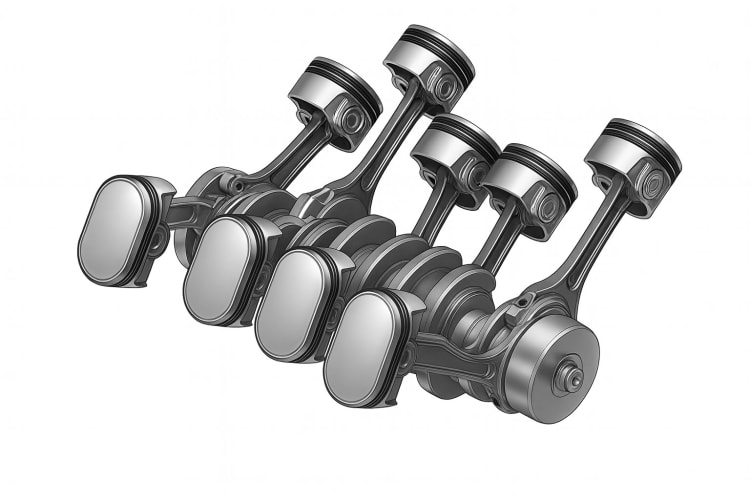
Ferrari is exploring radical oval pistons that could shrink engines, boost efficiency, and reinvent how high-performance gas motors are designed for the next generation.
===============================================================
Key Points
* Ferrari patents oval, or "stadium-shaped," pistons to replace traditional circular designs.
* The design could significantly shorten engines while maintaining displacement and cylinder count.
* Oval pistons could also lower frictional losses, improve combustion efficiency and lead to engines that "breathe" better.
===============================================================
Breaking Away from Tradition
For as long as internal combustion engines have existed, pistons have been round. This wasn’t necessarily because circular shapes were optimal for performance. It was simply the easiest and most cost-effective geometry to manufacture with the machinery available when engines were first being developed. Manufacturing technology has evolved dramatically since then, yet piston design has remained stubbornly circular.
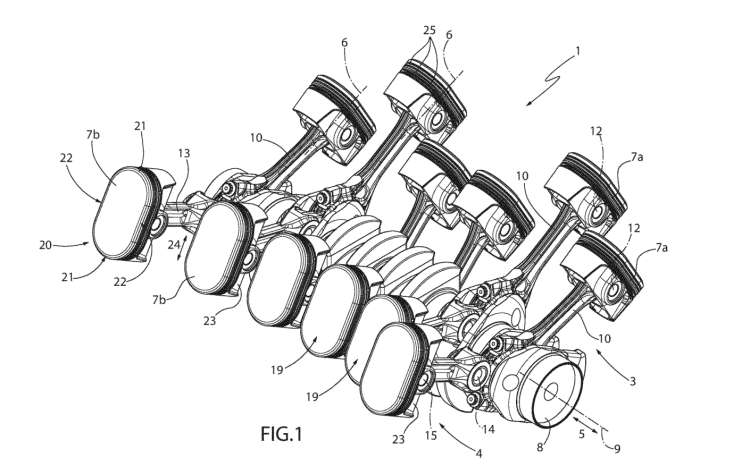
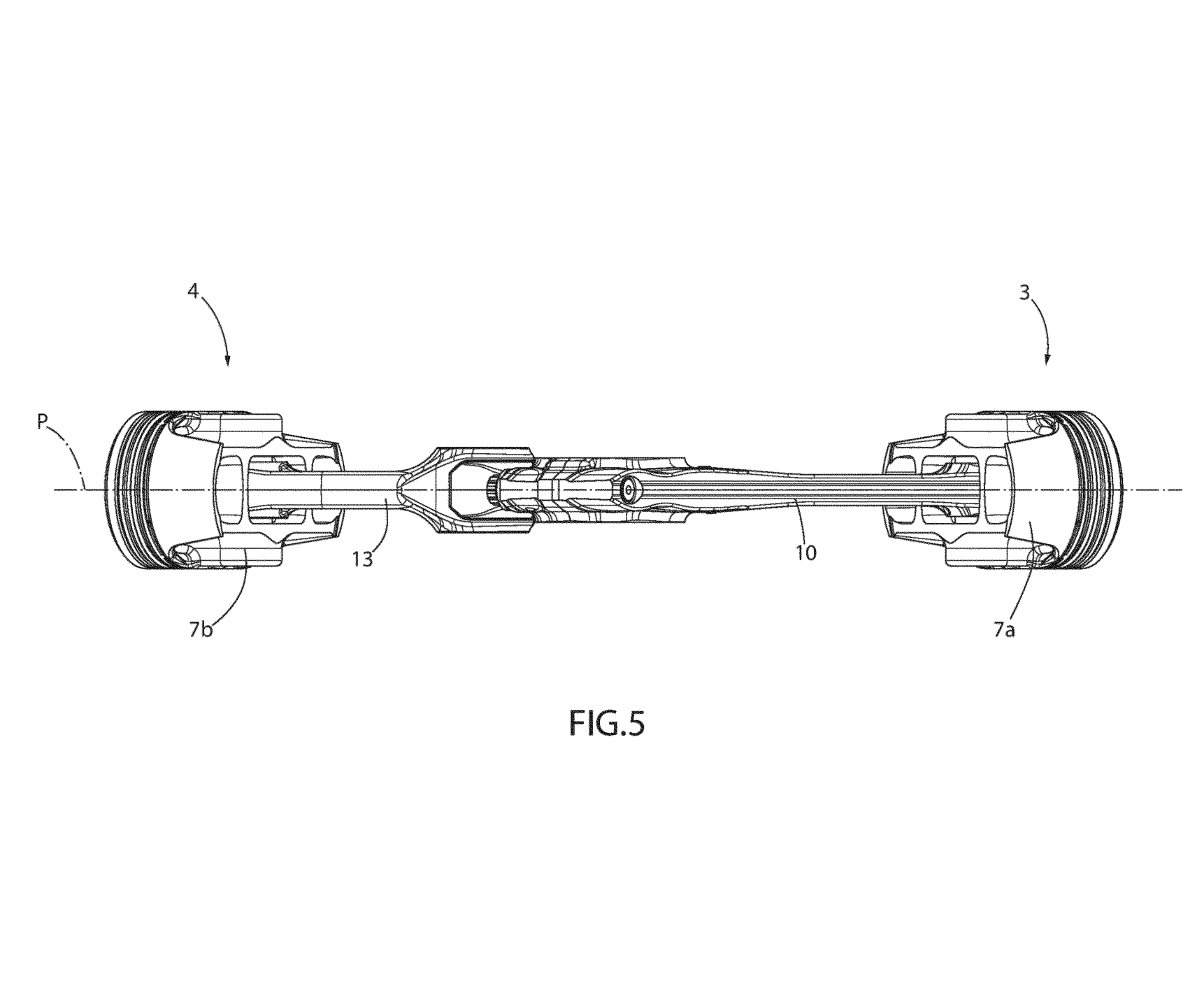
Ferrari oval piston patent rotating assembly
Ferrari’s European patent application, published in March this year, proposes something different. The company has filed protection for what engineers call a stadium shaped or pill shaped piston design. Instead of the traditional cylindrical form, these pistons are oval with elongated sides, or rectangles with semi-circular ends. Nothing says how serious Ferrari is about the internal combustion engine’s future than a complete reimagining of fundamental engine architecture.
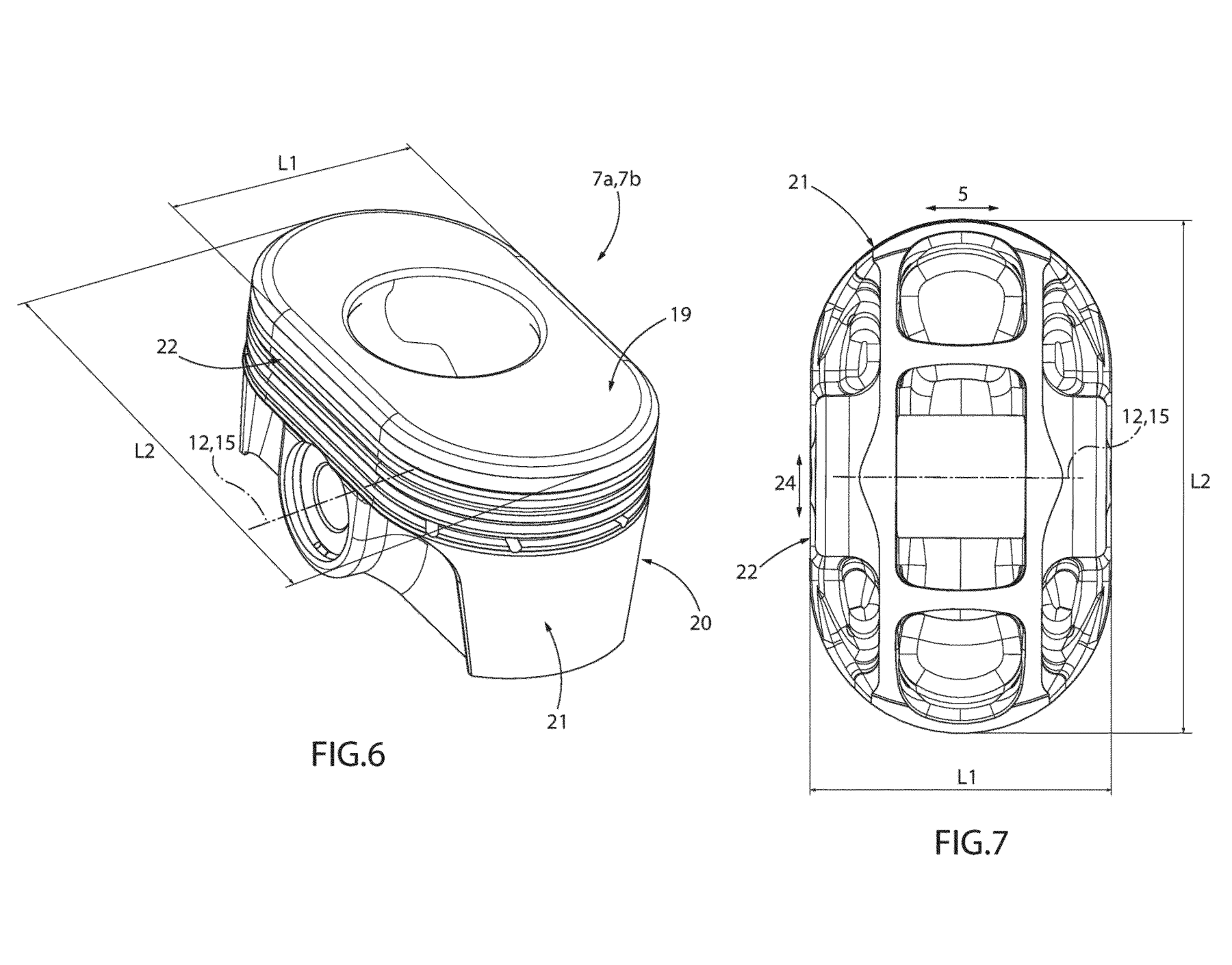
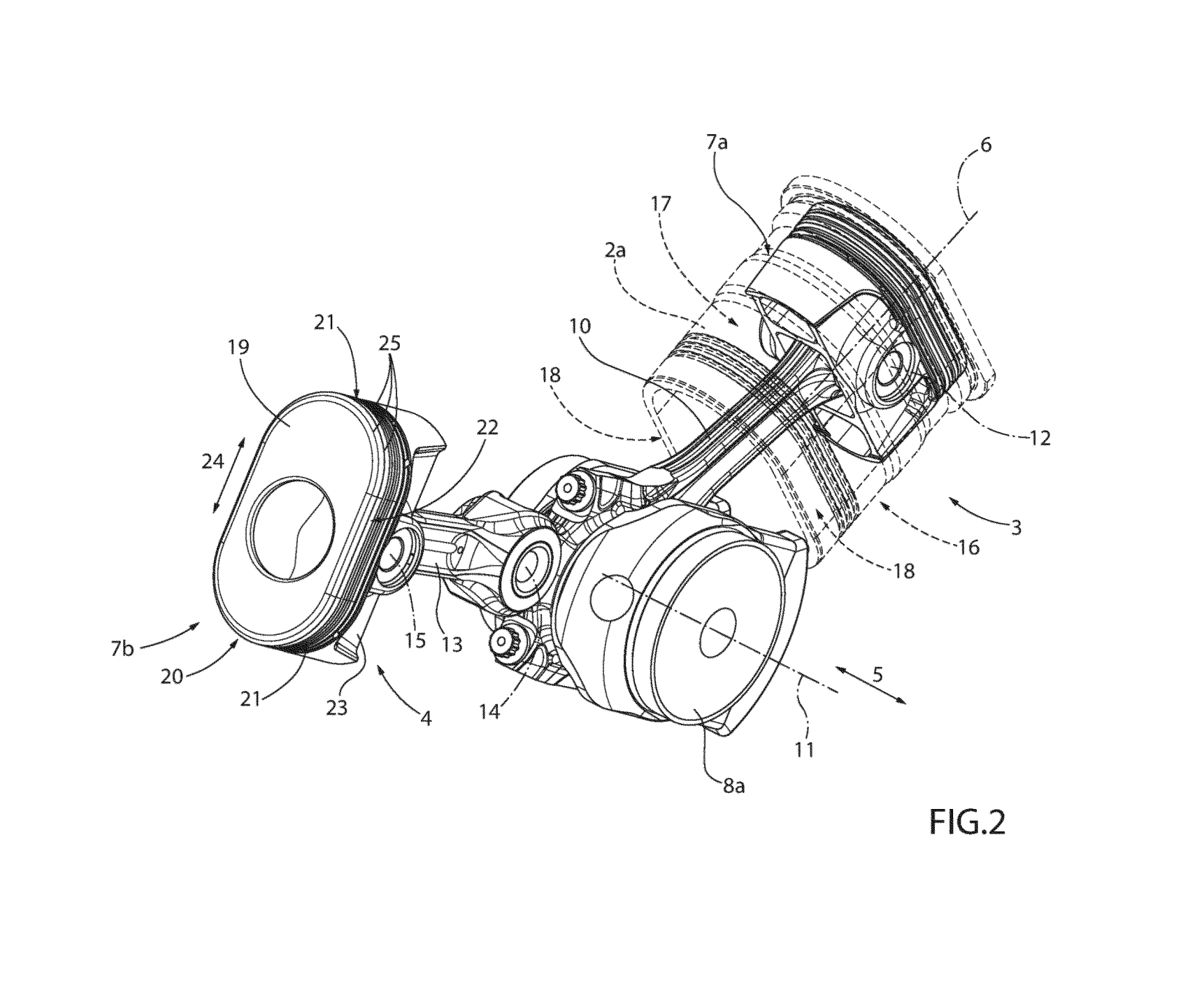
Ferrari oval piston patent single piston. Ferrari oval piston patent pair of pistons
How Oval Pistons Switch Things Up
Ferrari’s key innovation lies in the orientation. The long side of each oval piston lies perpendicular to the crankshaft. This arrangement allows the short dimension of the piston to run parallel to the crankshaft, which means the entire engine becomes significantly shorter from front to back.
This matters enormously for packaging, especially in engines with many cylinders. A V12 engine using conventional round pistons requires substantial length to accommodate all twelve cylinders. Ferrari’s oval design could compress the footprint considerably while maintaining the same displacement and cylinder count, possibly even with a hybrid unit. The patent also describes using shared connecting rods via a multi-link system for pistons on opposite banks, further reducing the engine’s overall size.
Ferrari isn’t the first to experiment with oval pistons. Honda attempted something similar with its NR500 motorcycle racing engine in the ‘70s and ‘80s, but oriented the pistons differently with the long axis parallel to the crankshaft. The ellipse piston design was also more complex, and Honda faced issues with the precise machining of piston rings, creating the required combustion chamber sealing and eventually high-rpm failures.
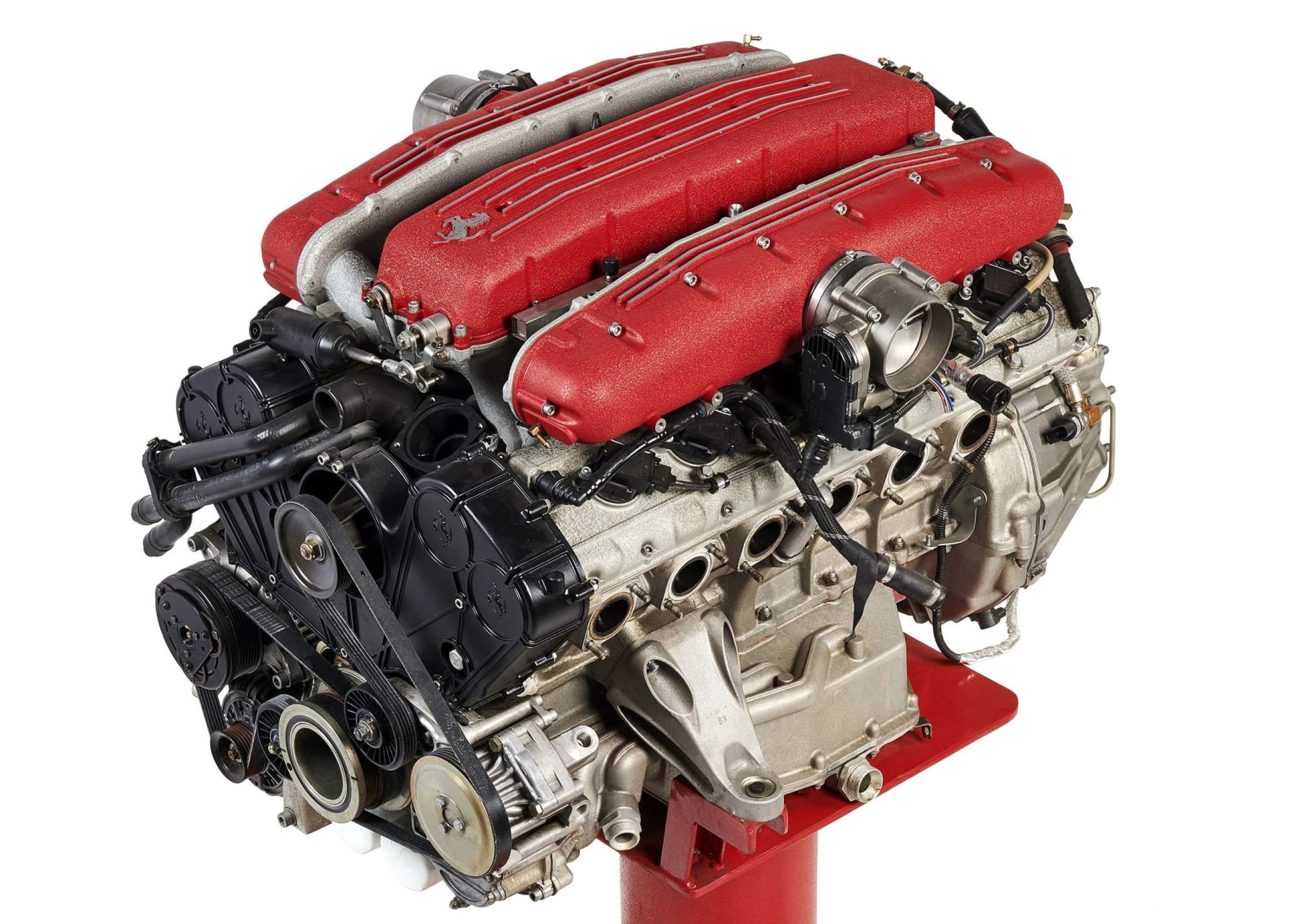
Ferrari oval piston patent cross sectional
More Than Just Space Saving
As packaging constraints tighten and efficiency demands increase, engineers must find creative solutions to maintain power output without building physically massive engines. Exotic configurations like Bugatti’s W16 have addressed this problem through clever cylinder arrangements, but Ferrari’s approach attacks the issue at an even more fundamental level by rethinking the piston itself.
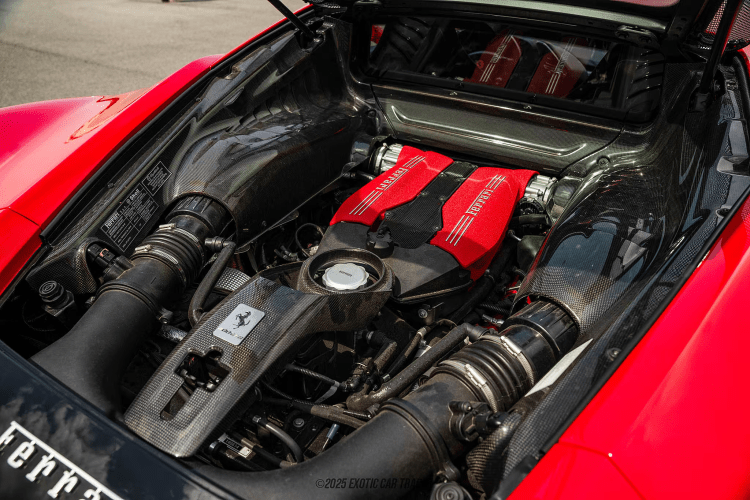
2018 Ferrari 488 GTB
The benefits of oval pistons are potentially more than just space-saving. Depending upon how the oval shape is implemented, there is great potential for improved combustion efficiency, lower frictional losses, and better thermal management. Given the increased surface area of the piston, there’s also scope for increasing valve surface area through more valves, which would allow the engine to breathe better. On the flip side, manufacturing complexity and cost will shoot up, considering a switch to oval pistons is like reinventing the wheel.
Whether this patent ever materializes in an actual Ferrari engine remains to be seen. But the very existence of this filing suggests Ferrari is actively exploring ways of rethinking internal combustion engine architecture for the better, which is good news for enthusiasts hoping to see them around for decades to come.
===================================================================
About the author
Simran Rastogi News Editor, Autoblog
Simran Rastogi is an automotive journalist with over a decade of experience writing and road testing for leading Indian and international outlets, including OVERDRIVE, India Today, and HotCars. Passionate about both modern and classic cars, he combines deep research with engaging storytelling to make automotive content accessible to all audiences.
The pistons appear to be very short................
Honda has been there done that with their motorcycles. Specifically the V4 engine. They weren’t able to perfect it.
Q: What is the commercial acceptance of oval engine cylinders?
A: Oval engine cylinders have virtually no commercial acceptance in the automotive or motorcycle industries due to significant engineering challenges and performance disadvantages compared to traditional circular cylinders. They have primarily been used for niche, experimental, and racing applications to bypass specific rules.
- google AI
Heh! 2 spark plugs per cylinder always makes me think of the Pratt & Whitney R-4360 Wasp Major used for the piston engine power for the B36 Peacemaker strategic bomber, AKA “aluminum overcast”.
That thing had 4 rows of 7 cylinders, 28 jugs! So a “tune up” involved changing 56 spark plugs on *one* engine, and there were 6 of them on the aircraft, so 336 spark plugs to be changed! Also 336 valves to check tolerances on and perhaps adjust.
And it would be now, but for seal issues.
There’s a new spin (get it?) on the radial design that came out recently that does not have the seal exposed to such force. I’ll hunt for the link.
Still a small, high RPM, engine with all that entails.
Interesting post RB.
“lower frictional losses, and better thermal management. Given the increased surface area ...”
Wouldn’t increasing the relative surface area of the moving parts while concentrating waste heat by moving the straight sides of the pistons closer together, result in the opposite of the claims? They must have ingenius solutions to “thermal management”.
Ford called a similar shape, “squircle”. IIRC
Any one remember the Wankel engine from 50 years ago? Supposed to be the up and coming new engine design!>>> It was actually built in the datsun 240 i think.
Honda already did this back in the 90s:
https://en.wikipedia.org/wiki/Honda_NR>>> Completely different design. The ovals are perpendicular to the shaft. The honda has them parallel and with two connecting rods in each.
Honda NS750 did it in the 90’s
I had a Harley shovel head with dual plugs.
There’s now several cars with either two plugs or two electrodes on each plug.
It runs on OVALTINE!
Very good commercial. After watching it, the tune came back to me....thanks...
Bingo. You win...
I can see shorter engine blocks (an inch or two) ... is that really worth it? Also I suspect that oval piston rings may not produce the tension under load to seal properly.
Interesting idea ...
For years I have amused myself, when stuck in stop and go 6 lane traffic, by visualizing all those pistons, rods and valves going up and down in vain. Now I will have to configure in oval pistons.
Serious question. Wouldn’t the pill shape increase the potential for excess movement on the down movement vs round? And this could impact ignition and power? Seems that could have some shattering effect if taken to the extreme. Exploding engines like on the Tundras? Interesting idea nonetheless.
Inverted pyramid shape . . . that’s the way to go . . . Stargate that bad boy.
I doubt Ferrari will ever build on this, they're just patenting it to take the idea off the table so no one else can use it (unless they pay Ferrari a royalty).
The siamesed conrods are quite clever but I have to wonder what having the force of two pistons on the same main bearing does to the bearing's lifespan.
Honda built a 500cc racing motorcycle engine in 1979 with oval pistons.

They were trying to build a 4-stroke engine that would be competitive with 2-cycle engines of the same displacement and they reckoned that in order to do that it would have to spin twice as fast (so it could have as many combustion cycles). Fortunately for them 2-strokes don't usually rev very high because of breathing inefficiencies so they were targeting 'just' 20,000 rpms.
To make it spin that fast they were going to have to make it breathe easier and to make it breathe twice as easy they figured would take eight poppet valves. The problem was, you can't get eight valve pockets of adequate size in a cylinder head without weakening the heads so Honda hit on the idea of using an oval combustion chamber to make room for all those valves.
The bike (NR500) didn't do well but the engine wasn't the real problem. In fact, it achieved the design goal, except they had to short-shift at 16,000 rpm in anything but very short races. And every motor racing body on earth immediately outlawed oval pistons, including Formula One. Which is one reason I think Ferrari doesn't intend ever building this engine. Because the FIA long ago banned oval cylinders.
Note that Honda used two conrods per piston, which they considered necessary to minimize the oval pistons rocking. I fancy that Honda's engineering skill even 45 years ago was superior to Ferrari's today, which is another reason I don't think Ferrari ever intends building this engine. And they're using slipper pistons, which are more prone to rocking, while the Honda engine used very long piston skirts.
Honda also created a street-legal 750cc production version of the oval-pistoned bike and built a few hundred of them with a $50,000 price tag.
They appear to have very short sides. Dual spark plugs would even out the explosion forces on both ends of the piston............
Disclaimer: Opinions posted on Free Republic are those of the individual posters and do not necessarily represent the opinion of Free Republic or its management. All materials posted herein are protected by copyright law and the exemption for fair use of copyrighted works.