Posted on 12/08/2025 6:12:04 AM PST by Diana in Wisconsin
Sometimes, what goes up doesn’t come back down — instead, it becomes a problem.
Junk is accumulating in space at a fantastic pace, millions of pieces orbit the Earth, from broken satellites to lost screws and tiny hunks of splintered paint. The International Space Station has to dodge it. Sometimes, space junk crashes into other space junk, creating more space junk. And while there have been many proposals for technologies to capture and destroy it, there’s not been a system-level plan for dealing with it in a comprehensive way.
This week, researchers at England’s University of Surrey published a paper outlining how to better deal with our celestial litter. The basic idea: make space more sustainable by using less material, repairing what’s already up there, and recycling the junk we can’t repair — and doing it systemically, industry-wide.
While this sounds pretty basic to Earth-dwellers already long-familiar with reduce, re-use, recycle, it really is a “fairly new” concept for the space industry, said Michael Dodge, a professor of space studies at the University of North Dakota, who was not involved in the study. “I’ve never seen it presented this way,” he said. “It’s an area that needs to be discussed further.”
There are currently more than 25,000 pieces of space junk larger than 4 inches in diameter circling the Earth, according to documentation from NASA. Add in smaller bits and that number soars to more than 100 million. Altogether, our space trash weighs upwards of 10,000 tons, according to a 2022 report by the agency.
(Excerpt) Read more at channel3000.com ...
Wasn’t there a bad SciFi* TV comedy (1970s) on this?
* Some might say it was so bad it was good!
We need the bomb magnet lady.
Ed Straker of SHADO ran into the problem of space debris in one episode of UFO.
“You Big Dummy!” :)
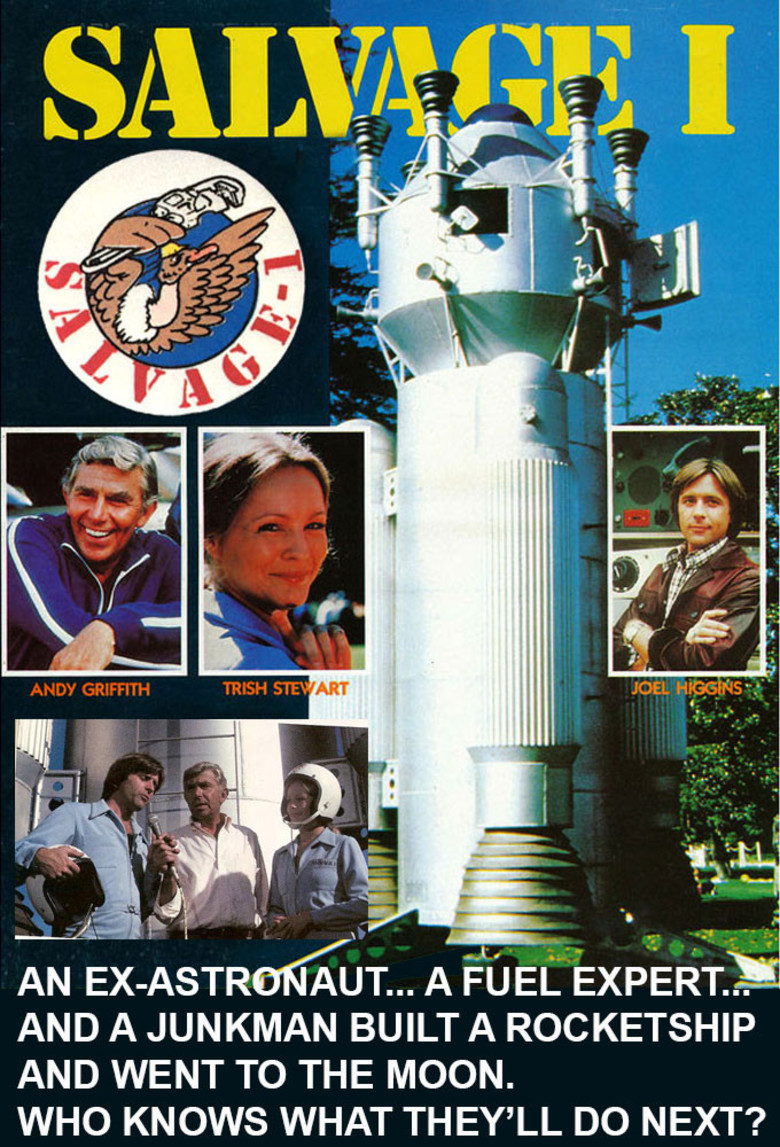
Salvage One had the idea of bringing junk from the moon to bring back and sell.
Beat me by two seconds!!


Someone needs to do a cost/benefit analysis on this type of proposal.
We need to send up lasers to slow them so they will disintegrate returning to the earth. There’s a lot of junk up there serving no purpose other than being a problem.
wy69
IF someone is going to plan for long trips in outer space they need to develop ways to do onboard metal smelting. The next space station should have some way to recycle and manufacture metal. Yes, expensive, but start small. Recycle the space station in situ rather than crashing it into the pacific.

End of the article makes it sound as if it’s not gonna happen, anyway:
“Recycling space junk could be nearly impossible if you need permission from every country that owns the objects before you clean them up. But, another part of the treaty requires countries to avoid contaminating space — which could be interpreted to mean you have to clean up your space junk, Dodge said.
And that could be a very important part of making space recycling happen.
‘People are interested in these sustainability ideas. They want to try it,’ Xuan said. “But it’s all about the money and whether there’s an incentive.’”
Diana here:
Incentive: Opening, ‘Bob’s Museum of Space Junk’ somewhere in the desert, LOL!
“Commence Operation....Vacu-Suck!”
That’s the one i was thinking of!
How much ferrous material is in space junk?
Disclaimer: Opinions posted on Free Republic are those of the individual posters and do not necessarily represent the opinion of Free Republic or its management. All materials posted herein are protected by copyright law and the exemption for fair use of copyrighted works.