
Posted on 12/15/2023 10:59:44 AM PST by Red Badger
INTERNATIONAL TEA DAY
Every year on December 15th, tea-producing countries celebrate International Tea Day. The day seeks to draw the attention of governments and citizens around the world to the impact that tea trade has on workers and growers.
The tea-producing countries that celebrate International Tea Day include:
Bangladesh
Sri Lanka
Nepal
Vietnam
Indonesia
Kenya
Malawi
Malaysia
Uganda
India
Tanzania
Aside from water, tea is the most popular beverage in the world. The primary types of tea include white, black, green, oolong, herbal, and pu’erh. Tea is believed to have originated in China. There, drinkers used tea for medicinal reasons. In the 17th century, tea made its way to the UK.
Because of the large number of tea drinkers in the world, tea demands a massive production scale. Unfortunately, in many tea-producing countries, production comes with many challenges. Some of the obstacles tea-producing countries face include low wages for tea workers, lack of medical care for tea workers in rural areas, and a lack of clean and potable water on tea plantations. There is also a need for improved sanitation on tea plantations. Additionally, women make up 50 percent of the workforce on tea plantations. These women usually don’t have access to education.
HOW TO OBSERVE #InternationalTeaDay
Trade unions and workers’ organizations gather on this day to organize seminars, public events, and presentations. Their goal is to heighten a sense of collectivism among tea growers and strengthen tea growers associations. The day also celebrates tea culture. Organizations host events recognizing the significance of tea as a major export crop for tea-producing countries.
You don’t have to be from a tea-producing country to celebrate this day. To participate:
Drink a cup of your favorite tea or try a kind of tea you’ve never had before Have a tea party with all the favorite girls in your life Learn about the intriguing history of tea Take a friend out for a cup of tea Read about all the health benefits of tea Be sure to share this day on social media with #InternationalTeaDay.
INTERNATIONAL TEA DAY HISTORY
International Tea Day was created at the World Social Forum in 2004. In 2005, the first International Tea Day was celebrated in New Delhi. Sri Lanka began organizing celebrations in 2006. Trade union movements have been responsible for organizing International Tea Day celebrations, as well as Global Tea Conferences. In 2015, the Indian government made a proposal to the UN Food and Agriculture Organization (FAO). The proposal was to expand the observance to countries around the world. In June of 2019, the UN considered combining special tea days in different countries into one day.
The Intergovernmental Group on Tea proposed to celebrate International Tea Day on May 21st. The proposal was approved at a recent FAO conference and is awaiting approval by the UN General Assembly.
~~~~~~~~~~~~~~~~~~~~~~~~~~~~~~~~~~~~~~~~~~~~~~~~~~~~~~~~~~~~~~
December 15th Celebrated (And Not So Celebrated) History
1791
The states ratify the Bill of Rights. Virginia becomes the 10th state to ratify the Bill of Rights agreeing to 10 of the 12 amendments and creating the necessary majority needed to pass.
1836
The temporary home of the U.S. Patent Office, the Blodget Hotel in Washington, D.C., goes up in flames. The office held approximately 10,000 patent documents from 1790-1836 and the fire destroyed nearly all of them.
1903
Italo Marchiony receives U.S. patent #746,971 for an ice cream cup mold.
1955
Country music singer Johnny Cash releases his single "Folsom Prison Blues."
1962
The brainchild of Peter Seibert and Earl Eaton, Vail Ski Resort in Eagle County, Colorado opens for operation.
1981
Chris Haney and Scott Abbott begin developing the game Trivial Pursuit.
~~~~~~~~~~~~~~~~~~~~~~~~~~~~~~~~~~~~~~~~~~~~~~~~~~~~~~~~~~~~~~~
December 15th Celebrated (And Not So Celebrated) Birthdays
Gustave Eiffel - 1832
The French civil engineer is best known for designing the Garabit viaduct in Ruynes-en-Margeride, France. In 1889, the Eiffel Tower opened to the public. Eiffel's design company built the 984-foot tall tower, and it is named for the French engineer.
Maxwell Anderson - 1888
The award-winning playwright, poet, and journalist earned the 1933 Pulitzer Prize for his play "Both Your Houses."
William Hinton - 1883
The bacteriologist was the first Black professor at Harvard Medical School. His research led to pioneering tests for the diagnosis and treatment of syphilis.
Betty Smith - 1896
The American author and playwright is best known for her novel A Tree Grows in Brooklyn.


Top 10 Tea Producing Countries In The World 2023
camellios.com
When it comes to global tea production, not all countries are brewed equal. Some nations have carved out a niche in crafting unique blends and cultivating high-quality leaves, while others dominate in sheer production volume. Whatever the case may be, each has its own fascinating story that contributes to the world’s love affair with tea.
Let’s explore the top 10 tea-producing countries, diving into the quantities they produce as well as their unique cultural takes on this universally beloved beverage. Get ready to steep yourself in a world of flavours, traditions, and tea leaves.
10. Japan: 85,000 tons
Japan has a rich history of tea culture dating back to the 9th century. The tea produced here is mostly green, with renowned varieties such as Matcha, Sencha, and Genmaicha. Tea ceremonies, known as “Sado,” hold a sacred place in Japanese culture, elevating the act of tea preparation into an art form. Japan’s production may not match the giants in the industry, but the quality and cultural significance of Japanese tea are unparalleled.
9. Argentina: 105,000 tons
Argentina is unique in that it primarily produces Yerba Mate, a type of tea that is vastly different from the more traditional green and black varieties. Yerba Mate is a staple in Argentine culture, traditionally consumed in social settings from a hollowed gourd. Although Argentina’s tea production is smaller in volume, it holds a large market share in Latin America.
8. Indonesia: 148,000 tons
Indonesia, an archipelago with diverse climates, is well-suited for tea cultivation. The country mainly produces black tea, although green and other specialty teas are also grown. Indonesia’s Java and Sumatra islands are particularly known for their robust and flavourful black teas. The nation’s production caters both to domestic needs and export markets.
7. Iran: 160,000 tons
Tea is an integral part of Iranian culture and is consumed at all times of the day. Most of Iran’s tea cultivation occurs in the northern regions, particularly in the province of Gilan. Iranian tea is predominantly black, and it often accompanies a social gathering or serves as a welcome drink for guests. The country is known for adding flavour to its tea with aromatic spices like cardamom.
6. Turkey: 212,000 tons
Turkey is not just one of the largest producers but also one of the highest consumers of tea in the world. Turkish tea, known as “çay,” is a variety of black tea that’s consumed throughout the day. Tea gardens are ubiquitous in Turkish culture, serving as social hubs where people gather for conversation and relaxation. The Rize region along the Black Sea is particularly famous for its tea cultivation.
5. Vietnam: 214,000 tons
Vietnam has rapidly gained prominence in the tea industry, specializing in both black and green teas. Vietnamese green tea, known for its light and balanced flavour, is particularly popular. The country is also known for its unique teas like Lotus and Jasmine tea, where the tea leaves are scented with flower blossoms.
4. Sri Lanka: 340,000 tons
Formerly known as Ceylon, Sri Lanka has a storied history of tea production dating back to the 19th century. The country is famous for its Ceylon tea, a bright and lively black tea. Sri Lanka’s varying altitudes and climates allow for a diverse range of flavours, from the light and floral to the strong and malty.
3. Kenya: 432,000 tons
Kenya is one of Africa’s biggest tea producers and is known for its strong, astringent black teas. Most of Kenya’s tea is grown in high-altitude areas like the Rift Valley. The country has pioneered in the development of “CTC” (Crush, Tear, Curl) methods, which produce teas ideal for blends and teabags.
2. India: 1.2 million tons
India is a powerhouse in the tea industry with a wide variety of teas like Assam, Darjeeling, and Nilgiri. Each region produces teas with unique characteristics, ranging from the strong and malty flavours of Assam to the light and aromatic profiles of Darjeeling. Chai, a spiced milk tea, is ubiquitous in India and has gained international fame.
1. China: 2.2 million tons
The birthplace of tea, China leads the world in tea production. From green and white to oolong and pu-erh, the diversity of Chinese tea is astounding. China’s tea culture is rich and complex, incorporating various preparation techniques and ceremonial practices. Regions like Fujian and Yunnan are especially renowned for their high-quality teas.
Each of these top 10 countries offers something unique, enriching our cups with every sip. Why not continue your tea journey with Camellios? Our selection features some of the finest teas from around the world, offering you a sip of the global tea culture right in the comfort of your home.
Source:
https://www.camellios.com/blogs/the-camellios-blog/top-10-tea-producing-countries-in-the-world-2023
Classic British Afternoon Tea Menu
Beverages:
English Breakfast or Earl Grey Tea, served hot with sugar, lemon OR milk
(never both) with milk poured into the cup first (why? who knows)
Sherry
Savories:
Stilton Cheese with Wheat Meal Biscuits and Branson Pickle Relish
Tea Sandwiches:
Classic Cucumber Sandwiches on buttered, thinly-sliced white bread,
Egg Salad on buttered brown bread,
Tomato on buttered bread (either brown or white)
Breads and Scones:
Cream Scones with Clotted Cream and Strawberry Jam
Sweets:
Shortbread Cookies
Almond Tea Cakes
Bakewell Tart
Victoria Sponge with Lemon Curd
Chocolate Biscuit Cake
Love my green tea.
Gracious Southern-inspired Tea
Homemade ham spread with pickle relish in tomato “baskets”
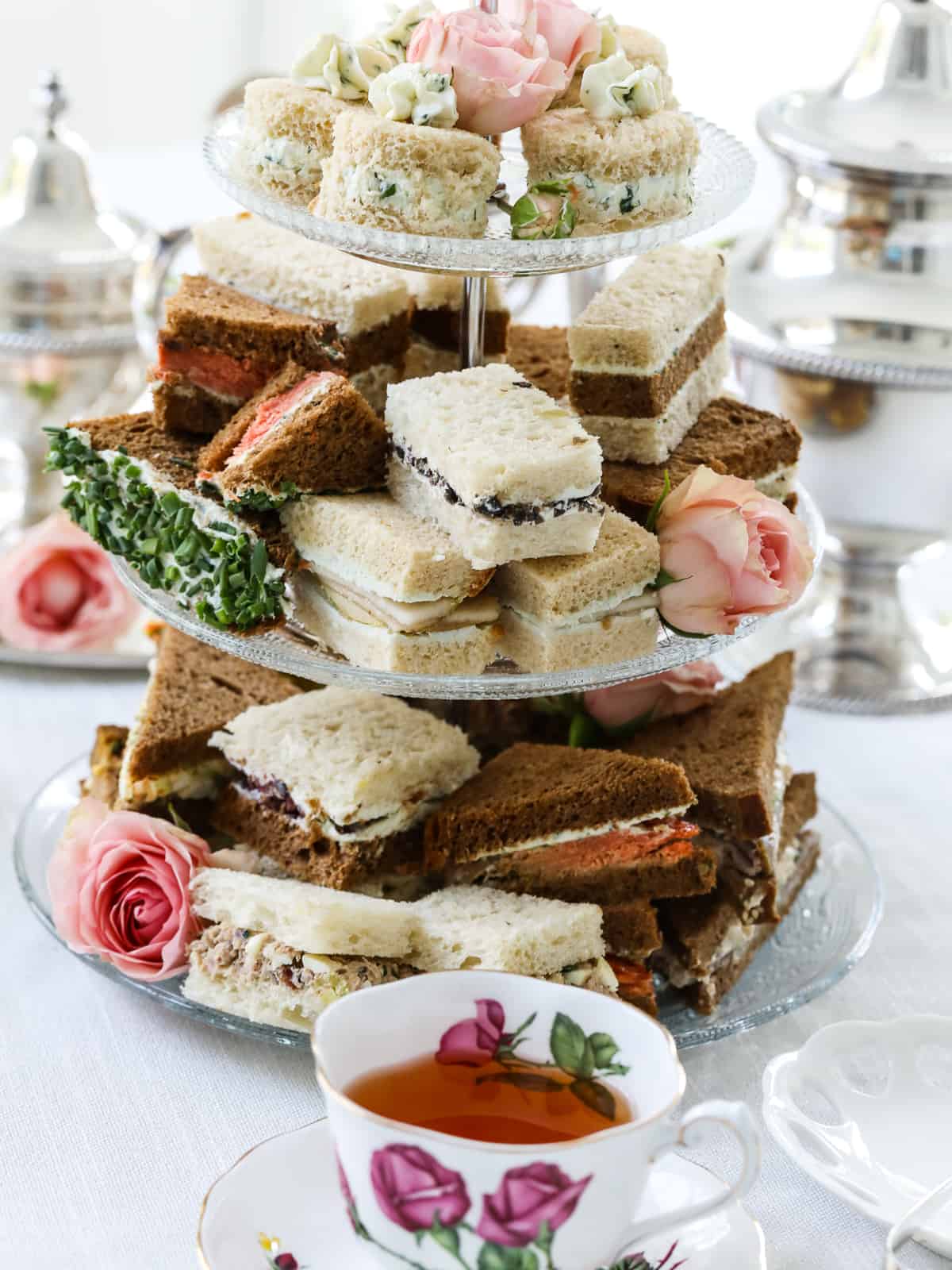
Finger sandwiches of chicken mayonnaise with tarragon and grapes
Cheddar and red pepper sandwich triangles
Deviled eggs
Sweet corn and bacon mini muffins with chive butter
Green bean salad on lettuce cups
Bread and butter pickles
Elegant Southern Pound Cake with peaches and cream
Caramel pecan “millionaires” cookies
Chilled Iced tea with mint and strawberries
Hmmmm👌
Thank you very much for inviting little old me 😆
Ahhh…so fine 😀
While I am not a gifted cook, I think I could contribute by making a decent pot of tea.
One needs two tea-pots to brew a genuine English tea, as my dear long-departed Granny made it. She had been working as a governess for a well-to-do family in England in the 1930s 🫖
One tea pot of hot water to heat the brewing pot first, right?
It actually tastes different. Milk in tea slightly curdles the milk. So it is slightly more sour. Now this is with proper pot brewed tea. If you are using the tea dust found in cheap teas who cares. :)
It also matters if you add cream to your coffee or coffee to your cream.
Good advice.
The traditional way is to heat up the teapot first. This is how I do it and it does make a difference. And one spoon for each cup plus one for the pot. :)
This actually goes back to proving the quality of your china. Putting milk into the tea cup first supposedly prevents low quality china from cracking where as if you have good quality china, fine bone china, pouring the hot tea in first then adding the milk is supposedly a sign you can afford good china. At least that’s what I’ve been told.
Yeah......heating the brew pot first makes all the difference.
Sounds kinda like a fine china marketing strategy.
:)
The finer the china the more likely it will shatter when you pour hot tea into it. So the milk would have provided some protection for the china but the cup would have to be very, very cold and the tea very hot for this to happen.
But the more likely reason is what I said, that milk added to tea curdles slightly where as tea added to milk, probably because it tempers the milk, does not curdle.
In a time where milk was not kept in refrigerators milk would have started to sour the moment it came out of the cow so adding the tea to milk would have prevented the embarrassing your hostess by the milk curdling in your cup. Not to mention curdled milk in tea is not very nice.

London Fog Drink / garnished w/ lavender
Copycat Starbucks London Fog drink recipe.
Ingredients--- 2 cups hot water 2 teaspoons loose earl grey tea (or 2 tea bags of earl grey tea) ¾ cup milk ½ teaspoon vanilla extract 2 tablespoons honey
Instructions---Bring water to a boil. Place the loose tea (or tea bags) in a glass measure. Pour boiling water over; steep 5 min. Strain (or remove tea bags). Pour into 2 mugs. Add the milk, vanilla, and honey in a milk frother, and froth til velvety. Divide over the two mugs and serve.
Notes---Loose-leaf tea is good, but 2 tea bags is ok. If you can find double-strength or double-Bergamot Earl Grey tea, use it--it's delicious. Milk---Your milk of choice, but note that cow's milk and oat milk are going to get the foamiest results. Honey----the best type of sweetener dissolves easily in warm liquids, like honey, but sugar is ok; just stir til it fully dissolves.
Disclaimer: Opinions posted on Free Republic are those of the individual posters and do not necessarily represent the opinion of Free Republic or its management. All materials posted herein are protected by copyright law and the exemption for fair use of copyrighted works.