Skip to comments.
Structure of the cytoplasmic ring of the Xenopus laevis nuclear pore complex
science.org ^
Posted on 06/09/2022 9:51:43 PM PDT by BenLurkin
The nuclear pore complex (NPC) mediates nucleocytoplasmic cargo transport. Here, we present a single-particle cryo–electron microscopy reconstruction of the cytoplasmic ring (CR) subunit from the Xenopus laevis NPC at 3.7- to 4.7-angstrom resolution. The structure of an amino-terminal domain of Nup358 has been resolved at 3.0 angstroms, facilitating the identification of five Nup358 molecules in each CR subunit. Our final model of the CR subunit included five Nup358, two Nup205, and two Nup93 molecules in addition to the two previously characterized Y complexes. The carboxyl-terminal fragment of Nup160 served as an organizing center at the vertex of each Y complex. Structural analysis revealed how Nup93, Nup205, and Nup358 facilitate and strengthen the assembly of the CR scaffold that is primarily formed by two layers of Y complexes.
 Cryo-EM structure of the double-layered CR of the X. laevis NPC.
The X. laevis CR, containing eight repeating subunits, is modeled on the basis of cryo-EM reconstructions (top left panel). One CR subunit is shown in two different views to highlight nucleoporins of key interest (bottom left and right panels). The inner and outer Y complexes are colored dark and light gray, respectively. Two Nup205, two Nup93, and five Nup358 molecules are colored blue, red, and purple, respectively.
(Excerpt) Read more at science.org ...
TOPICS: Science
KEYWORDS:
Navigation: use the links below to view more comments.
first 1-20, 21-22 next last
1
posted on
06/09/2022 9:51:43 PM PDT
by
BenLurkin
To: BenLurkin
2
posted on
06/09/2022 10:18:18 PM PDT
by
grey_whiskers
(The opinions are solely those of the author and are subject to change without notice.)
To: BenLurkin
Doesn’t interest me, but thanks.
3
posted on
06/09/2022 10:24:57 PM PDT
by
rexthecat
To: BenLurkin
I just peeked to see who understands and enjoys this topic.
To: BenLurkin
Sometimes the microcosm resembles the macrocosm. That picture on the upper left looks like a wreath of flowers and vines to me. Interesting.
5
posted on
06/09/2022 10:31:19 PM PDT
by
married21
(As for me and my house, we will serve the Lord.)
To: BenLurkin
Does this have anything to do with sex?
6
posted on
06/09/2022 10:31:40 PM PDT
by
eyedigress
(Trump is my President! )
To: BenLurkin
“The inner and outer Y complexes are colored dark and light gray, respectively.”
That was a good choice. Gray goes with anything.
7
posted on
06/09/2022 10:55:48 PM PDT
by
Larry Lucido
(Donate! Don't just post clickbait!)
To: KittyKares
8
posted on
06/09/2022 11:32:40 PM PDT
by
ifinnegan
(Democrats kill babies and harvest their organs to sell)
To: BenLurkin
It’s research into spinal chord formation. ‘Xenopus’ is an african frog that is used as a handy organism for study.
To: BenLurkin
To: BenLurkin
Am I getting warm?
Abstract
Nuclear pore complexes (NPCs) are the gateways connecting
the nucleoplasm and cytoplasm. This structures are
composed of over 30 different proteins and 60–125 MDa of
mass depending on type of species. NPCs are bilateral
pathways that selectively control the passage of
macromolecules into and out of the nucleus. Molecules
smaller than 40 kDa diffuse through the NPC passively
while larger molecules require facilitated transport
provided by their attachment to karyopherins. Kinetic
studies have shown that approximately 1000
translocations occur per second per NPC. Maintaining its
high selectivity while allowing for rapid translocation
makes the NPC an efficient chemical nanomachine. In this
review, we approach the NPC function via a structural
viewpoint. Putting together different pieces of this
puzzle, this chapter confers an overall insight into
what molecular processes are engaged in import/export of
active cargos across the NPC and how different
transporters regulate nucleocytoplasmic transport. In
the end, the correlation of several diseases and
disorders with the NPC structural defects and
dysfunctions is discussed. ...
To: BenLurkin
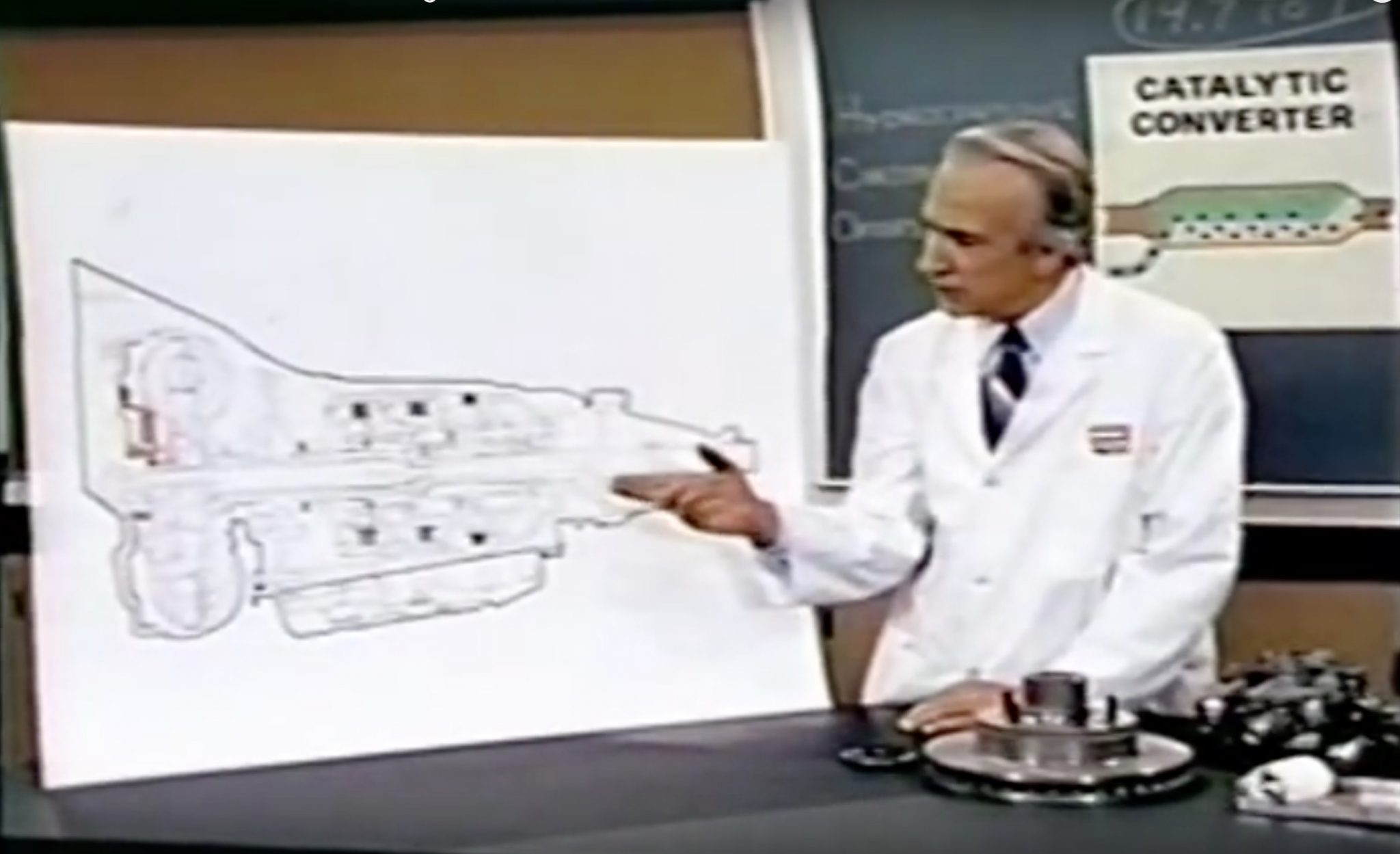
The Turbo Encabulator guy should explain your article to us...
12
posted on
06/10/2022 4:38:20 AM PDT
by
moovova
To: BenLurkin
I would guess you are one of the authors of this article but I don’t think you are Chinese.
13
posted on
06/10/2022 5:06:34 AM PDT
by
Brooklyn Attitude
(I went to bed on November 3rd 2020 and woke up in 1984.)
To: BenLurkin
The nuclear pore complex (NPC) mediates nucleocytoplasmic cargo transport. Bookmark for later after I get my PHD in nuclear physics or something.....
14
posted on
06/10/2022 5:09:06 AM PDT
by
Hot Tabasco
(I'm Jimmy Crack Corn and I don't care)
To: BenLurkin
Thanks for posting!
That thing is huge compared to the trans-membrane pore proteins I’ve seen.
You avoided TTIWWOP :)
Read your homepage. liked the ways to spot election fraud link.
To: Hot Tabasco
I think your proposed PhD should be in molecular biology. The nucleus in this article is the nucleus of a cell, not an atom. It seems to have something to do with transporting ‘stuff’ in and out of said nucleus through molecular sized holes; the structure of those holes being the important point.
I think.
And I’m honestly surprised anyone is still using Angstrom units ... in optical spectroscopy, we abandoned those for nanometers and microns a long time ago.
16
posted on
06/10/2022 6:34:10 AM PDT
by
NorthMountain
(... the right of the peopIe to keep and bear arms shall not be infringed)
To: NorthMountain
I think your proposed PhD should be in molecular biology. That's covered in my "or something" statement. But thanks for the clarification
17
posted on
06/10/2022 10:45:10 AM PDT
by
Hot Tabasco
(I'm Jimmy Crack Corn and I don't care)
To: BenLurkin
Oh yeah? Well, *I’M* of the opinion that the effects of adjuvants for increasing the immunogenicity of influenza vaccines are well known. However, the effect of adjuvants on increasing the breadth of cross-reactivity is less well understood. In this study we have performed a systematic screen of different toll-like receptor (TLR) agonists, with and without a squalene-in-water emulsion on the immunogenicity of a recombinant trimerized hemagglutinin (HA) vaccine in mice after single-dose administration. Antibody (Ab) cross-reactivity for other variants within and outside the immunizing subtype (homosubtypic and heterosubtypic cross-reactivity, respectively) was assessed using a protein microarray approach. Most adjuvants induced broad IgG profiles, although the response to a combination of CpG, MPLA and AddaVax (termed ‘IVAX-1’) appeared more quickly and reached a greater magnitude than the other formulations tested. Antigen-specific plasma cell labeling experiments show the components of IVAX-1 are synergistic. This adjuvant preferentially stimulates CD4 T cells to produce Th1>Th2 type (IgG2c>IgG1) antibodies and cytokine responses. Moreover, IVAX-1 induces identical homo- and heterosubtypic IgG and IgA cross-reactivity profiles when administered intranasally. Consistent with these observations, a single-cell transcriptomics analysis demonstrated significant increases in expression of IgG1, IgG2b and IgG2c genes of B cells in H5/IVAX-1 immunized mice relative to naïve mice, as well as significant increases in expression of the IFNγ gene of both CD4 and CD8 T cells. These data support the use of adjuvants for enhancing the breath and durability of antibody responses of influenza virus vaccines.
So THERE! smarty pants...
18
posted on
06/10/2022 10:48:20 AM PDT
by
Lazamataz
(The firearms I own today, are the firearms I will die with. How I die will be up to them.)
To: BenLurkin
To: BenLurkin
Who you callin’ Xenopus, smart guy?!
;-)
20
posted on
06/10/2022 11:12:54 AM PDT
by
Ranxerox
Navigation: use the links below to view more comments.
first 1-20, 21-22 next last
Disclaimer:
Opinions posted on Free Republic are those of the individual
posters and do not necessarily represent the opinion of Free Republic or its
management. All materials posted herein are protected by copyright law and the
exemption for fair use of copyrighted works.
FreeRepublic.com is powered by software copyright 2000-2008 John Robinson