Posted on 02/03/2022 6:30:50 AM PST by Red Badger
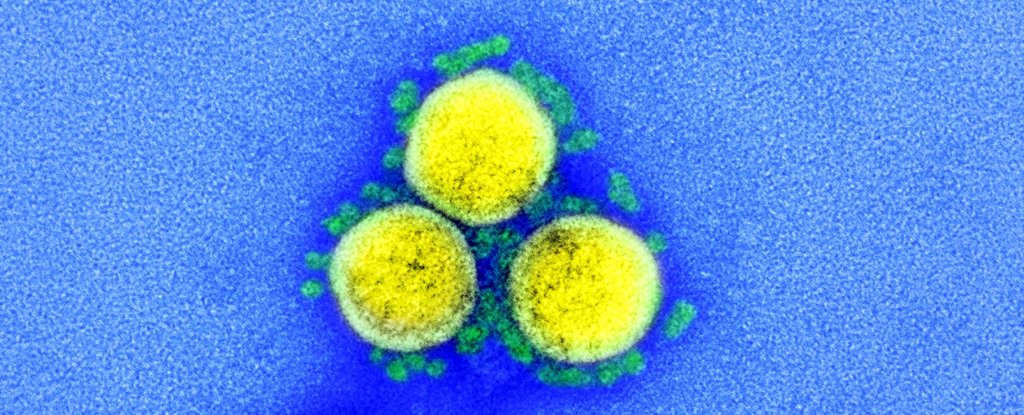
SARS-CoV-2 virus particles. (NIAID/Flickr/CC BY 2.0)
Scientists deliberately infected young, healthy volunteers with SARS-CoV-2, the coronavirus that causes COVID-19 – and now, they've shared their first results from that experiment.
The new study, published Tuesday (Feb. 1) in Springer Nature's preprint database, In Review, has not yet been peer-reviewed, but it could provide insight into how mild COVID-19 unfolds, from the moment of exposure to the point that the virus is eliminated from the body.
For the study, the researchers recruited 34 healthy volunteers ages 18 to 30; none of the participants had ever been infected with SARS-CoV-2 or received a COVID-19 vaccine, according to a statement. All participants tested negative for antibodies against SARS-CoV-2 at the start of the study, the researchers noted in their report.
After this screening process, each volunteer received a low dose of SARS-CoV-2 via drops delivered up the nose. These drops contained roughly the same amount of virus found in a single droplet of nasal fluid from a person infected with the novel coronavirus at the point when they're most infectious, the statement notes.
The version of SARS-CoV-2 used in the study predated the Alpha variant (or B.1.1.7, first detected in September 2020), but it differed from the original version of the virus in that it carried a mutation called D614G. This mutation affects the spike protein, which the virus uses to infect cells, and is thought to increase the virus's transmissibility.
After being exposed to the virus, 18 of the volunteers became infected, and of those, 16 developed mild to moderate symptoms, such as sore throat, headache, muscle and joint aches, fatigue and fever. Roughly a third (or 13) of the infected participants lost their sense of smell; for 10 of these people, their senses of smell returned to normal within three months, but the final three still experienced deficits at that point.
Thankfully, "there were no severe symptoms or clinical concerns in our challenge infection model of healthy young adult participants," the trial's chief investigator, Dr. Christopher Chiu, an infectious-diseases physician and immunologist in the Department of Infectious Disease and the Institute of Infection at Imperial College London, said in the statement.
For this reason, the study's results are most representative of mild infections rather than severe ones, he said.
In the 18 infected participants, the average incubation period – the time period from initial exposure to first detection of the virus via tests – was 42 hours, the team reported. The researchers took swab samples from the participants' throats and noses twice a day and calculated the amount of viable, or infectious, virus present using PCR tests and laboratory assays.
They found that the amount of virus in the participants quickly increased following the incubation period. The virus could be detected in the throat first, about 40 hours after exposure, and then the nose, about 58 hours after exposure.
On average, the participants' viral loads peaked five days after their initial exposure. Viral levels in the throat generally remained lower than those in the nose and also peaked sooner, the team reported. Notably, all of the infected participants showed similar viral loads, regardless of their symptoms, according to The Guardian.
Lateral flow tests – a type of rapid COVID-19 test — reliably detected the virus throughout the course of infection but were slightly less sensitive at the start and end of infection, when viral loads are relatively low.
In other words, the tests were less likely to detect the virus at low levels, meaning there was a greater likelihood of "false negative" results at those times.
"We found that overall, lateral flow tests correlate very well with the presence of infectious virus" as confirmed by laboratory tests, Chiu said in the statement.
"Even though in the first day or two they may be less sensitive, if you use them correctly and repeatedly, and act on them if they read positive, this will have a major impact on interrupting viral spread."
Looking forward, the team plans to investigate why some participants did not become infected with SARS-CoV-2, while others did; they also plan to run a similar challenge trial with the delta variant. (They did not note if they also plan to pursue a trial using Omicron.)
"While there are differences in transmissibility due to the emergence of variants, such as Delta and Omicron, fundamentally, this is the same disease, and the same factors will be responsible for protection against it," Chiu said.
"From the point of view of virus transmission related to the very high viral loads, we are likely if anything to be underestimating infectivity because we were using an older strain of the virus," he said.
"With a newer strain, there might be differences in terms of size of response, but ultimately, we expect our study to be fundamentally representative of this kind of infection."
Bkmk
No statement on the PCR tests just the lateral flow tests.
How does such a study comport with modern medical ethics standards?
It was voluntary...................
What I learned?
I wont tongue punch anyone up the nose ever again. But nothing about the effectiveness of masks?
“healthy volunteers ages 18 to 30”
That is not a sample that is at all like our very old and very obese population. Age matters a lot with this illness. I’m 54. My 22 year old son and I got the Omnicron at the same time. We both had what used to be called a bad cold (some chest congestion, sore throat, maybe a mild fever). The difference: he was sick for maybe 48 hours; I was sick for about 10 days. We are both in reasonably good shape. Younger people simply are not at nearly the same risk for this virus.
Interesting study. When they are able to drill down to the why on a lot of it, it will be fascinating.
Correct me if I’m wrong, but doesn’t this show that almost half of the subjects were “immune”, if only 18 of the 34 developed infections?
Much like the first cruise liner passengers who didn’t get sick, it looks like some of us don’t get it.
Isn’t this supposed to be a novel virus that no one is immune to?
Everybody that is healthy and has no comorbidities, has some form of immunity or at least an immune system that can quickly adapt itself to the invader.............
Agree. This is the beginning of a meaningful study. To be statistically useful, it needs to include a larger group of people. And you are correct in that it only represents results in the younger ages where immune systems are more resilient. The testing of accuracy of the lateral flow rapid COVID-19 test is also interesting. Which test is the one being mailed out for use at home, PCR or lateral flow?
The voluntary aspect is the people putting a deadly virus into other people did so voluntarily.
It is *their* ethics in question. Not the volunteer victims.
This looks pretty dangerous. The young are mostly safe, but these people picked an infection dose amount somewhat arbitrary. They said the amount was equivalent to the viral total on a single moisture droplet. Who said that was safe? Who said that was meaningful? Why not two moisture droplets? Are 2 or 3 or 4 droplet totals deadly?
The whole thing looks shakey.
there’s no such thing as an immune system. that’s a conspiracy theory. there’s only vaccines.
follow the science!
Your questions are valid, but you have to start somewhere. Their baseline test (a single droplet) may be arbitrary, but its a baseline from which to build future studies on. Same as the age group they chose.
Vaccines don't have a function/purpose without the immune system response.
They report some details about how the disease develops, but not the timeframes in which it resolved, or when infectiveness declined.
That would be very pertinent to recommending quarantine periods.
My guess is that they did not report on that because of fear of stepping on powerful toes politically, or possibly the “journalist” omitted those details, because they did not fit the current Party line recommendations - kind of like when the race of a perpetrator is omitted.
thats racist
CD should have included the rather obvious “/sarc”.
I don’t think anyone does this for deadly pathogens. Suppose one droplet killed half the samples? The young are generally safe, but if you kill even 1, you’re looking at jail time.
I can for sure kill young, vigorous volunteers with a big enough dosage. Apparently half their samples got very sick. “Mild” has evolved to be defined as “did not wind up in the hospital”. But if some youngster gets enough initial virus dosage, they are going to die. It will overwhelm the response.
lol
I hope its obvious I am not advocating for Josef Mengele experimentation. It would make a lot of sense if this was done to rats and monkeys first, but sooner or later, you have to see how things work on human anatomy.
Also, you use of the term ‘deadly pathogen’ is debatable. One side calls COVID a deadly pathogen. Another side, which I lean toward, calls it the flu. Is flu deadly? It can be, yes, but for the most part its not.
When one goes for allergy testing, they may be exposed to the very thing that could kill them in large enough dose, just to determine if they are sensitive to it. So, not being a medical professional, I wont make declarations as if I am an authority, but my gut says what has been done in this study is not unethical in any Mengele sense.
Disclaimer: Opinions posted on Free Republic are those of the individual posters and do not necessarily represent the opinion of Free Republic or its management. All materials posted herein are protected by copyright law and the exemption for fair use of copyrighted works.