Posted on 01/18/2022 11:05:27 AM PST by Red Badger
Levels of 14 proteins in the blood of critically ill COVID-19 patients are associated with survival.
A single blood sample from a critically ill COVID-19 patient can be analyzed by a machine learning model which uses blood plasma proteins to predict survival, weeks before the outcome, according to a new study published this week in the open-access journal PLOS Digital Health by Florian Kurth and Markus Ralser of the Charité – Universitätsmedizin Berlin, Germany, and colleagues.
Healthcare systems around the world are struggling to accommodate high numbers of severely ill COVID-19 patients who need special medical attention, especially if they are identified as being at high risk. Clinically established risk assessments in intensive care medicine, such as the SOFA or APACHE II, show only limited reliability in predicting future disease outcomes for COVID-19.
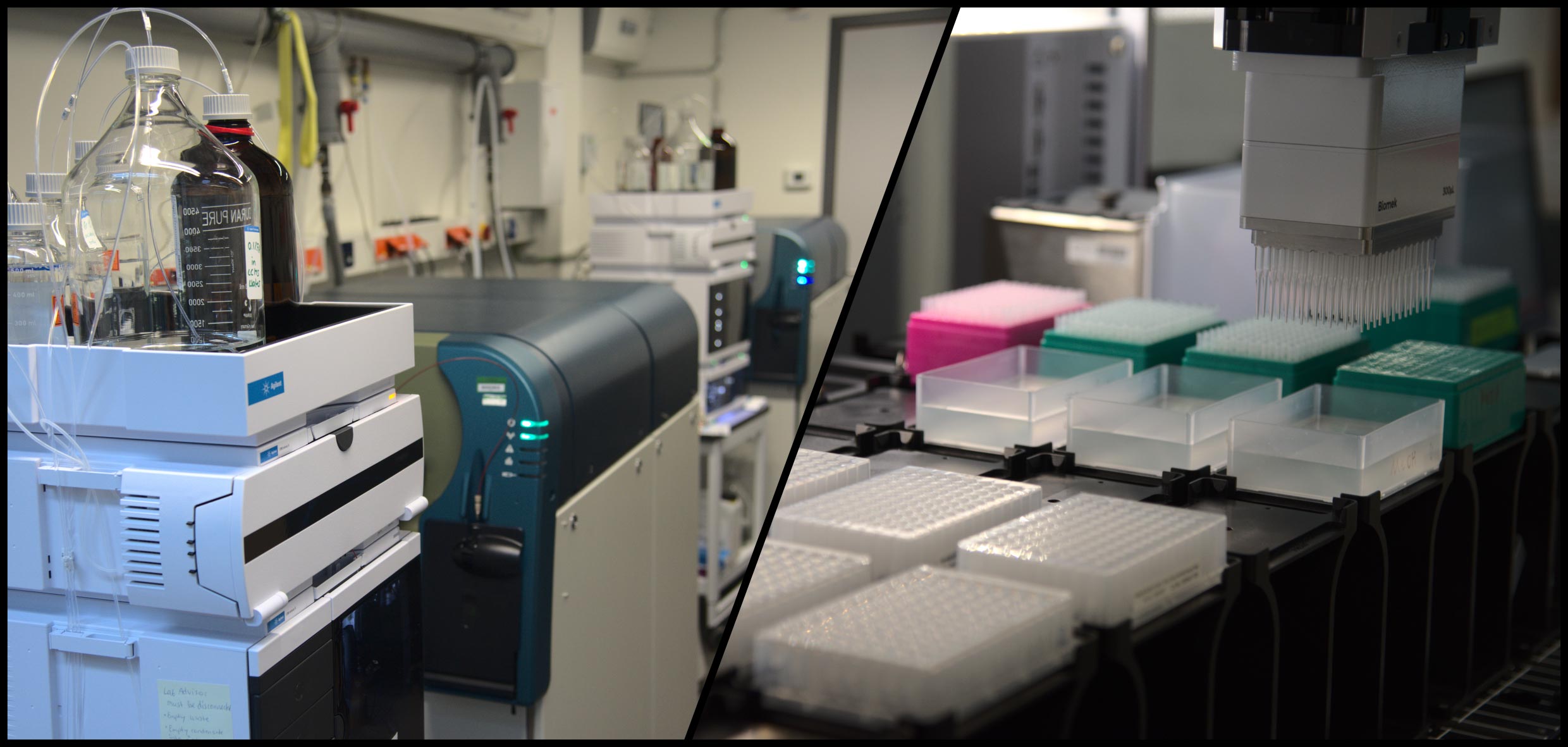
Proteomics core facility at Charité University hospital Berlin. Credit: Johannes Hartl, Charité
In the new study, researchers studied the levels of 321 proteins in blood samples taken at 349 timepoints from 50 critically ill COVID-19 patients being treated in two independent health care centers in Germany and Austria. A machine learning approach was used to find associations between the measured proteins and patient survival.
15 of the patients in the cohort died; the average time from admission to death was 28 days. For patients who survived, the median time of hospitalization was 63 days. The researchers pinpointed 14 proteins which, over time, changed in opposite directions for patients who survive compared to patients who do not survive on intensive care. The team then developed a machine learning model to predict survival based on a single time-point measurement of relevant proteins and tested the model on an independent validation cohort of 24 critically ill COVID-10 patients. The model demonstrated high predictive power on this cohort, correctly predicting the outcome for 18 of 19 patients who survived and 5 out of 5 patients who died (AUROC = 1.0, P = 0.000047).
The researchers conclude that blood protein tests, if validated in larger cohorts, may be useful in both identifying patients with the highest mortality risk, as well as for testing whether a given treatment changes the projected trajectory of an individual patient.
Reference:
“A proteomic survival predictor for COVID-19 patients in intensive care” by Demichev V, Tober-Lau P, Nazarenko T, Lemke O, Kaur Aulakh S, Whitwell H, et al., 18 January 2022, PLOS Digital Health.
DOI: 10.1371/journal.pdig.0000007
Is I still 99.8% survival rate?

Not if Dr. A.I. Model says you are a goner.
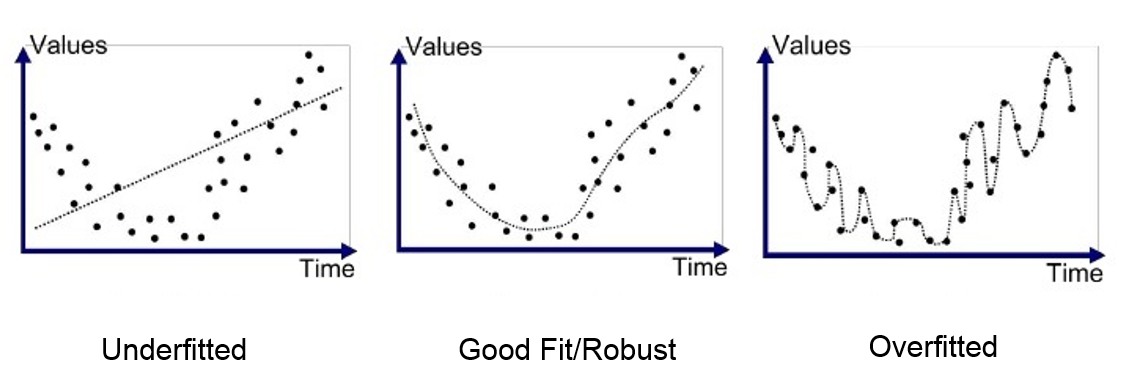
What is Overfitting?
Overfitting is a term used in statistics that refers to a modeling error that occurs when a function corresponds too closely to a particular set of data. As a result, overfitting may fail to fit additional data, and this may affect the accuracy of predicting future observations.
FAIL!
Not if you’re white and voted Xiden.
It’s not how many dots that counts, but who counts the dot..................
Any photo software that can count Chins, and assign a value for age and six comorbities.
With Omicron, You start out with a .00001% chance of dying for 30 year old with 1 chin.
Even with COVID Classic, 99.4% people under 55 that say they would have died if not vaccinated, would not have.
Don’t tell Elizabeth Holmes about this.
BS! Absolute total LIE!
if you fed a computer 1000 samples of the state of water at various temperatures, do you think it could “learn” that if below 32 it was ice and if above 212 it was steam?
Assuming it contained a proper program that could have been written by a freshman computer science major, or even a self-trained hacker.
Wowee! That’s Artificial Intelligence!
Let me guess, the higher the ivermectin level - the higher the survival rate?
If it always said you would live, then it would be correct 99% of the time.
My expertise with ML is very basic, but you can’t get anything useful from 50 data points.
LOL! Who needs AI? Just input the data!
What passes for ‘Machine learning’ is basically the old ‘20 Questions’ party game updated with a computer................
So, if the computer predicts death, they pull the plug on everything and save $250K?
Low Albumin levels have long been associated with poor prognosis.
50 patients may not be very many, but they can test the predictive power of the correlations they found against larger patient sets.
It’s Germany so trusting the results of their machine is like trusting dominion voting machines
Disclaimer: Opinions posted on Free Republic are those of the individual posters and do not necessarily represent the opinion of Free Republic or its management. All materials posted herein are protected by copyright law and the exemption for fair use of copyrighted works.