Posted on 07/22/2021 5:52:07 AM PDT by Red Badger
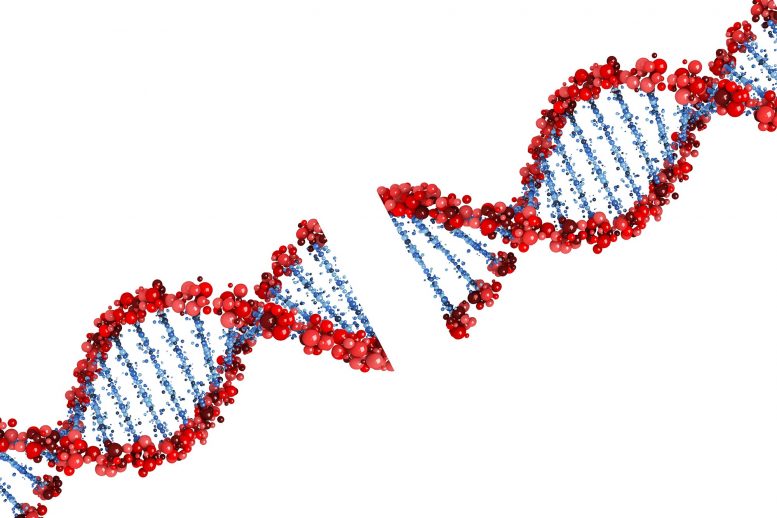
To provide access to genes needed for the encoding and storage of memories, brain cells snap open their DNA, breaking both strands. A new study finds this happens more extensively than previously realized and that it occurs not only in neurons but other supporting cell types, too.
================================================================================
To quickly express learning and memory genes, brain cells snap both strands of DNA in many more places and cell types than previously realized, a new study shows.
The urgency to remember a dangerous experience requires the brain to make a series of potentially dangerous moves: Neurons and other brain cells snap open their DNA in numerous locations — more than previously realized, according to a new study — to provide quick access to genetic instructions for the mechanisms of memory storage.
The extent of these DNA double-strand breaks (DSBs) in multiple key brain regions is surprising and concerning, says study senior author Li-Huei Tsai, Picower Professor of Neuroscience at MIT and director of The Picower Institute for Learning and Memory, because while the breaks are routinely repaired, that process may become more flawed and fragile with age. Tsai’s lab has shown that lingering DSBs are associated with neurodegeneration and cognitive decline and that repair mechanisms can falter.
“We wanted to understand exactly how widespread and extensive this natural activity is in the brain upon memory formation because that can give us insight into how genomic instability could undermine brain health down the road,” says Tsai, who is also a professor in the Department of Brain and Cognitive Sciences and a leader of MIT’s Aging Brain Initiative. “Clearly, memory formation is an urgent priority for healthy brain function, but these new results showing that several types of brain cells break their DNA in so many places to quickly express genes is still striking.”
Tracking breaks In 2015, Tsai’s lab provided the first demonstration that neuronal activity caused DSBs and that they induced rapid gene expression. But those findings, mostly made in lab preparations of neurons, did not capture the full extent of the activity in the context of memory formation in a behaving animal, and did not investigate what happened in cells other than neurons.
In the new study published on July 1, 2021, in PLOS ONE, lead author and former graduate student Ryan Stott and co-author and former research technician Oleg Kritsky sought to investigate the full landscape of DSB activity in learning and memory. To do so, they gave mice little electrical zaps to the feet when they entered a box, to condition a fear memory of that context. They then used several methods to assess DSBs and gene expression in the brains of the mice over the next half-hour, particularly among a variety of cell types in the prefrontal cortex and hippocampus, two regions essential for the formation and storage of conditioned fear memories. They also made measurements in the brains of mice that did not experience the foot shock to establish a baseline of activity for comparison.
The creation of a fear memory doubled the number of DSBs among neurons in the hippocampus and the prefrontal cortex, affecting more than 300 genes in each region. Among 206 affected genes common to both regions, the researchers then looked at what those genes do. Many were associated with the function of the connections neurons make with each other, called synapses. This makes sense because learning arises when neurons change their connections (a phenomenon called “synaptic plasticity”) and memories are formed when groups of neurons connect together into ensembles called engrams.
“Many genes essential for neuronal function and memory formation, and significantly more of them than expected based on previous observations in cultured neurons … are potentially hotspots of DSB formation,” the authors wrote in the study.
In another analysis, the researchers confirmed through measurements of RNA that the increase in DSBs indeed correlated closely with increased transcription and expression of affected genes, including ones affecting synapse function, as quickly as 10-30 minutes after the foot shock exposure.
“Overall, we find transcriptional changes are more strongly associated with [DSBs] in the brain than anticipated,” they wrote. “Previously we observed 20 gene-associated [DSB] loci following stimulation of cultured neurons, while in the hippocampus and prefrontal cortex we see more than 100-150 gene associated [DSB] loci that are transcriptionally induced.”
Snapping with stress In the analysis of gene expression, the neuroscientists looked at not only neurons but also non-neuronal brain cells, or glia, and found that they also showed changes in expression of hundreds of genes after fear conditioning. Glia called astrocytes are known to be involved in fear learning, for instance, and they showed significant DSB and gene expression changes after fear conditioning.
Among the most important functions of genes associated with fear conditioning-related DSBs in glia was the response to hormones. The researchers therefore looked to see which hormones might be particularly involved and discovered that it was glutocortocoids, which are secreted in response to stress. Sure enough, the study data showed that in glia, many of the DSBs that occurred following fear conditioning occurred at genomic sites related to glutocortocoid receptors. Further tests revealed that directly stimulating those hormone receptors could trigger the same DSBs that fear conditioning did and that blocking the receptors could prevent transcription of key genes after fear conditioning.
Tsai says the finding that glia are so deeply involved in establishing memories from fear conditioning is an important surprise of the new study.
“The ability of glia to mount a robust transcriptional response to glutocorticoids suggest that glia may have a much larger role to play in the response to stress and its impact on the brain during learning than previously appreciated,” she and her co-authors wrote.
Damage and danger? More research will have to be done to prove that the DSBs required for forming and storing fear memories are a threat to later brain health, but the new study only adds to evidence that it may be the case, the authors say.
“Overall we have identified sites of DSBs at genes important for neuronal and glial functions, suggesting that impaired DNA repair of these recurrent DNA breaks which are generated as part of brain activity could result in genomic instability that contributes to aging and disease in the brain,” they wrote.
Reference: “Profiling DNA break sites and transcriptional changes in response to contextual fear learning” by Ryan T. Stott, Oleg Kritsky and Li-Huei Tsai, 1 July 2021, PLOS ONE. DOI: 10.1371/journal.pone.0249691
The National Institutes of Health, The Glenn Foundation for Medical Research, and the JPB Foundation provided funding for the research.
That’s cool.
How anyone can look at the boundless intricacies and thoughtful complexity of nature and deny that there is a Designer behind it all is beyond my ability to grasp.
We all know people whose brain cells have snapped CLOSED.
Are glutocortocoids involved in glucose release or withholding?
Could diabetes then be a response to fear?
They have been blinded to reality.
If you were to talk to one of these people and point to the chair they are sitting in and say, “That chair just accidentally came together in that form or evolved from a dead tree to that form, with no designer or manufacturer or skilled laborer at all.” they would say you are crazy.
But they are perfectly content to say that ‘LIFE’ just ‘happened’ and the entire Universe is a cosmological accident..................
“Doublethink means the power of holding two contradictory beliefs in one’s mind simultaneously, and accepting both of them.”
― George Orwell, 1984
When a scientist says something is an accident or a coincidence they are actually admitting they are ignorant chimps...alone and afraid in a world they never made...
Resident Potato?
God: Oh yeah?
Scientist: Yep
God: Show Me.
Scientist: No problem!
So, the scientist started to gather some dirt, and just as he was about to start working with it, he was interrupted…
God: Hold it, stop!!
Scientist: What?
God: What are you doing?
Scientist: I’m gathering some dirt to generate life, just as described in Your book.
God: Get your own dirt…
They have been blinded to reality.
My brother and I have this ongoing thing where, when he or his wife relate something that clearly had God’s hand in happening, the conversation usually starts with “in today’s episode of “Oh, That’s Just A Coincidence”...
Our sister used to say, “If you believe in coincidences, you just aren’t paying attention.”
I am reminded of the insects that they find in amber, millions of years old, yet perfectly formed and fully functional at the time of their death in the yellow sap of the perfectly formed and functional trees of their era.
They are not ‘proto-insects’ that are only partially ‘evolved’, they are complete and obviously formed for their environment.
Never have the paleontologists ever found a transitional fossil of a living animal.
Where is the ‘proto-giraffe’ with a short neck?
Where is the ‘proto-whale and dolphins’ that walked on land?
Where is the ‘proto-penguin’ that once flew?
Where is the ‘proto-bat’ that never flew?
Where is the ‘proto-woodpecker’ with a short beak and weak neck?
They never existed................................
Why does every science article drip with fear? It is beyond tiresome.
LOL!..........................
Fear generates funds...........................
I am reminded of the insects that they find in amber, millions of years old, yet perfectly formed and fully functional at the time of their death in the yellow sap of the perfectly formed and functional trees of their era.
Utter kwap. Memory is not stored in the brain cells. Not enough bandwidth.
Now we should be able to take this - mental stress can induce an excess of DNA breaks in brain cells - and ponder the immediate, and possible long term effects on that condition when joined with conditions arising in the brain of an addict that is feeding their addiction.
With such a person, is permanent brain damage possible, and with it physical brain conditions that hinder the addict’s, or even former addict’s normal brain functions. Can such a person reach a point where they don’t think well in many critical decision making areas, because they can’t? Can it be that “the breaks” at critical neurological points remain, and so they remain making the same critical thinking errors?

Disclaimer: Opinions posted on Free Republic are those of the individual posters and do not necessarily represent the opinion of Free Republic or its management. All materials posted herein are protected by copyright law and the exemption for fair use of copyrighted works.