Posted on 03/19/2021 11:18:09 AM PDT by Red Badger
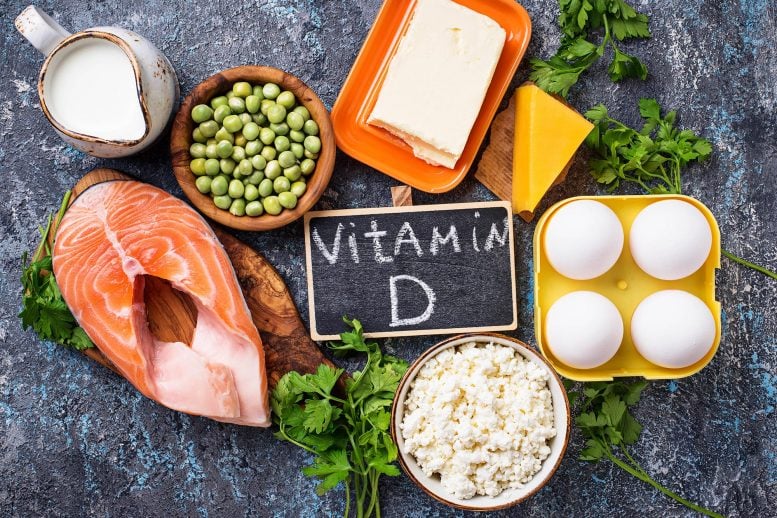
Food rich in vitamin D.
In a retrospective study of individuals tested for COVID-19, vitamin D levels above those traditionally considered sufficient were associated with a lower risk of COVID-19.
A new research study at the University of Chicago Medicine has found that when it comes to COVID-19, having vitamin D levels above those traditionally considered sufficient may lower the risk of infection, especially for Black people.
The study, published today (March 19, 2021) in JAMA Open Network, retrospectively examined the relationship between vitamin D levels and likelihood of testing positive for COVID-19. While levels of 30 ng/ml or more are usually considered “sufficient,” the authors found that Black individuals who had levels of 30 to 40 ng/ml had a 2.64 times higher risk of testing positive for COVID-19 than people with levels of 40 ng/ml or greater. Statistically significant associations of vitamin D levels with COVID-19 risk were not found in white people. The study looked at data from over 3,000 patients at UChicago Medicine who had had their vitamin D levels tested within 14 days before a COVID-19 test.
The research team is now recruiting participants for two separate clinical trials testing the efficacy of vitamin D supplements for preventing COVID-19.
This research is an expansion of an earlier study showing that a vitamin D deficiency (less than 20 ng/ml) may raise the risk of testing positive for COVID-19. In the current study, those results were further supported, finding that individuals with a vitamin D deficiency had a 7.2% chance of testing positive for the virus. A separate study recently found that over 80% of patients diagnosed with COVID-19 were vitamin D deficient.
“These new results tell us that having vitamin D levels above those normally considered sufficient is associated with decreased risk of testing positive for COVID-19, at least in Black individuals,” said David Meltzer, MD, PhD, Chief of Hospital Medicine at UChicago Medicine and lead author of the study. “This supports arguments for designing clinical trials that can test whether or not vitamin D may be a viable intervention to lower the risk of the disease, especially in persons of color.”
Meltzer was inspired to investigate this topic after seeing an article in early 2020 that found people with vitamin D deficiency who had randomly been assigned to receive vitamin D supplementation had much lower rates of viral respiratory infections compared to those who did not receive supplementation. He decided to examine data being collected at UChicago Medicine on COVID-19 to determine the role that vitamin D levels might be playing.
“There’s a lot of literature on vitamin D. Most of it has been focused on bone health, which is where the current standards for sufficient vitamin D levels come from,” Meltzer explained. “But there’s also some evidence that vitamin D might improve immune function and decrease inflammation. So far, the data has been relatively inconclusive. Based on these results, we think that earlier studies may have given doses that were too low to have much of an effect on the immune system, even if they were sufficient for bone health. It may be that different levels of vitamin D are adequate for different functions.”
Vitamin D can be obtained through diet or supplements, or produced by the body in response to exposure of the skin to sunlight. Meltzer noted that most individuals, especially people with darker skin, have lower levels of vitamin D; roughly half of the world’s population has levels below 30ng/ml. “Lifeguards, surfers, those are the kinds of folks who tend to have more than sufficient vitamin D levels,” he said. “Most folks living in Chicago in the winter are going to have levels that are well below that.”
While vitamin D supplements are relatively safe to take, excessive consumption of vitamin D supplements is associated with hypercalcemia, a condition in which calcium builds up in the blood stream and causes nausea, vomiting, weakness, and frequent urination. If left unchecked, it can further lead to bone pain and kidney stones.
“Currently, the adult recommended dietary allowance for vitamin D is 600 to 800 international units (IUs) per day,” said Meltzer. “The National Academy of Medicine has said that taking up to 4,000 IUs per day is safe for the vast majority of people, and risk of hypercalcemia increases at levels over 10,000 IUs per day.”
One of the challenges of this study is that it is currently difficult to determine exactly how vitamin D may be supporting immune function. “This is an observational study,” said Meltzer. “We can see that there’s an association between vitamin D levels and likelihood of a COVID-19 diagnosis, but we don’t know exactly why that is, or whether these results are due to the vitamin D directly or other related biological factors.”
Prompted by the evidence that people with vitamin D deficiency are more likely to test positive for COVID-19 and experience significant symptoms, a team at the University of Chicago and Rush University is conducting two studies to learn whether taking a daily vitamin D supplement can help prevent COVID-19 or decrease the severity of its symptoms.
Individuals who would like to learn more about the study and determine their eligibility can visit https://chess.uchicago.edu/vitamind/
Reference: “Association of Vitamin D Levels, Race/Ethnicity, and Clinical Characteristics with COVID-19 Test Results” by Thomas J. Best, Hui Zhang, Tamara Vokes, Vineet M. Arora and Julian Solway, 19 March 2021, JAMA Network Open. DOI: 10.1001/jamanetworkopen/2021.4117
Two sources of Vit.D - one comes from animal products and the other from plants. The best combo is K2+D3.
Vitamin D must be good for many things. My ortho surgeon prescribed 5,000 iu/day for 30 days prior to joint replacement, and 30 days after.
Oh, also, if you get the Epoch Times, a few issues ago there was a LONG article on the D3 angle with Covid and the interesting thing was that over 80% of the people that got Covid real bad and were in the hospital were Vitamin D deficient. That could just simply be a result of a lot of people in say a large northern metro area being part of this study since they would most likely be deficient anyway.
The last time I've had a cold or flu is >10 years.

Had sinus surgeries, 3!, in 2008.
Couldn’t smell a thing for a year or more..................
This was known a year ago out of a study in Thailand I believe
Dr. Fausti.................
This stuff was known LAST year.
There’s a reason POC in the US have a higher rate of COVID than those in Africa
Number one reason for COVID deaths...Obesity ***Crickets***
You don’t say.
Well, summer is coming. Time to catch some rays and get the Vitamin D cranked up.
As well as Asians.
Darker skin results in lower body production of Vitamin D. That Vitamin D production depends on how the skin turns sun light into Vitamin D. Yes, darker skin people wearing clothes all the time outdoors ought to take Vitamin D supplements; blood tests, on average, would likely show their Vitamin D levels lower than the average for lighter skinned folks.
Sunlight and Vitamin D from our diets will help to keep us healthy.
There is some interesting data on Low Dose Aspirin and Covid Patients.
Aspirin Is “Huge Win” for Those Looking to Reduce Risk From Some of the Most Devastating Effects of COVID-19
TOPICS:CardiologyCOVID-19George Washington UniversityInfectious DiseasesPopularPublic Health
By GEORGE WASHINGTON UNIVERSITY MARCH 17, 2021
Researchers from the George Washington University found that aspirin may have lung-protective effects and reduce the need for mechanical ventilation, ICU admission and in-hospital mortality in hospitalized COVID-19 patients.
George Washington University researchers found low dose aspirin may reduce the need for mechanical ventilation, ICU admission and in-hospital mortality in hospitalized COVID-19 patients. Final results indicating the lung protective effects of aspirin were published today in Anesthesia & Analgesia.
“As we learned about the connection between blood clots and COVID-19, we knew that aspirin – used to prevent stroke and heart attack – could be important for COVID-19 patients,” Jonathan Chow, MD, assistant professor of anesthesiology and critical care medicine and director of the Critical Care Anesthesiology Fellowship at the GW School of Medicine and Health Sciences, said. “Our research found an association between low dose aspirin and decreased severity of COVID-19 and death.”
Over 400 patients admitted from March to July 2020 to hospitals around the United States, including those at GW Hospital, the University of Maryland Medical Center, Wake Forest Baptist Medical Center and Northeast Georgia Health System, were included in the study. After adjusting for demographics and comorbidities, aspirin use was associated with a decreased risk of mechanical ventilation (44% reduction), ICU admission (43% reduction), and in-hospital mortality (47% reduction). There were no differences in major bleeding or overt thrombosis between aspirin users and non-aspirin users.
Preliminary findings were first published as a preprint in fall 2020. Since then, other studies have confirmed the impact aspirin can have on both preventing infection and reducing risk for severe COVID-19 and death. Chow hopes that this study leads to more research on whether a causal relationship exists between aspirin use and reduced lung injury in COVID-19 patients.
“Aspirin is low cost, easily accessible and millions are already using it to treat their health conditions,” said Chow. “Finding this association is a huge win for those looking to reduce risk from some of the most devastating effects of COVID-19.”
I’ve been taking that along with zinc and it’s kept me safe.
That’s interesting.
“Am I culturally appropriating?”
Yes. The D people are very resentful.
Disclaimer: Opinions posted on Free Republic are those of the individual posters and do not necessarily represent the opinion of Free Republic or its management. All materials posted herein are protected by copyright law and the exemption for fair use of copyrighted works.