Skip to comments.
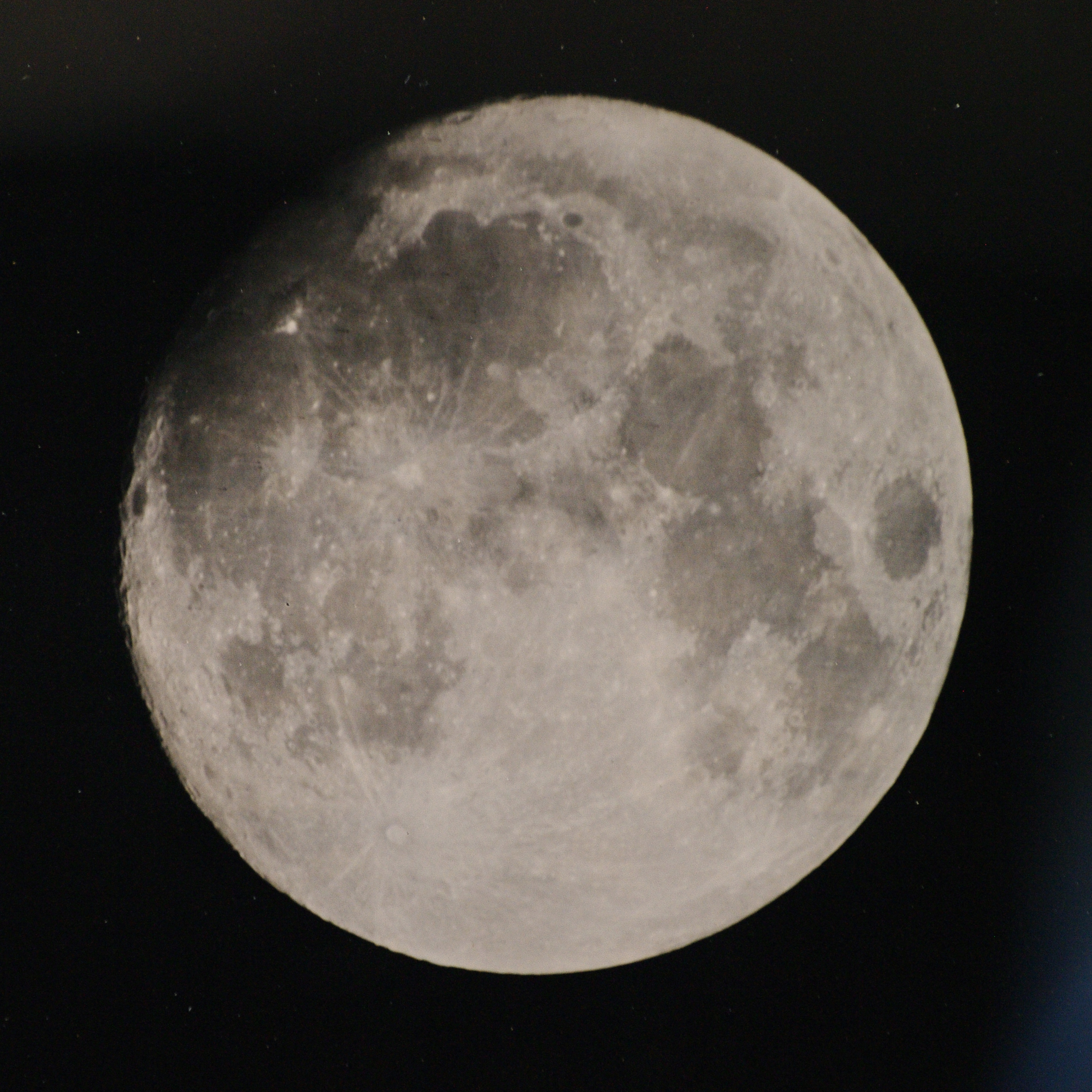
Astronomy Picture of the Day - 21st Century Wet Collodion Moon
APOD.NASA.gov ^
| 2 Jan, 2021
| Image Credit & Copyright: Mike Smolinsky
Posted on 01/02/2021 2:55:26 PM PST by MtnClimber
Explanation: In the mid 19th century, one of the first photographic technologies used to record the lunar surface was the wet-plate collodion process, notably employed by British astronomer Warren De la Rue. To capture an image, a thick, transparent mixture was used to coat a glass plate, sensitized with silver nitrate, exposed at the telescope, and then developed to create a negative image on the plate. To maintain photographic sensitivity, the entire process, from coating to exposure to developing, had to be completed before the plate dried, in a span of about 10 to 15 minutes. This modern version of a wet-plate collodion image celebrates lunar photography's early days, reproducing the process using modern chemicals to coat a glass plate from a 21st century hardware store. Captured last November 28 with an 8x10 view camera and backyard telescope, it faithfully records large craters, bright rays, and dark, smooth mare of the waxing gibbous Moon. Subsequently digitized, the image on the plate was 8.5 centimeters in diameter and exposed while tracking for 2 minutes. The wet plate's effective photographic sensitivity was about ISO 1. In your smart phone, the camera sensor probably has a photographic sensitivity range of ISO 100 to 6400 (and needs to be kept dry ...).
TOPICS: Astronomy; Astronomy Picture of the Day; Science; Society
KEYWORDS: apod; astronomy; nasa; science
To be added or removed from the Astronomy Picture of the Day ping list please send me a request via "Private Reply" (Mail).
For more detail go to the link and click on the image for a high definition image. You can then zoom by moving the magnifying glass over an area and then clicking. The side bars will move the zoomed area over the photograph.
To: MtnClimber
2
posted on
01/02/2021 2:55:52 PM PST
by
MtnClimber
(For photos of Colorado scenery and wildlife, click on my screen name for my FR home page.)
To: 21stCenturion; 21twelve; 4everontheRight; abb; AFB-XYZ; America_Right; Art in Idaho; AZ .44 MAG; ...
Pinging the APOD list.
🪐 🌟 🌌
3
posted on
01/02/2021 2:57:00 PM PST
by
MtnClimber
(For photos of Colorado scenery and wildlife, click on my screen name for my FR home page.)
To: MtnClimber
That’s the crater Tycho in the lower left. Pretty big one too. About 50 miles across and 2 miles deep.
4
posted on
01/02/2021 3:00:08 PM PST
by
jmacusa
(If we're all equal how is diversity our strength?)
To: MtnClimber
The striations are very interesting...the clarity of the image is amazing. Thank you.
5
posted on
01/02/2021 3:04:41 PM PST
by
Bodega
To: Bodega
oh, dang, I forgot to ask. It it symmetrically round? The area between 9 and 11 dented?
6
posted on
01/02/2021 3:06:11 PM PST
by
Bodega
bookmarking to see if better minds than mine can tie Uranus and wet collodion together.
7
posted on
01/02/2021 3:37:19 PM PST
by
pdunkin
(I apologize for this post )
To: All
8
posted on
01/02/2021 3:38:39 PM PST
by
Kid Shelleen
(Beat your plowshares into swords. Let the weak say I am strong)
To: jmacusa
It looks like a lot of material was ejected in that strike.
9
posted on
01/02/2021 3:41:07 PM PST
by
MtnClimber
(For photos of Colorado scenery and wildlife, click on my screen name for my FR home page.)
To: MtnClimber
The visible rays just mean it’s a recent impact. They disappear over time, not due to erosion but other impacts. With no atmosphere, micro meteors occur frequently all over the surface.
To: MtnClimber
Yes. As you can see the object that impacted broke into three pieces that left very distinct trails. Tycho is relatively ‘’young’’ in that it was formed about 108 million years ago.
11
posted on
01/02/2021 4:33:00 PM PST
by
jmacusa
(If we're all equal how is diversity our strength?)
To: jmacusa
Wow. Didn’t know it waa THAT big. Makes the Beringer Crater in TZ seem like a pinprick.
12
posted on
01/02/2021 4:38:23 PM PST
by
AFB-XYZ
(Option 1 -- stand up. Option 2 -- bend over.)
To: AFB-XYZ
Makes the Beringer Crater in TZ seem like a pinprick. Do you mean: The Barringer Crater in AZ?
Regards,
13
posted on
01/03/2021 3:54:49 AM PST
by
alexander_busek
(Extraordinary claims require extraordinary evidence.)
To: alexander_busek
Gahhh! Oh hell, I even typed the state wrong. And I hadn’t even had my first beer of the evening. Heh.
14
posted on
01/03/2021 5:00:10 AM PST
by
AFB-XYZ
(Option 1 -- stand up. Option 2 -- bend over.)
To: AFB-XYZ
And I hadn’t even had my first beer of the evening morning.Let's be honest...
Regards,
15
posted on
01/03/2021 7:41:06 AM PST
by
alexander_busek
(Extraordinary claims require extraordinary evidence.)
To: alexander_busek
16
posted on
01/03/2021 8:18:37 AM PST
by
AFB-XYZ
(Option 1 -- stand up. Option 2 -- bend over.)
To: MtnClimber
I hate it when my Collodion gets Wet....................
17
posted on
01/04/2021 5:22:06 AM PST
by
Red Badger
(TREASON is the REASON for the SLEAZIN'.................................)
To: MtnClimber
18
posted on
01/04/2021 5:22:50 AM PST
by
Red Badger
(TREASON is the REASON for the SLEAZIN'.................................)
To: Red Badger
That nitrocellulose used in collodion would be put to better use for reloading ammo!
19
posted on
01/04/2021 5:28:41 AM PST
by
MtnClimber
(For photos of Colorado scenery and wildlife, click on my screen name for my FR home page.)
To: MtnClimber
Or TNT.....................
20
posted on
01/04/2021 5:34:18 AM PST
by
Red Badger
(TREASON is the REASON for the SLEAZIN'.................................)
Disclaimer:
Opinions posted on Free Republic are those of the individual
posters and do not necessarily represent the opinion of Free Republic or its
management. All materials posted herein are protected by copyright law and the
exemption for fair use of copyrighted works.
FreeRepublic.com is powered by software copyright 2000-2008 John Robinson