Posted on 12/31/2020 11:21:33 AM PST by Red Badger
Harm prevention policies must take the long view, say experts.
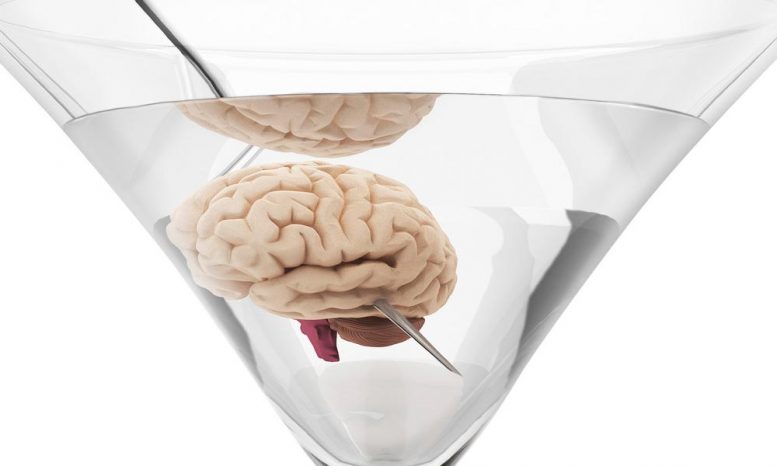
The evidence for the harmful effects of alcohol on brain health is compelling, but now experts have pin-pointed three key time periods in life when the effects of alcohol are likely to be at their greatest.
Writing in The BMJ in December 2020, researchers in Australia and the UK say evidence suggests three periods of dynamic brain changes that may be particularly sensitive to the harmful effects of alcohol: gestation (from conception to birth), later adolescence (15-19 years), and older adulthood (over 65 years).
They warn that these key periods “could increase sensitivity to the effects of environmental exposures such as alcohol” and say harm prevention policies “must take the long view.”
Globally, around 10% of pregnant women consume alcohol, with the rates considerably higher in European countries than the global average, they write.
Heavy alcohol use during pregnancy can cause fetal alcohol spectrum disorder, associated with widespread reductions in brain volume and cognitive impairment. But data suggest that even low or moderate alcohol consumption during pregnancy is significantly associated with poorer psychological and behavioral outcomes in offspring.
In terms of adolescence, more than 20% of 15-19 year olds in European and other high income countries report at least occasional binge drinking (defined as 60 g of ethanol on a single occasion), they add.
Studies indicate that the transition to binge drinking in adolescence is associated with reduced brain volume, poorer white matter development (critical for efficient brain functioning), and small to moderate deficits in a range of cognitive functions.
And in older people, alcohol use disorders were recently shown to be one of the strongest modifiable risk factors for all types of dementia (particularly early onset) compared with other established risk factors such as high blood pressure and smoking.
Although alcohol use disorders are relatively rare in older adults, the authors point out that even moderate drinking has been shown to be linked to a small but significant loss of brain volume in midlife, although further studies are needed to test whether these structural changes translate into functional impairment.
Furthermore, demographic trends may compound the effect of alcohol use on brain health, they write. For example, women are now just as likely as men to drink alcohol and experience alcohol related harms, and global consumption is forecast to rise further in the next decade.
The effects of the covid-19 pandemic on alcohol use and related harms are unclear, but alcohol use increased in the long term after other major public health crises, they add.
As such, they call for an integrated approach to harm reduction at all ages.
“Population based interventions such as guidelines on low risk drinking, alcohol pricing policies, and lower drink driving limits need to be accompanied by the development of training and care pathways that consider the human brain at risk throughout life,” they conclude.
Reference:
“Lifetime perspective on alcohol and brain health” by Louise Mewton, Briana Lees and Rahul Tony Rao, 4 December 2020, BMJ. DOI: 10.1136/bmj.m4691
There’s a little something from Delbert about cutting out devices except for one...
“I’ll drink to that!”
Darn you. I wanted to say that.
How else would my right arm get any exercise?
On second thought...don’t answer that.
I will drink to that
Cliff Clavin from Cheers explains his Buffalo Theory of drinking:
"Well ya see, Norm, it’s like this… A herd of buffalo can only move as fast as the slowest buffalo. And when the herd is hunted, it is the slowest and weakest ones at the back that are killed first. This natural selection is good for the herd as a whole, because the general speed and health of the whole group keeps improving by the regular killing of the weakest members.In much the same way, the human brain can only operate as fast as the slowest brain cells. Excessive intake of alcohol, as we know, kills brain cells. But naturally it attacks the slowest and weakest brain cells first. In this way, regular consumption of beer eliminates the weaker brain cells, making the brain a faster and more efficient machine. That’s why you always feel smarter after a few beers."
Well, with the muslim hordes in Europe, we can expect to see this problem disappear in time.
Soaked in brandy.

Happy New Year fellow blue stater.....🤪
Fortunately, I did not have to pay for my glass.
...even moderate drinking has been shown to be linked to a small but significant loss of brain volume...
~~~~~~~~~~~~~~~~~~~~~~
Well yeah, a smaller brain but a smarter brain, per the Cliff-from-Cheers herd thinning theorem.
Back in my drinking days I ran with a Former Marine who would tell all that he had killed more brain cells with alcohol than the ‘target’ would have in a lifetime.
Of course we did believe in the one drink a day policy-
even though I quit in 1990 I am ‘caught up’ to 2050...<:<: <:
Ha! I completely understand. I used to love your screennamesake as per beer, but learned to love the IPAs through brute force. It took months before they quit tasting like liquid rubber bands. Happy New Year!
And this hasn't been a very good year for "expert" opinions.
Sit home, six feet apart, no booze, with your mask on and watch the stupid ball drop in that giant rat infested shithole NYC.
Now Happy New year Y’all!
LOL, You need to move.....
Senior, pregnant, binge drinkers have been warned. Carry on.
Muslims drink alcohol, but not around other Muslims. They’re like Baptists in this respect...................
Correct..............
Disclaimer: Opinions posted on Free Republic are those of the individual posters and do not necessarily represent the opinion of Free Republic or its management. All materials posted herein are protected by copyright law and the exemption for fair use of copyrighted works.