Skip to comments.
Intermittent Fasting — Why Not Eating (for a Bit) Could Work for Weight Loss and Health
CBC ^
| Jan 24, 2020
Posted on 01/28/2020 12:03:22 PM PST by nickcarraway
Fasting seems to works at least as well as other diets, and may have additional health benefits
Intermittent fasting may be more than just the latest weight loss trend. According to a recent review published in the New England Journal of Medicine, it could have health benefits that go beyond those usually associated with losing weight.
"We think in the long run that an intermittent fasting eating pattern will likely decrease one's risk for stroke and possibly Alzheimer's and Parkinson's diseases," said Mark Mattson, one of the co-authors of the review. Mattson is adjunct professor of neuroscience at Johns Hopkins University.
Intermittent fasting is less about what or how much you eat, and more about a change in eating patterns. Two popular regimes that were the subject of the research included in the journal review, are known as "5:2" and "16:8."
5:2, involves eating normally five days a week, then only eating 500 calories on the other two days. 16:8, involves only eating in an eight hour window, then fasting for 16 hours.
Both groups of women, in our studies, lost the same amount of weight over a six month period. But the women on 5:2 intermittent fasting lost more belly fat and (...) had a stronger anti-diabetic effect - Mark Mattson, Johns Hopkins University
Mattson said the journal asked him to review the latest science because so many patients were asking their doctors about fasting and it was important to inform doctors about the subject.
He said this was also a good time to summarize the evidence because research on humans about intermittent fasting has been accumulating recently. As a result "we can be pretty confident and saying that what we're finding in rats and mice applies pretty well to humans."
The review found that beyond weight loss, other benefits to intermittent fasting could include increased physical and mental energy, improved learning and memory, reduced anxiety levels and improved mood. There was also evidence that fasting can suppress inflammation, improve blood sugar regulation and could even help extend life expectancy.
Intermittent fasting for weight loss
A number of studies have shown that intermittent fasting is at least as effective as standard diets in losing weight in those who are overweight or obese. But Mattson said simply reducing overall caloric intake throughout the day, as is done in many diets, doesn't give the same health benefits as fasting.
He said when he compared the results from an intermittent fasting regime to a regular diet where the same number of calories were cut, he saw differences.
"Both groups of women, in our studies, lost the same amount of weight over a six month period. But the women on 5:2 intermittent fasting lost more belly fat and they had significantly greater improvement in insulin sensitivity — that is, they had a stronger anti-diabetic effect," he said.
When people get used to intermittent fasting, they do tend to eat less, but Mattson said it doesn't appear to be the reason for the health benefits.
"We studied a strain on mice that when we put them on alternate day fasting, on the day they do have food, they eat pretty much twice as much food as they would normally eat," he said.
Over the long term, those mice weren't eating more calories, yet they lost more fat and showed metabolic and neurological improvements.
Benefits of fasting due to insulin
Toronto-based kidney specialist, Dr. Jason Fung — author of The Obesity Code, said the logic behind intermittent fasting was clear.
"Most people who are trying to lose weight have hundreds of thousands of calories of body fat sitting on their body. So why won't your body use it? If you don't eat, your body will use it," said Fung.
We started intermittent fasting and within like a month, all three were off of their insulin. And sort of like, within six months, all of them were classified as non-diabetic. - Dr. Jason Fung, author of The Obesity Code
Fung says the key to fasting is in the insulin response. Insulin levels are increased by the body when we eat. He describes insulin as a train conductor that can switch tracks to redirect where the body gets its energy.
When insulin levels are up, the track switches to burning fuel from the food we just ate. When insulin levels are down, it switches tracks and starts burning fuel from our liver and fat stores.
After this switch to burning fat happens, our cells can go into "repair and maintenance" mode, a process called autophagy, that starts recycling components of cells that aren't functioning well.
Therapeutic fasting for chronic illnesses Evidence is accumulating that fasting, sometimes for longer periods of time, can have significant benefits for people with a range of serious and chronic illnesses.
In 2018, Fung published a paper in the British Medical Journal Case Reports about three individuals he treated with intermittent fasting for Type 2 diabetes, which they had for 20-25 years.
"We started intermittent fasting and within a month, all three were off of their insulin," he said. "Within six months, all of them were classified as non-diabetic." These patients fasted for 24 hour periods several times a week.
Dr. Andreas Michalsen, the director and head of Charity Medical University's Department for Integrative and Internal medicine in Berlin, studies extended fasting — from five to 30 days, and treats up to 1500 people a year for chronic illnesses
He said the longer a person fasts, the more potent the improvements in mechanisms such as blood glucose regulation and autophagy seem to be.
"The signals are higher when you perform prolonged fasting," said Michalsen.
Fung cautions that longer fasts come with increased risk and require medical supervision.
Critics of intermittent fasting worry it can promote disordered eating, so researchers caution that anyone prone to eating disorders should avoid fasting.
Mattson added that those with a body mass index below 18, at the low end of the normal range, should also refrain from intermittent fasting, as well as children under 17 years old and women who are breastfeeding or who might be pregnant.
We asked the Canadian Society of Endocrinology and Metabolism about treating Type 2 diabetes with intermittent fasting. This was their statement in response:
"Type 2 diabetes is a chronic metabolic condition which has many contributing factors, including family history, age, nutrition, exercise, certain medications and other factors. No single factor is entirely responsible for the development of diabetes. Consequently, the approach to management involves multifactorial intervention. Nutrition is a major factor in the management of diabetes. However, nutrition management should be individualized and no single diet is appropriate for every individual. A number of diets, including Mediterranean style diet, Nordic style diet, DASH diet or vegetarian style diet have all been shown to help manage diabetes and reduce cardiovascular risk factors. Intermittent fasting can improve glycemic control, but also can place individuals at risk for low blood sugars (hypoglycemia), particularly if they are taking insulin. The Canadian Society of Endocrinology and Metabolism (CSEM) recommends that people with diabetes, especially if using insulin, check with their health care provider before considering any major change in their diet.
TOPICS: Health/Medicine; Religion; Science
KEYWORDS: autophagy; diabetes; dsj02; fasting; health; intermittentfasting; lowcarbdiet
Navigation: use the links below to view more comments.
first previous 1-20, 21-40, 41-60, 61-80, 81-87 next last
To: 1Old Pro
The Drinking Man’s Diet
By Allan Sherman
Oh, I’m on the Drinking Man’s Diet,
It came from a book I was loaned.
It’s really terrific and quite scientific
And I’m half stoned.
For breakfast some cornflakes and vodka,
But cornflakes have carbohydrates
So I don’t eat those fattening cornflakes,
I eat the vodka straight.
Drink, drink, everyone drink
It’s not as bad as we used to think.
With every Manhattan your stomach will flatten,
So drink, drink, drink.
The Air Force invented this diet,
A fact which they hotly deny.
Of course they deny it, cause this is the diet
That got the Air Force high.
For lunch you can have three martinis,
What better lunch is there than that?
But caution: do not eat the olives,
Cause olives make you fat.
Drink, drink, everyone drink;
It’s not as bad as we used to think.
If pounds you would burn off, then turn on your Smirnoff,
And drink, drink, drink.
21
posted on
01/28/2020 12:22:58 PM PST
by
Ken H
To: Quality_Not_Quantity
22
posted on
01/28/2020 12:24:07 PM PST
by
dp0622
(Radicals, racists Don't point do you at me I'm a small town white boy Just tryin' to make ends meet)
To: nickcarraway
I lost 50+ last year doing 16:8 IF and no sugar. I was pre-diabetic and on BP meds. Both those conditions have resolved. My numbers have never been better. I highly recommend it. After about 3 weeks it becomes habit and the initial misery goes away lol
To: nickcarraway
Fasting didn’t work so well in Ethiopia.
24
posted on
01/28/2020 12:37:17 PM PST
by
umgud
To: nickcarraway
Fasting puts you in danger of losing muscle mass. The body cannibalizes itself when it runs out of glucose.
25
posted on
01/28/2020 12:39:33 PM PST
by
jonrick46
(Cultural Marxism is the cult of the Left waiting for the Mothership.)
To: bk1000
I’m a 55 year old male, been doing IF for two years, down 138# as of last week. So... yep! Works great for guys. :) I’m a huge proponent of IF just because of all the benefits: more energy, sharper mental acuity, better moods, all that fun stuff!
I do a 20:4 myself, and cut down on the carbs (run 30%) just because carbs don’t keep me full or satisfy me as much as veggies do. The important thing is to pick a time window for eating that works for you and your lifestyle then go for it! Good luck!
To: umgud
Fasting and starving aren’t the same thing.
To: House Atreides
That’s exactly the schedule I’ve started with this week. I’m never really hungry in the morning so the challenge is to not snack after supper. I find I go to bed earlier, which is a better habit anyway. Hope it works for weight loss. Dropping 15 lbs would be nice.
To: nickcarraway
Periods of fasting are a lot better than a steady low calorie approach, for many reasons.
Chronic low calories slows metabolism, and wastes away muscle.
Periodic fasting triggers the genes (AMPK and mTOR) that turn on the clean up processes of the cells (autophagy and apoptosis).
A lot of people nowadays never go low enough for long enough to ever activate their cleanup processes. A lot of gunk, like clogged arteries, and Alzheimer's-related plaques in the brain, build up.
When the liver glycogen reserve is used up (which is basically enough to get you through the night's sleep), then the first triggers start activating. Since it takes about 4 hours for the stomach to empty, and then roughly 8 more for glycogen to run down, 12 hours is the minimum fast to see any effect. If you had eaten heavily the day before, it takes longer, and there is variation between individuals. Generally, if you go 16 hours without taking in calories (8 hour daily eating window), the effect is pretty reliable, and more pronounced.
If you go for 2-3 days below your nutrient sensors (AMPK for sugar, mTOR for protein) threshold, then very significant cleanup is triggered, and other powerful effects on clearing senescent cells and stimulating fresh stem cells start to activate.
Then when you re-feed, you can better grow some new muscle, organ and bone - including skin.
Gradually losing weight through periodic fasting methods tends to tighten up the skin dramatically more (over time) than the chronically low calorie approach, which can result in curtains of drooping skin, that have to be surgically removed.
Most tissues in the body are similarly refreshed, as the clean up processes selectively target the diseased and damaged cells and materials (inside and between cells, as well as among the cells themselves), system-wide.
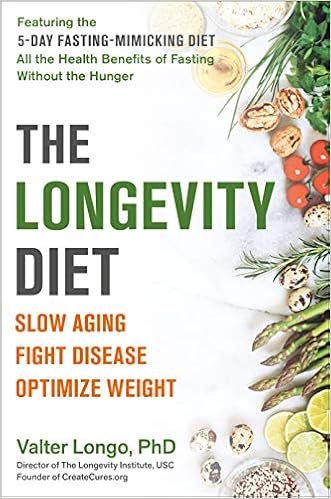
This is documented persuasively in the Longevity Diet (https://www.amazon.com/Longevity-Diet-Disease-Optimize-Weight/dp/0525534091/ref=sr_1_3?keywords=the+Longevity+Diet&qid=1580244178&sr=8-3 ), by Valter Longo, a top researcher in the field.
29
posted on
01/28/2020 12:49:09 PM PST
by
BeauBo
To: nickcarraway
No matter, I was only joking.
30
posted on
01/28/2020 12:49:46 PM PST
by
umgud
To: jonrick46
Calorie restriction/starvation risks muscle loss. Numerous studies show that properly done fasting does not cause muscle loss because there is no calorie restriction on non fasting days.
31
posted on
01/28/2020 12:49:49 PM PST
by
Valpal1
To: Wayne07
The benefits are absolutely profound...even in lab mice that don’t chose their diet.
32
posted on
01/28/2020 12:50:05 PM PST
by
erlayman
(yw)
To: Retrofitted
That's encouraging.
I'm down 17# for the year. No eating after my supper meal, and only coffee in the morning until about 11. I'm counting calories too and keeping an online diary of it. Fascinating how much junk you just shovel in without thinking about it. I go for long walks about 4x a week.
I have a goal of dropping #75. According to the calorie counting program, I was only supposed to drop 2# a week.
It is definitely about the choices we make.
33
posted on
01/28/2020 1:02:08 PM PST
by
tenger
(If you don't stay on 'em, they'll get it wrong. - Joe Soucheray)
To: BeauBo
Why fast mimick when you can actually fast and not buy overpriced packaged meals?
Fasting is free.
34
posted on
01/28/2020 1:03:41 PM PST
by
Valpal1
To: al_c
I did a program and my church last year called Exodus 90. Part of that is holding to the Catholic fast/abstinence days. Nice!
I definitely find it easier to fast for religious reasons than for waistline reasons. Unfortunately the fasting rules have gotten watered down over the last 100 years, so I'm slowly trying to get back to the older tradition. Lent especially....man that was tough the first few times but adopting the old Communion fast helped prepare me for it, and I am getting used to a much stricter Lent now. Not quite early medieval strict, mind you, without butter and eggs, but still! :)
Here's the traditional regimen:
Every Sunday fast before Communion...no food from midnight until after Mass (for us around 11:30 AM).
Only one meal every single day of Lent from Ash Wednesday to Holy Saturday (Sundays excepted).
Fast on Fridays (and in some places Wednesdays) of Advent.
Fast on every vigil of a feast day (Christmas, All Hallows, Immaculate Conception, etc.).
Fast on the Ember Days (Wed., Fri., Sat.) at every change of season.
This all makes for some interesting situations with people who don't observe....like every single Halloween is now a fast day, and this year my birthday is on Ash Wednesday. :D
35
posted on
01/28/2020 1:03:41 PM PST
by
Claud
To: nickcarraway
I have switched to a keto/paleo diet and gluten free.
What I have noticed is:
No more heartburn. No more scary and dangerous digestive problems in the middle of the night.
Reduce mid-section (one of the most surprising effects!) - like seriously deflated to the point where I can fit into my size 38 waist pants again, after beginning to struggle with 40.
No more joint pain. I used to use a cane.
More Energy!!
REDUCED HUNGER!!!! I used to snack constantly because I was always feeling hungry. Now, I sometimes forget to eat all day long.
You DO NOT need to buy expensive (and horrible) gluten free special foods...
Just eat the following:
Eggs (I have chickens, I boil eggs by the dozen)
veggies
meat, meat, and more meat.
cheese- especially fermented cheeses
oatmeal or cheerios for breakfast
I do eat potato chips, chocolate, fruits, cashews, quinoa, all that stuff- but just for variety and snacks. My main diet is above.
Biggest change was stopping bread and wheat 100%- you have to be absolutely religious about that for one whole month to see if it helps you.
I loved bread but I don’t even miss it anymore. I see a big burger on TV and just looking at that huge bu makes me nauseous.
If you want to start eat:
egg omelet for breakfast. Alternate with cheerios or oatmeal
fruit for lunch or steak salad
meat and potatoes for dinner with some green veggie like spinach or broccoli
after 2 weeks you will probably be down to 2 meals a day
eggs/cheerios for breakfast
steak or chicken salad for dinner
It is NOT expensive to eat steak every day since you will quickly realize you are good with 1/3rd of a steak. I usually only go through 4 steaks and 4 chicken breasts per month.
36
posted on
01/28/2020 1:04:46 PM PST
by
Mr. K
(No consequence of repealing obamacare is worse than obamacare itself.)
To: tenger
what was your starting weight?
37
posted on
01/28/2020 1:05:04 PM PST
by
central_va
(I won't be reconstructed and I do not give a damn.)
To: BeauBo
38
posted on
01/28/2020 1:05:06 PM PST
by
Claud
To: central_va
39
posted on
01/28/2020 1:09:05 PM PST
by
tenger
(If you don't stay on 'em, they'll get it wrong. - Joe Soucheray)
To: Valpal1
Calorie restriction/starvation risks muscle loss. Numerous studies show that properly done fasting does not cause muscle loss because there is no calorie restriction on non fasting days. Calorie restriction does not cause muscle loss unless you have exhausted your fat stores. This is one of these 1950's fallacies like cholesterol causes heart disease or high fat diets will make you fat. There is catabolization of muscle tissue only if there is not sufficient adipose tissue to fuel your body through gluconeogenesis. Makes sense eveloutionarily. Why would a human 50k years ago, in times of scarse food resources lose his muscle stores and lose the ability to walk, run, and take down a animal for food. See makes no sense. This fallacy is still hung onto by overweight people who just can't skip a mean or have any self control to put down the high carb foods..."But, but...you'll lose muscle tissue if you skip breakfast..pass the high fiber cereal Jane....."
Read Jason Fung's PhD. book The Obesity Code. The guy is the authority on Fasting and explains it. They have done exhaustive studies dispelling this myth.
40
posted on
01/28/2020 1:09:59 PM PST
by
pburgh01
(Negan all the MSM)
Navigation: use the links below to view more comments.
first previous 1-20, 21-40, 41-60, 61-80, 81-87 next last
Disclaimer:
Opinions posted on Free Republic are those of the individual
posters and do not necessarily represent the opinion of Free Republic or its
management. All materials posted herein are protected by copyright law and the
exemption for fair use of copyrighted works.
FreeRepublic.com is powered by software copyright 2000-2008 John Robinson