 We previously wrote about the deer sterilization program run by the Village of Cayuga Heights, NY, which borders the Cornell University campus and has large deer and faculty populations.
 Posted on 10/20/2014 2:19:58 PM PDT by Zakeet
We previously wrote about the deer sterilization program run by the Village of Cayuga Heights, NY, which borders the Cornell University campus and has large deer and faculty populations.
After years of bitter debate, Cayuga Heights decided that the deer population would be controlled through sterilization at enormous expense:
The Cayuga Heights deer control was mostly a failure because, you know, deer move around, so sterilizing deer in Cayuga Heights didn’t prevent new deer from coming into the area. And so on.
As far as I know, no plans were made to control the faculty population.
I was not aware that Cornell had its own sterilization program. I was aware that deer are all over campus.
The Cornell sterilization program combined on-campus sterilization with off-campus/regional hunting.
What possibly could go wrong? As the Washington Post reports (via Ithaca Voice), just about everything, Trying to limit the number of deer, with surprising results:
A few years ago, the central campus of Cornell University in Ithaca, N.Y., was facing a problem familiar to the Washington area. An infestation of white-tailed deer had pushed the community to the limits of its tolerance. Without natural predators, the deer reproduced until their numbers were limited only by the availability of food….Typically, a deer boom is dealt with through hunting. Often, sharpshooting riflemen or archers are brought in to bait the animals into zones where shots can safely be taken. Cornell’s administrators took a different approach: They chose to experiment with sterilizing many of the wild deer on campus while allowing periodic hunting on nearby land — and the result was something that nobody anticipated.
Let’s stop right there.
Basically, if you were a deer on campus, you got so much free birth control it would make Sandra Fluke jealous; if you were a deer off campus, you got served for dinner.
WaPo continues:
The method of contraception chosen by Cornell was tubal ligation, in which a doe’s fallopian tubes are either blocked or severed. This prevents egg cells from reaching the uterus. Unlike chemical forms of birth control, tubal ligation is typically permanent and avoids the expense of capturing the same deer each year to maintain their infertility. At a cost of roughly $1,200 per deer, 77 does were captured and sterilized though tubal ligation. (Without the help of the Cornell University College of Veterinary Medicine, the costs would have been higher.)
No, this is not The Onion. This is my world. Deer get tubal ligations at a cost of $1200 per pop, and I can’t even get good coffee in the faculty lounge.
Wapo goes on, result was fewer does, but more bucks looking for does:
… Initially, the results looked promising: The birth rate went down. Yet the total number of deer remained steady over five years. Something strange was going on.“Sterilization definitely did decrease fawn numbers, and doe numbers also declined,” Curtis said. “However, these population reductions were offset by increasing buck numbers. There were about 100 deer on campus when we started, and there were still about 100 deer [five years later].”
Something was attracting an abnormal number of mature bucks. Cornell’s biologists realized that the reproductive cycle of the ligated does was to blame.
Under normal conditions, all female whitetails go into heat within several weeks of each other and become pregnant at around the same time. This annual event is called the rut. However, if a doe is not impregnated during the rut, it will enter heat again the following month and again the month after that. Because the ligated does were unable to become pregnant, they continued to produce chemical signals of readiness to reproduce — signals that can attract bucks from miles away.
Duh.
Cornell found a quick solution. The one that every single Legal Insurrection reader would have suggested at the get-go, without any cost:
After examining Curtis’s data, Cornell’s administration rethought its nonviolent approach to deer population control. The tubal ligation program was halted, replaced by a program of nuisance deer removal using a combination of professional trapping and hunting by volunteer archers.“In winter 2013, our camera survey indicated there were 100 to 105 deer on campus. After the nuisance deer removal in 2014, the camera estimate was about 58 deer remaining on campus,” Curtis said.
“Because the bow hunters are volunteers, this program is essentially cost-neutral,” Blossey said.
But remember, this is the Ivy League. So we’re always looking for complicated, expensive replacements for effective, lost cost solutions:
Cornell has begun experiments with ovary removal in deer, but Curtis’s team has already had a surprise.“Three of the 77 tubal ligation deer gave birth to fawns,” Curtis said. “These three deer were recaptured and later were given ovariectomies. All three had ovarian anomalies, and at least one experienced tissue regrowth post-surgery.”
Even after the surgical removal of their ovaries, one of the three deer became pregnant again. It is not clear how this was possible. One supposition is that some ovarian tissue may have escaped the scalpel and regrown into a functioning ovary.
Stop. STOP.
Just stop.
STOP!!!!!
I've heard all the sob stories from the Bambi-lovers for over sixty years. But the sad truth is when there are too many deer, crops get ruined, more deer-related diseases spread, and there are more deer-human motor vehicle accidents i.e. more human fatalities.
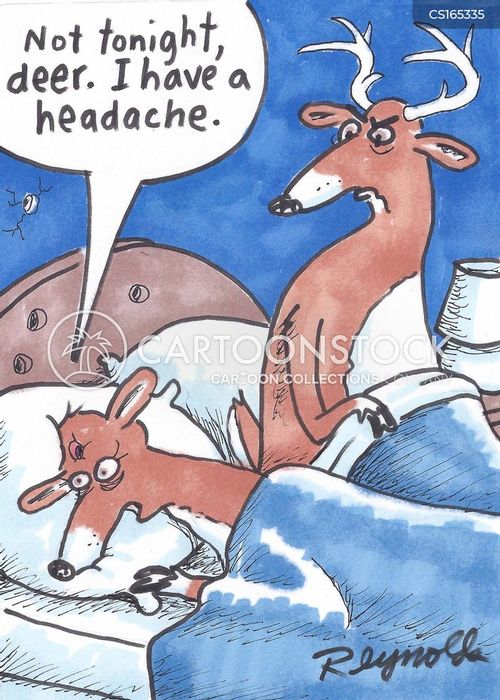
So now we know how to attract a lot of trophy bucks
P.I.V. is always rape!
LOL! Too bad they botched the catch, spay and release on the deer population. It would have been even more beneficial with the faculty population.
"No. No deer. Butt too high, run too fast."
When deer population dwindles in one area, deer overpopulating a neighboring area will walk over to the little-used green pastures and take right over again. Europe did to America - white man did to the red man.
We are in Cincinnati.
Part of tuition is lunch here.
But parochial schools certainly seem like a great deal!
ping
Could feed the homeless
If you’d like to be on or off this Outdoors/Rural/wildlife/hunting/hiking/backpacking/National Parks/animals list please FR mail me. And ping me is you see articles of interest.
If you’d like to be on or off this Outdoors/Rural/wildlife/hunting/hiking/backpacking/National Parks/animals list please FR mail me. And ping me is you see articles of interest.
And of course the deer are not “suffering” when they chop them open and rip out their insides to perform this lunacy.
The Lawrence Radiation Lab is located at the top of the UC Berkeley campus. Every year, the campus and the Lab grounds would be inundated with deer the day before hunting season started in the surrounding area — before a single shot was fired. The deer knew that they were safe on campus and at the Lab.
You’re Hostile!
Chief: Hos style, dog style, any style!
Oh Dear!
Chief: ........Then your comment.
Glad somebody knew the joke...
“And of course the deer are not “suffering” when they chop them open and rip out their insides to perform this lunacy.”
Considering that a kick from a deer can mean a sharp hoof in one side and out the other, rest assured the vet students made certain Bambi was totally under before starting the operation.
Disclaimer: Opinions posted on Free Republic are those of the individual posters and do not necessarily represent the opinion of Free Republic or its management. All materials posted herein are protected by copyright law and the exemption for fair use of copyrighted works.