Posted on 09/22/2026 6:38:09 AM PDT by Cronos
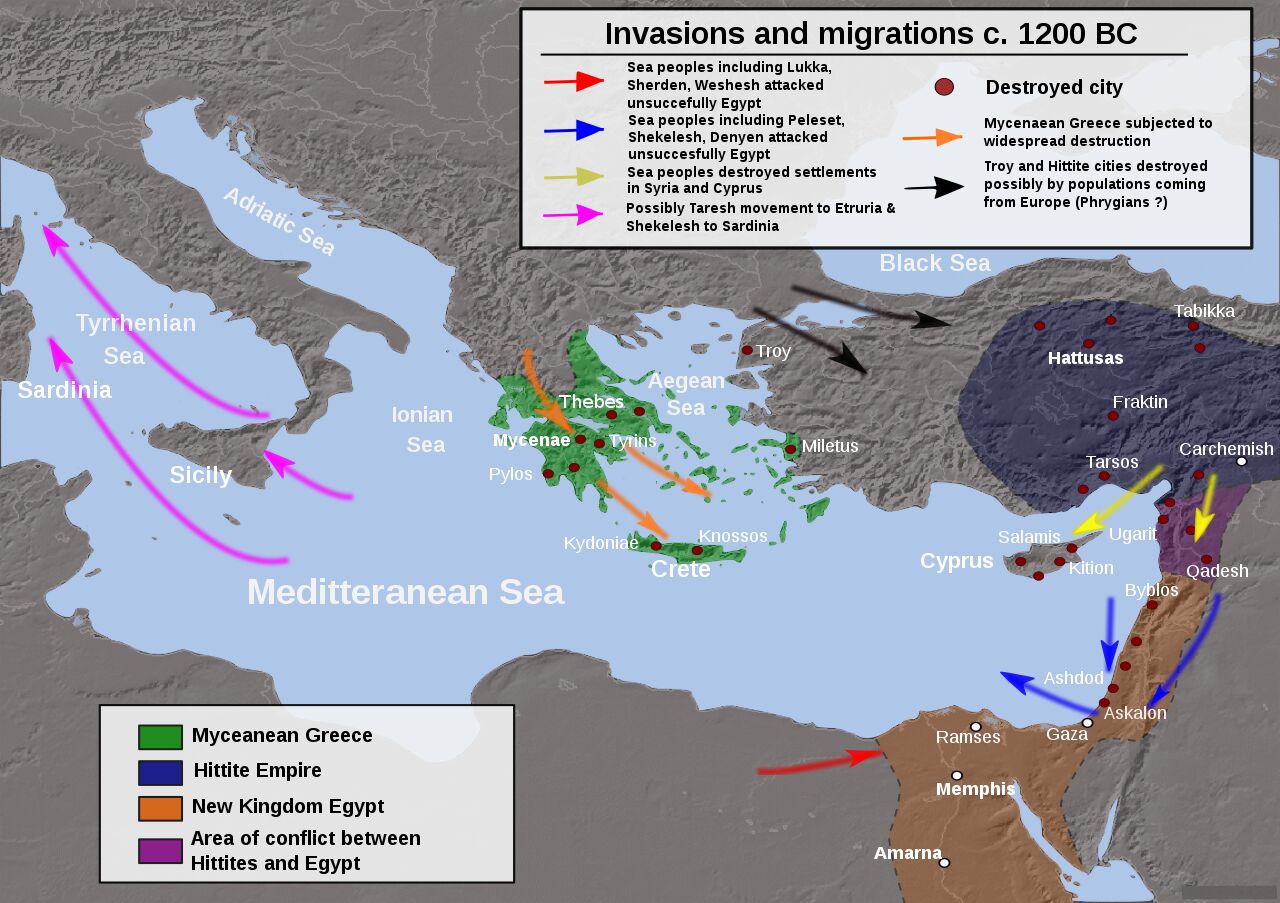
The Sea Peoples were a confederation of allied tribes who attacked Egypt, Anatolia and the Levant in the early-to-mid-12th century b.c.e. The identity and origin of this confederation’s members have been of great interest to archaeologists and historians for decades.
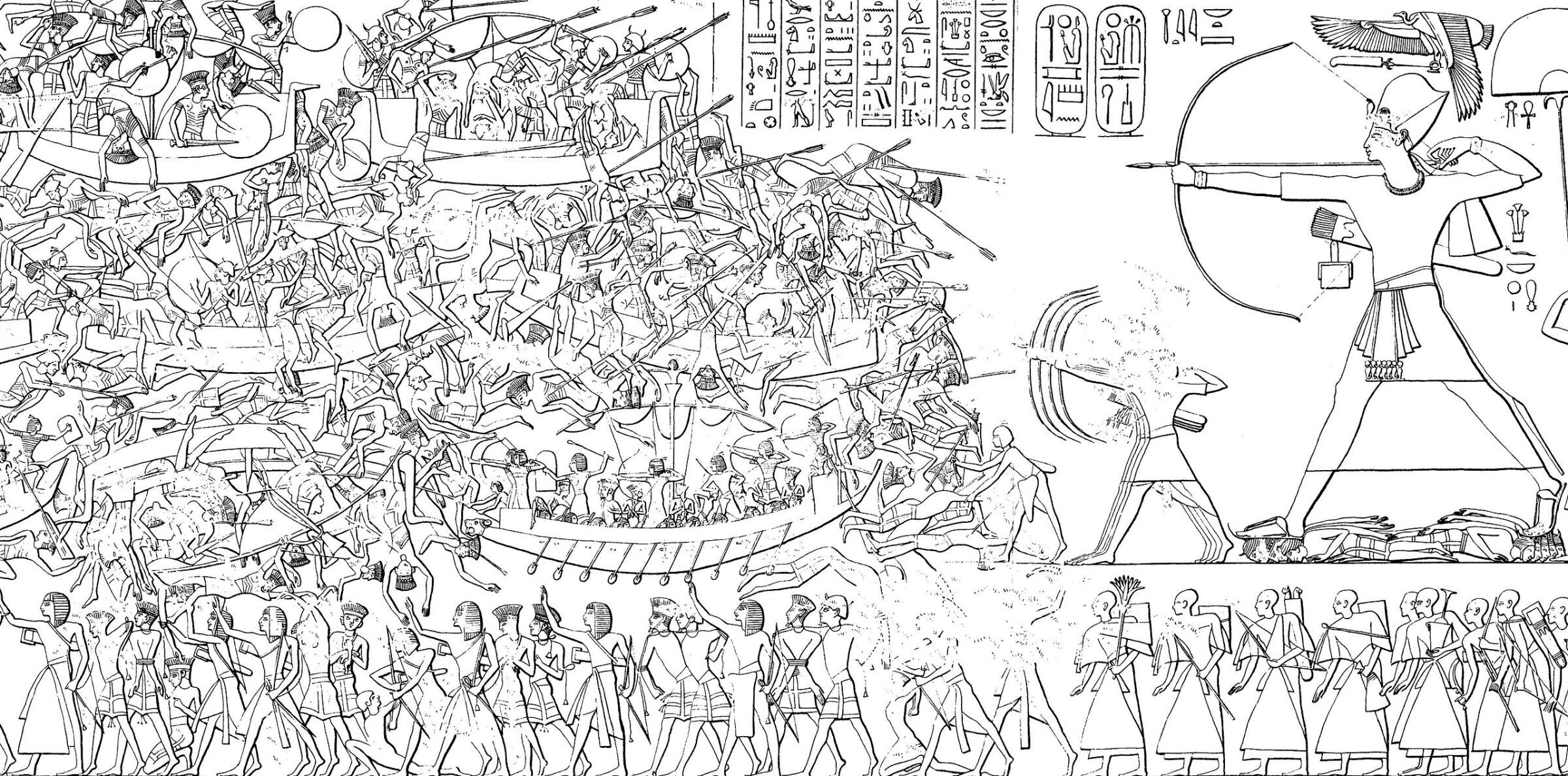
Ramses iii listed the names of the Sea Peoples on the walls of his temple at Medinet Habu. Of particular interest among these tribes is one named Denyen. The identity and origins of the Denyen people have been much debated.
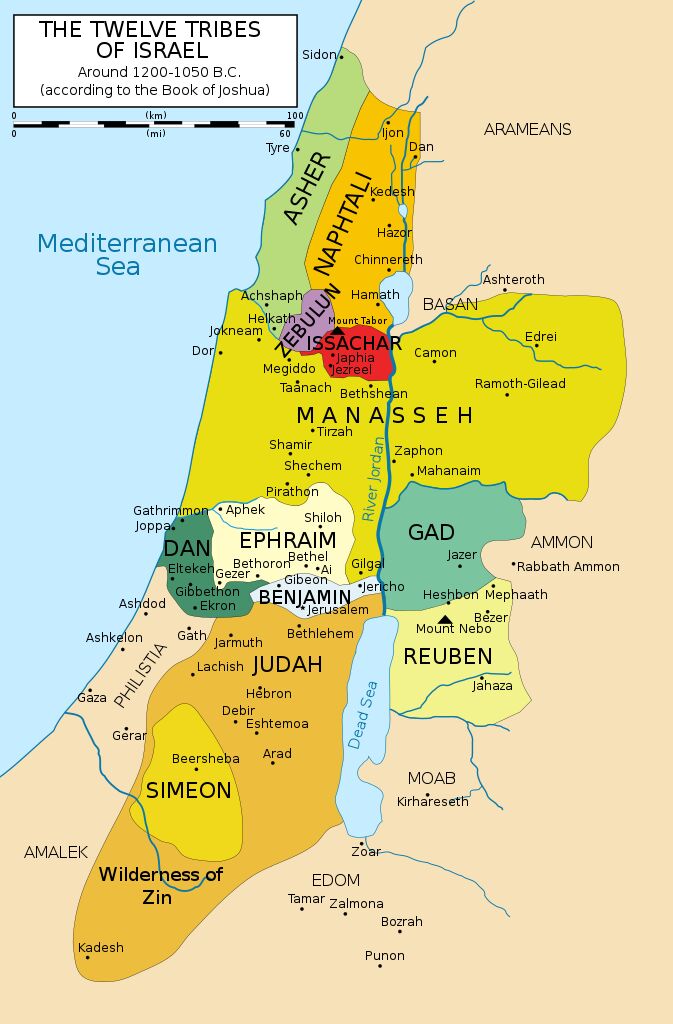
Israeli archaeologist Yigael Yadin proposed that these Denyen people were linked with the Israelite tribe of Dan (see his 1968 journal article, “And Dan, Why Did He Remain in Ships,” here). Historians like Othniel Margalith (The Tribe of Dan: The Sea Peoples in the Bible), Matthew Korpman (“Dan Shall Judge: The Danites and Iron Age Israel’s Connection with the Denyen Sea People”) and Michael Astour have agreed with Yadin’s proposition.
In Judges 5:17, Deborah laments, “why did Dan remain in ships?”
Jacob said of Dan, “Dan shall be a serpent in the way” (verse 17). The term “in the way” can also be translated “path.” Thus the scripture could also be translated, “Dan shall be a serpent’s path.”
Also notable is the peculiar fact that the tribe of Dan is one of the largest Israelite tribes at the time of the Exodus (Numbers 2, 26), yet sometime following the period of the judges, the tribe almost entirely disappears from view. Could this have been due to their seafaring endeavors?
(Excerpt) Read more at armstronginstitute.org ...
Probably a little bit of everything explains their disappearance.
I read something once that argued that the Hivites mentioned in the Bible as one of the non-Israelite peoples in the Land of Canaan could be Achaeans (Achaiwoi). I don’t know if that has met any acceptance.
The Sea Peoples are a fascinating mystery. One would think we’d know more about them since they had such a huge impact ushering in a “dark age.” AI has been used to predict gaps in ancient texts and pull seemingly unrelated information together. Perhaps it can be used to shed light on who the sea people were too.
"WHERE'S WAL-DON?"..............
That’s always a neat rabbit hole to go down!
The more the evidence is pulled together, the more it appears there may be a real historical signal hiding underneath the Dan–Denyen theory—but probably not in the simple form of “the Denyen were the tribe of Dan.”
A more interesting possibility emerges: the biblical Danites may have absorbed, merged with, or partly descended from a maritime population that the Egyptians knew as the Denyen.
That would explain several peculiarities about Dan without requiring us to force every Denyen reference into an Israelite framework.
There probably wasn't a civilization called the Sea Peoples. The term itself is modern. Egyptian sources instead name individual peoples who sometimes operated together.
Ramesses III's Year 8 inscription lists a coalition including the:
Earlier Egyptian records also mention groups such as the Sherden, Teresh, Ekwesh and Lukka.
So rather than imagining one invading empire, it may be more accurate to picture a Late Bronze Age population avalanche.
Around 1250–1150 B.C., the eastern Mediterranean system was coming apart. Mycenaean palace states collapsed. The Hittite Empire disappeared. Ugarit was destroyed. Long-distance trade networks broke down. Evidence points toward drought, famine, political rebellions and warfare occurring simultaneously.
Increasingly, historians view the Bronze Age collapse as a cascading systems failure rather than something caused solely by the Sea Peoples.
The groups we call the Sea Peoples may therefore have included:
That last point matters.
The Medinet Habu scenes include women and children being transported in ox carts. These were not simply Viking-style raiding parties. At least some of these groups were migrating populations.
Ancient DNA from early Iron Age Ashkelon also provides a tantalizing clue. Researchers detected a short-lived influx of European-related ancestry during precisely the period traditionally associated with the arrival of the Philistines.
That ancestry was rapidly absorbed into the local population.
This may provide a useful model for understanding what happened with some of the other Sea Peoples as well.
The Egyptian spelling conventionally rendered Denyen is approximately dnjn.
Scholars have long noticed several possible connections.
One is Danuna.
An entity called Danuna was already known to Egypt and the Levant before the great Sea Peoples attacks. The Amarna correspondence of the 14th century B.C. mentions a king of Danuna.
Later Iron Age inscriptions from Cilicia use the Phoenician form dnnym, commonly rendered Danunians. The Karatepe bilingual inscription connects these people with the region of Adana in Cilicia.
That is important because it suggests that Danuna or Denyen may represent a recognizable population whose roots extended well before the great upheavals around 1200 B.C.
Another possibility is the Greek Danaoi, or Danaans, one of the names used by Homer for the Greeks who fought at Troy.
Some scholars have therefore suggested:
Denyen → Danaoi → Aegean Greeks
Others favor:
Denyen → Danuna → Cilicia and Adana
Those possibilities may not actually be mutually exclusive.
Cilicia sat directly on the cultural fault line between Anatolia, Cyprus, Syria and the Aegean. Greek traditions themselves preserve stories of Aegean figures establishing settlements in this broader region.
Israeli archaeologist Yigael Yadin's proposal was much more sophisticated than merely noticing two similar names.
Yadin noticed that Dan behaves strangely in the biblical material.
His famous 1968 article was titled:
“And Dan, Why Did He Remain in Ships?”
The phrase comes directly from Judges 5:17:
“Gilead abode beyond Jordan: and why did Dan remain in ships?”
That is an extraordinary statement about an Israelite tribe.
Dan isn't described shepherding sheep.
Dan isn't described farming.
Dan is associated with ships.
This comes from the Song of Deborah, which many scholars consider one of the oldest portions of biblical Hebrew literature.
Even researchers who reject a direct Denyen-Dan identification have taken this maritime reference seriously.
One interpretation is that members of Dan may have worked as sailors, maritime laborers or commercial personnel aboard vessels operating near the Mediterranean coast.
That would fit their geography.
The original territory associated with Dan lay along the Mediterranean coastal corridor, immediately beside areas later dominated by the Philistines.
Then something unusual happens.
Judges 18 describes part of the tribe abandoning that region, traveling far north, conquering the city of Laish, and renaming it Dan.
In other words, the Bible itself preserves the memory of a significant Danite migration.
That occurred within the same broad historical horizon in which displaced Mediterranean populations were appearing throughout the Levant.
And Tel Dan itself has produced intriguing evidence.
Excavations of Iron Age I levels, roughly 1200–950 B.C., indicate a culturally diverse population showing influences associated with:
Over time, this mixed population appears to have developed a new local identity.
That does not prove Yadin's theory.
But it significantly changes the question.
Instead of asking:
“Were the Danites really Greek Sea Peoples?”
Perhaps the better question is:
“Was Dan a composite Israelite tribe that incorporated a substantial maritime, Aegean or Cilician population during the upheavals around 1200 B.C.?”
That possibility is much harder to dismiss.
Dan — Denyen — Danuna
Names alone prove very little, but this is not a random resemblance appearing thousands of miles apart.
All three names appear within the same eastern Mediterranean cultural world.
Judges 5:17 may be the strongest biblical clue.
Dan wasn't merely located near the Mediterranean.
The text assumes that its audience understood why Dan might be associated with ships.
“Why did Dan remain in ships?”
That is an unusual description for an Israelite tribe and strongly suggests some kind of maritime tradition.
Dan originally occupied precisely the area where incoming Sea Peoples and indigenous Canaanite and Israelite populations would have interacted.
The Samson narratives are particularly interesting in this regard.
Samson's stories occur almost entirely along the Danite–Philistine frontier.
He is constantly interacting with Philistines.
Yadin believed these stories might preserve memories of an unusual relationship between Dan and the Aegean-connected peoples settling along the coast.
Judges 18 preserves the story of a tribal migration.
The biblical writers remembered that part of Dan had once lived somewhere else and later relocated far to the north.
That is exactly the kind of population movement occurring throughout the eastern Mediterranean during the transition from the Bronze Age to the Iron Age.
This may ultimately become the most important piece of evidence.
Iron Age I Dan does not look culturally isolated.
It looks like a community in which Canaanite, Egyptian, Syrian, Cypriot and Aegean elements came together.
That is almost exactly what we would expect if displaced Sea Peoples were gradually absorbed into an existing Levantine population.
The most serious problem is chronology.
Danuna appears before the Sea Peoples crisis.
The Amarna correspondence refers to Danuna roughly two centuries before Ramesses III's famous battle scenes.
That means the Denyen probably were not a people suddenly created around 1200 B.C.
But that does not necessarily destroy a connection with Dan.
Instead, it could suggest that Danuna or Denyen represented an older maritime population from Cilicia or the Aegean, some portion of which later entered Canaan and merged with people who became known as Danites.
That is actually more historically realistic than imagining an entire foreign nation suddenly transforming into an Israelite tribe.
Ethnic identities during this period were not clean nation-states.
People migrated, intermarried, changed languages and adopted new religious and cultural identities.
The Philistines provide a useful comparison.
DNA suggests that foreign populations arrived in Philistia, yet within only a few generations their distinctive European-related genetic signal was heavily diluted through intermarriage with Levantine populations.
Something similar could have happened with Dan.
Genesis 49:17 says:
“Dan shall be a serpent by the way, an adder in the path, that biteth the horse heels, so that his rider shall fall backward.”
The Hebrew word translated “way” can indeed mean road, path or route.
However, grammatically the passage is not saying:
“Dan shall be a serpent's path.”
The more natural meaning is that Dan is compared to a serpent positioned beside or upon the road, lying in wait to strike.
So while serpent symbolism may be worth exploring, I would not use Genesis 49:17 as primary evidence for a Danite migration trail.
The maritime evidence in Judges 5 is considerably stronger.
It is also important to clarify that the tribe of Dan does not completely vanish from the Bible.
Dan becomes less visible as a tribal entity, but Danites still appear later.
For example, 1 Chronicles 12:35 records:
“And of the Danites expert in war twenty and eight thousand and six hundred.”
The northern city of Dan also becomes extremely important.
Jeroboam I famously establishes one of his major religious centers there:
“And he set the one in Bethel, and the other put he in Dan.”
Dan also appears in prophetic contexts, including Ezekiel's description of a future tribal allotment.
So Dan does not disappear completely.
Instead, something more subtle seems to happen:
The tribal identity becomes less prominent while the geographic identity of Dan becomes extremely important.
That could potentially reflect assimilation.
If we attempt to reconstruct the evidence without assuming in advance that either Yadin was correct or incorrect, the following scenario fits surprisingly well.
A people or political population known as Danuna exists somewhere within the Cilician and eastern Mediterranean interaction zone.
They participate in the highly interconnected Late Bronze Age world.
The Late Bronze Age economic and political system begins to fracture.
Populations throughout Anatolia, the Aegean, Cyprus and the Levant become increasingly mobile.
Some become mercenaries, raiders, refugees or migrants.
Groups from this collapsing world participate in the population movements recorded by Egypt.
The Egyptians identify one of these groups as the Denyen.
Rather than returning to their homeland, some settle or become incorporated into populations along the Mediterranean coast.
A portion may have entered the Joppa-Dan coastal region.
Their maritime expertise could help explain the otherwise unusual biblical memory:
“Why did Dan remain in ships?”
These maritime newcomers intermarry with local Canaanite and emerging Israelite populations.
Within several generations, nobody is culturally “pure Denyen.”
They have become part of something new.
They are simply Danites.
Pressure from Philistines and other populations contributes to instability in the coastal Danite territory.
Part of Dan eventually abandons the region.
A Danite group travels north, conquers Laish and establishes the city of Dan.
Archaeology at Tel Dan subsequently reveals precisely the kind of culturally mixed population we might expect:
This is not necessarily a story of Sea Peoples replacing Israelites.
It may be a story of ethnogenesis.
A new population forming out of several older ones.
Historians may have been asking the wrong question for more than a century.
Instead of asking:
“Where did the Sea Peoples come from?”
There may never be one answer.
The Sherden may have originated somewhere different from the Peleset.
The Peleset may themselves have been a mixed population.
The Denyen could have had Cilician roots combined with Aegean connections.
Some groups may originally have served as mercenaries within Late Bronze Age kingdoms before those kingdoms collapsed.
When the political and economic system failed, these populations began moving.
Egypt happened to leave us something remarkably close to photographs carved in stone of one moment in a much larger migration crisis.
The Sea Peoples therefore probably did not single-handedly cause the Bronze Age collapse.
They were simultaneously:
That may explain why identifying them has proven so difficult.
They were not one empire.
They were the human debris field of a collapsing world.
We cannot responsibly say that the Denyen were simply identical to the biblical tribe of Dan.
The evidence does not justify that level of certainty.
But there is enough overlap to take Yigael Yadin's theory seriously.
Several independent streams of evidence point in the same general direction:
None of these facts alone proves the theory.
Together, however, they create an intriguing possibility:
The tribe of Dan may have been a composite Israelite population that incorporated people from the maritime world represented in Egyptian records by the Denyen.
That is a far more defensible argument than simply declaring that “Dan was one of the Sea Peoples.”
And it may ultimately provide one of the best explanations for why the biblical tribe of Dan appears so unusual compared with many of the other tribes of Israel.
Hey Samuel. Its B.C. not b.c.e.
Recall, in the book of Judges, the second to last account, "how the Danites got their priest". Dan was unable to drive out the earlier residents, went looking for somewhere else to live, and eventually exterminated an isolated inland city of Sidonians and settled there.
No.
That may well be true. But don't forget the impact that climate change might have had on the dark age. I don't mean "climate change" like the Democrats with their doomsday cult stuff. I'm talking about real centuries long waves of warming and cooling.
Look at the graph below with the Minoan Warm Period topping out about 3,200 years ago (12th century BC, which is about when the Jews demanded Samuel to anoint them a king and usher in the Era of Kings). That point ended a centuries long warming period (usually meaning higher crop yields, more predictable precipitation, and less deaths by plague) and began the cooling period known as the Greek Dark Age or the Iron Dark Age cooling period.
If it was like other cooling periods that came afterwards (in which there were more people groups with a written language and we know more what life was like in those cooling periods), then it meant lower crop yields, less predictable precipitation, and more deaths by plague. Sometimes kingdoms and empires rise and fall based on who can best adjust to these changing climate conditions.

Graph source: https://andymaypetrophysicist.com/2016/06/22/climate-and-civilization-for-the-past-4000-years/
My other Bible/climate notes:
It looks like the Piora Cooling Period, the sharp decline that ended about 3,500 years ago, ended about the same time that Moses began his ministry (15th century BC). Thus the Era of Kings corresponds with the warming up to the Minoan Warm Period. And the Era of Kings seems to correspond to the Greek Dark Age cooling period (both beginning about 12th century BC). And if you use AI to search for how many famines and droughts were in Genesis before Moses (Piora Cooling Period), how many were in the Era of Judges (Minoan Warming Period), and how many were in the Era of Kings (Greek Dark Age), it seems to correspond with what I said that warming periods are good times from a climate perspective, while cooling periods are bad times.
My theory is that the Greek Dark Age was probably more to do with a cooling period much like the later Dark Age and then later Little Ice Age. During those waves it's more tempting to have mass atrocities because everyone is desperate for survival.
now that is a fabulously detailed and compelling narrative, DWARE!
Thank you!
Good point.
A similar climate change triggered the age of migrations - with the Angles, Jutes and others in the Jutland peninsula finding their lands salted and they being agrarian, had to leave. The Danes and others were more lifestock farmers and took over depopulated land.
The same for the other Germanic tribes moving southward
Wish I could take credit, but that was all ChatGPT.
So stop and think about it: my Anglo and Saxon ancestors had their own tail of tears. It was during the Dark Age cooling period, much like the trail of tears here in the U.S. was during the Little Ice Age cooling period. I'm not justifying it, I'm just saying the temptation to do that to others is higher if your civilization is starving and crop land is at a premium. And I've read that after trying out life in Denmark with it's marshy land (again, during the Dark Age cooling period) the Angles hoped that life in Britannia was better (taking over Celtic land).
Interesting. Thanks for posting.
Bookmark.
For the Huns, I hold to the Xiongnu theory namely that the Zhou dynasty Chinese fought them for century and the Han dynasty finally defeated them by reaching out to the Tocharians in the Tarim Basin (for horses) - defeating the Xiongnu and pushing them west.
The Xiong-nu were I believe proto-Yenisians initially but then merged with Mongolic, Turkic, then Tocharian, Finno-Ugric and Slavic peoples before merging with East Germanics.
The Angles, Jutes and Saxons from Jutland i.e. what is now Denmark, had it good agriculturally until the 4th century. The Germanic homelands along the North Sea coast (modern-day northern Germany, Denmark, and the Netherlands) were severely impacted by climate disruptions. Melting polar ice and changing weather patterns caused rising sea levels, leading to frequent, destructive saltwater flooding in low-lying coastal areas. The recurring floods significantly degraded their environment. The high salt content left behind by seawater made it increasingly difficult to plow the land and grow enough crops to feed their growing populations. Additionally, a broader regional cooling trend contributed to failing crop yields and agricultural instability.
At the same time Britain was left undefended - a perfect target to migrate.
The Danes, who were originally a North Germanic people from southern Sweden and the eastern Danish islands, migrated westward and southward to occupy these territories for a few key reasons:
1. filling the vacuum left by the Jutes and Angles
2. their ability to successfully inhabit and manage the old Anglian territories came down to a centuries-long time gap, a shift in how they used the land, and major leaps in agricultural technology -—> historical records, such as those from the medieval chronicler the Venerable Bede, note that parts of the Angeln peninsula remained virtually abandoned and uncultivated for up to two centuries. This extended break gave the severely flooded coastal ecosystems time to stabilize and recover naturally
3. the Danes and remaining local populations adapted by shifting away from intensive crop farming toward livestock grazing. The coastal marshes and lowlands were converted into rich pasturelands for sheep and cattle, a shift that eventually laid the geographic foundation for the region’s famous dairy farming traditions
4. By the early Viking Age, agricultural technology had advanced significantly with the widespread adoption of the heavy mouldboard plough. The Angles had largely relied on a light, wooden plough (called an ard) that merely scratched the surface of the soil but the Danes The heavy mouldboard plough featured a sharp iron blade that cut deep into the earth and flipped the soil over. This allowed Danish farmers to bury the degraded, salty topsoil and bring up the nutrient-dense, clay-rich soil hidden underneath
5. The Danes recognized that the geography of the abandoned Anglian lands was uniquely suited for commerce rather than just farming. The Angeln peninsula sits at the narrowest point of the neck of Jutland, perfectly bridging the North Sea and the Baltic Sea. Instead of struggling to be purely self-sufficient farmers, the Danes leveraged this location to build Hedeby, which became the largest and wealthiest Viking Age trading hub in Europe. They traded goods across the continent to accumulate wealth, reducing their absolute reliance on local crop yield
Disclaimer: Opinions posted on Free Republic are those of the individual posters and do not necessarily represent the opinion of Free Republic or its management. All materials posted herein are protected by copyright law and the exemption for fair use of copyrighted works.

