
Posted on 05/05/2026 10:00:16 PM PDT by fidelis
“Remain in me, as I remain in you. Just as a branch cannot bear fruit on its own unless it remains on the vine, so neither can you unless you remain in me. I am the vine, you are the branches. Whoever remains in me and I in him will bear much fruit, because without me you can do nothing.” John 15:4–5
Jesus is the source of life and fruitfulness. Yet, too often, we try to bear fruit of our own making. Truly good fruit can only come forth if we remain in Christ, for He is the source of all good fruit in our lives.
Bearing good fruit, meaning performing good works, does not save us by itself. Salvation is a gift of grace through Christ. However, good works, as fruits of grace, reveal the depth of our union with Him and are necessary expressions of a life transformed by God’s love. Just as a healthy vine naturally produces abundant grapes, so too does a soul united to Christ bear abundant spiritual fruit for the glory of God and the good of others. This fruit, above all, is charity—the eternal gift that reflects the presence of Christ in us and draws others to Him.
By analogy, a grapevine produces good grapes when it is healthy and well-nourished. A diseased or poorly nourished vine will produce useless grapes. If we want to make a difference in the world and in the lives of others, we have only one choice: We must remain firmly attached to our Lord, living in Him as He lives in us, so that the spiritual nourishment He provides will produce an abundance of grace in and through us.
Consider the people whom you love. If you could do anything for them, what might it be? You might wish to alleviate all their sufferings, such as a chronic illness, financial struggle, or some heavy cross they bear. While such desires reflect our care for them, even the greatest worldly comforts pale in comparison to the spiritual blessings of faith and divine grace. The greatest good we can do for others is to allow God to use us as instruments of His love, inspiring faith and leading them closer to Him.
The best way to make a difference in others’ lives is to first care for our own souls by ensuring we are united to our Lord. We must pray daily, seeking ways to deepen and extend our time of prayer. We must be faithful to the Commandments, regularly attend Mass, celebrate the Sacrament of Reconciliation, meditate on and read the Scriptures, familiarize ourselves with the lives of the saints, and know the teachings of Christ’s Church. All of this is for two purposes: First, it transforms us and more fully unites us with God. Second, it enables God to produce charity in our lives, which is His way of using us to touch others with His mercy.
In the end, every good we do for another passes away except for the greater good—charity. Charity alone remains throughout our lives and even into the next. In Heaven, the treasure of charity will remain with us and will be our eternal delight, and the recipients of that charity will forever be grateful for the gift God gave them through us.
Reflect today on the charity that is borne from your life and how it affects others. Can you point to concrete ways that God has used you to make a difference in their lives? Especially ponder the works of charity that touch their souls, drawing them closer to our divine Lord. Set your eyes on this goal, for if you do bear good fruit in this way, you will know with certainty that your life is in Christ, and His life is in you.
My Lord the true vine, You and You alone are the source of nourishment in my life. You sustain me and bear the good fruit of charity in my life. Please draw me close to You and live in me so that I can live in You. As You do, please produce an abundance of good fruit and lavish that good fruit—charity—upon others through me. Jesus, I trust in You.
Please keep in mind that this is a Catholic Caucus/Devotional thread for the purpose of prayerful reflection on the Sacred Scriptures and is closed to debate of any kind. Per FR policy on Religion Caucus threads, off-topic, argumentative, and abusive comments are not allowed and will be submitted to the Mods for deletion. Thanks, and God bless you.
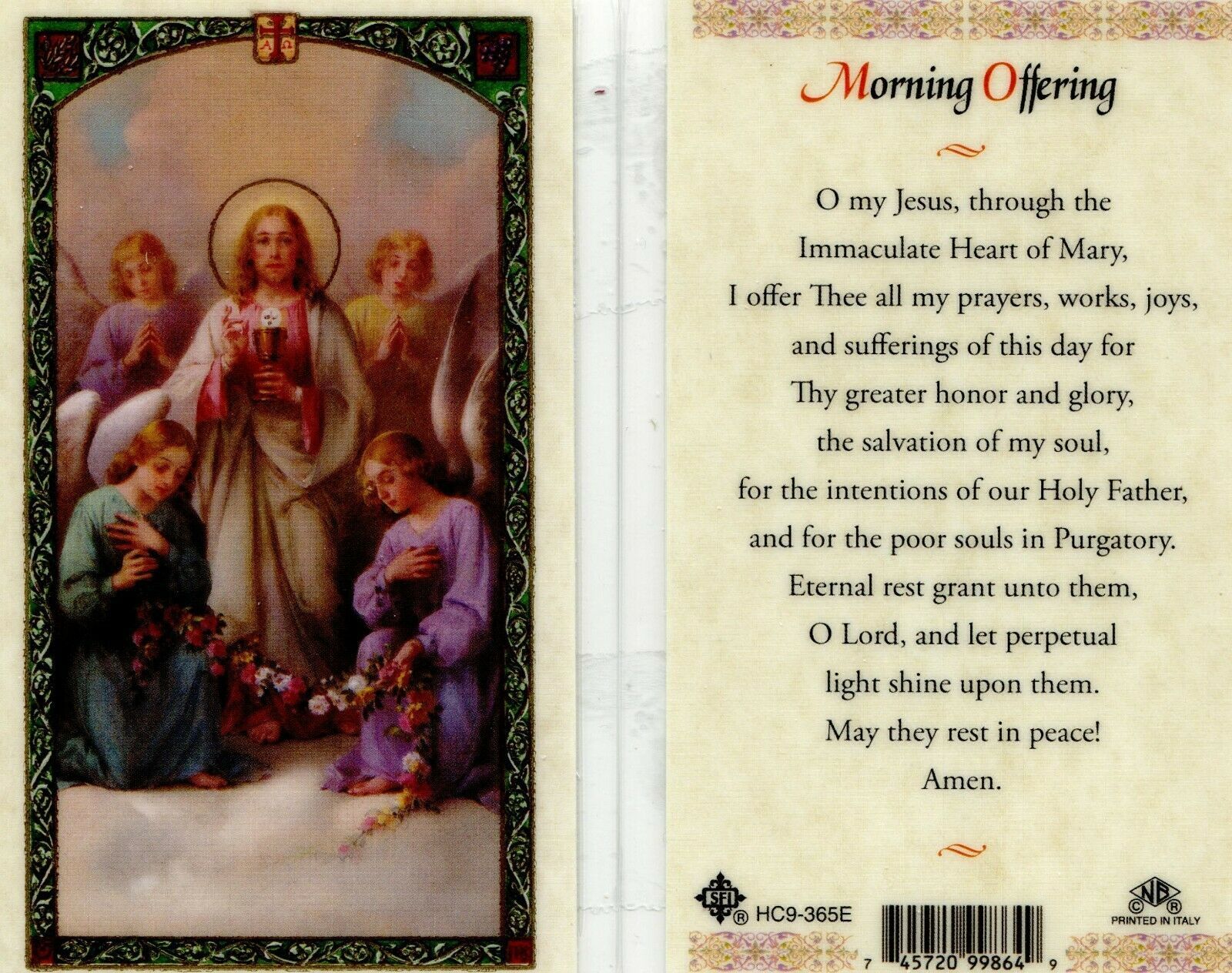
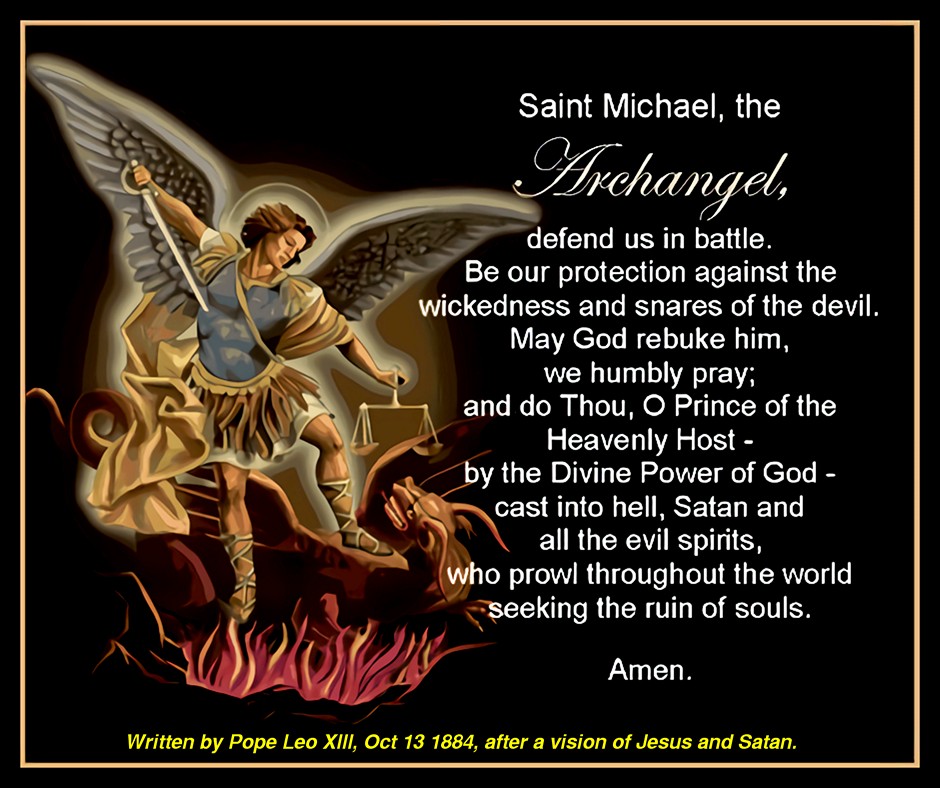
The Month of May is Dedicated to Devotion to Mary, the Mother of God.

“And when Elizabeth heard the greeting of Mary, the babe leaped in her womb; and Elizabeth was filled with the Holy Spirit and she exclaimed with a loud cry, “Blessed are you among women, and blessed is the fruit of your womb! And why is this granted me, that the Mother of my Lord should come to me?” (Luke 1:41-43)

Pope Leo XIV’s prayer intention for the month of May, 2026:
That everyone might have food
Let us pray that everyone, from large producers to small consumers, be committed to avoid wasting food, and to ensure that everyone has access to quality food.

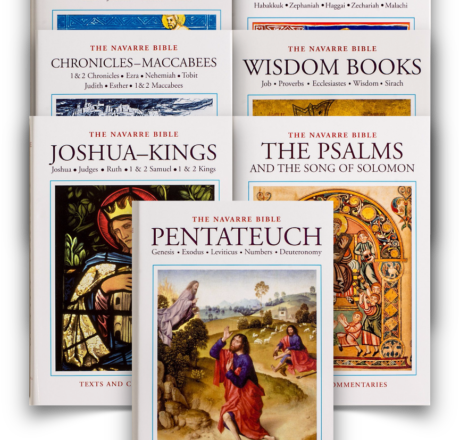
Today’s First Reading
From: Acts 15:1-6
Dissension at Antioch; Judaizers
--------------------------------
[1] But some men came down from Judea and were teaching the brethren, "Unless you are circumcised according to the custom of Moses, you cannot be saved." [2] And when Paul and Barnabas had no small dissension and debate with them, Paul and Barnabas and some of the others were appointed to go up to Jerusalem to the Apostles and the elders about this question.
Paul and Barnabas Go to Jerusalem
---------------------------------
[3] So, being sent on their way by the Church, they passed through both Phoenicia and Samaria, reporting the conversion of the Gentiles, and they gave great joy to all the brethren. [4] When they came to Jerusalem, they were welcomed by the Church and the Apostles and the elders, and they declared all that God had done with them. [5] But some believers who belonged to the party of the Pharisees rose up, and said, "It is necessary to circumcise them, and to charge them to keep the law of Moses."
Peter's Address to the Elders
-----------------------------
[6] The Apostles and the elders were gathered together to consider this matter.
***********************************************************************
Commentary:
1-35. This chapter is the center of Acts, not just because it comes right in the middle of the book but also because it covers the key event as far as concerns the universality of the Gospel and its unrestricted spread among the Gentiles. It is directly linked to the conversion of the pagan Cornelius; here, with the help of the Holy Spirit, all the consequences of that event are drawn out.
Christians with a Pharisee background--"certain men [who] came from James" (Galatians 2;12)—arriving in Antioch, assert categorically that salvation is impossible unless a person is circumcised and practices the Law of Moses. They accept (cf. 11:18) that Gentile converts can be baptized and become part of the Church; but they do not properly understand the economy of the Gospel, that is the "new" way; they think that the Mosaic rites and precepts are all still necessary for attaining salvation. The need arises, therefore, for the whole question to be brought to the Apostles and elders in Jerusalem, who form the government of the Church.
2. Paul and Barnabas are once again commissioned by the Antiochene community to go to Jerusalem (cf. 11:30). Paul says in Galatians 2:2 that this journey to the Holy City was due to a special revelation. Possibly the Holy Spirit inspired him to volunteer for it. "Paul", St. Ephraem writes, "so as not to change without the Apostles' accord anything which they would allow to be done perhaps because of the weakness of the Jews, make his way to Jerusalem to see to the setting aside of the Law and of circumcision in the presence of the disciples: without the Apostles' support they [Paul and Barnabas] do not want to set them aside" ("Armenian Commentary, ad loc".).
4. This does not mean that all the members of the Church were present to receive Paul: the whole Church was morally present in those brethren who attend the gathering and particularly in the Apostles and elders.
5. "Party": the Greek and the New Vulgate both literally say "heresy". However, in this context the word is not pejorative. It is a correct use of language in view of the religious exclusivity and separateness practiced by the Pharisees: they saw themselves as, and in fact were, the rightful representatives of post-exilic Judaism (cf. note on Acts 13:15). The Pharisees mentioned here were Christians who in practice still lived like Jews.
6-21. The hierarchical Church, consisting of the Apostles and elders or priests, now meets to study and decide whether baptized Gentiles are obliged or not to be circumcised and to keep the Old Law. This is a question of the utmost importance to the young Christian Church and the answer to it has to be absolutely correct. Under the leadership of St. Peter, the meeting deliberates at length, but it is not going to devise a new truth or new principles: all it does is, with the aid of the Holy Spirit, to provide a correct interpretation of God's promises and commandments regarding the salvation of men and the way in which Gentiles can enter the New Israel.
This meeting is seen as the first general council of the Church, that is, the prototype of the series of councils of which the Second Vatican Council is the most recent. Thus, the Council of Jerusalem displays the same features as the later ecumenical councils in the history of the Church: a) it is a meeting of the rulers of the entire Church, not of ministers of one particular place; b) it promulgates rules which have binding force for all Christians; c) the content of its decrees deals with faith and morals; d) its decisions are recorded in a written document--a formal proclamation to the whole Church; e) Peter presides over the assembly.
According to the "Code of Canon Law" (can. 338-341) ecumenical councils are assemblies--summoned and presided over by the Pope--of bishops and some others endowed with jurisdiction; decisions of these councils do not oblige unless they are confirmed and promulgated by the Pope. This assembly at Jerusalem probably took place in the year 49 or 50.
From: John 15:1-8
The Vine and the Branches
-------------------------
(Jesus said to His disciples,) [1] "I am the vine, and My Father is the vinedresser. [2] Every branch of mine that bears no fruit, He takes away, and every branch that does bear fruit He prunes that it may bear more fruit. [3] You are already made clean by the word which I have spoken to you. [4] Abide in Me, and I in you. As the branch cannot bear fruit by itself, unless it abides in the vine, neither can you, unless you abide in Me. [5] I am the vine, you are the branches. He who abides in Me, and I in him, he it is that bears much fruit, for apart from Me you can do nothing. [6] If a man does not abide in Me, he is cast forth as a branch and withers; and the branches are gathered, thrown into the fire and burned. [7] If you abide in Me, and My words abide in you, ask whatever you will, and it shall be done for you. [8] By this My Father is glorified, that you bear much fruit, and so prove to be My disciples."
***********************************************************************
Commentary:
1. This comparison of the chosen people with a vine was used in the Old Testament: Psalm 80 speaks of the uprooting of the vine in Egypt and its re-planting in another land; and in Isaiah's Song of the Vineyard (5:1-7) God complains that despite the care and love He has lavished on it, His vineyard has yielded only wild grapes. Jesus previously used this imagery in His parable about the murderous tenants (Matthew 21:33-43) to signify the Jew's rejection of the Son and the calling of the Gentiles. But here the comparison has a different, more personal meaning: Christ explains that He Himself is the true vine, because the old vine, the original chosen people, has been succeeded by the new vine, the Church, whose head is Christ (cf. 1 Corinthians 3:9). To be fruitful one must be joined to the new, true vine, Christ: it is no longer a matter of simply belonging to a community but of living the life of Christ, the life of grace, which is the nourishment which passes life on to the believer and enables him to yield fruits of eternal life. This image of the vine also helps understand the unity of the Church, Christ's mystical body, in which all the members are intimately united with the head and thereby are also united to one another (1 Corinthians 12:12-26; Romans 12:4-5; Ephesians 4:15-16).
2. Our Lord is describing two situations: that of those who, although they are still joined to the vine externally, yield no fruit; and that of those who do yield fruit but could yield still more. The Epistle of St. James carries the same message when it says that faith alone is not enough (James 2:17). Although it is true that faith is the beginning of salvation and that without faith we cannot please God, it is also true that a living faith must yield fruit in the form of deeds. "For in Christ Jesus neither circumcision nor uncircumcision is of any avail, but faith working through love" (Galatians 5:6). So, one can say that in order to produce fruit pleasing to God, it is not enough to have received Baptism and to profess the faith externally: a person has to share in Christ's life through grace and has to cooperate with Him in His work of redemption.
Jesus uses the same verb to refer to the pruning of the branches as He uses to refer to the cleanness of the disciples in the next verse: literally the translation should run: "He cleanses him who bears fruit so that he bear more fruit". In other words, He is making it quite clear that God is not content with half-hearted commitment, and therefore He purifies His own by means of contradictions and difficulties, which are a form of pruning, to produce more fruit. In this we can see an explanation of the purpose of suffering: "Have you not heard the Master Himself tell the parable of the vine and the branches? Here we can find consolation. He demands much of you for you are the branch that bears fruit. And He must prune you `ut fructum plus afferas": to make you bear more fruit'.
"Of course: that cutting, that pruning, hurts. But, afterwards, what richness in your fruits, what maturity in your actions" (St J. Escriva, "The Way", 701).
3. After washing Peter's feet Jesus had already said that His Apostles were clean, though not all of them (cf. John 13:10). Here, once more, He refers to that inner cleansing which results from accepting His teachings. "For Christ's word in the first place cleanses us from errors, by instructing us (cf. Titus 1:9) [...]; secondly, it purifies our hearts of earthly affections, filling them with desire for Heavenly things [...]; finally, His word purifies us with the strength of faith, for `He cleansed their hearts by faith' (Acts 15:9)" (St. Thomas Aquinas, "Commentary on St. John, in loc.").
4-5. Our Lord draws more conclusions from the image of the vine and the branches. Now He emphasizes that anyone who is separated from Him is good for nothing, like a branch separated from the vine. "You see, the branches are full of fruit, because they share in the sap that comes from the stem. Otherwise, from the tiny buds we knew just a few months back, they could not have produced the sweet ripe fruit that gladdens the eye and make the heart rejoice. Here and there on the ground we may find some dry twigs, lying half-buried in the soil. Once they too were branches of the vine; now they lie there withered and dead, a perfect image of barrenness: `apart from Me, you can do nothing'" (St J. Escriva, "Friends of God", 254).
The life of union with Christ is necessarily something which goes far beyond one's private life: it has to be focused on the good of others; and if this happens, a fruitful apostolate is the result, for "apostolate, of whatever kind it be, must be an overflow of the interior life" (St. J. Escriva, "Friends of God", 239). The Second Vatican Council, quoting this page from St. John, teaches what a Christian apostolate should be: "Christ, sent by the Father, is the source of the Church's whole apostolate. Clearly then, the fruitfulness of the apostolate of lay people depends on their living union with Christ; as the Lord Himself said: `He who abides in Me, and I in him, he it is that bears much fruit, for apart from Me you can do nothing'. This life of intimate union with Christ in the Church is maintained by the spiritual helps common to all the faithful, chiefly by the active participation in the Liturgy. Laymen should make such a use of these helps that, while meeting their human obligations in the ordinary conditions of life, they do not separate their union with Christ from their ordinary life; but through the very performance of their tasks, which are God's will for them, actually promote the growth of their union with Him" ("Apostolicam Actuositatem", 4).
6. If a person is not united to Christ by means of grace he will ultimately meet the same fate as the dead branches--fire. There is a clear parallelism with other images our Lord uses--the parables of the sound tree and the bad tree (Matthew 7:15-20), the dragnet (Matthew 13:49-50), and the invitation to the wedding (Matthew 22:11-14), etc. Here is how St. Augustine comments on this passage: "The wood of the vine is the more contemptible if it does not abide in the vine, and the more glorious if it does abide....For, being cut off it is profitable neither for the vinedresser nor for the carpenter. For one of these only is it useful--the vine or the fire. If it is not in the vine, it goes to the fire; to avoid going to the fire it must be joined to the vine" ("In Ioann. Evang.", 81, 3).
Christ is King.
Disclaimer: Opinions posted on Free Republic are those of the individual posters and do not necessarily represent the opinion of Free Republic or its management. All materials posted herein are protected by copyright law and the exemption for fair use of copyrighted works.


