
Painting of George Whitefield preaching.
Posted on 04/02/2026 11:59:17 PM PDT by Nateman
A Great Awakening
A movie about a preacher who was very influential just before the American Revolution and his friendship with Benjamin Franklin. This is movie is true art, an inspiring spiritual journey though time that is a very uplifting experience to watch.
(Excerpt) Read more at youtu.be ...
Painting of George Whitefield preaching.
Charlie Kirk before there was a Charlie Kirk.

A statue of George Whitefield that once stood at the University of Pennsylvania. It has since been removed because his way of thinking was no longer approved of by our modern thought police.
Unlike John Wesley (founder of Methodism), who was a staunch abolitionist, Whitefield actually campaigned to legalize slavery in Georgia. Whitefield argued that if he treated his slaves well and preached the Gospel to them, the institution itself was permissible.
He also split with John Wesley over strict Calvinistic predestination.
The reason for his statue's removal was that Whitefield was a lead lobbyist for the introduction of slavery into the colony of Georgia.
When James Oglethorpe founded Georgia in 1732,
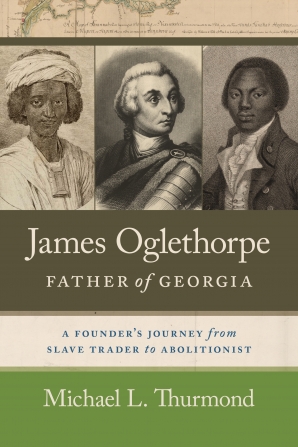
he envisioned it as a "social experiment." It was intended to be a haven for the "worthy poor" and debtors from England. The Trustees of Georgia banned slavery, along with rum and lawyers. They believed that if the settlers owned slaves, they would become "lazy" and that a large population of enslaved people would pose a military risk (since Georgia was a "buffer state" against Spanish Florida). The Trustees wanted small-scale farmers growing silk and grapes, tasks they believed white settlers should do themselves to remain industrious.
Whitefield arrived in Georgia in the late 1730s to establish the Bethesda Orphanage. The orphanage was expensive to run, and the local economy was struggling. Whitefield observed that the neighboring colony of South Carolina was booming with wealth from rice and indigo—industries powered by enslaved labor. Whitefield argued that white settlers could not survive the heat and labor of the Georgia swamps. He concluded that the orphanage would fail unless Georgia adopted the South Carolina model.
He famously told the Trustees that Georgia would never be prosperous until "negroes were allowed."
Georgia is the only one of the original 13 colonies that successfully banned slavery for a significant period of time (nearly 20 years), and Whitefield was a primary architect of that ban’s destruction.
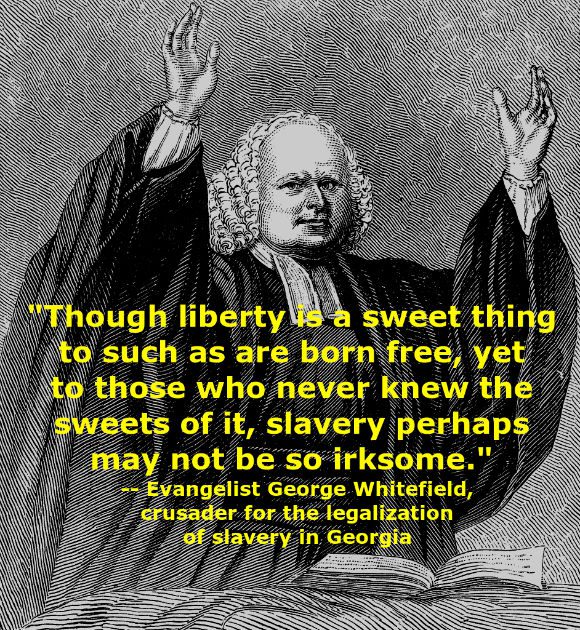
the man responsible for the "Great Awakening"—a movement that emphasized the equal need for all souls to be saved—was the same man who ensured the legal foundations of human chattel slavery in the deep South
Thank you
I agree. I’m looking forward to it.
Waiting on one to be done about Jonathan Edwards.
The truth is that Slavery was once the normal and expected part of Civilization. It was Christian beliefs that finally brought most of it to an end even if some Christians still clung to it . Trying to erase our past is necessary for the bad guys to win here in America.
The thing is, this guy in the article was not of “Christian beliefs that finally brought most of slavery to an end”
He was a preacher who preached the equality of man but then campaigned to force Georgia to become a slave state
Disclaimer: Opinions posted on Free Republic are those of the individual posters and do not necessarily represent the opinion of Free Republic or its management. All materials posted herein are protected by copyright law and the exemption for fair use of copyrighted works.