Free Republic
Browse · Search
Religion
Topics · Post Article

Skip to comments.

A Mysterious Word in the Lord’s Prayer
Archdiocese of Washington ^ | 12-13-17 | Msgr. Charles Pope

Posted on 12/14/2017 7:43:06 AM PST by Salvation

A Mysterious Word in the Lord’s Prayer

December 13, 2017

Pope Francis recently made news by indicating a preference for translating the phrase “lead us not into temptation” as “do not let us fall into temptation.” He did not say that the English rendering should be changed, only that He was supportive of a recent similar change made to the French translation. I have written on that issue here, but in this post I would like to explore another difficult element in the Our Father.

Within the Lord’s prayer is a mysterious word about which scholars (Greek and biblical) disagree. They don’t seem to have a common understanding of its precise meaning. Most Christians who do not read Greek are unaware of the difficulties and debate surrounding the word; they simply accept the most common English translation of the Our Father as undisputed.

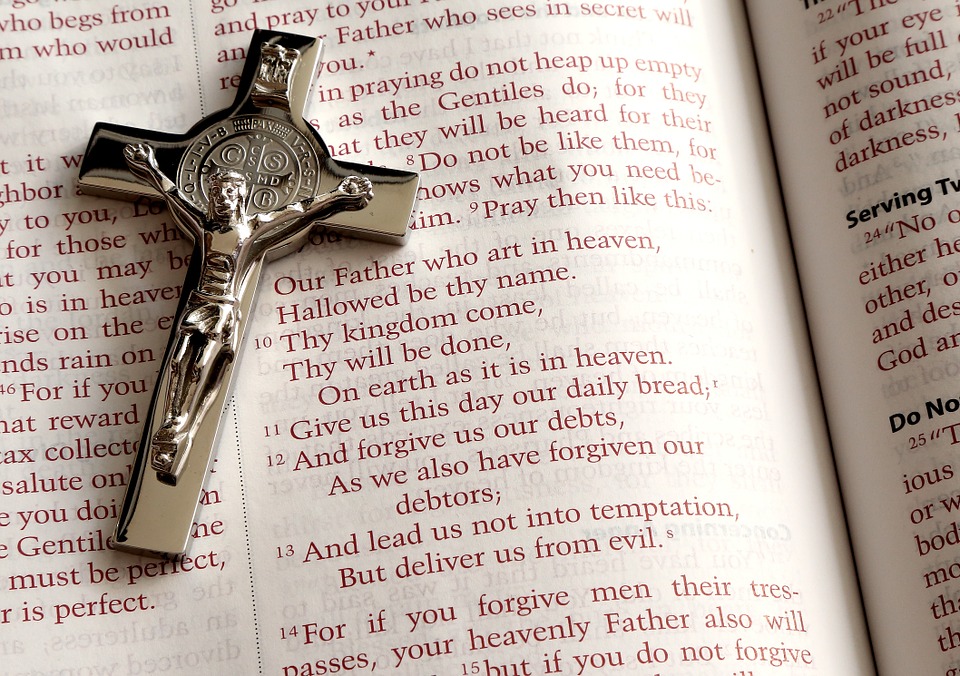
The mysterious word occurs as part of a phrase in the middle of the Lord’s prayer: τὸν ἄρτον ἡμῶν τὸν ἐπιούσιον (ton arton hēmōn ton epiousion). This phrase is typically rendered “give us this day our daily bread.”

The problematic word is epiousion. The difficulty is that it seems to exist nowhere else in ancient Greek; no one really knows what it means. Even the Greek Fathers, whose mother tongue was Greek, were unaware of its exact meaning. It occurs nowhere else in the Bible (with the exception of the parallel passage in Luke’s version of the Our Father (Luke 11:3)). It appears nowhere in wider Greek literature, Christian or Pagan. The early Church writer Origen, a most learned and well-read man, thought that Matthew and Luke or the early Church had “made up” or coined the term.

So, frankly, we are at a loss as to the exact, original meaning of this word! It’s actually pretty embarrassing when you think about it. Right there in the most memorable text of Christendom is a word whose meaning seems quite uncertain.

To be sure, over the centuries there have been many hypotheses as to its meaning.

  1. Supersubstantial – The Greek word seems to be a compound word from epi+ousios. Epi means over, above, beyond, in addition to, or some similar superlative. Ousious refers to the substance of something. Putting these words together gives us something amounting to supersubstantial, or “super-essential.”
  2. The Eucharist – Some of the Greek and Latin Fathers thought it clearly referred to the Eucharist and surely not to ordinary food or bread. Origen, for example, cited how Jesus rebuked the people in John 6 for seeking bread that perishes rather than the Bread that endures unto eternal life, which is Jesus’ flesh and which He will give us (cf Origen On Prayer 27.2). St. Cyprian, while admitting that “bread” can be understood simply, advanced the notion that the bread referred to here is more certainly Christ Himself in the Eucharist (cf. Treatise on the Lord’s Prayer, 18).
  3. Ordinary and daily bread – St. John Chrysostom, however, favored the idea that the bread for which we pray is only “bread for today.” Just enough for one day … Here Jesus condescends to the infirmity of our nature … [which] does not permit you to go without food … I require necessary food not a complete freedom from natural necessities … It is not for wastefulness or extravagant clothing that we pray, but only for bread and only for bread on a daily basis so as not to worry about tomorrow (Gospel of Matthew Homily, 19.5).
  4. Bread for tomorrow – St. Jerome said, The word used by the Hebrews to denote supersubstantial bread is maar. I found that it means “for tomorrow” so that the meaning here is “give us this day our bread for tomorrow” that is, for the future (Commentary on Matthew, 1.6.11). Many modern scholars favor this understanding as well.
  5. Supernatural bread – However, in the same commentary St. Jerome also wrote, We can also understand supersubstantial bread in another sense as bread that is above all substances and surpasses all creatures (ibid). In this sense, Jerome also seems to see it linked to the Eucharist. When he translated the text into Latin, as the Pope had asked him to do, he rendered it rather literally: panem nostrum supersubstantialem da nobis hodie (give us today our supersubstantial bread). If you look up the text of Matthew 6:11 in the Douay Rheims Bible, you will see the word “supersubstantial,” as in that Bible the Vulgate Latin is rendered into English quite literally.
  6. Every good thing necessary for subsistence – The Catechism of the Catholic Church adopts an inclusive approach: “Daily” (epiousios) occurs nowhere else in the New Testament. Taken in a temporal sense, this word is a pedagogical repetition of “this day,” to confirm us in trust “without reservation.” Taken in the qualitative sense, it signifies what is necessary for life, and more broadly every good thing sufficient for subsistence. Taken literally (epi-ousios: “super-essential”), it refers directly to the Bread of Life, the Body of Christ, the “medicine of immortality,” without which we have no life within us. Finally, in this connection, its heavenly meaning is evident: “this day” is the Day of the Lord, the day of the feast of the kingdom, anticipated in the Eucharist that is already the foretaste of the kingdom to come. For this reason, it is fitting for the Eucharistic liturgy to be celebrated each day (CCC # 2837). The Catechism thus attempts no resolution to the problem but simply indicates that several interpretations are possible and do not necessarily exclude one another.

Having a Greek word that is used nowhere else and having no agreement from the Fathers as to its meaning, we are surely left at a loss. It seems clear that we have something of a mystery.

Reverencing the Mystery – Perhaps the Lord intended that we should ponder this text and see multiple meanings. Surely it is right that we should pray for our worldly food. Likewise, we should pray for all that is needed for subsistence, whether just for today or for tomorrow as well. And surely we should ask for the Bread of Life, the Holy Eucharist, which is the necessary Bread that draws us to eternal life, and which (Who) is over and above all earthly substances.

So there it is, the mysterious word in the middle of the Our Father. My own preference is to see that “epiousion” (supersubstantial) as a reference to the Eucharist. Jesus, who “super-abounds” in all we could ask or want, said this: “I am the Bread of life.” In his Eucharistic presence, He is surely our Bread which “super-abounds.”

Most modern translations have settled on the word “daily.” For the record, the Latin Liturgy also uses the word daily (quotidianum). No one word can fully capture what is said here. The Lord has left us a mystery to ponder. I know that many of you who read my posts are learned in Greek, Latin, the Fathers, and scripture scholarship; I am most interested in your thoughts. This article has not covered every possible facet of the argument. I leave that you, all who wish to comment.


TOPICS: Apologetics; Catholic; History; Theology
KEYWORDS: catholic; languages
Navigation: use the links below to view more comments.
first 1-2021-32 next last
Video
1 posted on 12/14/2017 7:43:06 AM PST by Salvation
[ Post Reply | Private Reply | View Replies]

To: nickcarraway; NYer; ELS; Pyro7480; livius; ArrogantBustard; Catholicguy; RobbyS; marshmallow; ...

Monsignor Pope Ping!


2 posted on 12/14/2017 7:44:21 AM PST by Salvation ("With God all things are possible." Matthew 19:26)
[ Post Reply | Private Reply | To 1 | View Replies]

To: Salvation
In Spanish, we've been saying, No nos dejes caer en tentacion all along. "Do not let us fall into temptation."
3 posted on 12/14/2017 7:54:39 AM PST by Tax-chick ("It's not like a productive member of society would have been lost." ~ PAR35)
[ Post Reply | Private Reply | To 1 | View Replies]

To: Salvation

Was the Lord’s Prayer originally penned in Greek?

I thought the New Testament was authored in Aramaic...?


4 posted on 12/14/2017 7:59:13 AM PST by freedumb2003 (Conservatives should do daily affirmations: reading/repeating the 9th and 10th Amendments)
[ Post Reply | Private Reply | To 1 | View Replies]

To: Salvation

The Lord’s Prayer is a brief digest of the Hebrew Amidah, which presumably was delivered by Jesus in Aramaic.

I’d look for any translation there first.

Also note, it is not specifically Christian.


5 posted on 12/14/2017 8:01:20 AM PST by onedoug
[ Post Reply | Private Reply | To 1 | View Replies]

To: Salvation

Have you ever considered the “Lords Prayer” is really the
Shema prayer? it is.


6 posted on 12/14/2017 8:05:01 AM PST by merkava
[ Post Reply | Private Reply | To 1 | View Replies]

To: onedoug

“Also note, it is not specifically Christian.”

Our Father. Christians most often use such a term. Some other religions almost never use it. The relationship with the Father through the Son is a distinguishing characteristic of Christianity: https://books.google.com/books?id=IcUTror8d20C&printsec=frontcover#v=onepage&q&f=false


7 posted on 12/14/2017 8:15:54 AM PST by vladimir998 (Apparently I'm still living in your head rent free. At least now it isn't empty.)
[ Post Reply | Private Reply | To 5 | View Replies]

To: freedumb2003
Was the Lord’s Prayer originally penned in Greek?

I thought the New Testament was authored in Aramaic...?

Although our Lord spoke Aramaic, the New Testament itself was written in Greek. There is an argument that Matthew was originally written in Aramaic/Hebrew and latter translated into Greek but we do not have any copies of a possible Aramaic/Hebrew original. The Aramaic versions of the Gospels are actually back translations from the Greek.

8 posted on 12/14/2017 8:17:41 AM PST by Petrosius
[ Post Reply | Private Reply | To 4 | View Replies]

To: Salvation

I have always been leery of the phrase “who art” or “which art” in heaven.

It’s excessive and wordy. And what’s with “art?” Who says “art” any more?

I usually say “Our Father in heaven ...”

Bothers my wife a bit.


9 posted on 12/14/2017 8:18:21 AM PST by FroggyTheGremlim (Democrats: the political party of the undead)
[ Post Reply | Private Reply | To 1 | View Replies]

To: merkava

Please post the text of the two prayers, so that we may compare them.


10 posted on 12/14/2017 8:19:04 AM PST by NorthMountain (... the right of the people to keep and bear arms shall not be infringed)
[ Post Reply | Private Reply | To 6 | View Replies]

To: merkava

“Have you ever considered the “Lords Prayer” is really the
Shema prayer? it is.”

In some ways it is - but the Our Father is directed to “Our Father”. That is a concept completely missing from the Shema. Also, the fact that it was the Son who was teaching it showed the idea that we would be brothers with the God-man. Such a concept is completely missing from the Shema.


11 posted on 12/14/2017 8:19:22 AM PST by vladimir998 (Apparently I'm still living in your head rent free. At least now it isn't empty.)
[ Post Reply | Private Reply | To 6 | View Replies]

To: freedumb2003

They spoke Aramaic, the common street language of the area, but the Gospels were written in Greek, Luke and Mark’s native tongue, many years later...............


12 posted on 12/14/2017 8:37:22 AM PST by Red Badger (Road Rage lasts 5 minutes. Road Rash lasts 5 months!.....................)
[ Post Reply | Private Reply | To 4 | View Replies]

To: Salvation

Of course, this false pope would make a big deal out it.

Covfefe.


13 posted on 12/14/2017 8:37:53 AM PST by bgill (CDC site, "We don't know how people are infected with Ebola.")
[ Post Reply | Private Reply | To 1 | View Replies]

To: zot; xzins

Zot & Xzins,

I think both of you might be interested in Msgr’s column today on the phrase “lead us not into temptation” in the Lord’s Prayer is translated from the Greek. I think it very good and also food for thought.

Marantha,
Grey Friar


14 posted on 12/14/2017 8:39:46 AM PST by GreyFriar (Spearhead - 3rd Armored Division 75-78 & 83-87)
[ Post Reply | Private Reply | To 1 | View Replies]

To: Salvation
I am not Catholic but I always read and enjoy the articles by Monsignor Pope.

Greatly edifying.

15 posted on 12/14/2017 8:55:43 AM PST by RoosterRedux
[ Post Reply | Private Reply | To 2 | View Replies]

To: onedoug
Also note, it is not specifically Christian.

Perhaps - but it was given to us by Christ - the basis of Christianity.....

16 posted on 12/14/2017 8:56:19 AM PST by trebb (Where in the the hell has my country gone?)
[ Post Reply | Private Reply | To 5 | View Replies]

To: GreyFriar

Thanks for the ping. Yes, this is very good and also food for thought.
Likewise, “forgive us our debts” and “forgive us our trespasses.”

Maranatha,
zot


17 posted on 12/14/2017 9:22:22 AM PST by zot
[ Post Reply | Private Reply | To 14 | View Replies]

To: bgill
I don't think Pope Francis said anything at all about that particular phrase, "panem quotidianum" or "daily bread". Or in Greek, "hēmōn ton epiousion" (I think I've copied that right.)

But I may be wrong. I often am.

Got a link?

18 posted on 12/14/2017 10:04:46 AM PST by Mrs. Don-o
[ Post Reply | Private Reply | To 13 | View Replies]

To: eCSMaster

Pater noster, qui es in caelis...

...qui es...who art...

“Our Father in heaven...” suggests that we are addressing one of our fathers—the one in heaven as opposed to some other father.


19 posted on 12/14/2017 10:16:20 AM PST by Arthur McGowan (https://youtu.be/hj3e8cKZWiY)
[ Post Reply | Private Reply | To 9 | View Replies]

To: Petrosius

>>The Aramaic versions of the Gospels are actually back translations from the Greek.<<

Now THAT is interesting. All the time I spent on Aramaic (Ok, well not that much) just to get authenticity and I should have been studying Greek.

Thanks for that info!


20 posted on 12/14/2017 2:34:45 PM PST by freedumb2003 (Conservatives should do daily affirmations: reading/repeating the 9th and 10th Amendments)
[ Post Reply | Private Reply | To 8 | View Replies]


Navigation: use the links below to view more comments.
first 1-2021-32 next last

Disclaimer: Opinions posted on Free Republic are those of the individual posters and do not necessarily represent the opinion of Free Republic or its management. All materials posted herein are protected by copyright law and the exemption for fair use of copyrighted works.

Free Republic
Browse · Search
Religion
Topics · Post Article

FreeRepublic, LLC, PO BOX 9771, FRESNO, CA 93794
FreeRepublic.com is powered by software copyright 2000-2008 John Robinson