Skip to comments.
Catholic Caucus: Sunday Mass Readings, 01-22-06, Third Sunday in Ordinary Time
USCCB.org/New American Bible ^
| 01-22-06
| New American Bible
Posted on 01/21/2006 4:42:17 PM PST by Salvation
January 22, 2006
Psalm: Sunday 7
Jon 3:1-5, 10
The word of the LORD came to Jonah, saying:
“Set out for the great city of Nineveh,
and announce to it the message that I will tell you.”
So Jonah made ready and went to Nineveh,
according to the LORD’s bidding.
Now Nineveh was an enormously large city;
it took three days to go through it.
Jonah began his journey through the city,
and had gone but a single day’s walk announcing,
“Forty days more and Nineveh shall be destroyed,”
when the people of Nineveh believed God;
they proclaimed a fast
and all of them, great and small, put on sackcloth.
When God saw by their actions how they turned from their evil way,
he repented of the evil that he had threatened to do to them;
he did not carry it out.
Ps 25:4-5, 6-7, 8-9
R. (4a) Teach me your ways, O Lord.
Your ways, O LORD, make known to me;
teach me your paths,
Guide me in your truth and teach me,
for you are God my savior.
R. Teach me your ways, O Lord.
Remember that your compassion, O LORD,
and your love are from of old.
In your kindness remember me,
because of your goodness, O LORD.
R. Teach me your ways, O Lord.
Good and upright is the LORD;
thus he shows sinners the way.
He guides the humble to justice
and teaches the humble his way.
R. Teach me your ways, O Lord.
1 Cor 7:29-31
I tell you, brothers and sisters, the time is running out.
From now on, let those having wives act as not having them,
those weeping as not weeping,
those rejoicing as not rejoicing,
those buying as not owning,
those using the world as not using it fully.
For the world in its present form is passing away.
Mk 1:14-20
After John had been arrested,
Jesus came to Galilee proclaiming the gospel of God:
“This is the time of fulfillment.
The kingdom of God is at hand.
Repent, and believe in the gospel.”
As he passed by the Sea of Galilee,
he saw Simon and his brother Andrew casting their nets into the sea;
they were fishermen.
Jesus said to them,
“Come after me, and I will make you fishers of men.”
Then they abandoned their nets and followed him.
He walked along a little farther
and saw James, the son of Zebedee, and his brother John.
They too were in a boat mending their nets.
Then he called them.
So they left their father Zebedee in the boat
along with the hired men and followed him.
TOPICS: Activism; Apologetics; Catholic; Charismatic Christian; Current Events; Eastern Religions; Ecumenism; Evangelical Christian; General Discusssion; History; Islam; Judaism; Mainline Protestant; Ministry/Outreach; Moral Issues; Orthodox Christian; Other Christian; Other non-Christian; Prayer; Religion & Culture; Religion & Politics; Religion & Science; Skeptics/Seekers; Theology; Worship
KEYWORDS: catholiccaucus; catholiclist; ordinarytime; thirdsunday
Navigation: use the links below to view more comments.
first 1-20, 21-27 next last
For your reading, reflection, faith-sharing, comments, questions, discussion.
1
posted on
01/21/2006 4:42:20 PM PST
by
Salvation
To: nickcarraway; sandyeggo; Siobhan; Lady In Blue; NYer; american colleen; Pyro7480; livius; ...
Alleluia Ping!
Please notify me via FReepmail if you would like to be added to or taken off the Alleluia Ping List.
2
posted on
01/21/2006 4:43:25 PM PST
by
Salvation
(†With God all things are possible.†)
To: All
Prayer for the Helpless Unborn
Heavenly Father, in Your love for us, protect against the wickedness of the devil, those helpless little ones to whom You have given the gift of life.
Touch with pity the hearts of those women pregnant in our world today who are not thinking of motherhood.
Help them to see that the child they carry is made in Your image - as well as theirs - made for eternal life.
Dispel their fear and selfishness and give them true womanly hearts to love their babies and give them birth and all the needed care that a mother can give.
We ask this through Jesus Christ, Your Son, Our Lord, Who lives and reigns with You and Holy Spirit, One God, forever and ever. Amen.
3
posted on
01/21/2006 4:44:09 PM PST
by
Salvation
(†With God all things are possible.†)
To: All
From: Jonah 3:1-5, 10
Jonah Preaches Repentance in Nineveh
[1] Then the word of the LORD came to Jonah the second time, saying,
[2] ”Arise, go to Nineveh, that great city, and proclaim to it the
message that I tell you.” [3] So Jonah arose and went to Nineveh,
according to the word of the LORD. Now Nineveh was an exceedingly
great city, three days’ journey in breadth. [4] Jonah began to go into
the city, going a day’s journey. And he cried, “Yet forty days, and
Nineveh shall be overthrown!”
The People of Nineveh Do Penance
[5] And the people of Nineveh believed God; they proclaimed a fast and
put on sackcloth, from the greatest of them to the least of them.
[10] When God saw what they did, how they turned from their evil way,
God repented of the evil which he had said he would do to them; and he
did not do it.
Commentary:
3:1-4:11 The second part of the book has a similar structure to the
first--God and Jonah (3:1-3; cf. 1:1-3); Jonah and Gentiles (3:4-10;
cf. 1:4-16); Jonah and God (4:1-11; cf. 1:17-2:10). However, the
reader is now psychologically prepared for what will happen: Jonah’s
preaching will produce the desired result and the Ninevites will be
converted. So, the story is geared to the last chapter which poses and
solves the question that chapter 3 provokes. The episode described in
this second part is therefore a practical illustration of the scope of
God’s mercy. It was used as such in the debate with the Gnostics who
argued that there was a difference between the good God (the God
revealed in the New Testament) and the God revealed in the Old
Testament: “See how the stress is laid on the greatest name and
quality of God, his Mercy; that is, God is patient with evildoers, and
rich in mercy and compassion for those who recognize their faults and
repent them, as the Ninevites did. If such a Being as he is so good,
you [...] have to admit that he can do no evil for, as Marcion himself
once said, a good tree cannot bear bad fruit (Tertullian, "Adversus
Marcionem", 2, 24).
3:1-4. God renews his command to Jonah. And this time Jonah obeys.
Maybe the vows he promised to fulfill in 2:9 had to do with
this--going to preach in Nineveh. Anyway, the success of his mission
is assured, because it depends not on Jonah but on the Lord: it would
take three days to cross Nineveh (v. 3), but he has only gone one day
in his journey and the people convert (cf. 3:5).
3:5-10. The account of the conversion of the Ninevites looks like a
straight copy from other biblical passages, particularly from the
prophet Jeremiah: Jeremiah is the “prophet to the nations” (Jer 1:5),
and Jonah is sent to the archetypal Gentile city. There are many
little things in this passage that are reminiscent of Jeremiah: in the
book of Jeremiah, Jerusalem is called the “great city”, which is what
Nineveh is called here (1:2; 3:2; cf. Jer 22:8-9), and both books have
similar turns of phrase such as “let every one turn from his evil
way”, “man and beast”, “from the greatest to the least” (3:5, 8; cf.
Jer 6:13; 8:10; 36:3,7), etc. This passage is particularly reminiscent
of the call for a fast made by Jeremiah in the time of King Jehoiakim;
in Jeremiah 36 we are told how the prophet warned of misfortunes to
come and proclaimed a fast for conversion (Jer 36:9), but the king
refused to listen. Jonah, too, announces the destruction of Nineveh,
but it is the Ninevites themselves who proclaim a general fast, as if
God were speaking through them. Their own king establishes what the
fast will involve, and he issues a decree that sounds just like
something a prophet would have said (vv. 7-9; cf. Joel 2:12-14).
Furthermore, the king of the Ninevites seems to be quite familiar with
biblical teaching, for he is well aware (cf. Jer 36:3, 9) that
displays of penance will not automatically stay God’s hand; the king
has a genuine change of heart and is ready to submit to God (v. 9),
and when God sees that these people are ready to mend their ways he
revokes his decision to punish them (v. 10) The episode bears out
Jeremiah's teaching about repentance (cf. Jer 18 7-8).
The difference between the Ninevites and the Israelites can be seen in
the use that Jesus makes of this passage when he compares his Jewish
contemporaries with their ancestors: “The men of Nineveh will arise at
the judgment with this generation and condemn it for they repented at
the preaching of Jonah, and behold something greater than Jonah is
here” (Mt 12:41). It is not surprising, then, that in Christian
tradition, the Ninevites are referred to as a model of repentance ‘Let
us cast our minds backover the history of men, and see how the
Lord, in one generation after another, granted a time of penance to
those who desired to be converted to him. Noah preached salvation, and
those who listened to him were saved. Jonah told the Ninevites that
their city would be destroyed and they repented of their sins and
asked God for forgiveness and were saved by the power of their
pleading, even though they were not part of the chosen people” (St
Clement of Rome, "Ad Corinthios", 7, 5-7).
And another text by a great Father of the Eastern Church says: “Do not
dwell on how little time you have, but on the love of the Master. The
inhabitants of Nineveh cooled God’s wrath in three days. They did not
despair at how little time was left to them; their troubled souls won
over the goodness of the Master, and he brought about their salvation”
(St John Chrysostom, "De Incomprehensibile Dei Natura", 6).
Source: "The Navarre Bible: Text and Commentaries". Biblical text
taken from the Revised Standard Version and New Vulgate. Commentaries
made by members of the Faculty of Theology of the University of
Navarre, Spain. Published by Four Courts Press, Kill Lane, Blackrock,
Co. Dublin, Ireland.
4
posted on
01/21/2006 4:45:11 PM PST
by
Salvation
(†With God all things are possible.†)
To: All
From: 1 Corinthians 7:29-31
The Excellence of Virginity
[29] I mean, brethren, the appointed time has grown very short; from
now on, let those who have wives live as though they had none, [30] and
those who mourn as though they were not mourning, and those who rejoice
as though they were not rejoicing, and those who buy as though they had
no goods, [31] and those who deal with the world as though they had no
dealings with it. For the form of this world is passing away.
Commentary:
25-35. The Apostle now explains the excellence of virginity or celibacy
(vv. 26ff) for love of God as compared with marriage. The Magisterium
of the Church has explicitly spoken on the same lines (cf. Council of
Trent, "De Sacrum Matrimonio", can. 10; Pius XII, "Sacra Virginitas",
11).
He begins by saying that he has no commandment from the Lord on this
matter (cf. note on 7:12-16; Mt 19-12) but he for his part recommends
celibacy, and his advice carries weight because he is an Apostle chosen
by the Lord in his mercy. The reasons why he makes this recommendation
reduce to one, basically--the love of God: the unmarried person can
dedicate himself or herself to God more fully than a married person can,
who has to look after the family and is "divided" (v. 34). "This is the
main purpose and primary reason for Christian virginity--to dedicate
oneself exclusively to divine things, giving them all one's attention
and love, thinking of Him constantly and consecrating oneself to Him
completely, body and soul" (Pius XII, "Sacra Virginitas", 5). This
exclusive dedication to God will lead to a full and productive life
because it enables a person to love others and devote himself or
herself to them with great freedom and availability. Also, celibacy has
an eschatological dimension: it is a special sign of heavenly delights
(cf. Vatican II, "Perfectae Caritatis", 12), and points to the fact
that the blessed in heaven live as angels (cf. Mt 22:30).
St Paul's references to marriage should be understood in the context in
which he is writing (cf. note on 7:1-9). All he wants to make clear
here is that, although celibacy is a higher state, marriage is not
something bad: those who marry are not doing anything wrong (v. 28),
nor is there any need for married people to live as celibates (vv. 3-5)
or to separate (v. 27). However, only someone who acknowledges the
great value that marriage has is in a position to appreciate celibacy
as a gift of God. "Virginity or celibacy for the sake of the Kingdom of
God not only does not contradict the dignity of marriage but
presupposes it and confirms it. Marriage and virginity or celibacy are
two ways of expressing and living the one mystery of the covenant of
God with his people. When marriage is not esteemed, neither can
consecrated virginity or celibacy exist; when human sexuality is not
regarded as a great value given by the Creator, the renunciation of it
for the sake of the Kingdom of heaven loses its meaning" (John Paul II,
"Familiaris Consortio", 16)
29-31. In their letters, St Paul and the other Apostles frequently
remind us that life is short (cf. Rom 13:11-14; 2 Pet 3:8; 1 Jn 2:15-
17), in order to encourage us to make the very best use of our time to
serve God, and others for his sake. "When I reflect on this, how well I
understand St Paul's exclamation when he writes to the Corinthians,
"tempus breve est" (1 Cor 7:29). How short indeed is the time of our
passing through this world! For the true Christian these words ring
deep down in his heart as a reproach to his lack of generosity, and as
a constant invitation to be loyal. Brief indeed is our time for loving,
for giving, for making atonement. It would be very wrong, therefore,
for us to waste it, or to cast this treasure irresponsibly overboard.
We must not squander this period of the world's history which God has
entrusted to each one of us" ([St] J. Escriva, "Friends of God", 39).
A Christian, therefore, should always be detached from worldly things,
and never let himself become the slave of anything or anyone (cf. 1 Cor
7:23; "Lumen Gentium", 42) but, instead, always have his sights on
eternal life. "It is a great help towards this", St Teresa of Avila
teaches, "if we keep a very constant care of the vanity of all things,
and the rapidity with which they pass away, so that we may withdraw our
affections from everything and fix them on what will last forever. This
may seem to be a poor kind of help but it will have the effect of
greatly fortifying the soul. With regard to little things, we must be
very careful, as soon as we begin to be fond of them, to think no more
about them and to turn our thoughts to God. His majesty will help us
to do this" ("Way of Perfection", chap. X).
Source: "The Navarre Bible: Text and Commentaries". Biblical text
taken from the Revised Standard Version and New Vulgate. Commentaries
made by members of the Faculty of Theology of the University of
Navarre, Spain. Published by Four Courts Press, Kill Lane, Blackrock,
Co. Dublin, Ireland.
5
posted on
01/21/2006 4:46:07 PM PST
by
Salvation
(†With God all things are possible.†)
To: All
From: Mark 1:14-20
Jesus Begins to Preach and Calls His First Disciples
[14] Now after John was arrested, Jesus came into Galilee, preaching
the gospel of God, and saying, "The time is fulfilled, and the kingdom
of God is at hand; repent, and believe in the Gospel."
[16] And passing along by the Sea of Galilee, he saw Simon and Andrew
the brother of Simon casting a net in the sea; for they were fishermen.
[17] And Jesus said to them, "Follow me and I will make you become
fishers of men." [18] And immediately they left their nets and followed
him. [19] And going on a little farther, he saw James the son of
Zebedee and John his brother, who were in their boat mending the nets.
[20] And immediately he called them; and they left their father Zebedee
in the boat with the hired servants, and followed him.
Commentary:
14-15. "The gospel of God": this expression is found in St Paul (Rom
1:1; 2 Cor 11:7; etc.) where it means the same as "the gospel of Jesus
Christ" (2 Thess 1:8; etc.), thereby implying the divinity of Jesus
Christ. The imminence of the Kingdom requires a genuine conversion of
man to God (Mt 4:17; Mk 6: 12; etc.). The prophets had already spoken
of the need for conversion and for Israel to abandon its evil ways (Jer
3:22; Is 30:15; Hos 14:2; etc.).
Both John the Baptist and Jesus and his Apostles insist on the need for
conversion, the need to change one's attitude and conduct as a
prerequisite for receiving the Kingdom of God. John Paul II underlines
the importance of conversion for entry into the Kingdom of God:
"Therefore, the Church professes and proclaims conversion. Conversion
to God always consists in discovering his mercy, that is, in
discovering that love which is patient and kind (cf. 1 Cor 13:4) as
only the Creator and Father can be; the love to which the 'God and
Father of our Lord Jesus Christ' (2 Cor 1:3) is faithful to the
uttermost consequences in the history of his covenant with man: even to
the Cross and to the death and resurrection of the Son. Conversion to
God is always the fruit of the 'rediscovery' of this Father, who is
rich in mercy.
"Authentic knowledge of the God of mercy, the God of tender love, is a
constant and inexhaustible source of conversion, not only as a
momentary interior act but also as a permanent attitude, as a state of
mind. Those who come to know God in this way, who 'see' him in this
way, can live only in a state of being continually converted to him.
They live, therefore, "in statu conversionis" and it is this state of
conversion which marks out the most profound element of the pilgrimage
of every man and woman on earth "in statu viatoris" (John Paul II,
"Dives In Misericordia", 13).
16-20. In these verses the evangelist describes how Jesus called some
of those who would later form part of the Apostolic College (3:16ff).
From the start of his public ministry in Galilee the Messiah seeks
co-workers to help him in his mission as Savior and Redeemer. He looks
for them among people used to hard work, people for whom life is a
struggle and whose life-style is plain. In human terms they are
obviously at a disadvantage vis-a-vis many of those to whom they will
preach; but this in no way prevents their self-surrender from being
generous and free. The light lit in their hearts was enough to lead
them to give up everything. A simple invitation to follow the Master
was enough for them to put themselves completely at his disposal.
It is Jesus who chooses them: he interfered in the lives of the
Apostles just as he interferes in ours, without seeking our permission:
he is our Lord. Cf. note on Mt 4:18-22.
Source: "The Navarre Bible: Text and Commentaries". Biblical text
taken from the Revised Standard Version and New Vulgate. Commentaries
made by members of the Faculty of Theology of the University of
Navarre, Spain. Published by Four Courts Press, Kill Lane, Blackrock,
Co. Dublin, Ireland.
6
posted on
01/21/2006 4:47:12 PM PST
by
Salvation
(†With God all things are possible.†)
To: All
Sunday, January 22, 2006
Third Sunday in Ordinary time
(Week of prayer for Christian unity) |
|
|
7
posted on
01/21/2006 4:48:39 PM PST
by
Salvation
(†With God all things are possible.†)
To: All
Yes or No?
|
|
Yes or No?
|
 |
01/21/06
|

|
 |
The Gospel makes it all seem so quick and easy: Jesus walks along the Sea of Galilee; He calls Andrew, Peter, James and John to follow Him; they leave behind their life as fishermen to become "fishers of men."
|
|
As simple as it sounds, this little scene has some profound truths to reveal about the nature of vocations.
First, every vocation is a two-way street: God calls, we respond. These first Apostles did not simply take it upon themselves to become "fishers of men." It is our Lord Who calls them to a new life, a new mission. It is our Lord Who calls them to leave behind the known and familiar to embrace the unknown and unfamiliar. Clearly there was something about Jesus that attracted these men enough to give up their livelihoods, to radically change their lives. Perhaps it was the firm conviction that here was a man sent by God and worth listening to. There certainly had to be a degree of trust. A vocation begins with the firm belief that God has a plan for me. What He desires I desire, because I trust His goodness and authority and know that such a union of wills is a key to holiness. We move forward in the firm belief that what God calls me to do He will strengthen me to accomplish.
Second, our Lord calls two sets of brothers to be the first Apostles. Is it not our firm belief that the seedbed of every vocation is the family? Marriage preparation begins long before an engaged couple meets with a priest for the first time. Lessons in communication, showing affection, sharing, reconciliation and sacrifice are first learned in the family among parents and siblings. Vocations to priesthood and religious life are encouraged and nurtured by family, where the faith is first handed down.
Third, every vocation ought to be seen as a path to holiness, a path to sainthood. We know the story of the Apostles did not end on the day they were called and they said "yes." These guys had a lot more to learn about being fishers of men, of being shepherds with the true mind and heart of Christ. The mother of James and John would be worried about her children's place in the kingdom, sparking a lesson from Jesus on humility and service. Peter would learn a lesson about forgiving one's brother seven times 70 times. The call to apostleship was not simply a change in career, it was a change of life. These men would never be the same.
Every vocation demands constant fidelity and commitment. Am I ready to give my all to being a Christian mother or father? Am I ready to give my all to being a holy priest or religious? Am I ready to do and give all that the Lord may ask of me in my vocation, trusting that He will strengthen me to do it?
The Lord gives a simple command: "Follow me." Nothing will profoundly affect our lives more than our simple "yes" or "no."
Fr. Grankauskas is parochial vicar at St. Mary of Sorrows Parish in Fairfax.
|
8
posted on
01/21/2006 4:50:50 PM PST
by
Salvation
(†With God all things are possible.†)
To: Salvation
Thanks for the ping to the texts and all this wonderful information, Salvation.
9
posted on
01/21/2006 5:34:28 PM PST
by
syriacus
(Independent counsel system has "been corrupted and no longer serves its intended purpose" Leahy,1998)
To: Salvation
10
posted on
01/21/2006 6:36:49 PM PST
by
Ciexyz
(Let us always remember, the Lord is in control.)
To: syriacus
Here's wishing all FReepers reading this thread, a restful night's sleep.
11
posted on
01/21/2006 6:41:18 PM PST
by
Ciexyz
(Let us always remember, the Lord is in control.)
To: Ciexyz
Here's wishing all FReepers reading this thread, a restful night's sleep.The same to you, too, Ciexyz.
12
posted on
01/21/2006 7:02:04 PM PST
by
syriacus
To: All
Catholic Culture

|
Collect:
All-powerful and ever-living God, direct your love that is, within us, that our efforts in the name of your Son may bring mankind to unity and peace. We ask this through our Lord Jesus Christ, your Son, who lives and reigns with you and the Holy Spirit, one God, for ever and ever. |
|
 |
January 22, 2006    Third Sunday of Ordinary Time
As he passed by the Sea of Galilee, he saw Simon and his brother Andrew casting their nets into the sea; they were fishermen. Jesus said to them, "Come after me, and I will make you fishers of men." Then they abandoned their nets and followed him (Mark 1:16-19).
Sunday Readings
The first reading is taken from the Book of the Prophet Jonah 3:1-5, 10 and tells the story of Jonah's call from God to go to a pagan city and preach repentance to the sinful people there. The second reading is from the first Letter of St. Paul to the Corinthians. St. Paul admonishes his converts to do what our Lord himself advised his follower—always to be ready for the judgment. The Gospel is from Mark 1:14-20. Jesus came to announce to all men the good news of God's eternal plan for them. He spent his public life convincing the Jews of Palestine of the truth of this message, and he died on the cross because he claimed to be that he was God's divine Son, who had come in human nature to raise all men to the standing and status of adopted sons of God. That very death, cruel and unjust though it was, was part of the divine plan. He conquered death and was raised from the grave to prove that we too, if we accept his divine gospel and live by it, will be raised from the dead and reign with Christ in the kingdom of his Father forever. Christ preached this doctrine in Palestine. It is the doctrine for which he gave his human life and which he gave to his Apostles to hand down to all future generations. This is the self-same doctrine preached by Christ's Church to all men today. It is the good news of God's mercy and love toward us weak, mortal creatures. To some it seems too good to be true; it would indeed be so if God were a limited, finite being like us, but he is Being itself. He is without limit, his goodness and love are limitless as is his nature. What God can see in creatures has ever been a puzzle to thinking man. One of the psalm-writers said centuries ago: "What is man that you should spare a thought for him, the son of man that you should care for him" (Ps. 8 :4)? Many a saint too, has repeated this remark ever since. We cannot hope to fathom the mind of God, nor do we need to. He has gone to such a length as the humiliation of his divine Son in the incarnation in order to give us a new standing in relation to himself and a new mode of eternal living after death. We are still God's creatures, "the work of his hands," but through accepting Christ and his gospel—his message of divine truth—we are no longer mere mortals. We shall die, but death is the beginning of the true life which God has arranged for us. It is no wonder that St. Paul could cry out: "O death where is your victory, O death, where is your sting?" We Christians should be the happiest people on earth. We know why we are here, we know where we are going and we know how to get there. There are trials and troubles which beset us on our journey; there are rough parts of the road and weaknesses in our human nature which often lead us off the right road, but we are not left to our own human resources. We have help from above to strengthen and comfort us on our journey. We have divine aids in the Church which Christ set us and we have the guarantee of our Good Shepherd that he will keep us in his fold or bring us back should we foolishly wander from it (Jn. 10: 14; Lk. 1.5:4-7). We Christians can indeed be the happiest people on earth, if we live according to the divine good news revealed to us through Christ. "Repent and believe in the gospel," Christ told the people of Galilee. The same call goes out from our loving Savior to each of us today: repent—change your outlook on life— and see it as God sees it to be for us, a short journey toward heaven. If we really believe in the gospel of Christ, the revelation of God's plan for our eternal happiness, our earthly troubles will look small, our trials and temptations will appear to us as they really are—a means of earning the eternal victory. Christ, the innocent victim for our salvation, has gone before us, carrying his heavy cross; can we refuse to carry the relatively lighter cross which he places on our shoulders as our means of making atonement for our own failings and for those of our fellowmen? God forbid that we should! If we have failed in the past, let us repent today and show our belief in the truth of the Christian gospel, by living as true Christians who are on their way to heaven. Excerpted from The Sunday Readings by Fr. Kevin O'Sullivan, O.F.M. |
13
posted on
01/22/2006 8:42:17 AM PST
by
Salvation
(†With God all things are possible.†)
To: Salvation
The Work of God
Inspirations of the Holy Spirit 
Year B - Third Sunday in ordinary time Repent and believe the Good News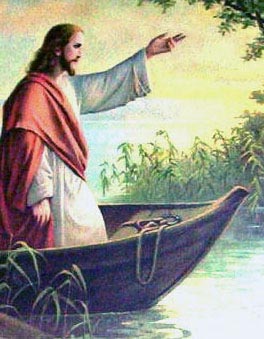 Mark 1:14-20 Mark 1:14-20 14 Now after John was arrested, Jesus came to Galilee, proclaiming the good news of God,
15 and saying, "The time is fulfilled, and the kingdom of God has come near; repent, and believe in the good news."
16 As Jesus passed along the Sea of Galilee, he saw Simon and his brother Andrew casting a net into the sea -- for they were fishermen.
17 And Jesus said to them, "Follow me and I will make you fish for people."
18 And immediately they left their nets and followed him.
19 As he went a little farther, he saw James son of Zebedee and his brother John, who were in their boat mending the nets.
20 Immediately he called them; and they left their father Zebedee in the boat with the hired men, and followed him.
(NRSV)Inspiration of the Holy Spirit - From the Sacred Heart of Jesus |
You all have experienced the difficulty of finding a locked door and not having the key to open it. It is as frustrating as trying to see when there is total darkness and there is no light.
Well let me tell you: repentance is the key to the door of the kingdom of heaven. I am the light that shines in your spiritual world of darkness.
A sinner who does not repent is a person who loses conscience of what sin is, he begins to see a lot of good reasons for his sinfulness, he justifies himself for his actions and believes his sin is very small and has no consequence. He only wants to listen to himself and to the enemy of souls who becomes his best friend. The sinner becomes blind to my light, deaf to my word and his soul infected by sin gets sicker and sicker, it begins to die.
In the spirit, the soul of a sinner looks exactly as the body of a leper, this is why I cured many lepers in my ministry of healing. Those who are obstinate in their sins are blind because they do not see with the eyes of the spirit. Those who commit mortal sin and do not repent are the same as the paralytics who can not move. I came to heal the sick not only in the body, but most importantly in the soul, since the soul and the spirit are eternal.
A sinner is a fool gambling with his eternal life. He is so close minded that preferring the temporary pleasures of the world, he is already rejecting the eternal joy and glory offered to him.
I have come to propose to everyone a great opportunity for all eternity. It is indeed the good news of salvation, otherwise humanity would be doomed to the desires of the flesh.
You are flesh and spirit, I am spirit. I have sacrificed myself for you in order to make you a child of God. Without my forgiveness you cannot receive a place in heaven, therefore repent and start exploring the spiritual being within you, know yourself and know me. You are much more than what you think you are.
Wake up my little soul, I have been calling you for a long time. Come out of your dark cave of sin and indifference to God. Repent, change your life, convert, pray more and start living the new life that I invite you to live. Follow me.
Author: Joseph of Jesus and Mary
14
posted on
01/22/2006 8:45:57 AM PST
by
Salvation
(†With God all things are possible.†)
To: All
Homily of the Day
|
|
Homily of the Day
| Title: |
Loving is Giving Your Gift |
| Author: |
Monsignor Dennis Clark, Ph. D. |
| Date: |
Sunday, January 22, 2006 |
|
|
|
Jon 3:1-5, 10 / 1 Cor 7:29-31 / Mk 1:14-20
A young man was walking along the beach when he stumbled on a magic lantern. He rubbed the lantern and a genie popped out with a hearty greeting, "Have I got good news for you! This very afternoon you will receive three gifts: a miracle cure for all ailments, a huge diamond, and a dinner date with a famous movie star."
Of course, the young man was elated, so he rushed right home where he was greeted at the door by his mother. "Some odd things have being happening this afternoon," she said. "At noon someone delivered a barrel of chicken soup. A half hour later, a telegram came saying a long lost relative has left you a minor league baseball stadium, and just a few minutes ago, MGM called inviting you to dinner tonight with Lassie!"
+ + +
So much for good news! As with much of life, that fellow was raised up for a moment and then let down fast. We know the experience well: a hungry longing for something more, a momentary hope that it's within our grasp, then disappointment and back to hungry longing.
It is to all of us who know that hungry longing that Jesus is speaking his invitation, "Come with me! Follow in my path." Many of us are ready to say "yes" to him, but we still have a question: how do we follow him? What is his way? We know the generic answer: Jesus' way is the golden rule: "Love God with your whole heart and your neighbor as yourself." But how does that translate into the concrete? How do we actually put together a life out of that?
We begin by remembering that love is never in the abstract. In general good feelings are nice but they aren't love. Love is always in the concrete. We give our love and care to this specific person or that one at this specific moment or that. Furthermore, we love and care with what we have and with what we are and not with what somebody else has or is.
The specific shape of the loving and caring to which we are called individually is defined by the specific gifts that God has entrusted to our personal care. That means, on the one hand, that you are very probably not called to be Mother Teresa, and I am definitely not called to be our parish organist. But it also means we have to work very hard at seeing, naming, and developing what are our own special gifts so that we can share those gifts with those who need what we have to give.
The deep and hungry longing for joy, which we all know so well, will never be fully satisfied in this life. But if we see, and name, and develop our own special gifts and then share them open heartedly with all who need them, we'll begin to experience the joy we've always longed for. We'll begin to know the peace for which we were made.
That's the Good News we've been waiting for! Joy and peace can be ours here and now! Thanks be to God!
|
15
posted on
01/22/2006 8:48:21 AM PST
by
Salvation
(†With God all things are possible.†)
To: Salvation
Lauds -- Morning Prayer
Morning Prayer (Lauds)
If this is the first Hour that you are reciting today, you should precede it with the Invitatory Psalm.O God, come to my aid.
O Lord, make haste to help me.
Glory be to the Father and to the Son and to the Holy Spirit,
as it was in the beginning, is now, and ever shall be,
world without end.
Amen. Alleluia.
A suitable hymn may be inserted at this point.
| Psalm 92 (93) |
| The magnificence of the Creator |
The Lord reigns! He is robed in splendour,
clothed in glory and wrapped round in might.
He set the earth on its foundations:
it will not be shaken.
Your throne is secure from the beginning;
from the beginning of time, Lord, you are.
The rivers have raised, O Lord,
the rivers have raised their voices.
The rivers have raised their clamour.
Over the voices of many waters,
over the powerful swell of the sea,
you are the Lord, powerful on high.
All your promises are to be trusted:
and holy is your habitation,
O Lord, to the end of time.
Glory be to the Father and to the Son and to the Holy Spirit,
as it was in the beginning, is now, and ever shall be,
world without end.
Amen. |
| Canticle |
Daniel 3 |
| All creatures, bless the Lord |
Bless the Lord, all his works, praise and exalt him for ever.
Bless the Lord, you heavens; all his angels, bless the Lord.
Bless the Lord, you waters above the heavens; all his powers, bless the Lord.
Bless the Lord, sun and moon; all stars of the sky, bless the Lord.
Bless the Lord, rain and dew; all you winds, bless the Lord.
Bless the Lord, fire and heat; cold and warmth, bless the Lord.
Bless the Lord, dew and frost; ice and cold, bless the Lord.
Bless the Lord, ice and snow; day and night, bless the Lord.
Bless the Lord, light and darkness; lightning and storm-clouds, bless the Lord.
Bless the Lord, all the earth, praise and exalt him for ever.
Bless the Lord, mountains and hills; all growing things, bless the Lord.
Bless the Lord, seas and rivers; springs and fountains, bless the Lord.
Bless the Lord, whales and fish; birds of the air, bless the Lord.
Bless the Lord, wild beasts and tame; sons of men, bless the Lord.
Bless the Lord, O Israel, praise and exalt him for ever.
Bless the Lord, his priests; all his servants, bless the Lord.
Bless the Lord, spirits of the just; all who are holy and humble, bless the Lord.
Ananias, Azarias, Mishael, bless the Lord, praise and exalt him for ever.
Let us bless Father, Son and Holy Spirit, praise and exalt them for ever.
Bless the Lord in the firmament of heaven, praise and glorify him for ever. |
| Psalm 148 |
| An anthem to the Lord, the Creator |
Praise the Lord from the heavens,
praise him in the highest heavens.
Praise him, all his angels;
praise him, all his powers.
Praise him, sun and moon,
praise him, all stars that shine.
Praise him, waters of the heavens,
and all the waters above the heavens.
Let them praise the name of the Lord,
for he commanded and they were made.
He set them firm for all ages,
he made a decree that will last for ever.
Praise the Lord from the earth,
sea-serpents and depths of the sea,
fire, hail, snow and fog,
storms and gales that obey his word,
mountains and hills,
fruit-trees and cedars,
wild beasts and tame,
serpents and birds.
Kings of the earth, all peoples,
all leaders and judges of the earth,
young men and women,
old people with the young –
praise the name of the Lord,
for his name alone is exalted.
His splendour is above heaven and earth,
he has raised up the strength of his people.
This song is for all his chosen ones,
the children of Israel, the people close to him.
Glory be to the Father and to the Son and to the Holy Spirit,
as it was in the beginning, is now, and ever shall be,
world without end.
Amen. |
| A short Bible reading and responsory may follow here. |
| Canticle |
Benedictus |
| The Messiah and his forerunner |
Blessed be the Lord, the God of Israel, for he has come to his people and brought about their redemption.
He has raised up the sign of salvation in the house of his servant David,
as he promised through the mouth of the holy ones, his prophets through the ages:
to rescue us from our enemies and all who hate us, to take pity on our fathers,
to remember his holy covenant and the oath he swore to Abraham our father,
that he would give himself to us, that we could serve him without fear – freed from the hands of our enemies –
in uprightness and holiness before him, for all of our days.
And you, child, will be called the prophet of the Most High: for you will go before the face of the Lord to prepare his path,
to let his people know their salvation, so that their sins may be forgiven.
Through the bottomless mercy of our God, one born on high will visit us
to give light to those who walk in darkness, who live in the shadow of death;
to lead our feet in the path of peace.
Glory be to the Father and to the Son and to the Holy Spirit,
as it was in the beginning, is now, and ever shall be,
world without end.
Amen. |
| Some short prayers may follow here, to offer up the day's work to God. |
Our Father, who art in Heaven,
hallowed be thy name.
Thy kingdom come,
thy will be done on earth as it is in heaven.
Give us this day our daily bread,
and forgive us our trespasses
as we forgive those that trespass against us,
and lead us not into temptation,
but deliver us from evil. |
| A concluding prayer may follow here. |
| May the Lord bless us and keep us from all harm; and may he lead us to eternal life. |
| A M E N |
16
posted on
01/22/2006 8:50:43 AM PST
by
Salvation
(†With God all things are possible.†)
To: Salvation
Jonah, the Reluctant Prophet
http://www.antiochian.org/dynamis/1082174400.html
"And now, Lord God, take my life from me; for it is better for me to die than to live." In the last chapter of the Book of Jonah, the flawed character of the famous son of Amittai is exposed. We see a dark bitterness in the heart of God's reluctant Prophet. Jonah fled rather than preach in the Assyrian city of Nineveh. Yes, even when God forgave him for disobedience, even when God saved him from drowning by sending a great fish to swallow him and cast him up onto dry land miraculously, and even when God blessed him with great success in his preaching, still Jonah was peevish and angry.
For us, the Book of Jonah is a warning - to not be like the prophet Jonah. God relented from carrying out His plan to overthrow Nineveh when He saw that the people of the city "turned from their evil ways" (Jon. 3:10), and the opening line of today's reading tells us that, in turn, "Jonah was very deeply grieved, and he was confounded" (Jon. 4:1). Strange that a man so blessed by God should be distressed when his mission was accomplished so very easily.
Let us examine the opening verse of chapter four more carefully. The verbs in the LXX are "lupe" and "synecho." While the first verb, "lupe," can express grief, it also may well suggest "vexation" and "anger." Similarly "synecho" can mean either "confusion" or "frustration." The versions based on the Hebrew text favor "angry frustration." Hence, the RSV has, "...it displeased Jonah exceedingly, and he was angry" (vs. 1) - yes, annoyed and petulant, because the result of his preaching was not to his liking. Hence, as we envision the Prophet climbing the hill and setting up his watch "over against the city...until he should perceive what would become of the city" (vs. 5), let us remember that he climbed and sat there grumbling.
Jonah's petulance is most blatantly displayed in his virtual scolding of God: "I made haste to flee to Tarshish; because I know that Thou art merciful and compassionate, long-suffering, and abundant in kindness, and repentest of evil" (vs. 2). We may easily complete his railing against the Lord: "So, of course, Thou forgavest them! How couldest Thou forgive the Ninevites, of all people?" Jonah had neither love nor compassion for the Ninevites - but God did.
Historically, the Prophet was reflecting the common view of the people of Israel who, in the eighth century BC had repeatedly chafed under the superior and subjugating power of the Assyrian empire. His outburst matches the Psalmist's cry to God: "Lift up Thy hands against their pride at the end, against the things which the enemy hath wickedly done in Thy holy place....How long, O God, shall the enemy utter reproach?" (Ps. 73:4,11 LXX).
The vignette of the gourd that shades the Prophet for a moment and then withers when eaten away by a worm reinforces the portrait of a bitter, unforgiving man (Jon. 4:6-10). Observe him: he flees to Tarshish to avoid any potential for complicity in God's compassion, mercy, and forgiveness toward the Assyrian whom he finds utterly repugnant. Even when Jonah himself receives God's compassion and mercy and then obeys and preaches as God instructs him (Jon. 3:1-11), still he clings to the loathing in his heart. Finally, God makes His message explicit: "shall not I spare Nineveh, the great city, in which dwell more than twelve myriads of human beings, who do not know their right hand or their left hand; and also much cattle?" (Jon. 4:11).
Beloved of the Lord, let us be ready always to forgive, even them that hate us. As St. Gregory the Great has said: "We must not allow any malice at all to remain in our hearts. May almighty God have regard for our love of our neighbor, so that He may pardon our iniquities!
Remember what He has taught us: 'Forgive, and you will be forgiven.'"
"Our Father, forgive us our trespasses as we forgive those who trespass against us."
And prayers for our troops serving in harm's way in modern day Nineveh, Mosul Iraq.
17
posted on
01/22/2006 9:34:10 AM PST
by
silverleaf
(Fasten your seat belts- it's going to be a BUMPY ride.)
To: Salvation
| Mk 1:14-20 |
| # |
Douay-Rheims |
Vulgate |
| 14 |
And after that John was delivered up, Jesus came in Galilee, preaching the gospel of the kingdom of God, |
postquam autem traditus est Iohannes venit Iesus in Galilaeam praedicans evangelium regni Dei |
| 15 |
And saying: The time is accomplished and the kingdom of God is at hand. Repent and believe the gospel: |
et dicens quoniam impletum est tempus et adpropinquavit regnum Dei paenitemini et credite evangelio |
| 16 |
And passing by the sea of Galilee, he saw Simon and Andrew his brother, casting nets into the sea for they were fishermen. |
et praeteriens secus mare Galilaeae vidit Simonem et Andream fratrem eius mittentes retia in mare erant enim piscatores |
| 17 |
And Jesus said to them: Come after me; and I will make you to become fishers of men. |
et dixit eis Iesus venite post me et faciam vos fieri piscatores hominum |
| 18 |
And immediately leaving their nets, they followed him. |
et protinus relictis retibus secuti sunt eum |
| 19 |
And going on from thence a little farther, he saw James the son of Zebedee and John his brother, who also were mending their nets in the ship: |
et progressus inde pusillum vidit Iacobum Zebedaei et Iohannem fratrem eius et ipsos in navi conponentes retia |
| 20 |
And forthwith he called them. And leaving their father Zebedee in the ship with his hired men, they followed him. |
et statim vocavit illos et relicto patre suo Zebedaeo in navi cum mercennariis secuti sunt eum |
18
posted on
01/22/2006 11:28:36 AM PST
by
annalex
To: annalex

Christ calling the apostles
Holkham Bible Picture Book
England, circa 1320-1330 (language is French)
British Library
19
posted on
01/22/2006 11:31:49 AM PST
by
annalex
To: silverleaf
Thanks for that bit about Jonah.
20
posted on
01/22/2006 9:20:25 PM PST
by
Salvation
(†With God all things are possible.†)
Navigation: use the links below to view more comments.
first 1-20, 21-27 next last
Disclaimer:
Opinions posted on Free Republic are those of the individual
posters and do not necessarily represent the opinion of Free Republic or its
management. All materials posted herein are protected by copyright law and the
exemption for fair use of copyrighted works.
FreeRepublic.com is powered by software copyright 2000-2008 John Robinson

